Axios Markets

January 10, 2025

😎 It's Friday! Today we have a look (written by humans) at what happens when AI enters the workforce and starts filling jobs.
🍷 Plus: Soaring office vacancy rates, and the world's smartest wine club.
All in 1,090 words, a 4-minute read.
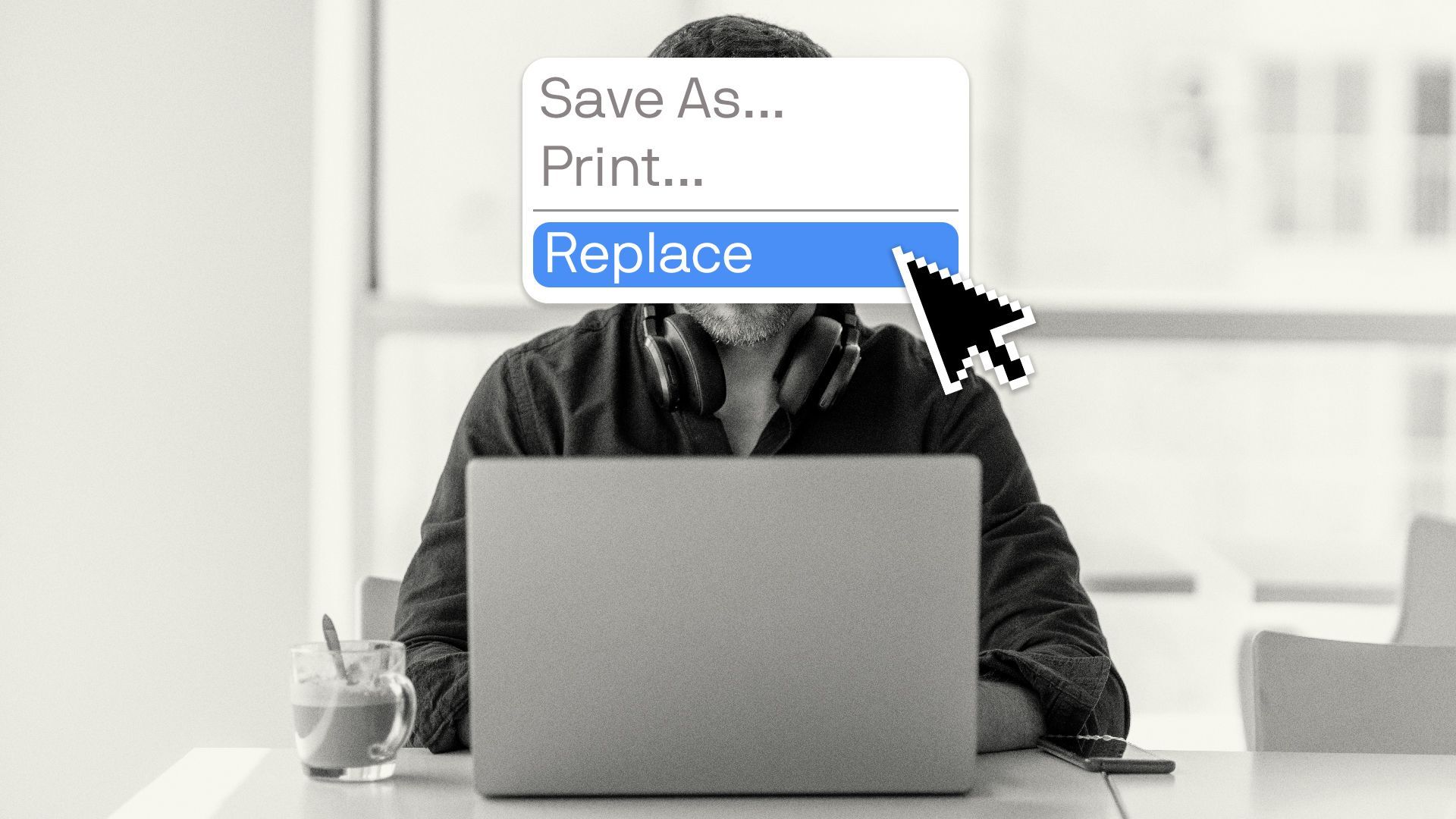
1 big thing: AI agents come to the office
AI technology is advancing rapidly and if you're not already using it at work, brace yourself.
Why it matters: That was Sam Altman's message, buried in a blog post.
- "We believe that, in 2025, we may see the first AI agents 'join the workforce' and materially change the output of companies," writes the OpenAI founder.
State of play: The possibility of using AI agents to do work instead of expensive humans has some companies super excited. It's making many workers super anxious.
- Distinct from an AI chatbot, an AI agent can work autonomously. You tell it what to do, and the agent goes off and does it in the real world. In other words, it could theoretically fully replace a human.
Reality check: Altman, of course, has a big interest in a future where AI plays a bigger role at work. And it's not clear yet what happens to workplaces in 2025.
- But the idea of AI agents in our workplaces is hardly just an AI entrepreneur's fantasy, researchers and experts say.
Zoom in: Some companies are already experimenting with AI agents in limited pilot programs to conduct drug discovery, for project management, or to design marketing campaigns.
The big picture: The key question is what happens to people's jobs? Most experts agree that agents will change the nature of work over the coming years, particularly for those who work at a desk in front of a computer.
That could mean an agent starts doing some of your work. "In an ideal world, this is a multiplier of effort where I delegate the worst parts of my job to AI," says Ethan Mollick, a management professor at Wharton who studies AI.
- AI has made workers more efficient, but there's still a lot more work to do. "The one thing I'm not worried about is that we're running out of work," GitHub CEO Thomas Dohmke tells Axios.
Yes, but: While humans will still absolutely be needed to supervise the AI's work, agents will start replacing humans over the next two years, says Anton Korinek, an economics professor at the University of Virginia and a visiting scholar at Brookings.
- "Any job that can be done solely in front of a computer will be amenable to AI agents within the next 24 months," Korinek says in an email, assuring this reporter he was not himself an AI. (He also agreed that he could be replaced by one.)
Between the lines: Humans are moving more slowly than the technology. Companies have to figure out how to adjust operations to accommodate AI workers, says Lareina Yee, a senior partner at McKinsey and an AI expert.
- The biggest challenge to moving AI agents into workplaces isn't the tech, it's the people, she says. "This is not a technology strategy moment, it's a business strategy moment."
2. Office vacancies hit a record high


Office vacancies hit a new high last year, with 20.4% of office space in the country's top 50 metro areas empty, per Moody's latest tally.
Why it matters: Though the return to office push picked up momentum last year, plenty of workers are in hybrid or remote setups, and employers don't quite need as much office space as before 2020.
- There are signs that we are nearing a peak, though.
The data analytics firm suggests two adjustments could reduce vacancies:
- Converting offices into residential properties. That's something we are starting to see more often, though often quite tricky to pull off.
- Knocking down office buildings. The idea is to get rid of older, cubicle-era offices firms aren't interested in. That's happening more, too.
- Office demolitions have been ticking up since 2022, per CoStar data.
What they're saying: "A new regime is forming which has led to a permanent reduction in office demand," Thomas LaSalvia, head of commercial real estate economics at Moody's, said in a note last week.
Where it stands: Some companies have called workers back without having enough office space for them.
- AT&T workers told Business Insider that there weren't enough desks and parking was hard to find now that everyone is required to be in the office five days a week. Amazon reportedly had similar problems.
What to watch: Construction activity is below pre-pandemic levels, and the vacancy rate could peak over the next nine to 15 months, LaSalvia tells Axios.

3. Love is blind, wine edition
It's a well-established fact that if you're drinking expensive wine, the best way to maximize enjoyment of it is to be sure that you know what you're drinking.
- So it's worth asking why the very people who helped establish that fact have continued to blind their wine for 40 years.
Why it matters: Blind tasting can, in the right circumstances, provide long-term benefits that dwarf any short-term returns. At least, that's the revealed preference of some extremely celebrated economists and others.
The big picture: A long series of empirical experiments has demonstrated that even sophisticated and experienced wine tasters do not prefer more celebrated and expensive wines when they're tasting blind.
- Many of those experiments were conducted by Richard Quandt, a lauded economist and founding member of the Princeton Wine Group, which has met roughly eight times per year since the 1980s, drinking more than 1,700 different wines in the process.
- Now the legendary economist Burton Malkiel — author of "A Random Walk Down Wall Street," which has sold more than 2 million copies and has never been out of print in more than 50 years — has published a detailed account of the Princeton Wine Group, and what its members have learned, in the Journal of Wine Economics.
What they found: The group does a statistical analysis of every group of wines it tastes, and has found, with one notable exception, that they cannot "determine dependable differences in wine quality," per Malkiel, even when they're drinking such spectacular wine as Mouton Rothschild or Romanée-Conti.
- The one outlier came in a tasting where a 1995 Dom Perignon was clearly preferred to "a $2 bottle of Russian sparkling wine bought at a Moscow airport."
Between the lines: Every member of the group loves and appreciates drinking fine wines, so why would they deliberately obscure that enjoyment by tasting them blind?
- One hint can be found when Malkiel writes that "the real delight" in the tastings "comes from debunking myths and finding wines that are beating their more expensive peers."
The bottom line: As former Continental Airlines CEO Frank Lorenzo, another member of the group, tells Axios, "Blind tasting adds an intellectual element to the wine drinking pleasure, and adds some modesty to experienced tasters."
Thanks to Ben Berkowitz for editing and Anjelica Tan for copy editing. Have a great weekend!
Sign up for Axios Markets