OpenAI's new o3 model freaks out computer science majors

Add Axios as your preferred source to
see more of our stories on Google.
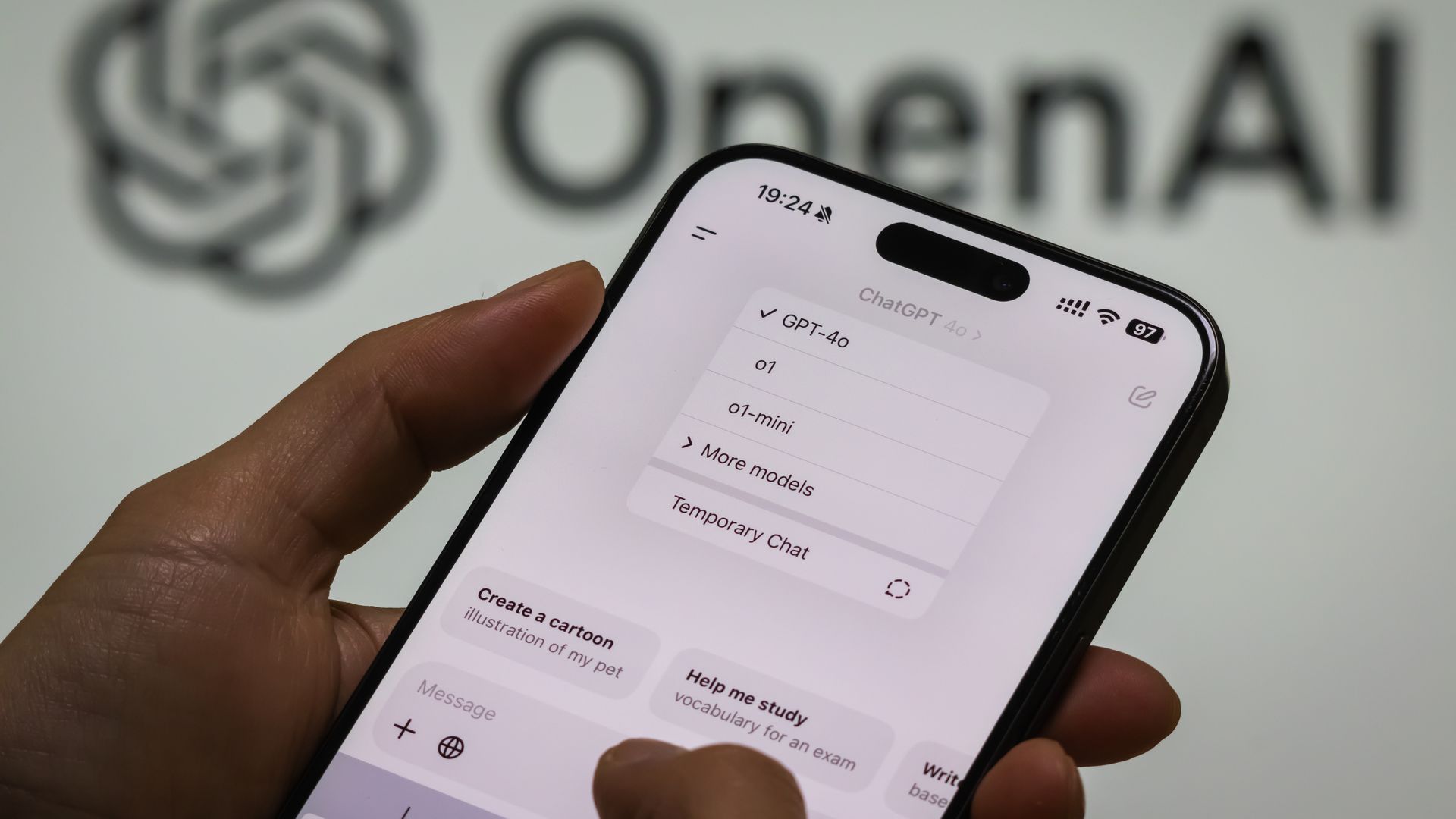
Photo illustration: Cheng Xin/Getty Images
OpenAI's announcement of its new o3 reasoning model has triggered another wave of anxiety among some computer science majors who fear AI will edge them out of the job market.
Why it matters: The new OpenAI model, though not yet widely available, is likely to power ChatGPT and other services eventually, and its capacity to independently tackle larger-scale projects could disrupt many professions.
State of play: One user on X said, "CS grads might honestly be cooked." Another user said they "might need to pivot."
- "Now with o3 from OpenAI, what am I supposed to do as a CS freshman?" a user asked on the "r/singularity" subreddit.
- OpenAI says o3 scores higher on one math benchmark than "human expert" level. Its performance on a coding benchmark beat the company's own chief scientist's score. And the model will only improve from here.
Yes, but: For people who want to go into computer science, "I would tell them there are so many new things that need to be built and would not worry at all," Pascal Van Hentenryck, director of Georgia Tech's AI Hub, told Axios.
- "The job opportunities are going to increase," he said. "The easy and tedious tasks will become automated and people will be able to work at a higher, sophisticated level."
Computer science continues to gain popularity as an undergraduate major, with 5.9% of class of 2025 students pursuing CS degrees compared with 4.8% of the class of 2024, according to data provided by Handshake.
- Less than half of this year's seniors believe generative AI will increase worker productivity, and less than a fifth think it will create jobs or make hiring more equitable.
Between the lines: Reasoning models like o3 use enormous amounts of computing resources and energy to arrive at their answers.
- The cost per task for some versions of the o3 model to answer a complex question can run as high as $1,000.
OpenAI CFO Sarah Friar recently said that the company is leaving the "door open" to a $2,000 monthly subscription for its AI products.
- That's a high price tag, but Friar suggests it could be worth it to get "literally a Ph.D.-level assistant for anything that I'm doing."
Zoom out: For every professional who fears generative AI will lower wages and kill jobs, there's another who dreams it will free humans from drudgery.
- Sam Altman wrote in September that "many of the jobs we do today would have looked like trifling wastes of time to people a few hundred years ago, but nobody is looking back at the past, wishing they were a lamplighter."
The bottom line: Many white-collar jobs will likely shift in the coming years, relying more on generative AI technology for task automation, brainstorming, creative uses and agents that act on one's behalf.
Go deeper: How ChatGPT changed the future
