Axios Markets

October 03, 2025

🫧 All major indexes hit record highs yesterday, with the S&P 500 notching its 30th of the year, just six months after "Liberation Day" sent stocks reeling. What could go wrong?
- Today: How the AI bubble could pop (and sooner than some investors think).
- Plus: Tariffs are not fueling a manufacturing renaissance in one community.
Let's get into it. All in 1,020 words in 4 minutes.
1 big thing: A big sign of an AI bubble starts to appear
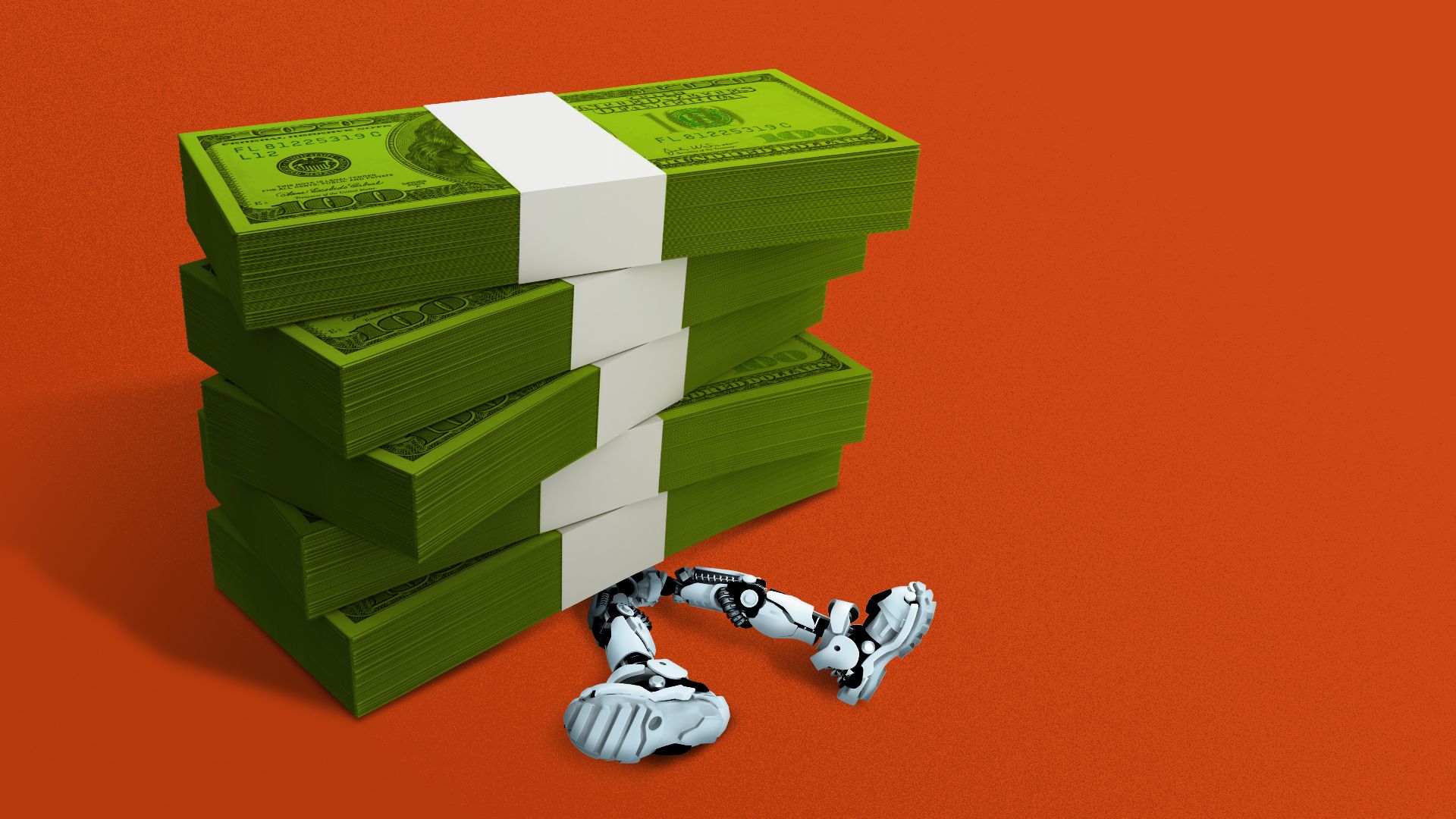
Debt is the canary in the coal mine for market bubbles. Housing debt fueled the global financial crisis. Corporate debt led to dotcom bust. Now, the tech companies driving today's bull market are quietly levering up, sometimes through private lenders that make their debt less visible to shareholders.
Why it matters: That debt — and how it is getting structured — is "almost an acknowledgement that this is getting out of hand," Dario Perkins, managing director of global macro at TS Lombard, tells Axios.
What they're saying: Regarding returns on AI expenditures, the Big Tech firms "say they don't care whether the investment has any return, because they're in a race…Surely that in itself is a red flag," Perkins says.
- He sees two major issues: increased leverage to fund costly AI infrastructure and few opportunities to make money once that infrastructure is built and paid for with debt.
Zoom out: Big Tech is turning to private debt markets and special purpose vehicles. The catch? That kind of borrowing doesn't have to be reflected on balance sheets.
- "SPVs mean companies like Meta do not need to show the debt as their debt," Perkins writes in a note to clients. He likens today's financing tactics to the subprime era, when firms shifted risk off their books to reassure investors.
- Meta is raising $29 billion via private capital for its AI data center buildout.
- Other tech giants are tapping the public market for debt. Oracle recently issued $18 billion in debt to fund its AI and infrastructure expansion.
Yes, but: Plenty of strategists have reminded Axios of the old Keynesian adage that "the market can stay irrational longer than you can stay solvent."
- In other words, this tech-driven bull market could still have legs to create more wealth before the bubble bursts. Perkins, however, isn't convinced.
- "I wouldn't touch this stuff now," Perkins says, adding that comparing this market with the dotcom bubble, "we're much closer to 2000 than 1995."
Between the lines: Why are tech companies spending this much to win the AI race if the bubble risk is so prescient?
- The market is rewarding them even if it "makes no economic sense to spend at this level because there's no way they can recoup the value of the capital spending," investor Paul Kedrosky explains on the Plain English podcast.
- Kedrosky is also watching how companies are moving financing off the balance sheet: "That for me is a reflection of not wanting the credit rating agencies to look at what they're spending."
What we're watching: Hidden debt, recycling of investment, and insider selling are examples of the warning signs of a late cycle, Perkins says.
- Perkins doesn't see the economy as tied up in AI like some other macro strategists have argued. That means investors who are well diversified across the U.S. economy and globally could still benefit even if the AI bubble bursts.
The bottom line: If hugely profitable tech companies need to mask their borrowing to fund AI spending, it signals they're not confident that they'll soon get the returns needed to justify such investments. That suggests the very spending powering today's earnings boom can't last forever.
2. Why tariffs may not save furniture manufacturing


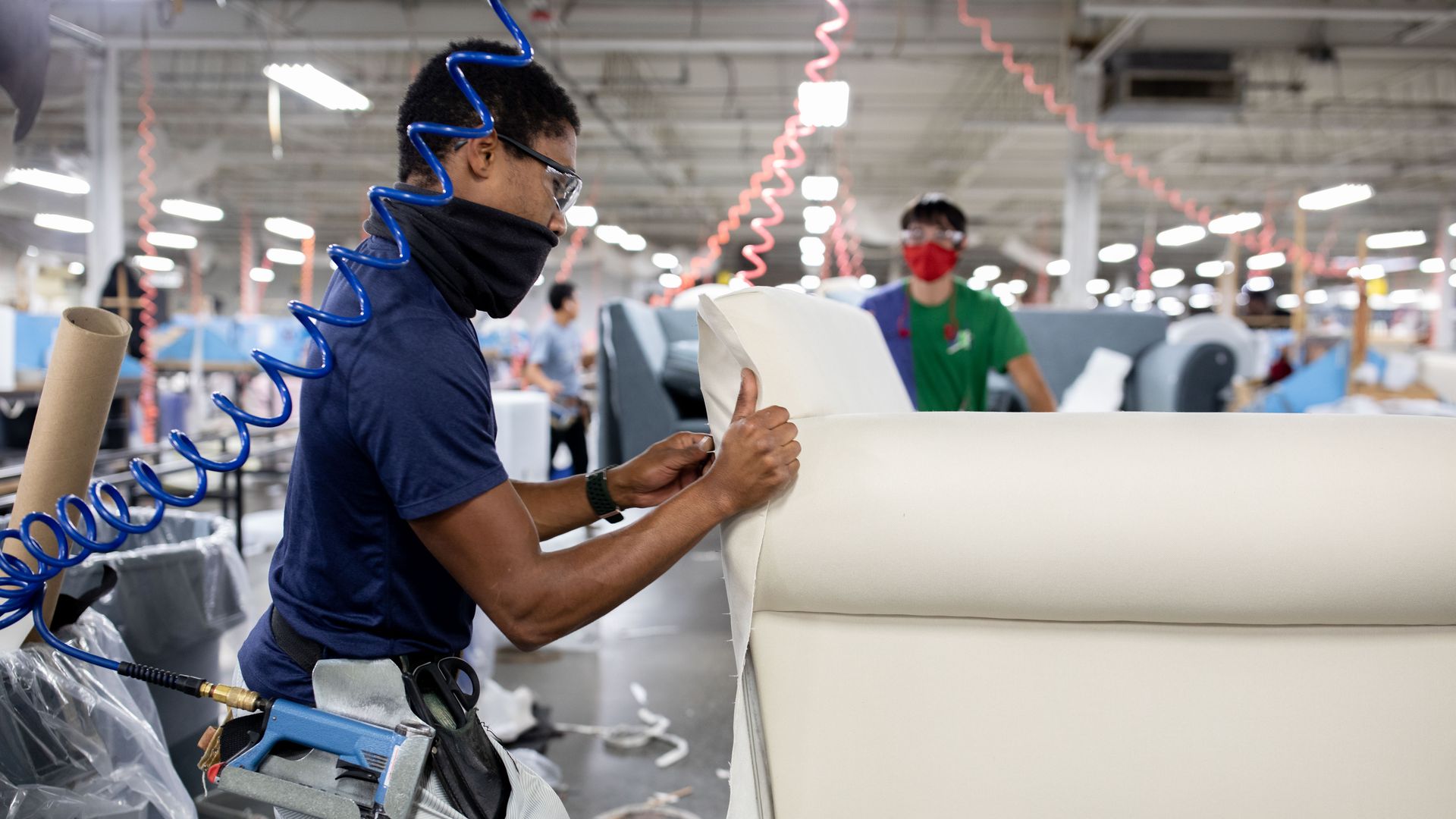
President Trump is unleashing a new round of tariffs on furniture, with the stated goal of reviving North Carolina's furniture manufacturing industry.
Why it matters: After the South lured factories and thousands of jobs from the North with the promise of cheap labor in the mid 20th century, North Carolina became a hotbed of furniture manufacturing. In the next century, much of that work moved to lower-cost markets like China and Vietnam.
- Those in the manufacturing sector say tariffs are unlikely to revive the industry that once underpinned much of North Carolina's economy.
By the numbers: In 2000, there were more than 78,000 furniture jobs in the state, per the Bureau of Labor Statistics. As of August, about 28,000 remain.
Driving the news: Trump took to Truth Social on Monday to promise a new round of "substantial" tariffs on countries that make furniture overseas.
Zoom in: The White House later provided more details, saying it would levy a 25% tariff on upholstered furniture imports, rising to 30% on Jan. 1, and a 25% tariff rising to 50% on Jan. 1 for imports of kitchen cabinets and vanities.
- It also adds a 10% tariff on imports of softwood lumber.
State of play: North Carolina Gov. Josh Stein told Axios Raleigh on Tuesday that he had not seen the post by the president but said the economy is best served when there is consistency.
- "Obviously, we want to support our furniture industry. I just don't understand how this tariff fits into his overall tariff policy," he said.
What they're saying: Tariffs cannot "unravel and reverse" the global trends that shaped the home furnishings industry over the last few decades, trade group Furniture for America said in a letter.
- "Tariffs cannot reopen factories that no longer exist, bring back thousands of workers who retired or moved on to other industries, nor reverse the interests and inclinations of today's younger workers, who are attracted to higher-paying trades and the burgeoning tech industry," it added.
3. S&P 500 hits another all time high amid shutdown
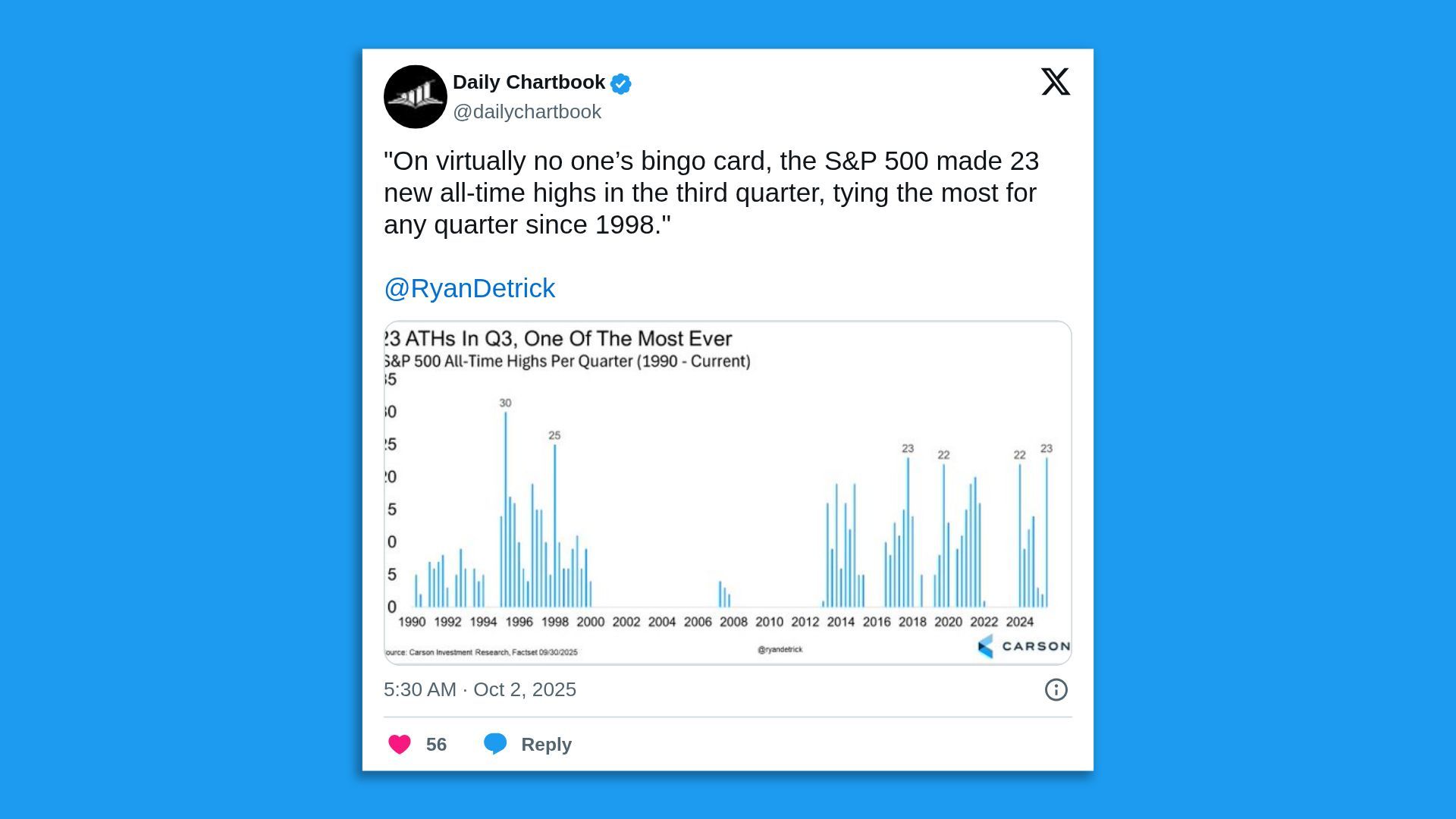
In the middle of the government shutdown this week, the S&P 500 hit its 30th all-time high this year after notching 23 new record highs in the third quarter alone, according to data from financial services firm the Carson Group.
Why it matters: Earnings growth among companies — not politics in Washington — drives the market, and gains tend to beget gains.
👀 Got tips? Email me at [email protected]. I would love to hear from you about anything that may be of interest for our investor audience.
Thanks to Jeffrey Cane for editing and to Anjelica Tan for copy editing. See you Monday!
Sign up for Axios Markets