Axios Markets

December 05, 2023

1 big thing: Crypto lives


Bitcoin touched $42,000, a level not seen since May 2022 before the collapse of a stablecoin called TerraUSD heralded the start of the industry's meltdown, Emily writes.
Why it matters: The price surge yesterday comes thanks to optimism about the possibility of a Bitcoin ETF, as well expectations for Fed rate cuts buoying riskier assets — but this isn't just a market forces thing.
- A less-appreciated aspect of bitcoin's current run is what happened last month with Binance, the world's largest crypto exchange.
Catch up fast: The company and its CEO pleaded guilty to money laundering and fraud charges, agreeing to pay more than $4 billion — the largest penalty in U.S. Treasury history.
- Among the charges, Binance laundered money for terrorist groups including Hamas.
- Despite the current anti-crypto atmosphere among some U.S. regulators, the settlement agreement allowed Binance to continue operating.
Zoom in: But there's a catch. Under the settlement, Binance is required to create an effective anti-money laundering system — under the watchful eye of an independent outside party that reports to federal regulators.
- "It's the first such arrangement in crypto," explain Henry Farrell and Abraham Newman in a must-read piece for the WSJ. And, they argue it's more significant than the monetary penalty.
- The new system will transform Binance "from a scofflaw into a watcher and enforcer on behalf of the U.S. government," they write.
Zoom out: The arrangement will also change the larger crypto market.
- Anti-money laundering rules "spread like a virus," the WSJ piece argues. That's because anyone who wants to do business with Binance needs to get their house in order, too. And the people doing business with those Binance users will need to adjust.
- The U.S. did something similar about 10 years ago with a crackdown on big banks — levying big fines and imposing monitoring arrangements. That terrified "other financial institutions into rapid and widespread compliance," they write.
The big picture: While the crypto market lives on, the vision of what cryptocurrency could be is very different from its early days.
- Given the Binance deal, it's hard to argue that crypto traders are operating in a decentralized Wild West market outside of U.S. dollar hegemony.
- Instead, the market has drifted toward centralization where big exchanges — Coinbase, too — operate under the watchful eye of the U.S. government. (Lawbreakers could move to smaller less centralized trading to try to avoid detection.)
Yes, but: Regulators aren't done with Binance. A lawsuit filed by the SEC is ongoing.
The bottom line: A year ago, in the wake of Sam Bankman-Fried's downfall, the future of crypto looked uncertain — but it has survived and even mounted a bit of a resurgence.
2. Catch up quick
3. Golden age for savers


It's a golden era for savers: Those fortunate enough to have some spare cash can earn some real interest on their money right now, Emily writes.
Driving the news: The rate on the highest-yielding savings accounts is outpacing inflation by a historically wide margin.
Yes, but: Not all savings accounts offer great rates. You may have to do a little work to transfer your cash to a higher-yielding account.
What to watch: The Fed could cut rates as soon as early next year, changing the dynamic.
4. Suspicious short-selling spike
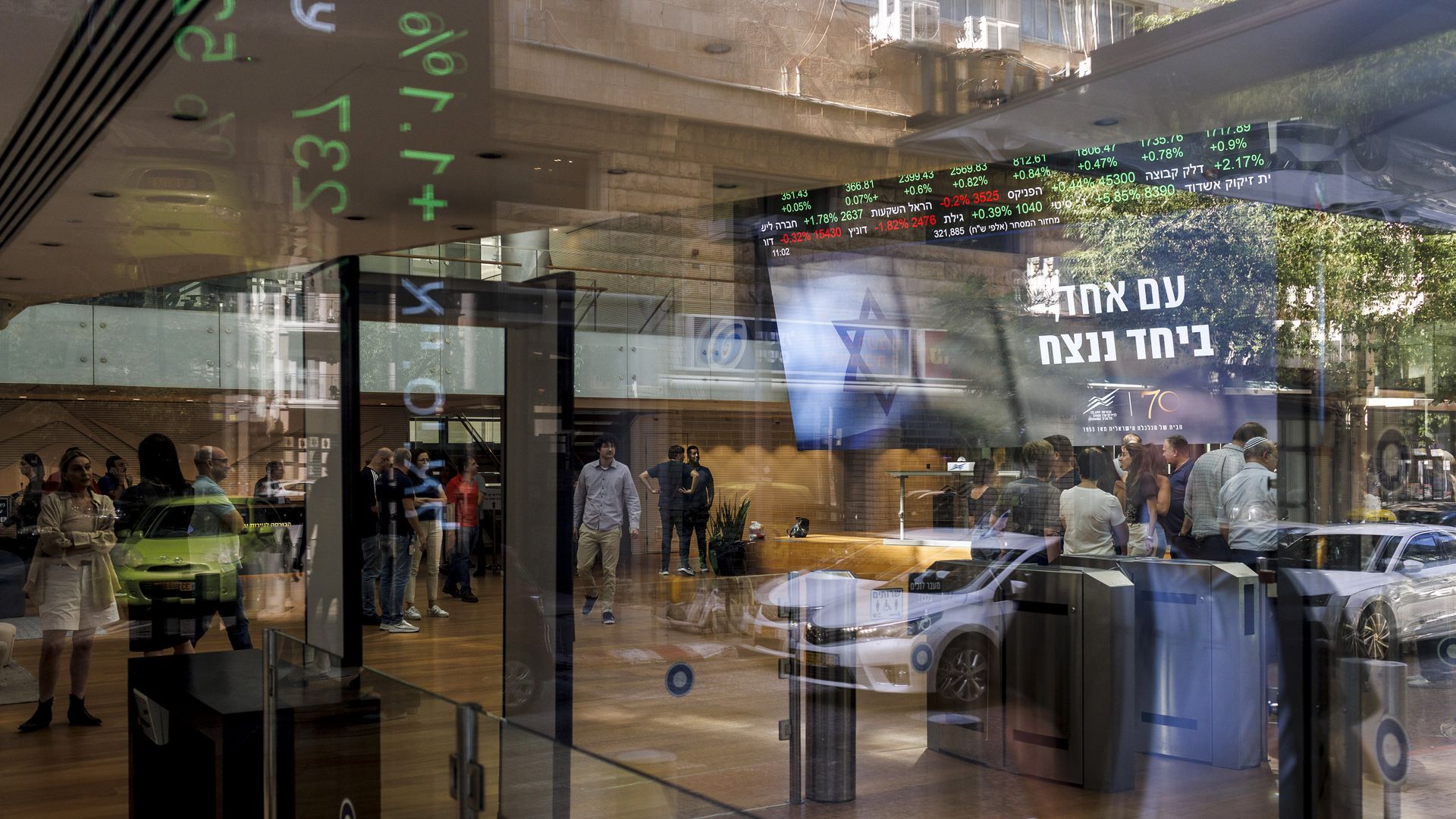
The Tel Aviv stock exchange in November. Photo: Kobi Wolf/Bloomberg via Getty Images
5. 📈 Charted: U.S. oil production record


U.S. oil production has touched new record highs in recent weeks, Matt writes.
Why it matters: American production is part of the reason that recent efforts by OPEC — and its strategic ally, Russia — haven't been able to end the slide in global oil prices.
- Economic weakness in China — the world's largest oil importer — is dampening demand and also playing a role in the price drop.
State of play: U.S. benchmark oil prices are down nearly 20% in the fourth quarter, to below $75 a barrel.
- The national average price for a gallon of regular gasoline is $3.24, according to AAA. That's down 5% in the last month.
Axios Markets
Stay on top of the latest market trends and economic insights