
Axios Markets

March 15, 2022
ππ Good morning! It's Emily. Is everyone as unadjusted to daylight saving time as I am? Also, what are your thoughts on orange juice β still as delicious as when you were a kid? I really want to know. I'm drinking heavily (juice anyway) to cope with all this uncertainty. Neil Irwin will explain.
π Join Axios virtually at our inaugural Whatβs Next Summit on April 5. Β
Today's newsletter is 991 words, 4 minutes.Β
1 big thing: The world economy depends on geopolitics

Illustration: AΓ―da Amer/Axios
These are unsettling times. Warfare in Europe. New pandemic lockdowns in China. High inflation in the U.S. that global developments stand to make worse, Axios' Neil Irwin writes.
- The common thread: Aspects of how the world works that people have taken for granted for a generation have become deeply uncertain.
Why it matters: There is a sense of the world coming unglued that hangs over global markets and the economy β and a sense that it's ultimately the course of great power geopolitics that will shape economic destiny.
The threats are to globalization itself, and specifically the assumption that even countries that have big disagreements can do business with each other on an ever-widening scale.
- At the same time, the faster and more efficient supply chains that companies have built over the course of decades are crumbling in new ways.
Driving the news: Over the weekend China announced a one-week lockdown of Shenzhen, an industrial powerhouse region that produces goods crucial to many global supply chains, due to a spike in COVID cases.
- The shutdown is just the latest hit, at a time when war and sanctions are already straining supplies of commodities.
State of play: In effect, a collision is underway between powerful geopolitical and economic forces of a sort that are creating rapid whipsawing effects in markets as traders and policymakers try to make sense of this rapidly changing world.
- The Russian invasion of Ukraine has caused spiking prices for oil, wheat, and many metals on commodity markets (though those prices pulled back some yesterday), as the productive capacity of two large countries, is essentially cut off from the rest of the global economy
- There were reports that Russia has asked China for military assistance, which, if honored, would raise the possibility of the economic schism between Russia and the West expanding to include the world's second-largest economy most populous nation.
Put it all together, and the economic outlook is messy. Yesterday's market shifts reflected this unsettling time, with some surprising moves.
- Treasury bond yields soared to their highest levels since 2019 β contrary to the usual pattern in which times of crisis cause people to pour money into ultra-safe bonds, driving their yields downward. It's a sign that investors are not counting on global uncertainty to bring about cheaper money like in the past.
- China-linked commodities dove and Chinese stocks fell precipitously (more on that below).
The bottom line: The thing about living through momentous times in history is you don't know how things are going to end. Markets, and all of us, are just trying to make sense of it in real time.
2. Catch up quick
π¦ Sen. Joe Manchin wonβt support Fed nominee Sarah Bloom Raskin, putting her confirmation in doubt. (Axios)
π’ Oil producers are exiting hedges so they can profit from higher prices, which could lead to more production. (Bloomberg)
β‘οΈ Nickel trading resumes today on the London Metal Exchange. (WSJ)
3. Charted: π Hong Kong stocks hit 6-year low


Hong Kong's Hang Seng Index dropped more than 5% today β on the heels of a 5% drop yesterday β thanks to those COVID-related lockdowns as well as worries about renewed government clampdowns on homegrown tech giants, Matt writes.
The big picture: Todayβs is the biggest one-day drop for the index β a gauge of some of corporate China's largest global companies β since 2015. And the index hasn't been this low since early 2016.
- A tech-related subindex of the Hang Seng tumbled an eye-popping 11% yesterday, after the Wall Street Journal reported that Chinese tech giant Tencent faces a possible record fine from the Chinese central bank for violating money-laundering rules.
The bottom line: A serious disruption to tech production in Shenzhen β and even more so if lockdowns spread to Shanghai β would increase supply chain snarls and prices for tech products worldwide.
4. China lockdown whipsaws commodities


After massive commodity producer Russia was exiled from the world economy, a new shock is emerging from China β the world's biggest user of raw materials, Matt writes.
The big picture: Commodities prices turned tail and tumbled yesterday, as China imposed new COVID-related lockdowns in response to soaring infection rates.
- U.S. benchmark crude oil dropped 5.8% to $103 a barrel.
- Benchmark Chinese iron ore contracts dropped nearly 7%.
- Prices for copper, a key industrial metal, fell 2.4%.
- Even European natural gas prices β the epicenter of the Russian commodity shock β dove nearly 10%.
Threat level: If sustained, the downturn in commodities prices suggests traders see the remarkable level of global uncertainty right now β War! Inflation! COVID! R.I.P. globalization! β as potentially triggering an economic downturn.
5. EEOC warning
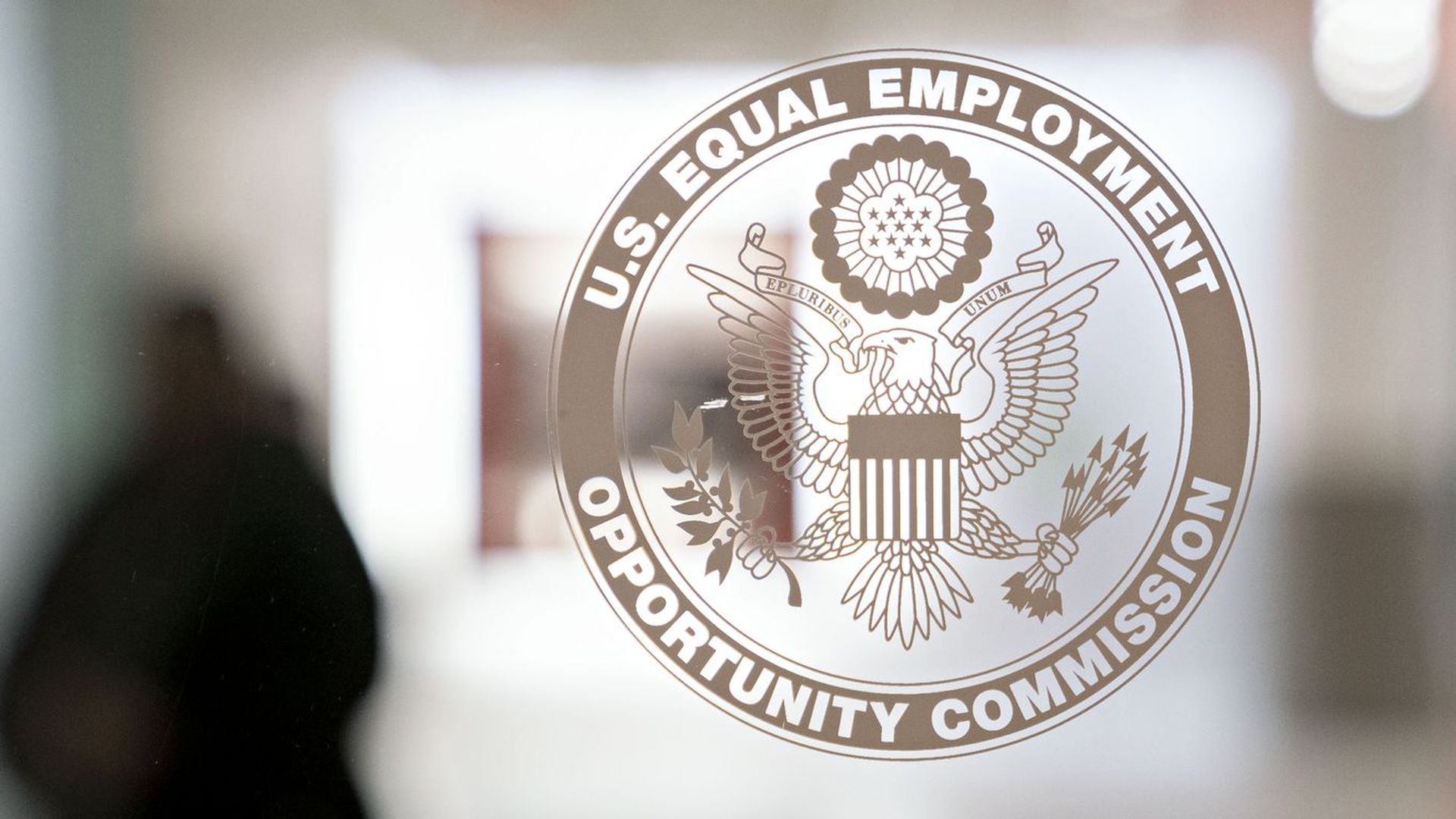
Andrew Harrer/Bloomberg via Getty Images
The agency charged with enforcing civil rights laws in the workplace issued new guidelines yesterday, warning that discrimination against caregivers, including mothers, may be unlawful β and something to watch out for as more women return to work, Emily writes
Why it matters: "We really want to make sure that the pandemic does not lead to a long-term widening of gender and racial pay gaps," Charlotte Burrows, chair of the Equal Employment Opportunity Commission, told Axios in an exclusive interview about the new guidance.
The big picture: Discrimination against mothers and other caregivers was already a problem heading into the pandemic, but it intensified during COVID-19, with schools, day cares and other resources shuttered or intermittently unavailable.
- "We are getting a lot of COVID-related [complaints] in general," Burrows said.
State of play: Civil rights laws do not designate "caregivers" as a protected class. Discrimination happens when stereotypes about gender or race bump up against employee responsibilities. The guidance offers some examples:
- Not assigning demanding or high-profile projects because of stereotypes about a mother's willingness to work.
- Disparaging women for working hard when they "should" be home with their kids.
The pandemic has been "a civil rights challenge disproportionately hitting minorities, women, persons with disabilities and vulnerable groups," Burrows said.
What to watch: Complaints to the EEOC lag the actual discrimination, and the agency will be tracking charges coming in on these issues.
Sign up for Axios Markets

Stay on top of the latest market trends and economic insights