Axios Markets

June 05, 2024

Welcome back. Today we're going deep on the labor market. It's back to normal from the heady days of 2022, and that's not a great feeling for job hunters. In 789 words, 3 minutes.
1 big thing: Job applicants face dizzying maze
The labor market is stagnating, particularly for white-collar workers. Employers are reluctant to let workers go and they also aren't in a hurry to hire.
Why it matters: The cooling labor market may be good for quelling inflation but it's frustrating for job hunters — those who are employed feel stuck in roles they no longer want, while the unemployed struggle to get hired.
What they're saying: "The stagnant job market is driving people crazy," says Phoebe Gavin, a career coach in media, entertainment and tech.
Zoom in: Workers are reporting that the hiring process has become a marathon, Gavin says. Her clients are going through "really long processes with many, many stages."
- Employers are asking applicants to perform complicated tests, and they're not willing to budge much in negotiations, she says.
- A graphic designer told Axios he's been looking for a new role for eight months. There are so many hoops to jump through in the interview process, he says. And the salaries and freelance rates on offer are far lower than a few years ago.
- In posts on Reddit's r/recruitinghell page and LinkedIn, job hunters share similar frustrations. (A few years ago, "recruiting hell," in certain industries, meant that recruiters were incessantly calling you.)
Driving the news: Job openings are at their lowest level in three years, according to the latest Job Openings and Labor Turnover Survey (JOLTS) data released yesterday.
- But the number of people losing their jobs through layoffs and firing is lower than last year.
The big picture: The labor market has slowed from the go-go days of 2022, but it's not in crisis. Most people who want to work are — eventually — finding jobs, says Nick Bunker, an economist at Indeed.
- Layoffs are at low levels, per the JOLTS data, and so is the unemployment rate.
- This is exactly what the Federal Reserve was hoping for when it started hiking rates in 2022, says Bunker.
- "Even if it's very frustrating that a person with a job, can't go out and find a new job and get a huge pay raise very quickly," he says. "That's actually probably the least painful way for the labor market to have cooled down over the last few years."
The bottom line: Not too long ago, most professionals were living in a job-hoppers paradise — now, not so much.
Readers: Are any of you job hunting? I'm interested in hearing about your experiences and travails, possibly for another story. Shoot me an email, [email protected].
2. Charted: Back to earth


At the macro level, the labor market has fallen back to earth and landed in a pretty healthy place — cold comfort to folks who experienced the bounty of the post-pandemic job search.
Driving the news: In April, there were 1.24 job openings for every unemployed American — same as in October 2019, the all-time high reached before the post-pandemic recovery.
Flashback: At the peak of the job-hopping frenzy in March 2022, there were two job openings for every one unemployed American.
- The high ratio was great for workers who were able to command higher wages and many snagged better jobs. But it also was an inflation driver.

3. Work friendships fade in remote era
The stagnant situation isn't the only issue plaguing the job market these days. The new, scattered working world is disrupting one of the long-standing traditions of the workplace — making friends with colleagues.
Why it matters: It's adding to America's worsening loneliness crisis, as people increasingly feel like the critical social component of working has disappeared.
- "As social connections have become more difficult to form, it's become even more important to have that person or those people who make you feel like you belong," says Ben Wigert, a research director at Gallup.
By the numbers: The share of U.S. workers who say they know their coworkers personally has fallen from around 80% in 2019 to around 67% today, the WSJ reports.
- In Jan. 2020, 47% of American workers believed someone at work cared about them, per Gallup polling. That's fallen to 38%.
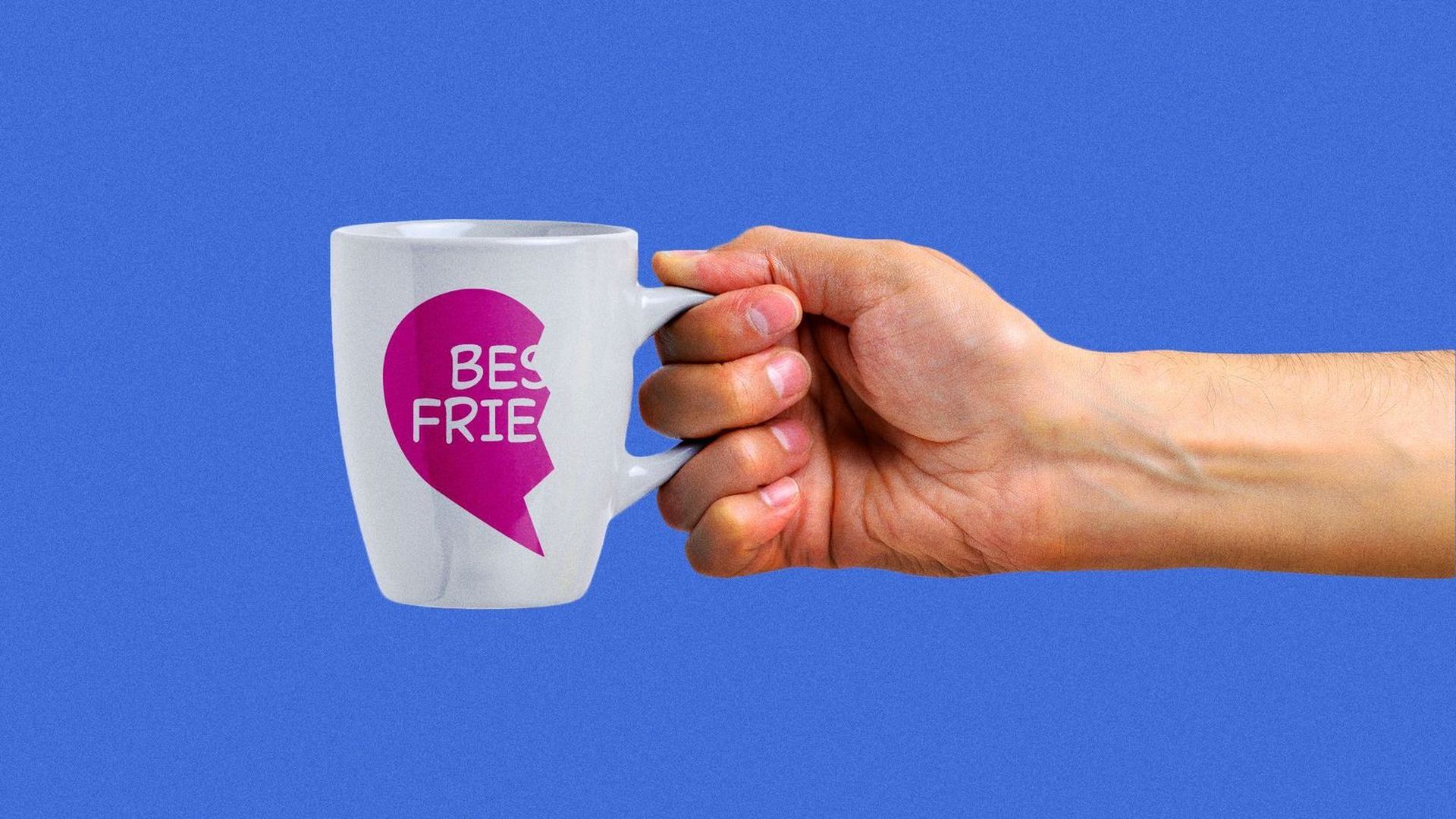
Zoom out: Having a best friend at work isn't just nice to have for workers — for companies, it's a key part of worker retention, Gallup has found.
💭 Emily's thought bubble: The rise of remote work and the loneliness that comes along with it is a good reminder that folks need to find social connections outside the office, says Gavin, the career coach.
- If your whole identity is tied up in work, "then any sort of negative outcome that happens at work is a negative outcome for you as a person." Having a better social mix is good for work-life balance, she says.
The bottom line: Remote work has led to a decrease in work friendships, but maybe there's a bright side.
Thanks to Kate Marino for editing this newsletter and to Mickey Meece for copy editing it.
Did someone forward you this email? You can subscribe here.
Sign up for Axios Markets