Axios Markets

December 09, 2022

1 big thing: ChatGPT could disrupt search

Illustration: Sarah Grillo/Axios
2. Catch up quick
3. Greenback signals
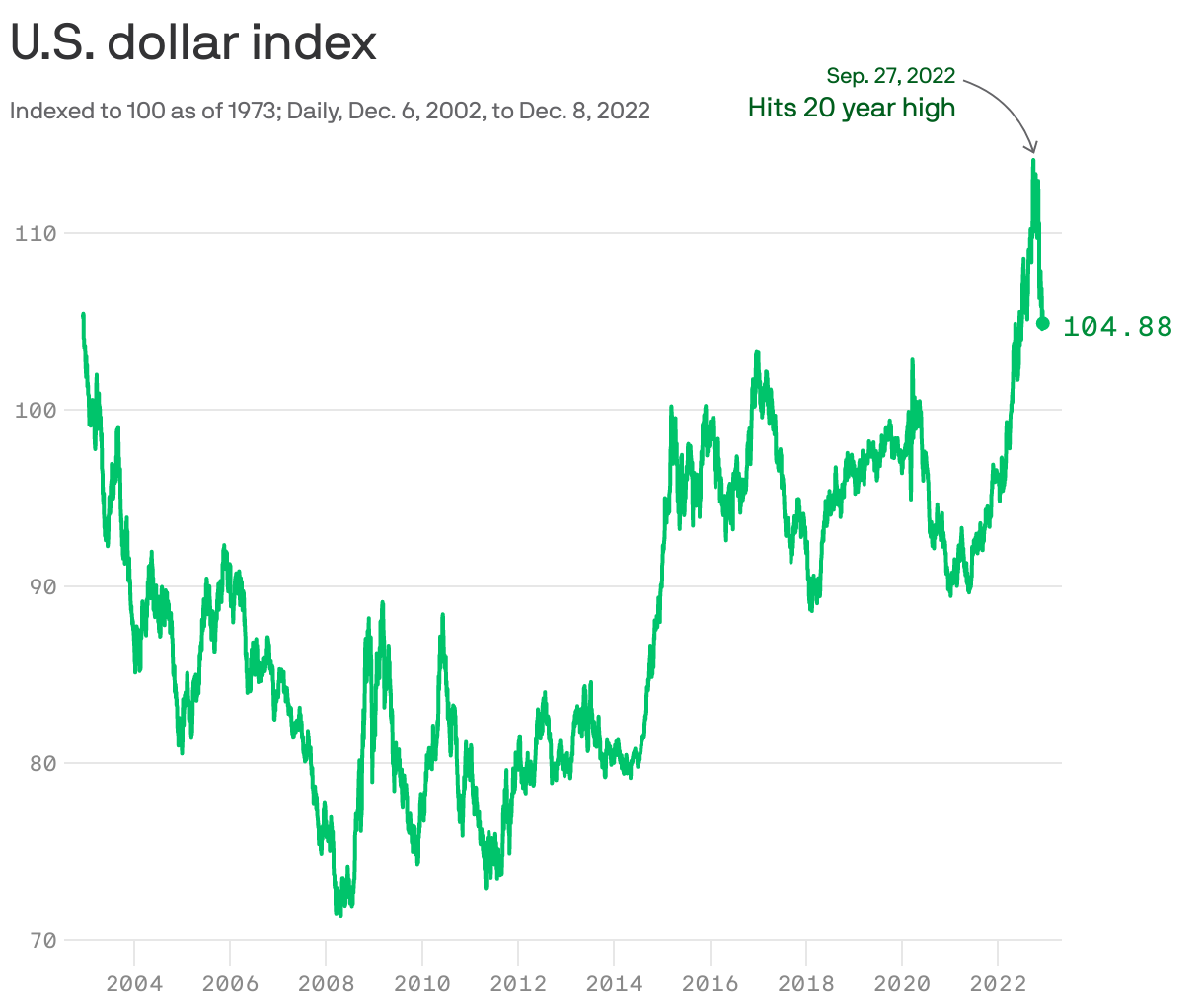
After hitting a 20-year high this fall, the dollar is now weakening fast, Matt writes.
Driving the news: The U.S. dollar index — which tracks the buck against a basket of six other major currencies — is down more than 8% from its September peak.
- That's the most the dollar has fallen in a roughly 10-week time frame in over a decade.
Why it matters: The drop suggests markets now think the worst of the recent inflation is over, and therefore the Fed can soon start to slow down or even stop its rate-hiking program.
The big picture: Like pretty much everything in the markets this year, the dollar's rally — it was up nearly 19% at one point — is tied to the aggressive interest rate hikes the Fed imposed to try to rein in inflation.
- Currencies fluctuate for a bunch of reasons. But some of the most important drivers are known on Wall Street as "interest rate differentials."
- When a central bank in one country is raising its monetary policy rates, and a central bank in another country is not, the former's higher rates act as a magnet pulling capital into that country's currency.
- That's basically the story of the greenback in 2022.
Yes, but: Over the last couple months, the dollar started to tumble on news suggesting the Fed might not keep raising rates as fast as it has been.
- For instance, it tumbled when the October U.S. jobs report showed a rise in unemployment and weakening wage growth.
- And it dove on Nov. 10, when U.S. inflation data was weaker than previously expected.
- It slumped again on Dec. 1, when Fed chair Jerome Powell seemed to hint that the central bank would shrink the size of its next rate hike to a half-percentage point.
What we're watching: Next week's Fed meeting on Wednesday and whether Powell & Co. make the dovish pivot that many clearly expect.
3. Ship stuff like it's 2019


The cost of shipping goods between Asia and the U.S. West Coast has plunged, as Chinese trade nosed dived due to COVID restrictions, Matt writes.
Why it matters: The unknotting of supply-chain snarls is another indication that inflationary pressures are moving in the right direction.
State of play: Spot prices for shipping containers in the key Asia-west coast corridor plunged 25% last week, finally dipping below where they sat for much of 2019, according to Freightos, a booking and payments platform for international freight.
- Freightos analysts noted that the decline came "as empty containers accumulate at Chinese ports" — an indication of just how sharp the downturn in activity has been in the Asian economic giant.
What we're watching: Whether China's industrial engine can start to rev again, now that the government just announced plans to scrap the harsh quarantine and testing rules that played havoc with the economy for much of 2022.
4. Mortgage rates may have peaked


The average 30-year fixed mortgage rate fell for the fourth straight week, to 6.33%, according to Freddie Mac, Emily writes.
- It's a big pullback since rates went over 7% during early November.
Why it matters: Like the retreating dollar and shipping rates, this is — you guessed it — yet another sign that inflation worries are easing.
- Mortgage rates could still head back up, of course — but some experts, like Mike Fratantoni, chief economist at the Mortgage Bankers Association, are calling the top. "We think we're now past the peak on mortgage rates," he told Market News International earlier this week.
Zoom out: With rates double their year-ago levels, this recent decline won't snap the real estate market out of its doldrums. But it's not the worst news for anyone looking to buy a home.
- Forecasters are betting on more declines next year, maybe getting back to the 5% area.
- And home prices are falling — the past three months of declines in the S&P CoreLogic Case-Shiller index have been the steepest since the financial crisis.
What to watch: Next Tuesday, we'll see where inflation is when the Consumer Price Index for November is released.
Axios Markets

Stay on top of the latest market trends and economic insights