Axios Markets

April 24, 2025


💵 What's safer than the U.S. dollar? It's a question that investors around the world are asking themselves as the "sell America" trade gains steam.
- We unpack the recent flight to safety, and where investors are parking their money. Plus, how to buy access to the president, crypto-style.
All in 770 words, a 3-minute read.
1 big thing: A risky dollar reckoning
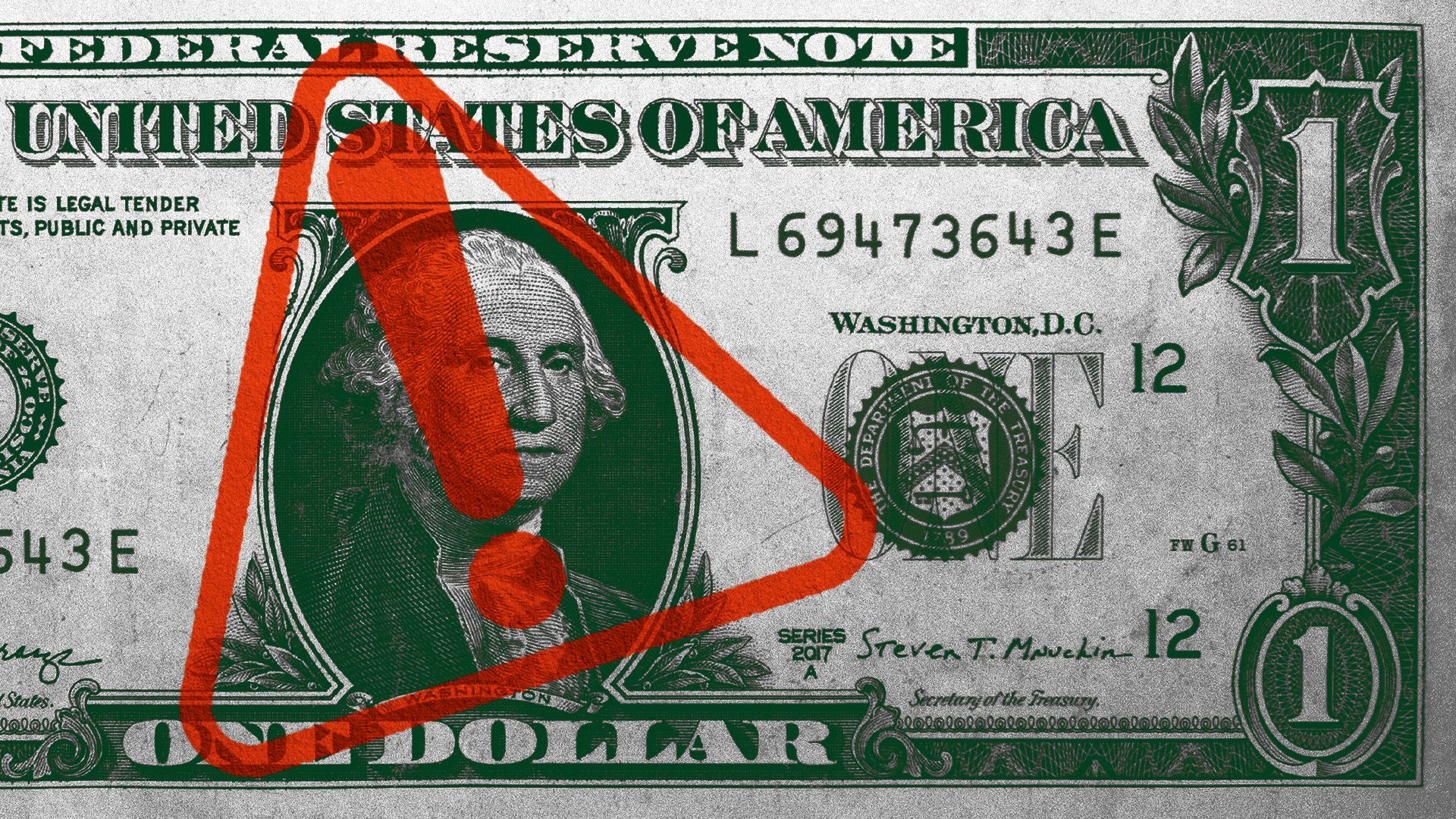
The dollar smile — the longstanding dynamic where the dollar would rally in good times and bad — has been turned upside down.
Why it matters: The U.S. is no longer a safe haven. In fact, it's the country from which risk capital is now fleeing in times of turmoil.
The big picture: Ever since the global financial crisis of 2008 to 2009, market strategists have tended to look at various different assets through an "RO/RO" lens.
- Times of bullish greed are viewed as "risk on," which means buying equities and credit. Times of bearish fear are seen as "risk off," which means buying Treasuries and the dollar (which, in practice, generally means buying very short-term Treasury bills).
- This time around, however, "risk off" days have seen sharp declines in Treasuries and the dollar, with those assets rising only on days when the stock market goes up. In other words, the dollar is now acting as a risk asset, rather than playing its normal role of safe haven.
Between the lines: "Abrupt and unilateral policy changes have shaken global confidence in American economic and security leadership, and US assets are paying the price," former U.S. Mint director Philip Diehl tells Axios, adding that fearful investors want to "sell the USA."
- Diehl, who is now president of the U.S. Money Reserve, a precious metals company, sees a "rush to gold for protection."
- That seems to be borne out in the price action for gold, which touched an all-time high just over $3,500 on Monday, up more than 25% this year.
Where it stands: The dollar has lost its traditional "safe-haven bid," JPMorgan analysts wrote in a research note earlier this month, adding that "there is a broader risk premium being baked into U.S. assets generally."
- Making matters worse are worries about tariff-induced U.S. inflation.
- Currencies are valued in very large part according to their "real yields," or the interest rate in that currency minus the inflation rate. As U.S. inflation estimates rise, real yields fall, and the dollar becomes less attractive.
2. Investors have little safe haven
For years investors had an "automatic reflex" to buy dollars and Treasuries in times of turmoil, Stephane Lintner, CEO of Jiko, a money-markets brokerage, tells Axios. "I think we've lost that."
- "Investors stopped treating the dollar as a flight to safety currency and started treating it as a risk currency, a risk asset," adds Steven Kamin, a former Federal Reserve economist now at the American Enterprise Institute.
- "That goes for Treasuries, too," says Kamin, who recently wrote an article in the Financial Times headlined "Dark days for the less-mighty dollar."
Follow the money: It's not clear whether any other asset has really replaced the dollar as the beneficiary of the safe-haven trade.
- Gold, Swiss francs, and even bitcoin have sometimes (but not always) seen a bid on down days for the market, but all of them are small enough in size that a tiny proportion of dollar outflows can move them significantly.
The bottom line: The dollar might not be safe any more, but there's nowhere else that's obviously safer.
3. The new price of access to Trump

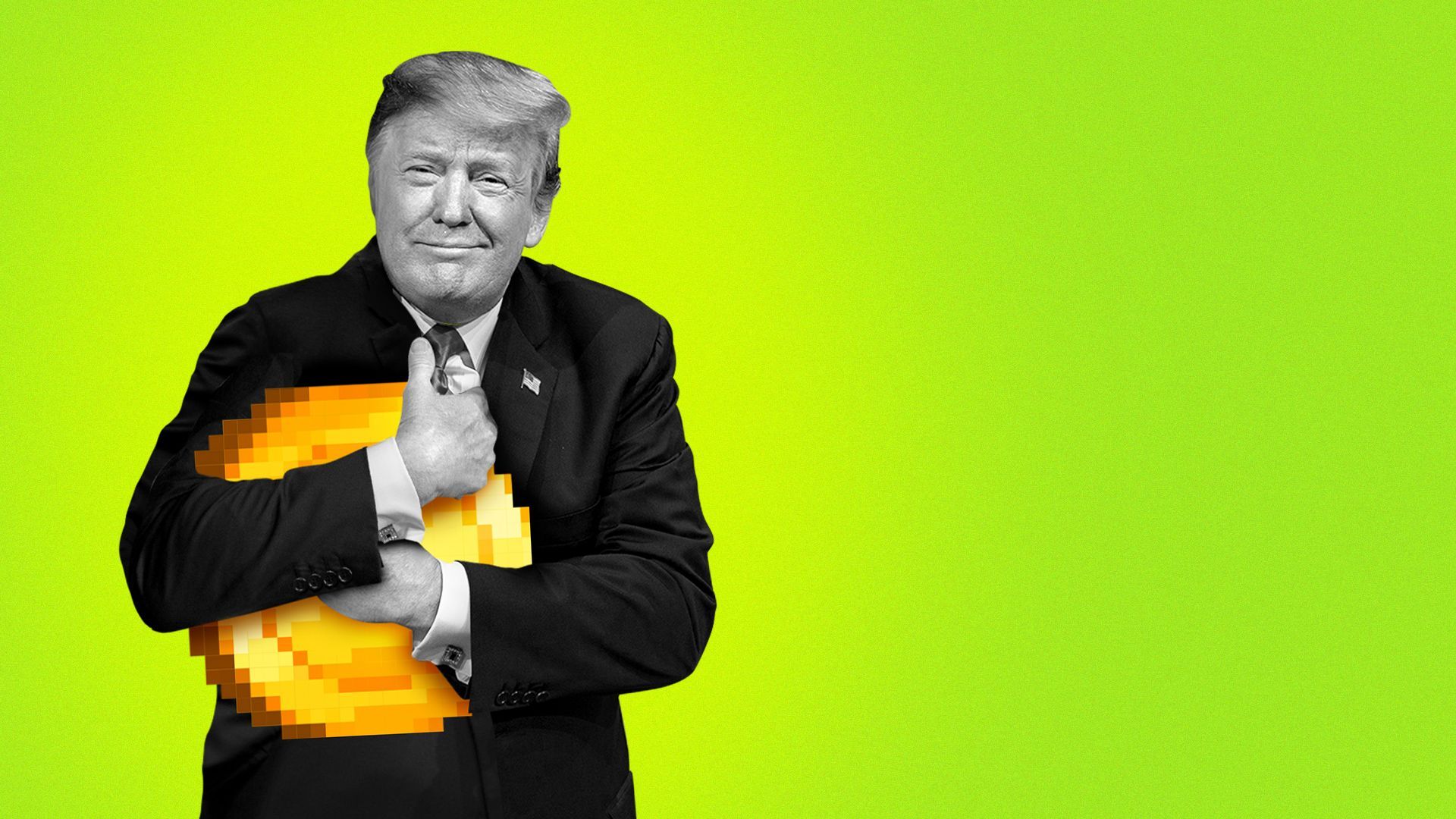
Speaking of surging assets, the Official Trump meme coin rose nearly 50% yesterday on news that its biggest holders get to have dinner with Donald Trump.
Why it matters: The big question everyone had about this crypto token was whether or not buying it would offer privileged access to the president, and now we have an answer.
Between the lines: According to the meme coin's website, the top 220 holders will be invited to a special dinner with the president on May 22.
- The top 25 will get to go to a special reception before the dinner, and a "special VIP White House Tour" the following day.
How it works: To indicate their interest in attending, users must register by connecting their wallet to the website. Then, supposedly, they need to start accumulating tokens to make sure they are in the top spot (which creates buying pressure and drive up the price).
- Invites will be determined by average balances from April 23 to May 12.
By the numbers: As of Wednesday afternoon, the holder on chain with the 25th largest supply had over 1 million tokens, valued at over $13 million.
- The 220th largest holder had 26,633 of the meme coins, or about $350,000 worth.
What we're watching: Another 40 million meme coins were recently set to unlock for trading, which is expected to put downward pressure on price. Those tokens have not yet begun selling.
- Yesterday's boost in price would make buying those newly liquid tokens more attractive now, if the holders started to move them onto the market.
Thanks to Ben Berkowitz for editing and Anjelica Tan for copy editing. See you tomorrow!
Sign up for Axios Markets