Axios Markets

September 24, 2025

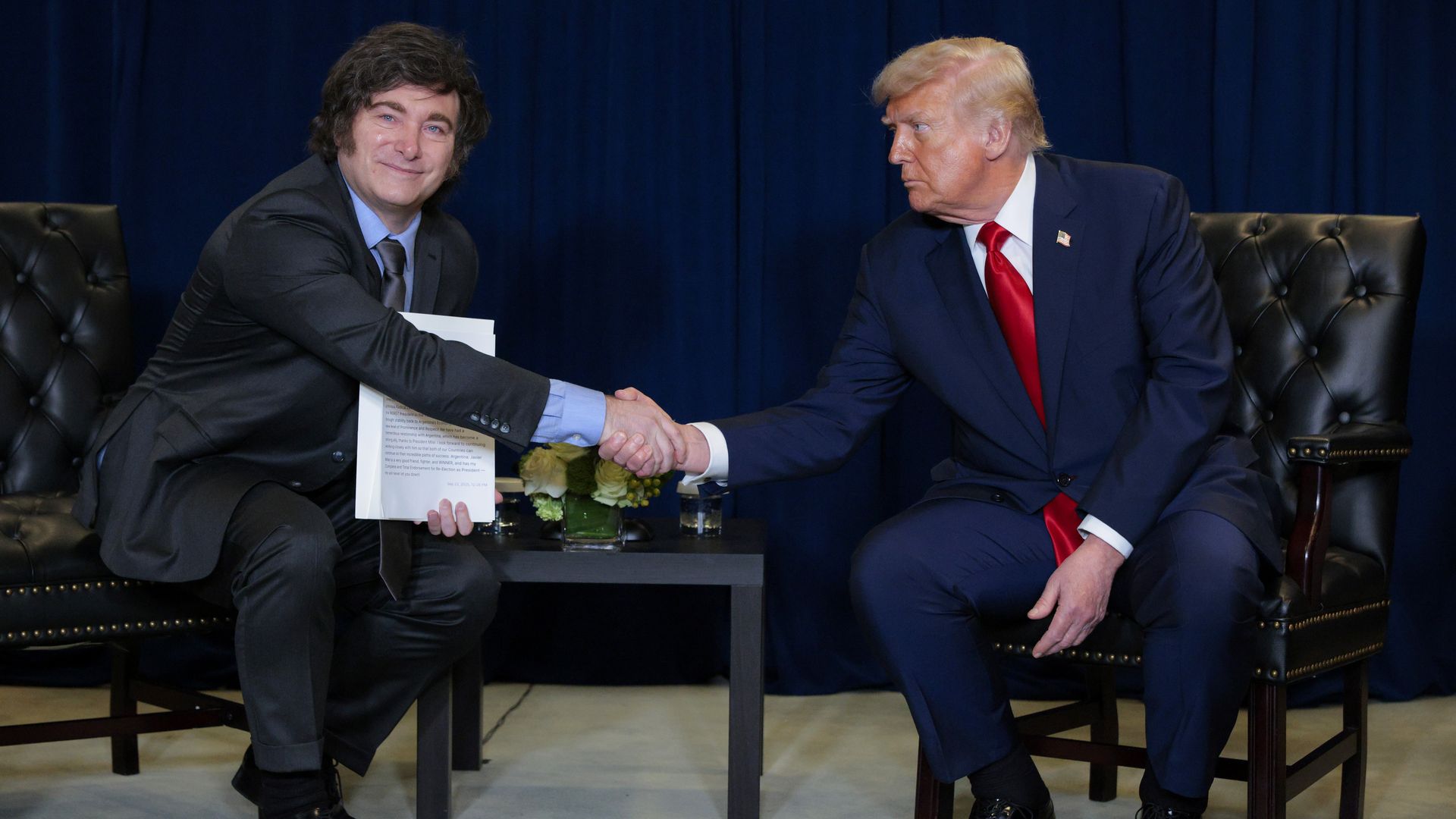
🌍 President Trump met with Argentina's president, Javier Milei, at the U.N. General Assembly yesterday, as Argentine assets extended gains off the back of potential U.S. financial support.
- Today: a dive into the geopolitical chess match between Argentina, China and the U.S. that has left American farmers sidelined.
- Plus: the latest example of retail investors getting a seat at the table.
Let's get into it. All in 1,253 words in 4.5 minutes.
1 big thing: The U.S. helped Argentina, then Argentine farmers made a deal with China

The Trump administration threw Argentina a financial life raft this week, and Argentina promptly responded by offering China an enticement in the form of untaxed soybeans.
Why it matters: It's a harsh blow to already struggling U.S. soybean farmers, and it illustrates the complex implications of rescuing a close ally.
Driving the news: On Monday, Treasury Secretary Scott Bessent announced concepts for broad financial support to stabilize Argentina's economy. Argentine markets and their currency, the peso, rallied on the news.
- Argentina, looking to rake in more capital, suspended its export taxes on several products Monday, including its 26% soybean tax.
- That attracted China, historically the top buyer of U.S. soybeans, to Argentina. China doubled Argentine soybean purchases overnight Tuesday to 20 cargoes, following an uptick earlier in the week.
- This further priced out U.S. soybean farmers, who are already grappling with a 20% tariff imposed by China on their soybeans.
- Several industry experts and farmers told Axios they have received zero orders from China this year and that measures like this are hurting their profits. Most years, China buys more than half the soybeans grown in the U.S., per the New York Times.
What they're saying: "The soybean farmers have been screaming for assistance since we took office," a senior Trump administration official tells Axios. "So this isn't new. And the president is going to help."
- The president has two pots of money through which he can distribute aid, and there's talk of diverting some tariff revenue to farmers, the official says.
As for Argentina: "You saw the interaction with Milei," the official notes, referring to Trump's meeting with the Argentine president and subsequent endorsement of his reelection at the U.N. General Assembly.
- "The president likes him. That goes a long way. But even so, Argentina is an important ally and we're determined to help where we can."
The big picture: Argentina is of major geopolitical importance to the Trump administration. Unlike other administrations in recent memory, the Trump administration has made Latin America a focus, especially as China gains a foothold in the hemisphere.
- Along with Chile, Argentina controls one bank of the Strait of Magellan at the southern tip of South America.
- Argentina is rich in natural resources, including oil and gas reserves, uranium and lithium used in batteries.
- Milei is governing in a Trump-like populist style and has repurposed MAGA as "Make Argentina Great Again."
What we're watching: Any developments on bailouts for domestic farmers.
- A USDA spokesperson said: "We are constantly assessing the farm economy and exploring the need for further assistance but have not made a determination if an additional program is needed at this time."
The bottom line: The U.S. propped up Argentina, and Beijing reaped the reward, potentially leaving American farmers as collateral damage.
2. U.S. farmers are caught in the crosshairs
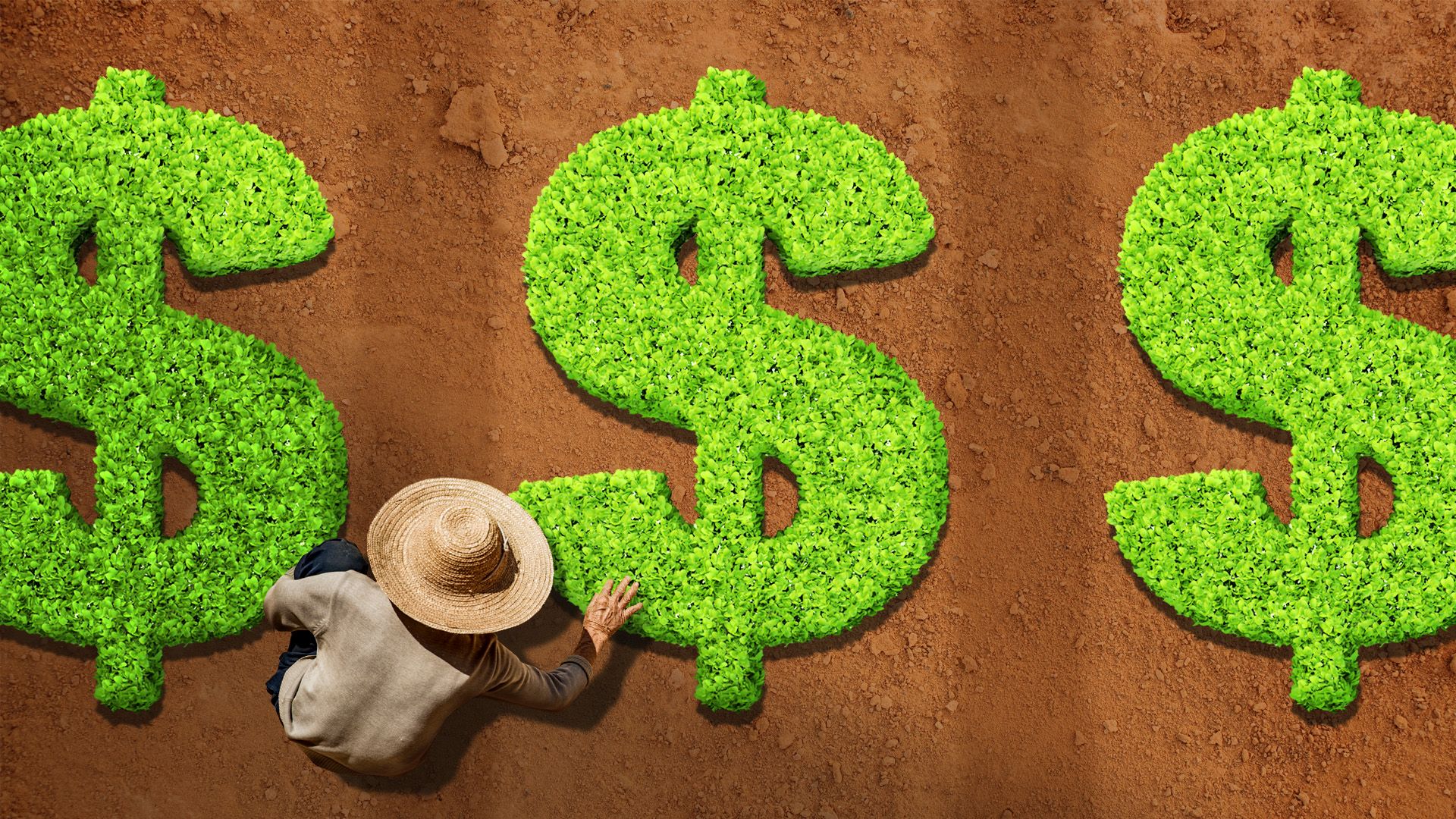
The pledge to stabilize Argentina's economy is squeezing soybean farmers who are already wrestling with the impact of U.S. trade policy.
Why it matters: Rural communities, a key voting bloc for Trump, stand to be hit by the administration's latest geopolitical chess move.
What they're saying: This is "troublesome" for Ohio farmers, Farm Bureau spokesperson Ty Higgins tells Axios.
- "There is a growing concern that as the harvest ramps up, the piles of corn and soybeans will not have the markets they once had, causing further downward pressure on commodity prices and the farmers' bottom line," Higgins says.
- In Minnesota, soybeans account for 25% of the state's total agricultural exports.
- "We want fair trade ... but when it starts impacting the demand, and it's ongoing like it is, it creates so much uncertainty for farmers," Minnesota Soybean Growers Association president Darin Johnson, a fourth-generation farmer, tells Axios.
Republican House members from soybean country aren't happy, either.
- "It is very unfortunate that as the U.S. is helping Argentina stabilize its economy they would undermine American farmers and weaken President Trump's negotiations with China," said U.S. Rep. Julie Fedorchak (R-N.D.).
- "This is a bitter pill for North Dakota soybean farmers to swallow."
The latest: The Trump administration is considering the use of tariff revenue to fund bailouts for U.S. farmers, according to Agriculture Secretary Brooke Rollins.
Zoom out: In the near term, consumers will likely see lower prices on soybean products, ranging from vegetable oil to soy milk to meat alternatives, says Jacquie Holland of the American Soybean Association.
- We could see the opposite effect in the long term, as farmers will likely stop planting soybeans this year, which could cause a supply shortage and drive up prices, she adds.
What we're watching: Tariff revenue was meant to, in part, address the federal government's ballooning deficit.
- If it's used to bail out farmers instead, that could start to roil bond market investors, potentially leading to higher rates despite the administration's push for lower levels.
With assistance from Monica Eng from Axios Chicago, Worth Sparkman from NW Arkansas, Kyle Stokes from Twin Cities, Alissa Widman Neese from Columbus and Kate Santaliz.
3. Exxon's auto-vote plan may blunt activism


The Securities and Exchange Commission isn't pushing back on Exxon Mobil's plan to overhaul how its retail shareholders vote, establishing a new hurdle for activists.
Why it matters: The strategy, the first of its kind for a public company, is a win for corporate America in its fight against Environmental, Social and Corporate Governance (ESG) activism.
Driving the news: The SEC granted no-action relief last week for Exxon's proposal, which will allow its retail shareholders to opt into a program that syncs their votes with the board's recommendations.
Zoom in: Retail shareholders make up 40% of Exxon's shareholder base, but the company says it hears from only 25% of them.
- The program aims to bridge that gap — in Exxon's interests.
- "When retail investors don't vote, shareholder feedback to the board is incomplete and missing a crucial component," the company wrote in a blog post.
- Fund managers BlackRock, State Street and Vanguard have all piloted some version of enrolled voting programs.
Catch up quick: Exxon has had a contentious relationship with activist proposals that have pushed pro-climate resolutions in the past.
- CEO Darren Woods said last year the company would sue activists it believed abused proxy rules.
What they're saying: Lawyers and bankers tell Axios they expect the new program to curtail such shareholder proposals, which can range from labor to environmental issues.
Yes, but: Greg Marose, a founder of the communications firm Longacre Square Partners, called the threat to activism a "rush to judgment."
- "We expect activism and investor voting participation to remain alive and well so long as the SEC is faithful to its mandate," he says.
What we're watching: Few companies have retail voting blocks the size of Exxon's. It's unclear how many companies could adopt a similar program.
- And even if they did, expect legal challenges.
Unlock the whole story and a steady diet of scoops and smart analyses by talking to our sales team about Axios Pro Deals.
👀 Got tips? Email me at [email protected]. I would love to hear from you about anything that may be of interest for our investor audience.
Thanks to Jeffrey Cane for editing and Katie Lewis for copy editing. See you tomorrow!
Sign up for Axios Markets