Axios Markets

October 17, 2022

🌅 Morning folks! As far as we know both Liz Truss and the head of lettuce are still both hanging in there. Here are a few other things to keep tabs on.
Today's newsletter is 963 words, 4 minutes.
1 big thing: China's shifting economic storyline
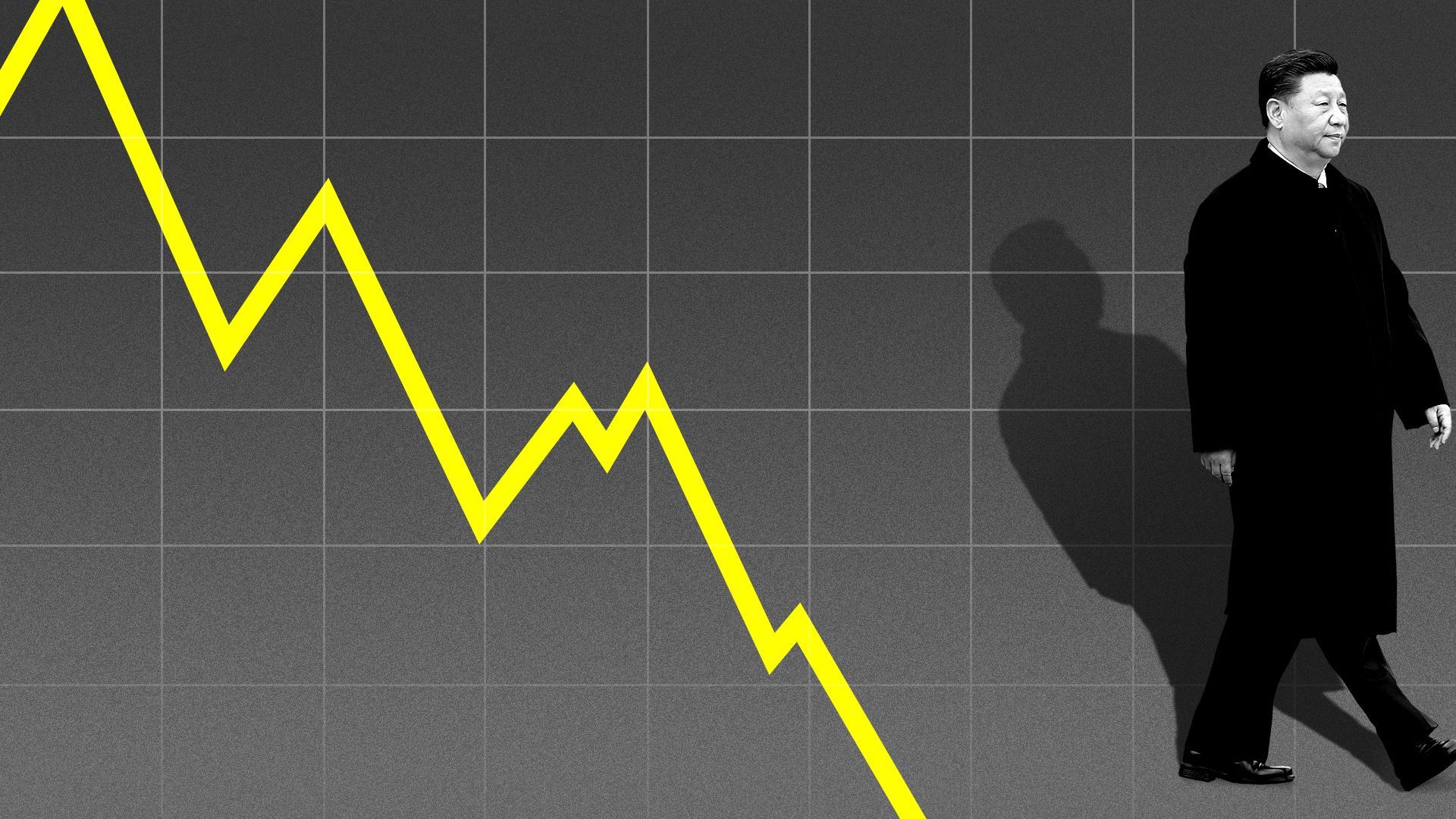
Photo illustration: Sarah Grillo/Axios. Photo: Lintao Zhang/Getty Images
Xi Jinping's third term ruling China won't be based on generating the kind of economic growth that defined the world economy in recent decades, Matt writes.
Why it matters: China drives economic decision-making worldwide, from the investments made by Australian iron miners and German automakers to the planting patterns of Argentine and Iowan soybean farmers — to the borrowing decisions of the U.S. government, for which China is a massive creditor.
Driving the news: Xi is all but certain to break with the traditional two-term limit for the country's leaders. He's expected to be named to a third term at the twice-a-decade congress for leaders of the ruling Communist Party, which just got underway.
- That will extend his tenure for another five years, cementing his revival of a personalized authoritarian style of leadership over the world's most populous country.
Backdrop: For decades, the party — members make up just 7% of the population — has based its legitimacy on China's massive economic growth, which has lifted nearly 800 million of its people out of extreme poverty.
Yes, but: China's economy is not just slowing fast — it's seriously struggling.
- Xi's own zero-COVID policy — and the repeated, massive and often incredibly harsh lockdowns of cities that serve as China's economic engines — has hobbled activity.
- The housing market — which accounts for as much as 30% of GDP once related industries are factored in — is in deep disarray, with prices dropping and developers tottering on the brink of bankruptcy.
- Longer-term prospects for economic growth look equally dismal, as collapsing birthrates will saddle it with lopsided demographics — and similar financial issues as Japan.
Between the lines: The downbeat outlook for the economy is a key reason the party has shifted the storyline that justifies its monopoly on power away from the economic performance, and toward a narrative that emphasizes restoring China to its rightful place as a great power.
Yes, but: In his opening address to the congress on Sunday, Xi reiterated that economic development remains the party's "top priority in governance," language that China's leaders have used since 2002, Bloomberg's Tom Hancock points out.
- Some analysts thought Xi could skip that statement this year, signaling a more serious pivot away from growth to security as the top concern for China's policymakers.
What to watch: Any announcement on who will replace retiring premier Li Keqiang, once considered the country's top economic official, in the Politburo Standing Committee, the seven-member group at the heart of political power in China.
- Li, closely connected to now-retired President Hu Jintao, had seen his power and influence ebb considerably in recent years, as Xi consolidated power.
2. Charted: Sputtering economy
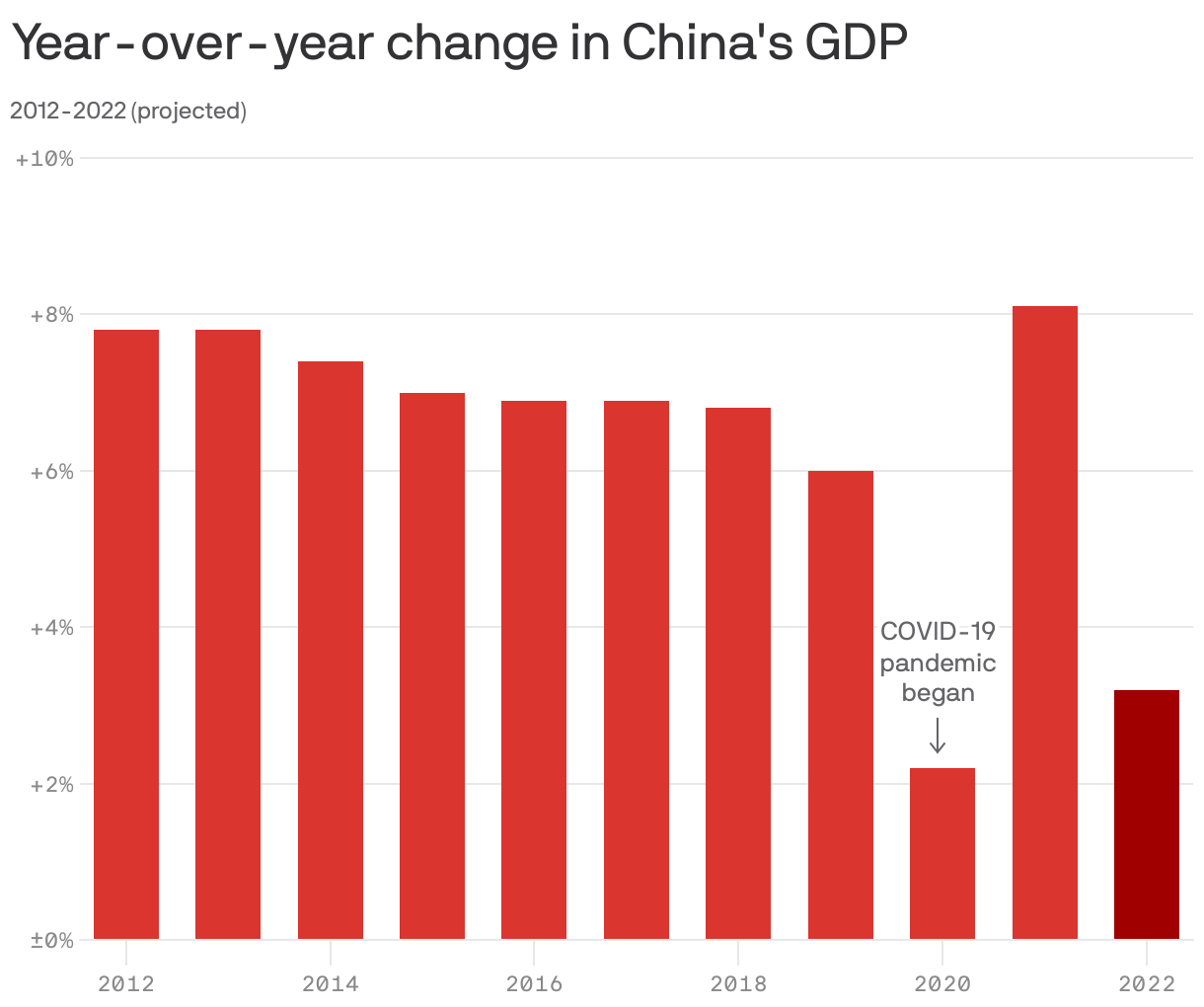
We're a long way from the double-digit economic growth China boasted in the late 1990s and early 2000s.
- That's just one of the challenges facing Xi Jinping in his third term, Axios' Han Chen and Bethany Allen-Ebrahimian report.
4. Another supply chain worry

Illustration: Annelise Capossela/Axios
The more the planet warms, the more likely it is that the U.S. will be unable to fully offset the economic damages from stronger, wetter hurricanes, a new study finds, Axios' Andrew Freedman writes.
Why it matters: The study is a warning that domestic supply chains need to be better prepared for worsening storms.
- Published this morning in Environmental Research Letters, it arrives just after Hurricane Ian struck southwest Florida, likely becoming one of the most expensive storms in U.S. history.
Zoom in: The study focuses on how the damages from storms like Hurricane Harvey, which inundated Houston in 2017, might change as global average temperatures continue to increase.
- Harvey caused $125 billion (in 2017 dollars) in direct damages, the study states.
- The researchers find that as storms grow wetter and more intense due to climate change (though they may be fewer in number), the economic consequences could overwhelm even the richest economies.
- “Our calculations show, for the first time, that the US economy as one of the strongest on our planet, will eventually not be able to offset the losses in their supply chains on their own," lead author Robin Middelanis of the Potsdam Institute for Climate Impact Research said in a statement.
Yes, but: This does not mean that stronger hurricanes will send the U.S. into an economic tailspin. Rather it signals bigger ripple effects to come throughout the U.S. economy and beyond when future hurricanes do strike.
- Supply chains in one part of the U.S. could take such a big hit that factories in other parts of the country would not be able to fully offset the lost production, the study finds.
- This could raise prices for consumers, akin to what's happening with supply chain woes today.
Editor's note: This item has been corrected to say Hurricane Harvey caused $125 billion in damage (in 2017 dollars), not $125 million.
5. 💬 Quoted: "Someone is going to be offsides."
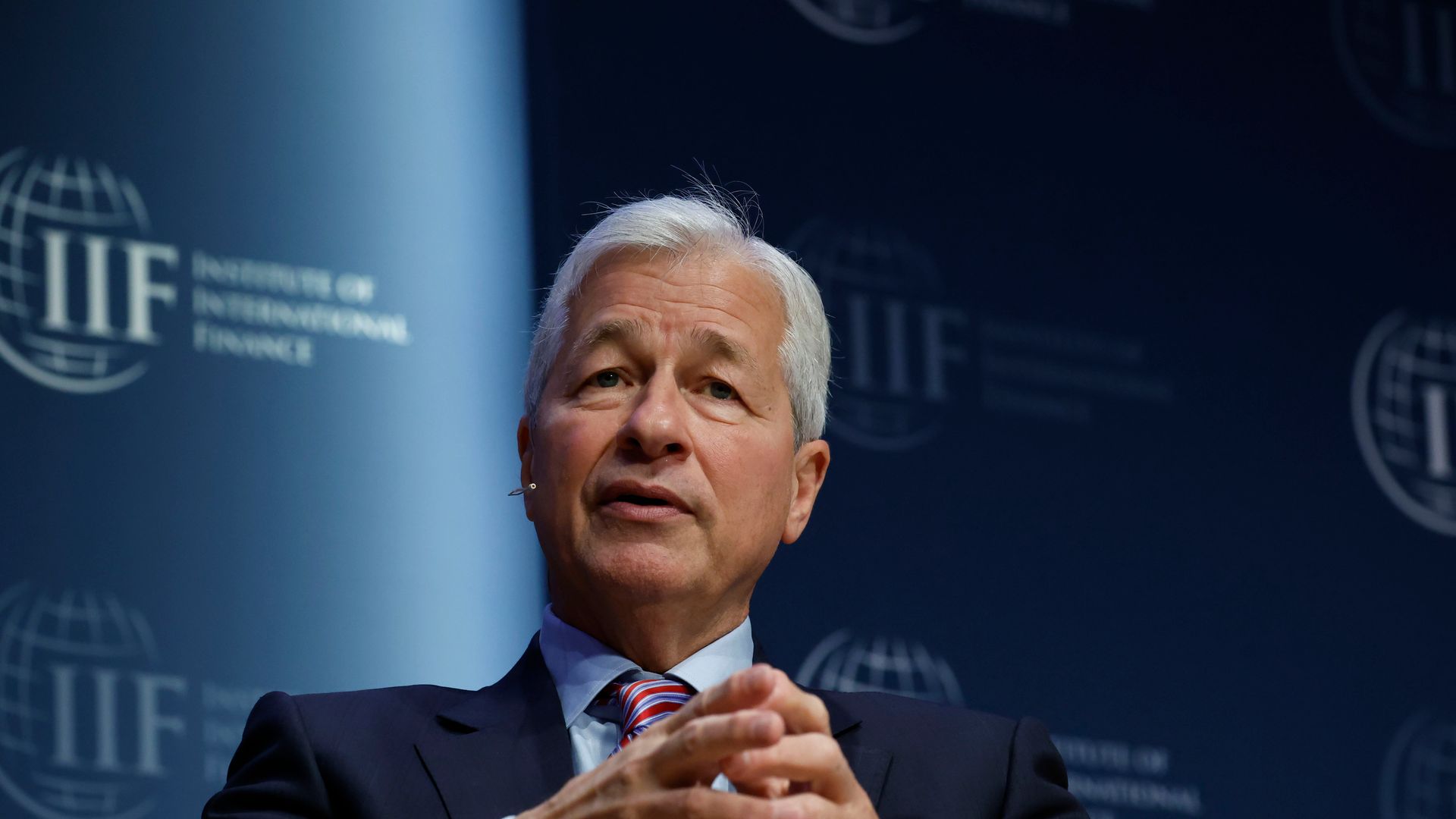
JPMorgan Chase CEO Jamie Dimon on Oct. 13. Photo: Ting Shen/Getty Images
"I was surprised to see how much leverage there was in some of those pension plans. And my experience in life has been when you have things like what we're going through today, there are going to be other surprises. Someone is going to be offsides.”— Jamie Dimon, CEO of JPMorgan Chase
Driving the news: During JPMorgan's earnings call on Friday, CEO Jamie Dimon riffed on whether the recent surge in interest rates could expose hidden risks in the market.
- His answer: It certainly could.
The backstory: A sharp surge in British interest rates set off by new U.K. Prime Minister Liz Truss' first fiscal policies earlier this month triggered big losses for British pension plans.
- It forced the Bank of England to intervene to short-circuit what could have been a serious financial crisis.
- The fallout has been swift, and severe. The finance minister was sacked, and Truss walked away from her policy proposals.
🚨 Join Axios BFD virtually on Oct. 26 ... Register to livestream interviews with Mark Cuban, NYSE president Lynn Martin, ESPN chair James Pitaro and more.
Was this email forwarded to you? Sign up here!
Today's newsletter was edited by Kate Marino and copy edited by Mickey Meece.
Sign up for Axios Markets

Stay on top of the latest market trends and economic insights