Axios Markets

October 28, 2026


1 big thing: Bond investors have gotten picky about AI
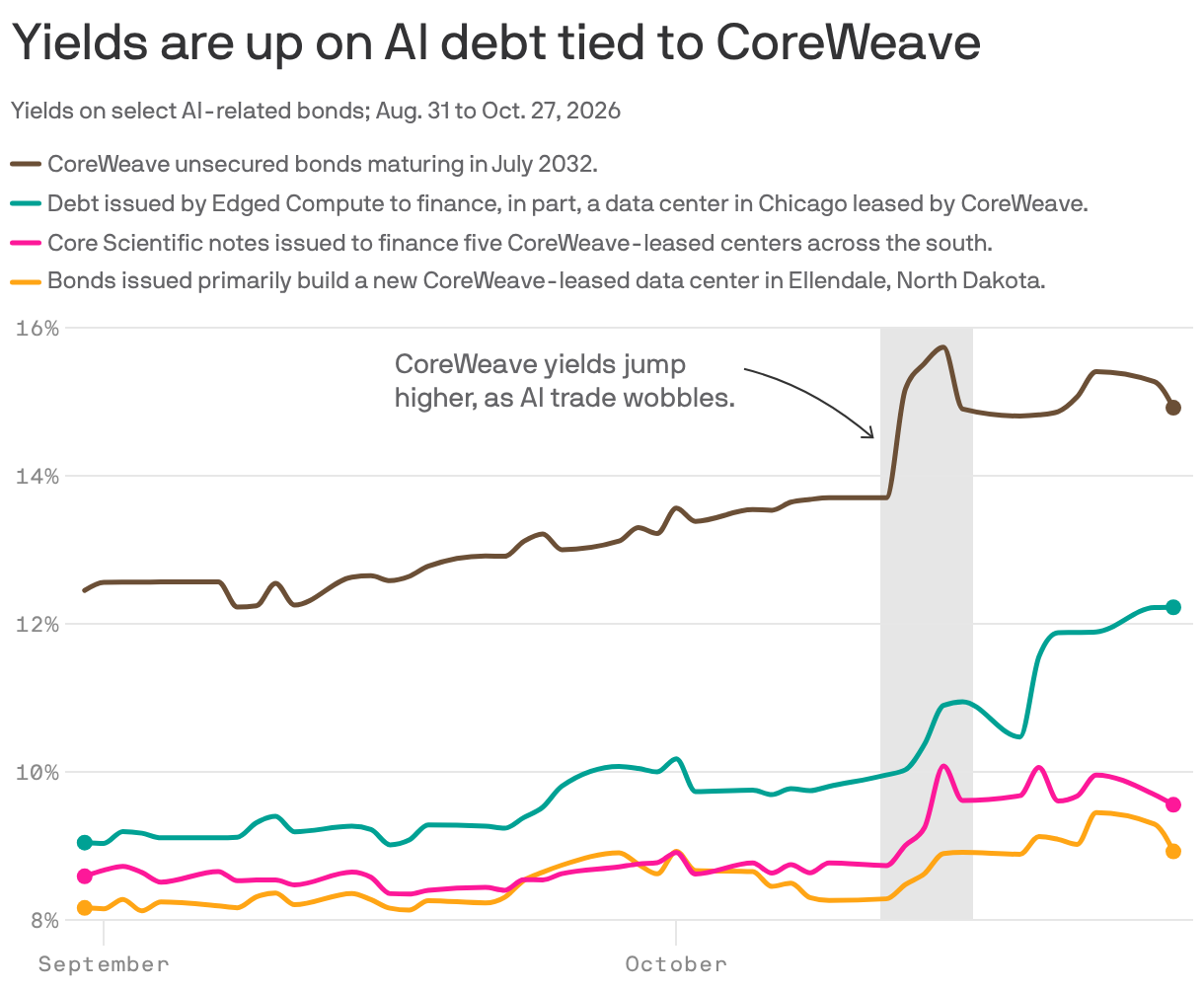
Even as AI borrowing roars on, the bond market is becoming more selective about which companies, projects and structures to finance.
Why it matters: Bond markets determine borrowing costs.
- And since the AI boom increasingly relies on debt, borrowing costs have become a key constraint.
State of play: On the surface, things have calmed down in the corporate bond market since earlier this month, when yields on bonds issued by the heavily indebted AI player CoreWeave soared. (Bond yields move in the opposite direction of their prices, so this means CoreWeave's bond prices tumbled.)
- That calm — plus the excitement over Anthropic and Meta — has helped rebuild confidence in the AI trade that is supporting the stock market.
Yes, but: A CoreWeave-shaped dent remains in the bond market.
- Prices show that investors are increasingly cognizant of the complex web of loans, ownership stakes, lease commitments and contractual obligations linking various players in the boom.
- And assets with links to the most heavily indebted players in the AI ecosystem, like CoreWeave and Oracle, are clearly seeing investors apply a chunky risk premium.
Case in point: After CoreWeave bonds tumbled two weeks ago, pushing yields on its own unsecured bonds to highs of around 16%, bonds that are financing the development of data centers that CoreWeave has leased — including those issued by developer Edged Compute and ex-bitcoin miners Core Scientific and Applied Digital — also saw yields creeping higher. (See the chart, above.)
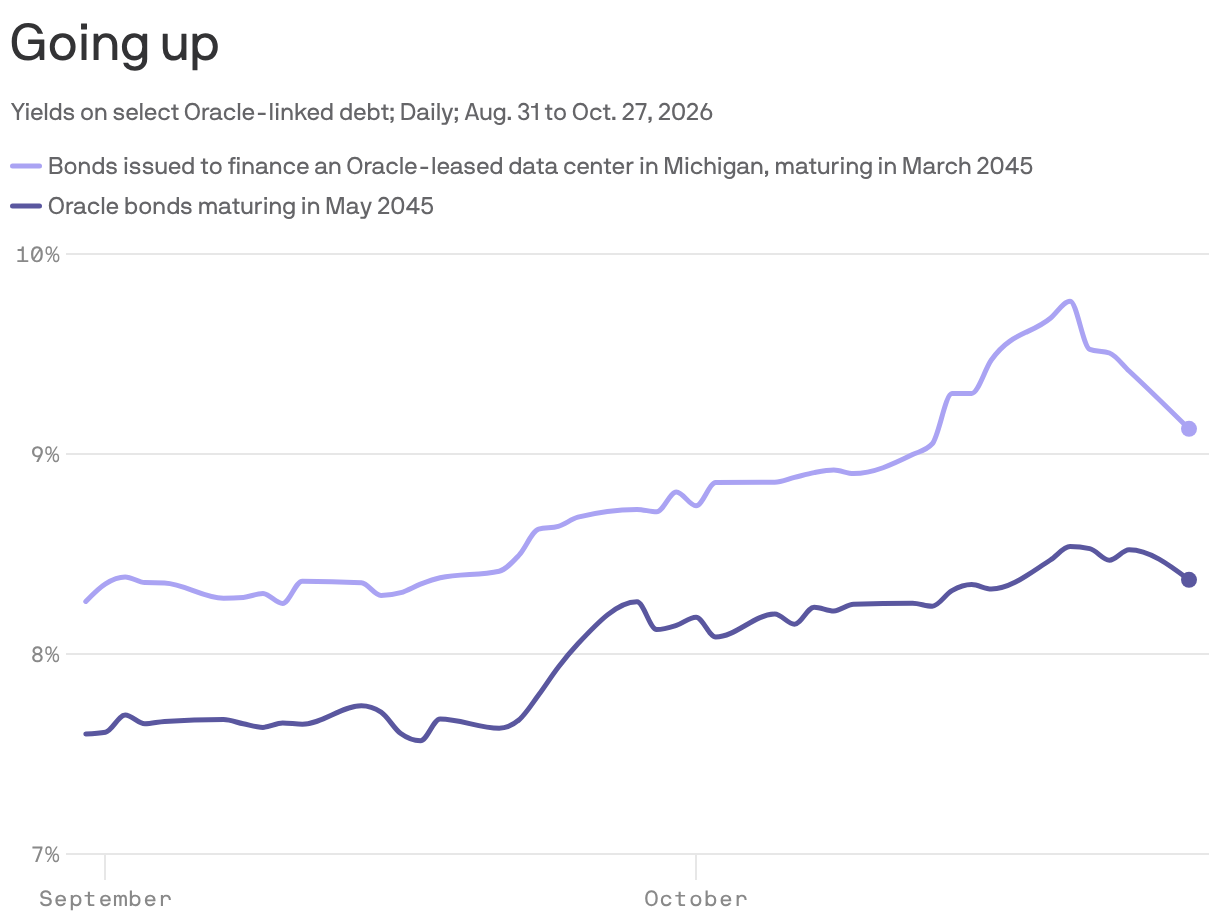
- Likewise, the yields on the debt of data centers contracted to Oracle have moved in sympathy with swings in the price of bonds issued by the heavily indebted hyperscaler itself.
- For instance, yields on roughly $14 billion worth of bonds maturing in 2045 issued to pay for the construction of a large data center campus in Saline Township, Michigan, wobbled alongside those of Oracle over the last couple of weeks. (Oracle's signed 17-year lease for the data center is a major supporting element of the bonds, ratings agencies say.)
What they're saying: "Tenant-specific risk was exposed during the October pullback, with CoreWeave and its associated neoclouds and data centers bearing the brunt of the selloff," wrote high-yield debt analysts at Citigroup last week, adding that data center bonds "are not immune to tenant default risk and can reprice quickly as that risk escalates."
- The story is largely the same in the world of safer investment grade debt, where the market has gone from treating AI-related bonds as somewhat interchangeable to differentiating starkly between different borrowers and bonds.
- "The market has moved from trading AI as a theme to pricing issuers differently," analysts at Barclays wrote.
The bottom line: "We expect differentiation to persist as investors refine their views on the winners and losers of AI spending," the analysts said.
2. OpenAI's new model cuts prices again
OpenAI has launched a cheaper GPT-6.1 Terra model, costing up to half as much per token as the previous version.
Why it matters: Prices for tokens — a basic unit for AI usage — have been falling sharply, raising questions about both the strength of the demand for AI and how much revenue the data center boom will ultimately create and shower on investors.
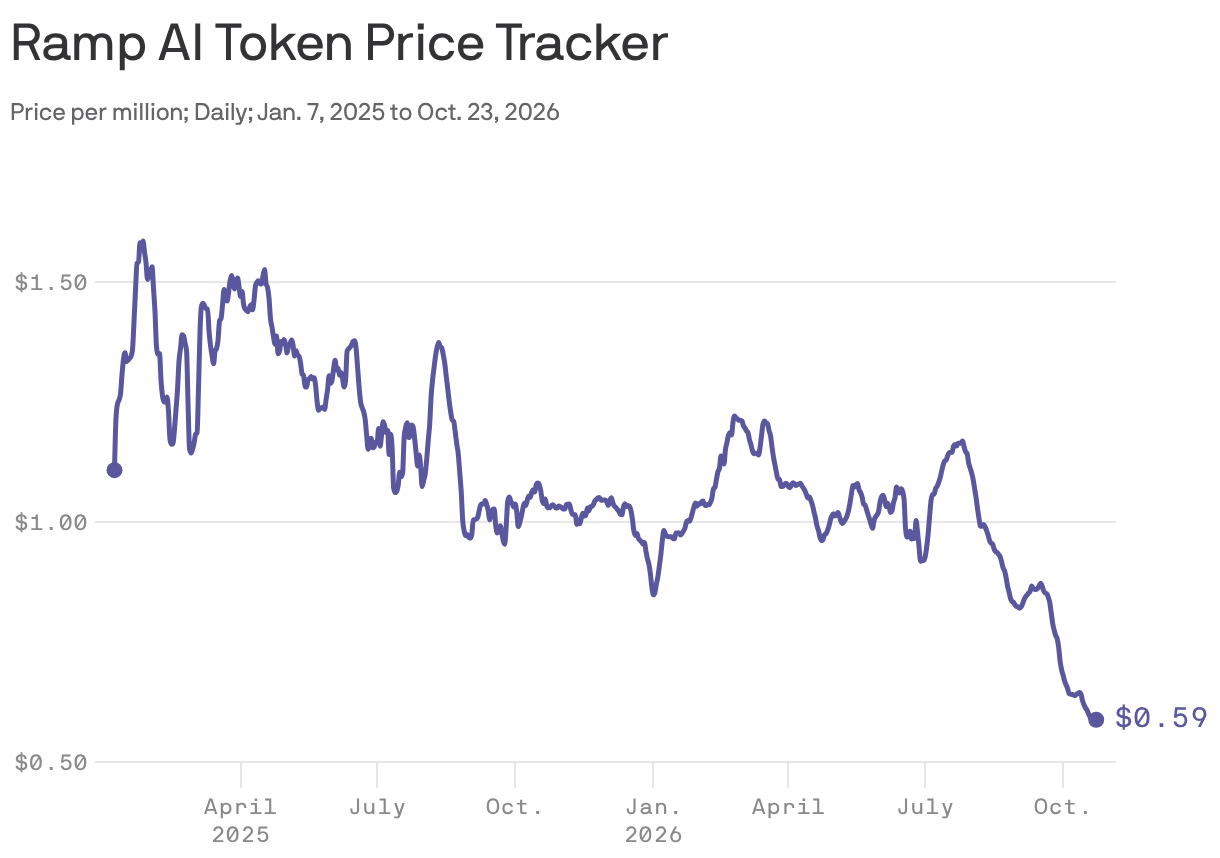
The latest: According to an AI token price index from corporate expense management firm Ramp — which uses actual corporate spending on AI from Anthropic and OpenAI to generate its numbers — token prices have dropped to roughly 59 cents per million tokens as of last Friday.
- That's down roughly 35% since the end of June.
Zoom out: Essentially, a price war has broken out between the two giant AI model makers — not something that usually happens during periods of soaring demand.
Yes, but: Token usage has also surged, evidence, AI boosters say, that as the cost of AI computing power declines, adoption of the technology will surge, delivering the riches everyone seems to be counting on.
The bottom line: That may be true. But what investors are concerned about isn't token usage, but token spending, which is a matter of both usage and prices.
- And recent numbers, also from Ramp, show what looks like a flattening in spending growth.
Axios Markets