Axios Markets

January 06, 2025

☕ Welcome to the first Monday of the new year — and so it begins.
Today we take a deep dive into Fannie Mae and Freddie Mac: why their futures are so incredibly complicated, what Bill Ackman has to do with their fate, and the many thorny questions the Trump administration will have to answer.
All in 1,180 words, a 4.5-minute read.
1 big thing: Bill Ackman gets back into activism
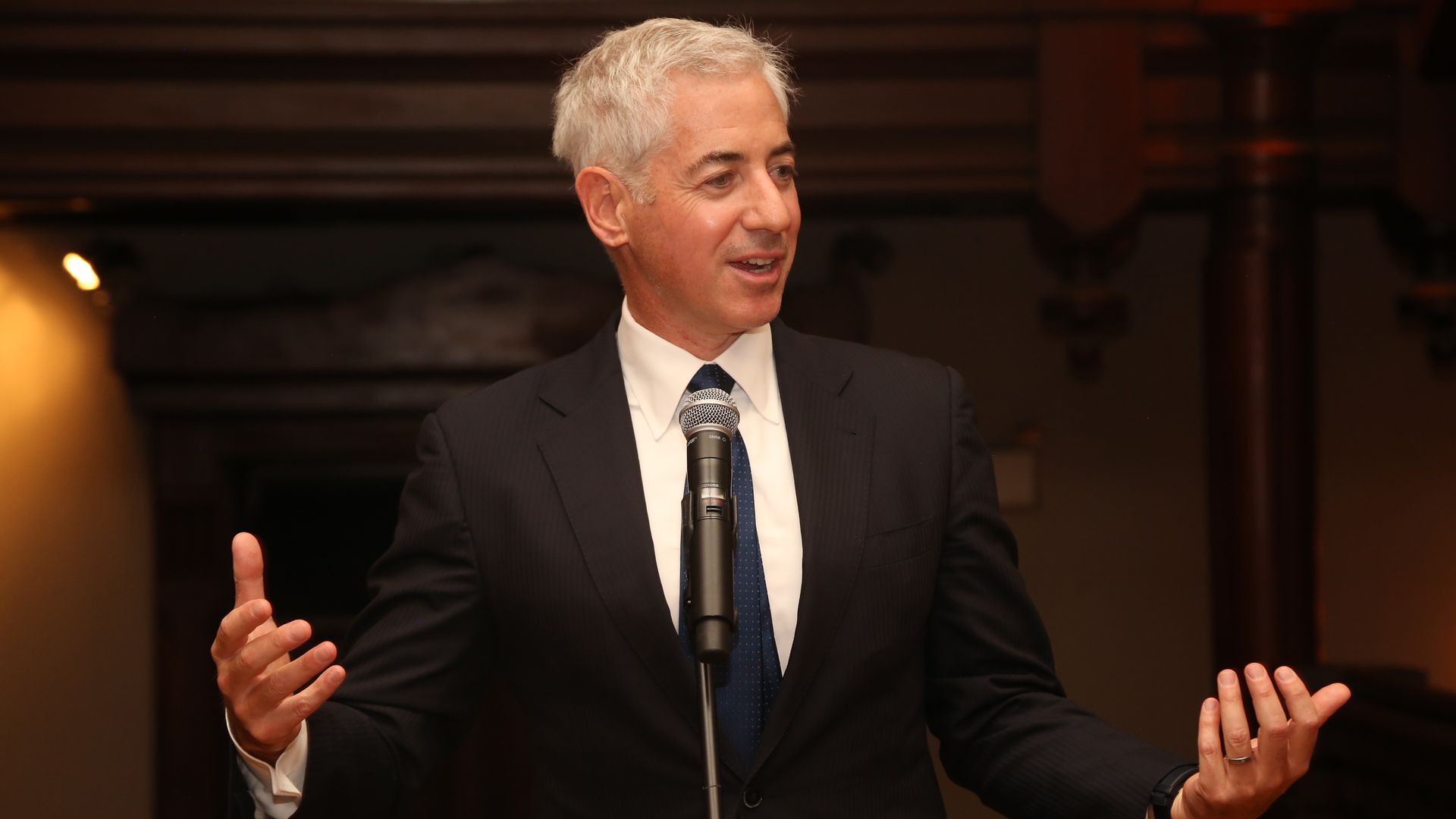
In the latest iteration of Bill Ackman's activist investing career, the billionaire hedge fund manager is using the power of his 1.5 million followers on X to try to influence one man in particular: Donald Trump.
Why it matters: The president-elect is very likely to both create and destroy fortunes by executive decree.
- Huge sums of money can therefore be made if it's possible to influence Trump's actions — and social media has supplanted Fox News as the medium of choice by which to reach him.
Driving the news: Last week, Ackman laid out a thesis for how he thinks the government should exit its positions in Fannie Mae and Freddie Mac, the so-called government-sponsored enterprises, or GSEs. Such an action, he said, would benefit shareholders in the two companies, including himself.
- Ackman has held this thesis — and this position — for over a decade, during which period very little progress has been made toward releasing the GSEs back into the private sector. Nevertheless, Ackman hasn't given up hope.
- Being sure to tag the president-elect in his tweet, Ackman wrote: "I expect that in the second @realDonaldTrump administration, Trump and his team will get the job done."
- Ackman will go public with a more detailed presentation of his thesis next week, per a source familiar with the matter.
The big picture: For the past few years, Ackman has been unusually quiet as an investor.
- As he explained in a letter to investors in 2022, his investment firm Pershing Square graduated successively from Pershing 1.0, where he used the "transactional activism" playbook to push companies to take actions that would juice the stock price, to Pershing 2.0, where he joined the board and took more direct control of medium-sized companies like General Growth, to Pershing 3.0, where he takes a more passive stake in larger companies.
Where it stands: Ackman's approach to his position in the GSEs is reminiscent of Pershing 1.0, but in this case, rather that seeking to pressure the board or the management of the companies he's investing in, Ackman is looking instead to get the president of the United States to act in accordance with his wishes.
- Ackman is aided in this quest by the power of his X account writ large, which in recent months has become loudly pro-Trump and pro-MAGA.
Between the lines: The details of any plan to release the GSEs from government control get fiendishly complicated very quickly. (More below.)
The bottom line: Almost everybody in Trump's orbit likes the idea of releasing the GSEs in theory.
- The big question is whether Ackman can persuade the president that the government's current fiscal balance — which includes hundreds of billions of dollars owed by the GSEs to the Treasury Department — is a function of bad accounting, and that the money they borrowed should be considered to have already been repaid in full.
2. Fannie Mae and Freddie Mac quagmire


Ackman's social media posts aside, there is a broad-based desire to wrest Fannie Mae and Freddie Mac from federal control once Trump takes office.
Why it matters: These two companies are the backbone of the U.S. housing market — together they support around 70% of U.S. mortgages.
- Messing with their structure poses risk to the economy, and at the very least could raise mortgage rates even further.
State of play: Last week, the Treasury Department and the Federal Housing Finance Agency, which oversees the two companies, released a roadmap for how privatization could work.
- In a sign that investors believe there's a real chance privatization could happen during Trump 2.0, GSE stocks jumped on the news.
- Mortgage Bankers Association chief lobbyist Bill Killmer told Axios it's highly likely that the issue will at least be examined during the new administration, following several other reports.
- Trump did not address the GSEs during the campaign or since his election. "No policy should be deemed official unless it comes directly from President Trump," Karoline Leavitt, spokeswoman for the transition, said in an email.
Reality check: This roadmap is a memo from a lame-duck administration, and the incoming Trump team could simply reverse it.
- But the idea was to put up some guardrails up so the new administration doesn't act too recklessly in getting rid of federal oversight, said Jim Parrott, who was a housing adviser in the Obama administration.
- He describes it as "a good governance move just to make sure that the new guys don't f--k things up too badly."
Zoom in: The roadmap lays out a process for privatization. It requires that the federal government gather public comment before making any moves and that Treasury be involved.
- But it doesn't go into the nitty-gritty details of how the process would work.
The big picture: Any such process would be pretty gnarly.
- Various policymakers and politicians have been trying to do it for years, with no success. An effort during the first Trump administration fell short.
Flashback: Fannie Mae and Freddie Mac lost more than $200 billion after the financial crisis hit in 2008 — vastly more than they had in cash.
- They were the epitome of "too big to fail," so the government bailed them out by lending them billions of dollars they found themselves unable to repay.
- Those debts were eventually restructured in a series of events that ended with the government owning 80% of the companies and having full rights to their profits, whether retained or paid out.
- Common shareholders are left with nothing.
3. Solving the problem
Fannie and Freddie are now very profitable, meaning they would be very valuable were they fully public companies where profits flowed to shareholders.
- However, such an action would involve Treasury giving up a valuable asset, while it's still owed an enormous amount of money.
- Its "liquidation preference" — money owed to Treasury after earnings were retained to beef up capital — is $212 billion from Fannie Mae alone.
What's next: Fannie and Freddie both exist to borrow money on the capital markets at a risk-free rate. They can do that at the moment because they are part of the government.
- As private companies, however, without a government guarantee, they would almost certainly lose their triple-A credit rating — and their debt would be considered risky for the purposes of calculating bank capital.
- Both things would make their borrowing costs rise substantially, cutting into their profits. Those higher borrowing costs would then flow through into higher mortgage rates for the general population.
Between the lines: Most housing experts, both liberals and conservatives, say that the key to privatization is giving these entities an explicit guarantee of a federal backstop in case things go badly.
- In theory, a procedure called credit risk transfer can achieve this without leaving the government with a multitrillion-dollar contingent liability. In practice, that only increases the costs of GSEs even further.
The bottom line: No one has yet come up with a plan that extracts the GSEs from government control, repays Treasury what it's owed, makes sure the GSEs pose no systemic risk to the financial system, and prevents mortgage rates from rising.
- Probably because such a plan is all but impossible.
Thanks to Ben Berkowitz for editing and Anjelica Tan for copy editing. See you back here tomorrow!
Sign up for Axios Markets