Axios Markets

May 14, 2026

🫡 Oh, hey, glad you're back. This morning, the U.S. and China kicked off two-day talks in Beijing, and U.S. stock futures point to a positive open after surging yesterday. Investors are awaiting today's trading debut of AI chipmaker Cerebras Systems, the biggest IPO this year (so far — more below).
🚀 Today, a look at the SpaceX rocket ship about to change the fabric of the stock market. Plus, all of a sudden energy — electricity, oil, etc. — is holding back the economy.
Let's discuss. In 1,168 words, a 4.5-minute read.
1 big thing: The coming stock tsunami
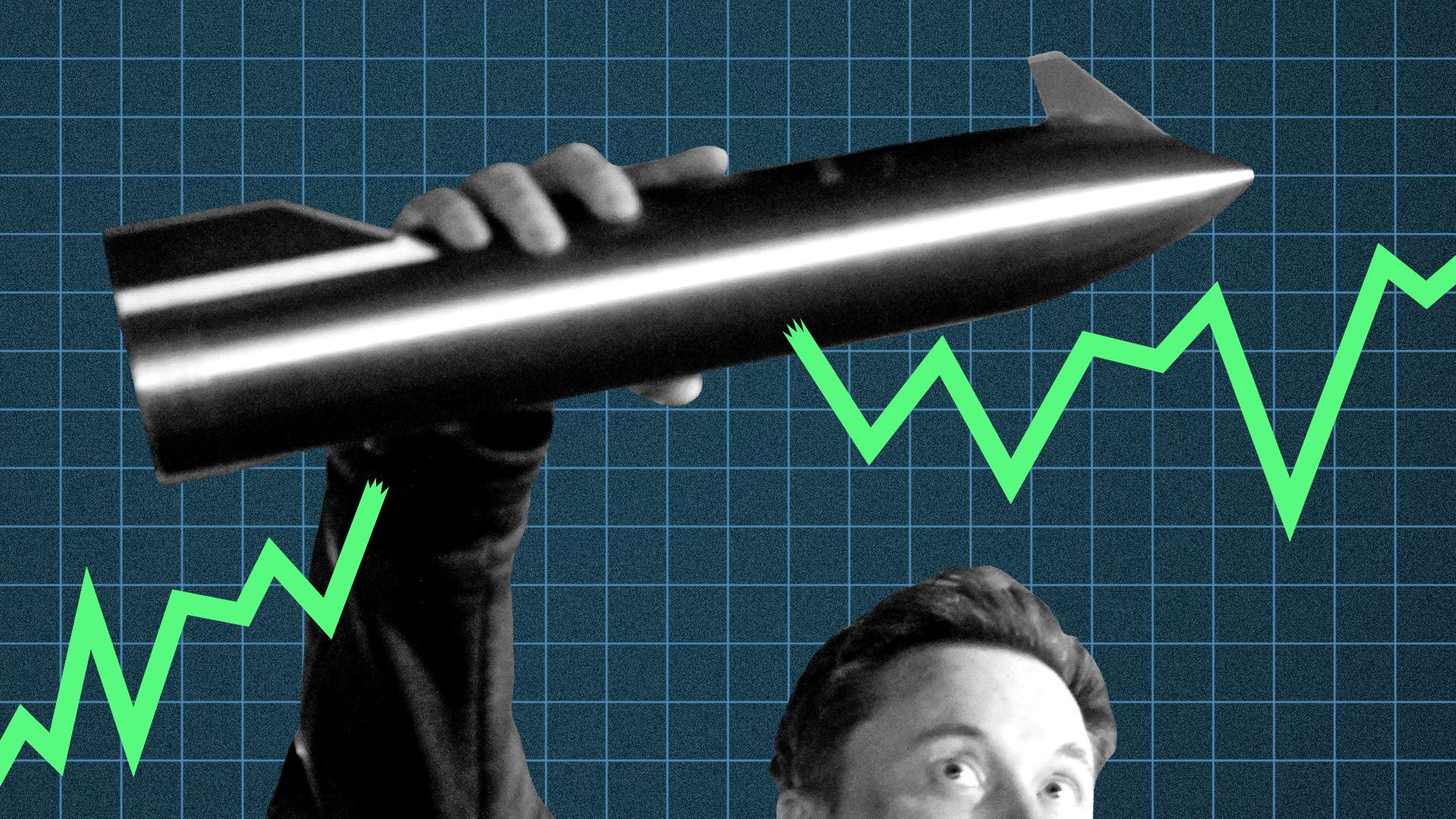
Elon Musk's $1 trillion-plus SpaceX isn't a public company yet, but its size and ambitions are already upending the stock market and sparking questions over the power and influence wielded by such behemoths.
Why it matters: The IPO, expected next month, would signal the start of a new AI era for the public markets, potentially valuing SpaceX as much as $2 trillion.
The big picture: OpenAI and Anthropic are also expected to IPO this year — possibly translating into $5 trillion in value in the markets, estimates venture capitalist and MIT research fellow Paul Kedrosky.
- The new stocks will hit the markets like a tsunami, he says.
- The IPOs will trigger an enormous wave of demand from investors who will pull money out of other assets to buy — sort of like how the ocean pulls back before it crashes over the beach and into the surrounding area upending everything.
- The "scale and consequences" will be massive, he says.
The latest: The S&P 500 is considering changing its rules to fast-track SpaceX's inclusion into the benchmark index.
- If that happened, it would guarantee lots of buyers for the stock — index funds, which make up an increasingly large share of the market, would effectively be forced to invest.
Friction point: Critics say the changes are unfair and distort the stock market.
- "The rules are being rewritten to benefit IPO issuers and early-stage insiders, and your capital is the tool being USED to enrich them," writes long-time investor George Noble on Substack.
- The proposal is "egregious," argues Wall Street Journal columnist James Mackintosh, saying that it is an acknowledgement that there are different rules for the big companies.
Yes, but: The market is changing to accommodate these mega IPOs not because of some conspiracy, but because the indexes want to reflect reality.
- "Investors want indexes to be representative of the market," says Jay Ritter, the director of the IPO initiative at Warrington College of Business at the University of Florida.
- "These companies likely would be included sooner or later unless they totally collapse, so it's mainly a question of timing."
Catch up quick: Nasdaq has already changed its rules for SpaceX to allow for fast-tracking onto the Nasdaq 100 index, which features the biggest tech companies.
Where it stands: The S&P is considering changing the rules for companies it calls "MegaCaps," defined as those with a value that puts it within the top 100 largest by market capitalization. The three proposed changes are:
- There would no longer be a requirement that a company be profitable. (We'll know if SpaceX is profitable or not when its prospectus is made public.)
- The 12-month wait to get included on the index would be cut to six months.
- A requirement that a company needs to offer up at least 10% of its stock to the public would be eliminated. (SpaceX reportedly will have just a 5% float.)
Follow the money: In the 1980s and '90s most companies that went public were profitable. But in this century, most haven't been, Ritter says.
- "Some of these rules were decided on many decades ago, when the world was a bit different from now."
What to watch: If the proposed rule changes are approved by the May 28 deadline, they would take effect before the market opens on June 8, presumably ahead of the IPO.
2. The energy squeeze


Energy — whether it be oil for cars or electricity for data centers — is suddenly the world's biggest constraint.
Why it matters: We're confronting both unprecedented scarcity and demand for energy on a timeline that's considered remarkably sudden for the usually slow-moving energy sector.
Driving the news: Higher oil prices fueled by the Iran war are the main driver behind rising inflation. Energy costs were up 18% in April, from the same period a year ago.
Meanwhile, trouble is also lurking in our power lines.
- The nation's grid watchdog took the unusual step last week of issuing its highest level warning that exploding power demand from AI data centers could strain electricity systems.
How it works: At first glance, the Iran war and the AI boom may not seem to have much overlap.
- Oil is primarily used in transportation, after all, so most of the impact hitting the economy is through gasoline and driving.
Data centers, on the other hand, require electricity, which is not directly impacted by the war (at least in the U.S., thanks in part to ample supplies of domestic natural gas).
- Even though U.S. electricity isn't directly affected by the war, power prices are going up anyway — partly due to data centers.
Friction point: Voter discontent with high power prices could collide with parallel discontent with high prices at the pump.
- High energy prices could help fuel growing populist sentiment across the country that's also being fanned by worry about AI displacing jobs.
What they're saying: "Whether the issue is oil-supply disruption or power-sector strain, the lesson is the same," said Jason Bordoff, founding executive director of Columbia University's Center on Global Energy Policy.
- "When energy is unavailable, unreliable or unaffordable, economies slow, public anxiety rises, and policymakers have little room to focus on anything else."
Yes, but: Data centers are driving a far larger share of power growth in the U.S. compared with the world as a whole, according to the International Energy Agency.
The bottom line: The next phase of the global economy will be shaped by who has energy — and who doesn't.
Sign up here for the Axios Future of Energy newsletter.
3. Share of women on boards drops below benchmark

The share of women on the boards of public companies dipped slightly below 30% in the first quarter of the year, per a new report from advocacy group 50/50 Women on Boards.
Why it matters: Efforts to get more women into the upper echelons of corporate America are reversing amid a ferocious backlash.
- A minimum level of 30% representation is considered a critical threshold for women — who are less likely to be sidelined if there's more representation.
Zoom in: 29.9% of Russell 3000 company board seats were held by women in the first three months of this year, down from 30.4% at the same time last year, according to the analysis done in collaboration with Equilar.
- 80 companies had no woman on the board.
Send me tips and story ideas: [email protected] or reply to this email.
Thanks to Jeffrey Cane for editing and Carlin Becker for copy editing this edition.
Tell your friends to sign up here. You can also hit me up on X.com or Bluesky at EmilyRPeck.
Sign up for Axios Markets