Axios Markets

March 02, 2022
Good morning. Markets are jittery as the West effectively severs big connections between Russia and the world economy.Â
Today's newsletter is 1,151 words, 4.5 minutes.
1 big thing: $100+ oil is the new reality
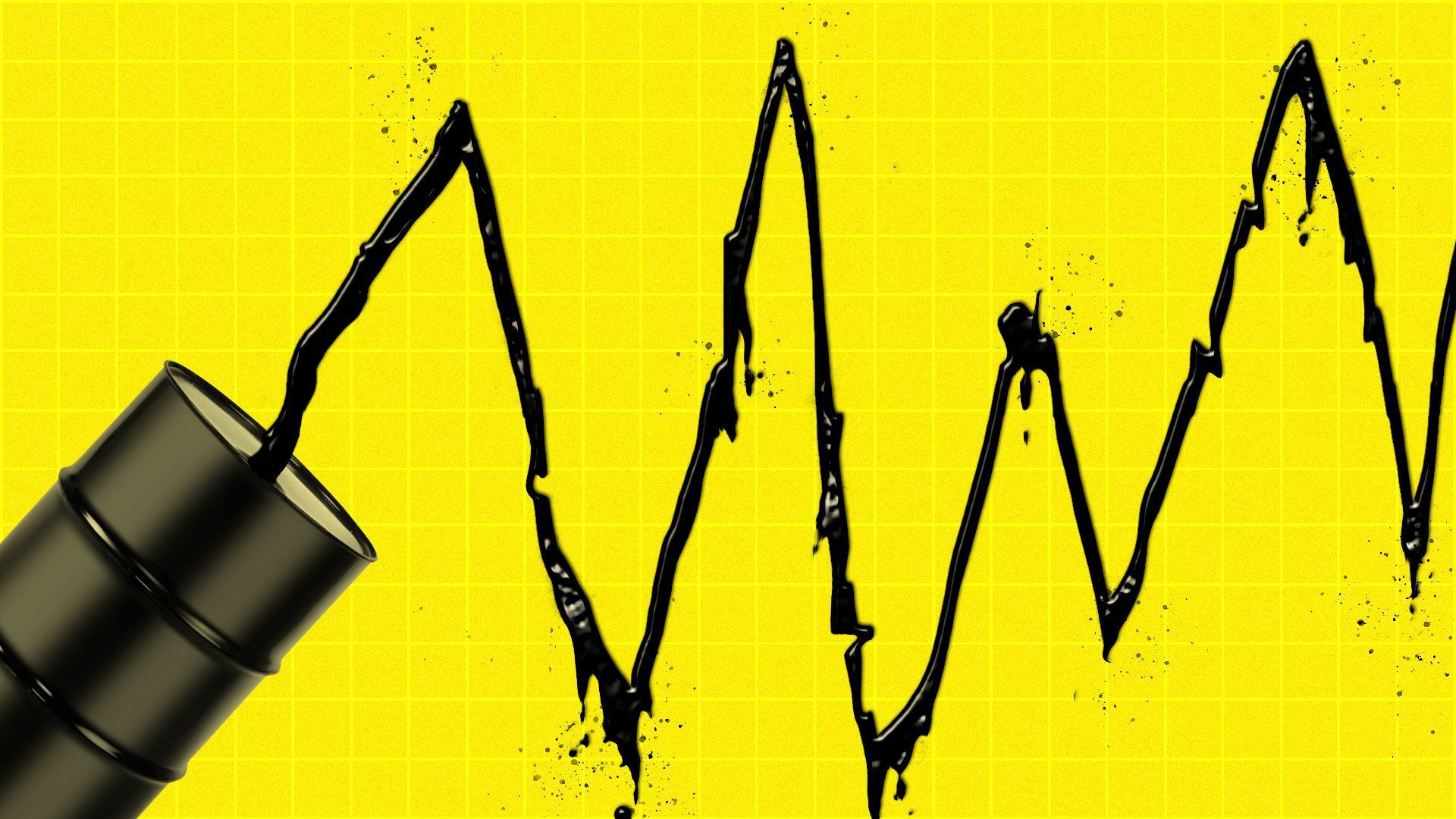
Illustration: Shoshana Gordon/Axios
Energy costs continue to spiral higher, with U.S. and European crude benchmarks both leaving the century mark in the dust, Matt writes.
- West Texas Intermediate, the U.S. oil benchmark, rose to as high as $111.50 early today, according to FactSet data.
- Brent crude, the European reference point for oil, nearly climbed to $113 in early trading today.
- This is the highest oil prices have been since August 2013.
What it matters: Surging crude oil costs underscore how sanctions aimed at Russia could also hurt the domestic economies of the Western nations that imposed them.
What's happening: The war.
- Russia is the world's third-largest producer of crude oil — the Russian benchmark grade is known as Urals — and its second-biggest exporter, sending nearly 8 million barrels per day onto the world market last year.
- A combination of sanctions and commercial decisions by shippers and insurers to steer clear has cut that contribution to global supplies sharply over the last week.
What they're saying: "Proposed sanctions that would either blacklist Russian oil supplies or blacklist the financial tools to purchase Russian crude is already hitting Urals crude," wrote analysts at energy consulting firm Rystad in a client note yesterday.
- With buyers taking fewer barrels of Russian oil, those purchasers are driving prices higher elsewhere.
Yes, but: That's a geopolitical victory, depriving Russia of revenue it desperately needs to keep its economy functioning. Still, it comes at a cost.
- With rich nations still grappling with post-pandemic inflation, surging oil costs — a key determinant of gasoline prices — will only make the prices pinching voters that much more irritating (it's natural gas prices, too — see below).
- If the daily drama of the war in Ukraine starts to fade from public view, and inflation persists, the political costs of inflation could test the unity that the West has shown in its stance toward Russia
What we're watching: How effective Western leaders are at convincing their populations to bear the pain associated with taking action against Russia — or at mitigating it.
- Yesterday, the U.S. and other members of the International Energy Agency said they would release 60 million barrels of oil reserves.
- U.K. Prime Minister Boris Johnson this week warned of Britain's vulnerability to an energy shock.
- And last night at his State of the Union address, President Biden noted that the U.S. would release 30 million of its strategic reserves as part of the IEA effort and would "do more if necessary, unified with our allies."
2. Catch up quick
📱🚢 Apple, Google and Ford halted sales to Russia; Maersk and MSC suspended container shipping to and from the country. (Reuters)
🛢 ExxonMobil pledged to cease new investments in Russia. (Axios)
💳 Russian customers of sanctioned banks are cut off from paying for foreign goods and services. (WSJ)
3. 🇪🇺 Europe's natural gas problem gets worse


European natural gas prices have risen an astounding 60% this week, as investors panic about disruptions to supplies, Matt writes.
Driving the news: Benchmark natural gas prices briefly touched a record high of €194 euros per megawatt-hour today.
Why it matters: Europe gets 40% of its natural gas from Russia. Gas is crucial for heating homes, power generation and industrial activity on the continent, and the surge could upend its economy.
- Last summer, the gas market became the first battlefield of what is rapidly becoming an economic war between Russia and the West.
What they're saying: "Market participants have been contemplating the potential for supply disruptions," wrote natural gas analysts at JPMorgan yesterday. "And undoubtedly the probability of a supply disruption is increasing as we pen this publication."
- Yes, but: For now, Russian gas continues to flow west. But military destruction of pipelines in Ukraine, sanctions, or Russian political decisions to cut supplies are all at risk, analysts say.
Go deeper: Putin's (natural) gaslighting of Europe.
4. Powell in the hot seat
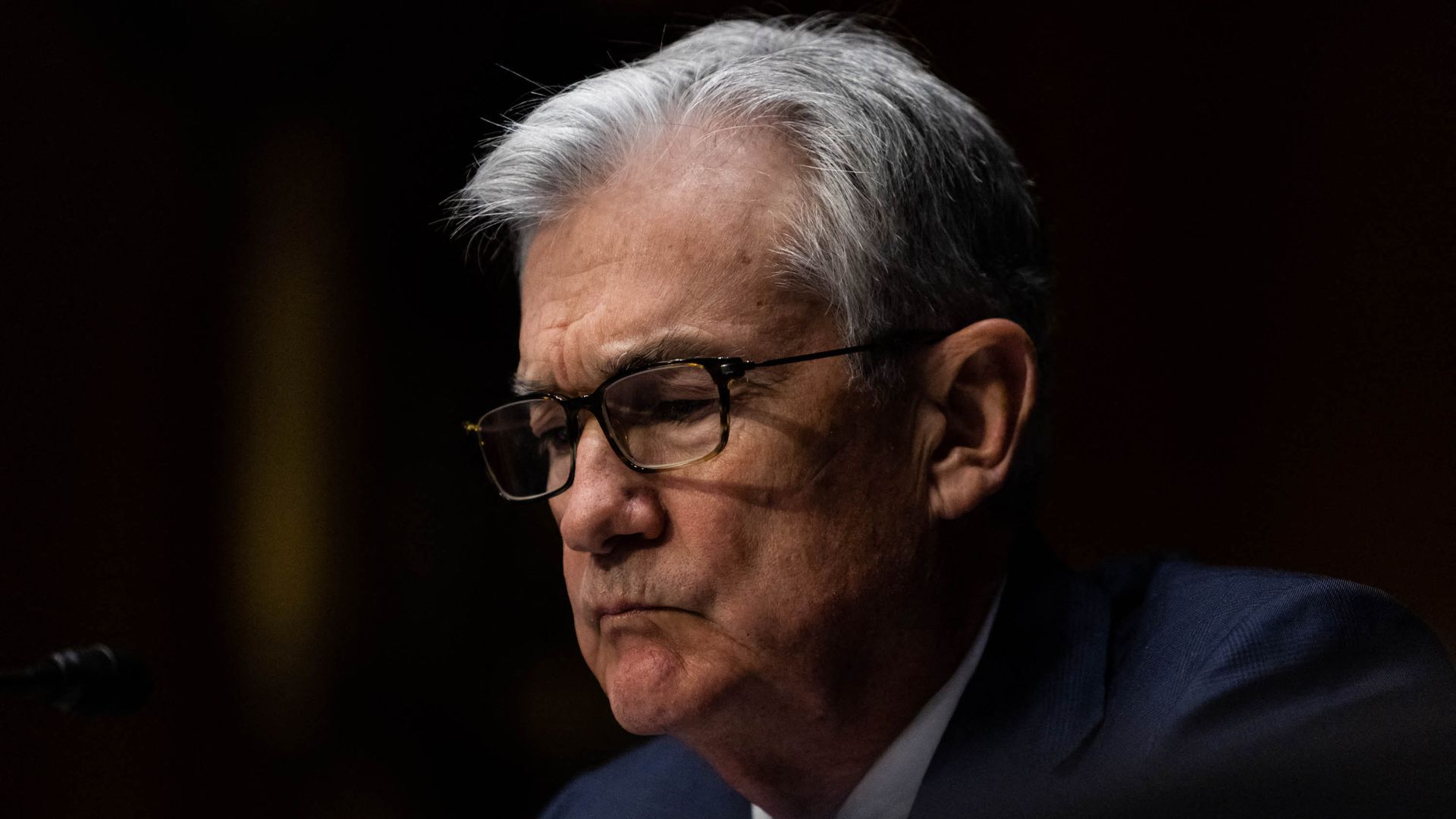
Fed chair Jerome Powell will face tough questions with no easy answers. Photo: Graeme Jennings/Getty Images
Federal Reserve chair Jerome Powell begins two days of testimony on Capitol Hill this morning. It will be, in a word, fraught, Axios' Neil Irwin writes.
- Powell and the Fed are at the center of an extraordinary collision of economic and geopolitical forces — and they don't have any good options. Adding to the pressure, Powell himself is still awaiting Senate confirmation for a second term.
Why it matters: Powell faces a high-wire act. He'll seek to signal that the Fed is resolute in its plans to try to rein in inflation, yet flexible enough to respond if the Ukraine crisis damages the economy.
The big picture: The Fed has been on course to begin its rate-raising campaign at its policy meeting two weeks from now. Nine days ago, the open question was whether it would kick things off with a quarter-percentage-point rate hike or a half-point.
- The Russian invasion of Ukraine, however, has thrown a wrench in those calculations. Global markets have been upended by the war, and by the U.S. and its allies' concerted efforts to effectively cut Russia off from the global economy.
- The Fed is generally reluctant to raise interest rates at a moment of crisis, especially when the economic ripple effects are not yet clear.
- If the Ukraine crisis acts as a brake on global growth, Fed rate increases could make it worse.
5. Crypto vs. sanctions
Illustration: Sarah Grillo/Axios
With Russia barred from accessing its foreign reserves, and some of its banks kicked off SWIFT, attention has turned to cryptocurrency as a possible platform for evading sanctions, Axios' Ryan Lawler and Lucinda Shen write.
Why it matters: Sanctions are increasingly isolating Russia from the global financial system. Transacting in crypto could be a powerful workaround — but experts say the crypto market lacks the scale and the privacy to materially aid Russia's war effort.
Driving the news: The White House’s National Security Council and Treasury Department have asked major crypto exchanges to help cut off access to sanctioned entities and individuals, Bloomberg reports.
- Ukrainian Vice Prime Minister Mykhailo Fedorov asked major crypto exchanges to go beyond what's required by sanctions — and block the addresses of all Russian users.
Major exchanges Binance, Coinbase and Kraken have said they will comply with sanctions — but have come out against blanket bans on Russia-based addresses. They say it goes against their core beliefs and would unfairly hurt innocent Russian nationals.
Reality check: “At the macro level, the crypto markets are not big enough to absorb sanctions-abating levels of currency," Salman Banaei, co-head of public policy at blockchain data platform Chainalysis, tells Axios.
- And the transaction volume necessary would make spotting that activity quite easy, says Andrew Jacobson, an attorney on Seward & Kissel's economic sanctions and cross-border regulatory team.
- "I think it would be very obvious from on-chain activity," Jacobson tells Axios. "It's actually much harder in this day and age to launder funds on public ledgers than it is to do with fiat."
For more of Ryan and Lucinda’s coverage of this topic and others, sign up here for the Fintech Deals newsletter from Axios Pro.
Sign up for Axios Markets

Stay on top of the latest market trends and economic insights