
Axios Macro

October 13, 2023
Today, our Axios Markets colleague Emily Peck makes a guest appearance to lay out a candy-coated metaphor for understanding the delicate moment for the economy and Federal Reserve policy. Just in time for Halloween.
- Plus, a gloomy reading on consumer sentiment.
🙌 Axios Local Power Players is celebrating the best business leaders and rising stars in Charlotte, Chicago and Denver. Winners will be profiled in Axios Local and honored at a reception in their city. Nominate an impactful member of the business community to be considered for an honor on this year's Axios Local Power Players list.
Today's newsletter, edited by Javier E. David and copy edited by Katie Lewis, is 658 words, a 2½-minute read.
1 big thing: A candy aisle metaphor for the Fed's challenge
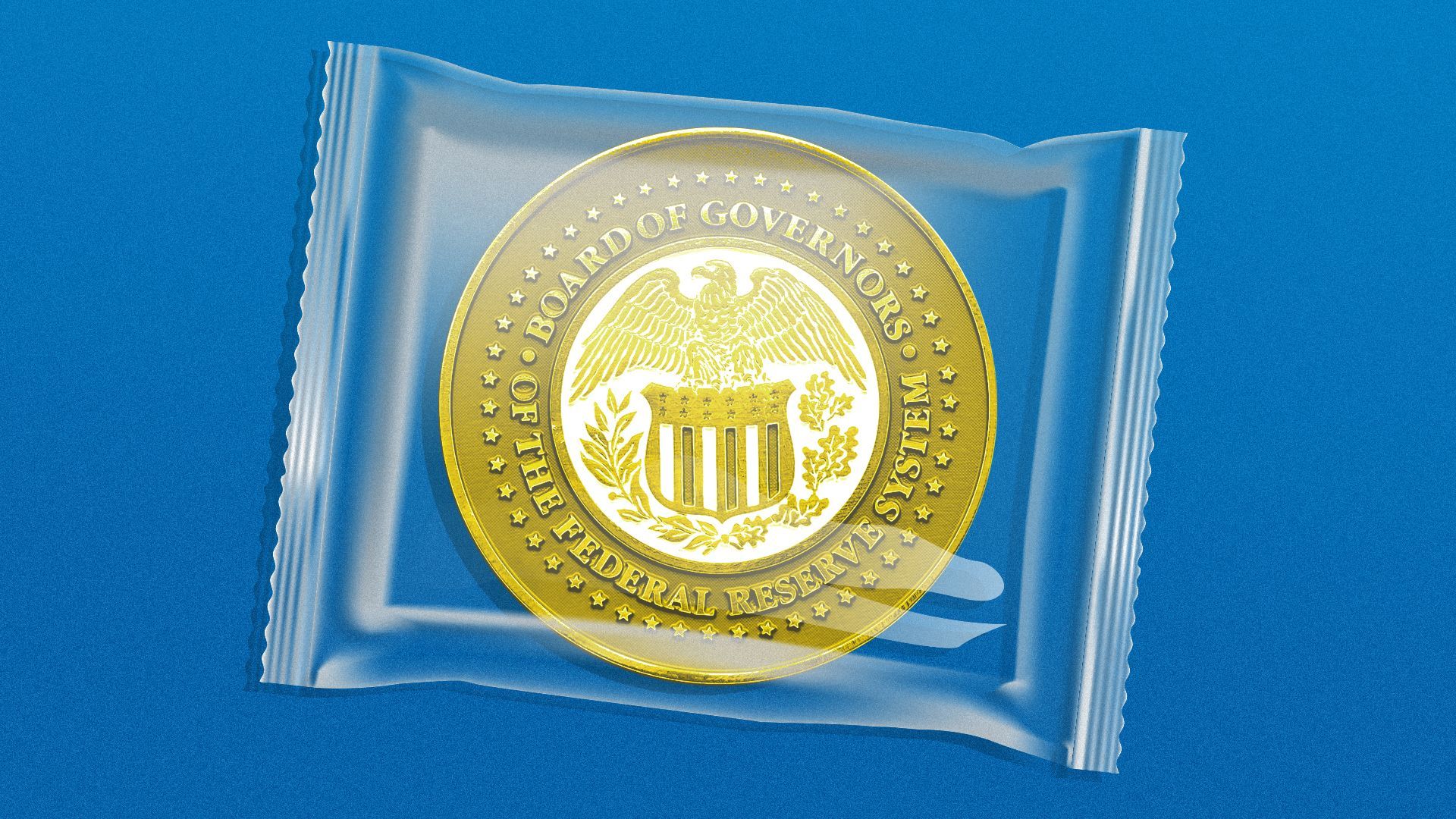
Illustration: Annelise Capossela/Axios
The Fed has a Lemonhead problem, Emily reports. That's the term that one investor is using to explain why the central bank's historic rate-hiking campaign hasn't done more damage to the economy (yet).
How it works: Like the candy, rate hikes start off sour — the S&P fell 19% last year; the tech industry shed a lot of jobs. But then they turn sweet — that's where we are now, with consumer spending and the labor market still looking relatively solid.
- "The full effect of higher rates is not being felt by consumers and businesses," said James Fishback, founder and chief investment officer (and candy theorist) at Azoria Partners, a global macro hedge fund.
Zoom in: Two key players in the economy have so far been relatively insulated from higher rates: mortgage holders (i.e., a lot of consumer households) and companies with fixed-rate bonds (think Apple or Microsoft).
- A slew of companies took advantage of the very low rates of 2021 and are now benefiting from the higher rates they can earn on cash.
- 82% of mortgaged homeowners have a rate below 5%. Many refinanced during a wave two years ago and locked in rates of 3% or less. Plus, the value of their homes has soared — a factor that may lead some to feel wealthier and spend more.
Like homeowners, many companies took advantage of low rates back in 2021. They borrowed money — by issuing bonds — and locked in low rates for long durations.
- Companies don't borrow on 30-year timelines like homeowners, but the average duration for investment-grade corporate debt has doubled from four to eight years, Fishback pointed out.
- And companies are paying less in debt now than a year ago. U.S. corporate net interest payments have fallen for the past five quarters, according to Bureau of Economic Analysis data. At the same time, businesses are earning 4%-5% on their cash holdings.
- Many companies have "actually benefited from higher rates," Fishback wrote in an email.
What's next: Eventually, as one continues to savor the Lemonhead, it turns from sweet back to sour. ("I got, like, a case of them," Fishback said.)
For the record: David Einhorn, Fishback's former boss at Greenlight Capital, coined a jelly donut hypothesis to argue that rate cuts were hurting the economy.
- The idea was the first rate hike, like the first donut you eat, is delicious or effective — but the yum factor, or effectiveness, decreases with each subsequent treat or rate cut.
Bottom line: Those donuts are still with us today, shielding mortgage holders and business owners from the full power of historic rate hikes.
2. Bad vibes warning


Over the summer, we were alert to signs that ordinary Americans' perception of the economy was, at long last, starting to improve. Early signs are that sentiment has turned back downward with the onset of fall.
Driving the news: The preliminary October University of Michigan consumer sentiment survey showed a steep falloff in views about the economy. The index fell to 63, from 68.1 in September. It had reached a recent high of 71.6 in July.
- The falloff was driven by drops in both survey respondents' assessment of current economic conditions and their expectations for the future.
- Perhaps most worrying, survey respondents' expectations for inflation over the next year soared, to 3.8% from 3.2% in September. Long-run inflation expectations edged up to 3%, from 2.8%.
Between the lines: This may reflect a lagged impact of a surge in gasoline prices in late summer (prices have receded some so far in October) and a recent bumpy ride on Wall Street that has sent interest rates soaring.
- Consumer sentiment was even lower for much of 2022, when inflation was at modern highs, but remains far below the levels that were the norm in the 2010s.
- In fact, if you go back before the current inflationary episode, the last time sentiment fell below current levels was in 2011, when there was a debt ceiling showdown.
Sign up for Axios Macro

Stay ahead of the curve on the most important economic developments with reporting and analysis on how business, policy, and markets collide.