Axios Macro

June 13, 2023

1 big thing: Inflation outlook rests on rent relief


The biggest takeaway from today's CPI report is clear: Overall inflation is cooling in large part because energy prices have plummeted — a huge relief for consumers.
- But the core gauge, which excludes energy and food prices, shows inflation is still running hot.
Why it matters: Much of the optimism for a cooldown hinges on the hope that soaring shelter costs pushing up the index will decelerate or even fall alongside a slew of other goods and services.
- But if it doesn't play out as analysts expect, that might keep pressure on the Federal Reserve to continue pushing up rates — even if they do "skip" an increase at this week's policy meeting.
By the numbers: Overall prices rose only 4% in the 12 months through May — down from 4.9% for the year ended in April and the peak 9.1% last June.
- The sharp deceleration is largely explained by the run-up in energy prices, with Russia's invasion of Ukraine becoming less of a factor in the data. Energy prices were down nearly 12% last month compared to May 2022, while gas prices were down almost 20%.
The other side: The core measure, of course, does not get the tailwind from cheaper energy and has essentially moved sideways in recent months.
- The core measure has risen at a 5% annualized rate over the past three months, and has been steady at about that level all year — the kind of sticky inflation officials are worried about.
Yes, but: Shelter prices continue to be the key category putting upward pressure on inflation, up 0.6% in May and rising 8% compared to the same period a year ago.
- Falling rents seen in private sector data have not fed through to official government data. That needs to happen for overall inflation to cool, given shelter costs represent 43% of core CPI.
- But that also assumes other components cooperate. Used car prices, for instance, have reaccelerated — rising 4.4% in May (and April), though economists say that jump may also prove fleeting.
What they're saying: "We are still waiting for the slowdown in shelter costs to start to make its way into the calculation of inflation, but so far, it has remained highly elusive," Eugenio Alemán, chief economist at Raymond James, wrote in a note.
- "For now, all the progress in bringing down inflation has been made by the energy component of the index, which means that the disinflation process remains dependent on continued weakness in energy prices."
The bottom line: Inflation has come down from last year's steep readings. But underlying price pressures might prove even more difficult to stamp out — a reality that could pressure the Fed to keep tightening in the months ahead.
2. Where that leaves the Fed
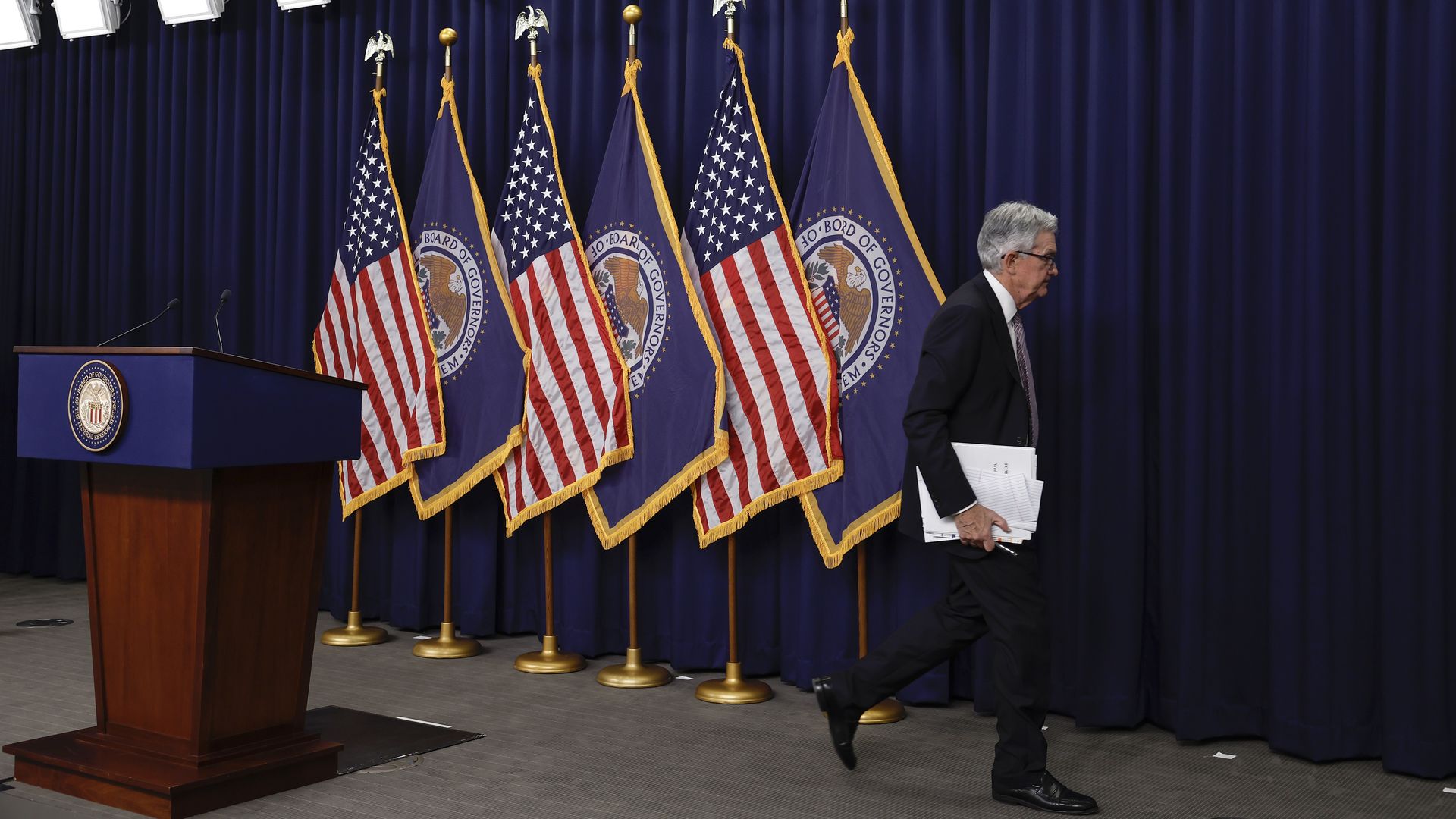
Fed chair Jerome Powell. Photo: Anna Moneymaker/Getty Images
Axios Macro

Stay ahead of the curve on the most important economic developments with reporting and analysis on how business, policy, and markets collide.