Axios Macro

January 10, 2025


Phew! The jobs report suggests an all-around healthy economic backdrop for workers. Details below, including takeaways from our post-payrolls interview with Chicago Fed president Austan Goolsbee.
- Plus, a warning from Biden-era economists as they head for the exits.
Situational awareness: The Fed released transcripts of its 2019 monetary policy meetings this morning, following the customary five-year delay.
- It was a simpler time, an era of mid-cycle adjustments and worries about inflation being too low. Dig in here.
Today's newsletter, edited by Ben Berkowitz and copy edited by Katie Lewis, is 825 words, a 3-minute read.
1 big thing: No jobs slowdown here

Rumors of a job market downturn were, it appears, greatly exaggerated.
Why it matters: A robust December employment report suggests the labor market is heating up — or at least not meaningfully cooling — as 2025 begins.
Catch up quick: The jobless rate fell, employers added to their payrolls, a larger share of the adult population was working, and wages rose at a healthy pace last month.
- That makes the outlook for further Fed interest rate cuts more remote. Another cut later this month now looks to be off the table, and market odds of a rate cut in March fell sharply this morning.
- With a solid labor market, officials can move more gingerly as price pressures look stickier.
What they're saying: "I have more confidence that the job market is not deteriorating," Goolsbee tells Axios. "There is a statistical pattern that when unemployment goes up, it tends to keep going up. I have more comfort now that we did stabilize and this time is quite different than previous business cycles."
By the numbers: The U.S. economy added 256,000 jobs last month — the most since March 2024 and about 100,000 (!) more than economists had expected.
- That partly reflects a bounce back from hurricane-induced payrolls weakness in the fall, but the strength is echoed in other data.
- The unemployment rate ticked down to 4.1% from 4.2%. (Remember the recession jitters that followed the jobless rate jump last summer? That looks increasingly more like a head fake.)
- The share of employed prime-age workers (those aged between 25 and 54) ticked up, rising 0.1% to 80.5% and recovering some of the losses since September.
- Average hourly earnings, a measure of wage growth, rose 0.3% in December and have increased by 3.9% over the previous 12 months.
The big picture: The final data point for 2024 came in hot, nearly matching the job gains that kicked off the year. Still, relative to 2023, the labor market has slowed a bit.
- The economy added an average of 186,000 jobs per month last year, down from the 251,000 in 2023.
The intrigue: Bond markets sold off on the news, driving an upturn in yields amid diminished prospects for Fed rate cuts.
- The yield on the U.S. 10-year government bond rose to 4.78% this morning, the highest level since late 2023. That rate was 3.62% in mid-September when the Fed commenced its rate-cutting campaign.
- The Fed started its rate-cutting cycle with an eye on the labor market that, at the time, looked wobbly.
- Fears about the job market have since receded. Now there is a closer eye on inflation that has already ceased cooling, with risks that President-elect Trump's trade and immigration policies might reignite it.
"I think the most material thing is this question of, do you think the economy is overheating, or do you think we're in a stabilizing range with inflation getting back to target?" Goolsbee says.
- The Fed has cut rates by a full percentage point since September and Goolsbee says he still thinks "we have some to go."
The bottom line: Trump will inherit a labor market that has thrived under the weight of high inflation and high interest rates.
2. Biden-era economists stand by going big
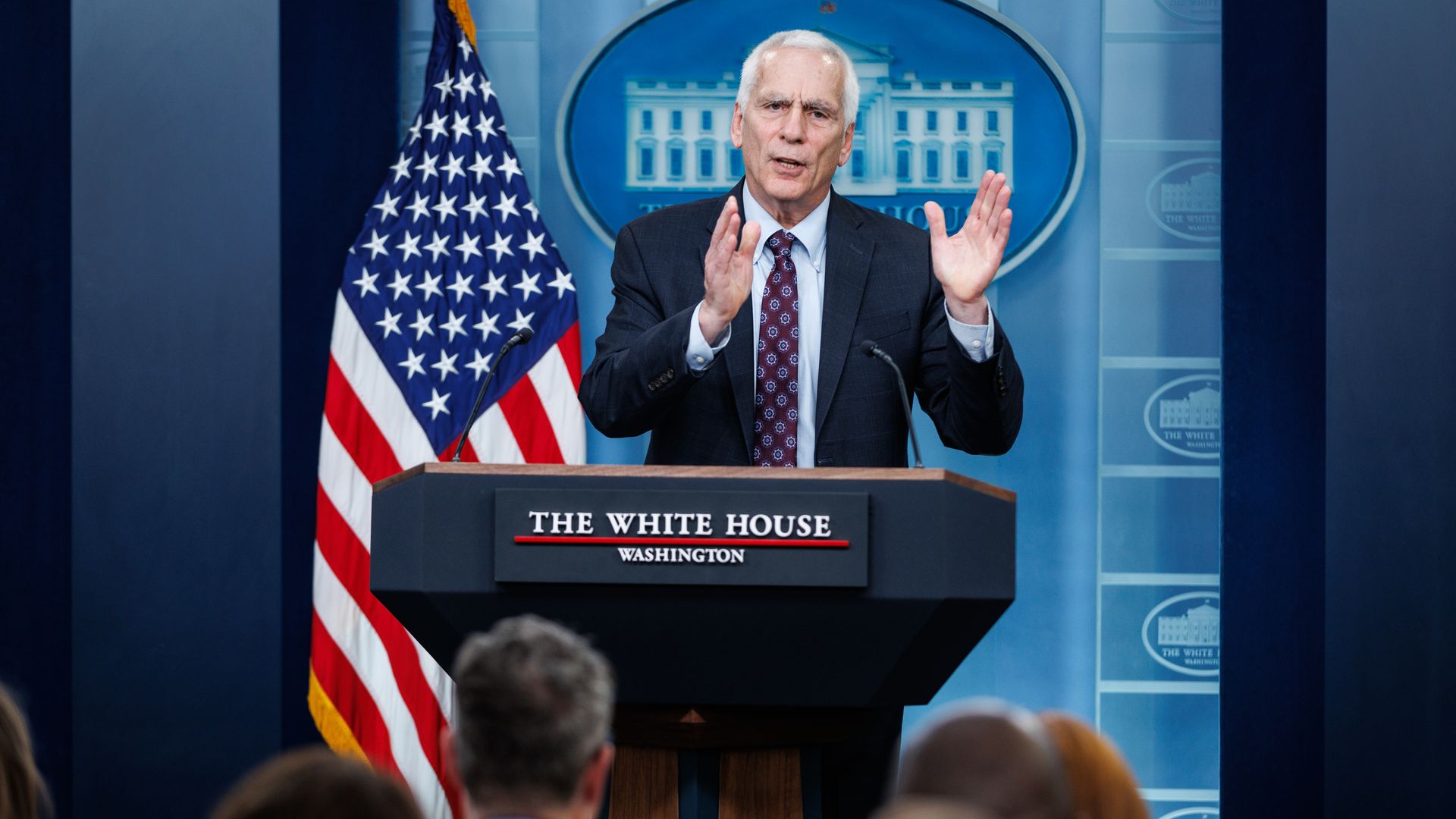
Top Biden economists are sharing a lesson for the Trump administration and beyond: When the next crisis hits, the government should not hold back.
Why it matters: The Biden pandemic-era bill has been criticized for its size and the role it might have played in the inflation crisis that contributed to the administration's election loss.
- Still, the administration's leading economists warn that doing too little during the next crisis could be disastrous for the economy.
What they're saying: The lesson comes in the annual Economic Report of the President — issued by the Council of Economic Advisers — that was released today.
- "There are risks to robust fiscal action—including rising prices—but a strong fiscal response can deliver durable growth, and the risk of underreacting to a large global shock is material," the economists wrote.
The big picture: The report, the last of the Biden era, acknowledges that many pandemic fears that might have inspired the 2021 American Rescue Plan did not bear out.
- "With full information about the future, policymakers may have allocated fiscal support differently," they noted.
The intrigue: "The emergence of inflation does not negate the wisdom of a strong fiscal response," the economists noted. The 2020s inflation shock was global, suggesting U.S. fiscal support was not totally responsible for higher prices, they said.
- "Inflation harms businesses and families across the income distribution, but the prospect of future inflation must be balanced against labor market pain amid a large, negative shock."
- The Fed is "well-positioned to respond to demand-driven inflation when it arises," they added.
The bottom line: Inflation stuck around far longer than most policymakers anticipated and weighed heavily on consumers.
- Still, America had the strongest economic recovery of all rich nations — a lesson that Biden economists want lawmakers to remember.
Sign up for Axios Macro