Axios Login

February 16, 2023

I've got to make this quick: I have a new Lego project to build — an "Avatar" set I got AJ for Valentine's Day. He wanted it. Honest.
Today's Login is 1,262 words, a 5-minute read.
1 big thing: Dividing work between humans and AI
Illustration: Annelise Capossela/Axios
Many of the smartest people working in artificial intelligence argue that these systems work best paired with human beings, letting each partner do what they do best. But dividing the tasks is often trickier than it sounds.
Why it matters: Figuring out where humans need to play a role — whether for their common sense, skills or ethics — is a key task facing society as AI systems grow increasingly powerful.
Some of these tensions are already apparent in the field of autonomous and semi-autonomous vehicles.
- Humans are highly flawed, prone to distraction, error and inebriation.
- But computer systems remain expensive and struggle to handle the array of conditions that crop up on the road.
Yet there's no simple method for combining the skills of both people and AI in the real-time decision-making driving demands. At a certain point, either the computer or the person has to be in control.
- There is a broad sense that fully autonomous cars could save lives lost to human error. But, with widespread availability of such technology still far off, the industry has been wrestling with how to incorporate some autonomy into cars while still relying on humans at the wheel.
- A key principle, says Avinash Balachandran, director of human interactive driving at Toyota Research Institute (TRI), is making sure that human beings are in control most of the time so they don't lose focus, with the computer either invisibly assisting or taking over only when absolutely necessary.
Context: Toyota opened the doors of its research center in Los Altos, California, to reporters for the first time in five years on Wednesday — in part to discuss the work it is doing to ensure humans and machines can complement one another.
The big picture: Society has been captivated by both the capabilities and glaring shortcomings in the latest generation of generative AI technologies, such as OpenAI's ChatGPT.
- Experts say that's a harbinger of what the next few years hold, and society should harness such systems’ power, while ensuring humans limit the systems’ many potential missteps.
Between the lines: Getting humans and AI systems to work together well requires a sober and sophisticated understanding of where each excels and where they stumble.
- "I love people who are optimistic about the future," says Gill Pratt, who runs the Toyota lab. "I am one of them, but we have to have our eyes open."
AI systems are really good at digesting vast amounts of data and increasingly good at presenting their findings in creative and even inventive ways.
- At the same time, such systems lack common sense, struggle to cope with novel situations, and can incorporate and automate existing bias, among other problems.
- "Data is fundamental but it has big gaping holes," said Adrien Gaidon, director of machine learning at TRI.
Humans, for all their flaws, are amazing at tasks that computers still struggle with. Even toddlers readily master tasks like understanding object permanence or identifying novel obstacles.
- Importantly, humans can learn by venturing out into the world and having new experiences, while AI systems are largely limited to the diet of digital information on which they are trained.
Of note: The argument for humans and AI working in tandem often presupposes the pairing of a trained computer system and a worker with years of hands-on experience.
- But as AI systems take on more tasks, over time there may be a dwindling number of humans with the needed expertise.
Be smart: Ideally, says Balachandran, computers can be trained to make humans better over time, but that often doesn't happen.
- He points to the fact that spell check has reduced errors but hasn't necessarily made humans better at spelling.
- If people are to remain at the wheel, he argues that the system should not only step in when needed, but also help humans become better drivers.
2. Twitter to allow cannabis advertising

Illustration: Maura Losch/Axios
Twitter on Wednesday updated its advertising policies to allow cannabis ads to run on its service in states where cannabis is legal, Axios' Sara Fischer reports.
Why it matters: The policy represents the biggest step forward that any major tech company has made toward allowing cannabis advertising where it’s legal in the U.S.
- Meta allows ads for some hemp products, but not THC or CBD products.
- Reddit allows ads for "topical and non-ingestible hemp-derived CBD products" in the U.S.
- Google updated its policies last month to allow ads for FDA-approved pharmaceuticals containing CBD and "topical, hemp-derived CBD products with THC content of 0.3% or less" in California, Colorado and Puerto Rico.
Details: The ads that Twitter will accept will be limited, according to a policy update posted to its website.
- CBD and THC companies can run ads promoting their brands, but the ads can't promote or offer the sale of cannabis, with the exception of topical hemp-derived CBD products "containing equal to or less than the 0.3% THC government-set threshold."
- Twitter will only accept cannabis advertisers that are licensed by the appropriate authorities and that the company has pre-authorized.
- Advertisers can only target geographical areas in the U.S. in which they are licensed to promote cannabis products or services online.
The big picture: The new policy is a reflection of Musk's preference for fewer content restrictions.
Between the lines: Musk has publicly admitted to using marijuana, even going as far as to smoke it during a podcast interview.
- In its blog post announcing the update, Twitter said: "We look forward to helping more customers unlock the power of Twitter Ads to connect with the cannabis conversation and drive their business forward."
- "As for the impact on the cannabis industry: let's just say we've got high expectations."
3. First impressions of Sony's PlayStation VR2
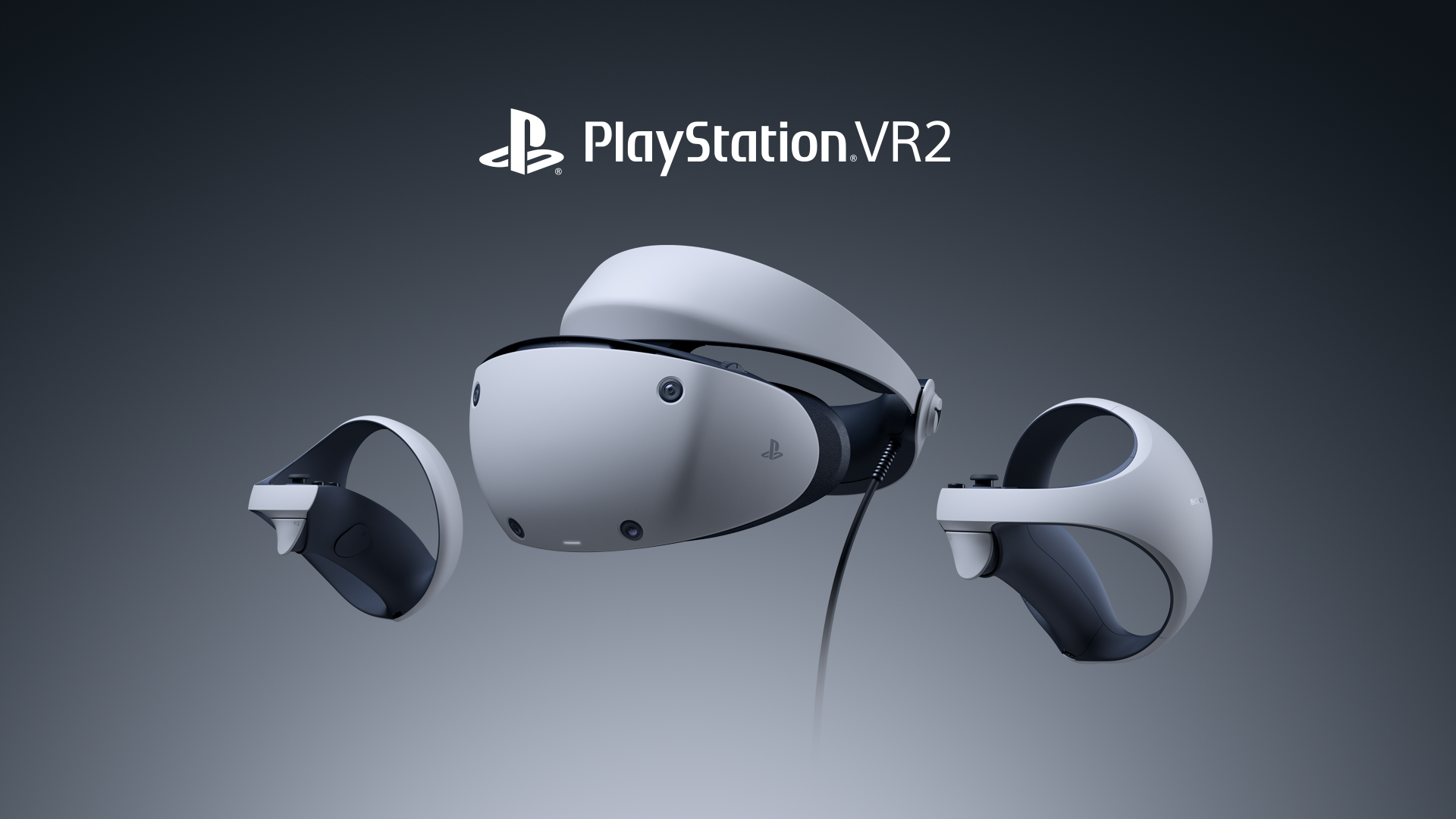
Sony's PlayStation VR2 virtual reality headset. Image: Sony Interactive Entertainment
Sony's PlayStation VR 2 headset is a big improvement to its previous version, but it is unlikely to convert VR skeptics, Axios gaming reporter Stephen Totilo writes after spending a week with the device.
Driving the news: Sony will make its second major attempt at cornering the VR market with the Feb. 22 launch of PSVR 2.
- Rather than Meta's all-encompassing vision for a virtual world, Sony is pitching the powerful $550 PSVR 2, which must be plugged into a PlayStation 5, purely as a gaming escape. It will come with a launch lineup of more than three dozen games.
Pros:
- Impressive tech that produces great-looking VR games without inducing nausea or discomfort, even when we used it for two hours straight.
- It keeps up with modern VR improvements by eschewing external sensors and offers some valuable perks like gaze-tracking that lets users move on-screen cursors with their eyes.
Cons:
- It's evolutionary VR, at best, meaning even its most fun games require an acceptance of the medium's current limitations on character movement and a lack of satisfying tactile connection to the virtual world the system generates.
- It's also still pricey.
4. Take note
On Tap
- DoorDash reports earnings after the markets close.
(Not Yet) Trading Places
- Elon Musk said he's likely not to replace himself with a new CEO at Twitter until near the end of 2023.
ICYMI
- GitHub says it has improved its Copilot AI coding assistant and notes it is now being used to generate 46% of new code on its site. (Bleeping Computer)
- Mother Jones has a worthy — if difficult to read — look at the history and devastating impact of far-right trolling site KiwiFarms, which has been used to bully people, especially trans, nonbinary and autistic people, to the point of suicide. (Mother Jones)
5. After you Login

This week I learned that strawberries not only ripen on the vine, but they eventually sprout — and you can still eat them even after the green shoots take over.
Thanks to Scott Rosenberg and Peter Allen Clark for editing and Bryan McBournie for copy editing this newsletter.