Axios Login

January 30, 2023

The power went out last night right as the Chiefs-Bengals game went into the last minute tied. (Fortunately we were able to stream the ending on a phone.) Today's Login is 1,233 words, a 5-minute read.
📣 Situational awareness: TikTok CEO Shou Zi Chew will testify before the House Energy and Commerce Committee in March regarding TikTok’s privacy policies, its impact on children and its relationship with China’s government, Bloomberg reports.
1 big thing: AI rockets ahead in vacuum of U.S. regulation
Illustration: Lazaro Gamio/Axios
The overnight success of ChatGPT is kicking off a tech-industry race to bake AI into everyday products and decision-making with little oversight from government, Axios' Ashley Gold reports.
Why it matters: ChatGPT's uncanny ability to spit out stories, articles and recipes is heating up AI awareness and concerns, yet there's almost no effective U.S. regulation of the technology in place, raising fears it could promote bias, misinformation, fraud and hate.
What they're saying: "We can harness and regulate AI to create a more utopian society or risk having an unchecked, unregulated AI push us toward a more dystopian future," Rep. Ted Lieu (D-Calif.), who recommends creating a government agency to oversee AI, wrote in a New York Times op-ed last week.
U.S. lawmakers have been talking about AI's promise and perils for many years. But as with previous waves of tech innovation, products' speed-to-market has far outstripped the government's readiness to regulate.
- For every leader like Lieu that's pushing for fast, strong AI rules, there's another warning that premature regulation could stifle progress and limit American efforts to compete with China and other rivals.
State of play: "It's a patchwork system [of AI regulation] in the United States," with some laws around transparency and preventing discrimination from AI on the state level but only early moves at the federal level, Jessica Newman, who leads the AI Security Initiative at the UC Berkeley Center for Long-Term Cybersecurity, told Axios.
- "I still think there's a long way to go and I would love to see federal AI regulation that is more comprehensive," Newman said.
What's happening: In Congress, lawmakers have proposed regulations on the use of facial recognition and other applications of AI.
- The White House has an AI research office and has released a blueprint AI Bill of Rights.
- The Federal Trade Commission, Equal Employment Opportunity Commission and other federal agencies have begun to float new rules on the use of AI.
Driving the news: This week, the National Institute of Standards and Technology, part of the Department of Commerce, put out a long-awaited AI framework, meant to give companies guidance on using, designing or deploying AI systems.
- The framework should "accelerate AI innovation and growth while advancing — rather than restricting or damaging — civil rights, civil liberties and equity for all," Deputy Commerce Secretary Don Graves said this week.
Yes, but: The framework is voluntary, and companies face no consequences for straying from it.
The other side: "The government should not be in the business of making very fine-grained laws or regulation because stuff just moves very, very rapidly," Sridhar Ramaswamy, founder of ad-free search engine Neeva, which has its own generative text program for search results, told Axios.
- "This is not to say that existing laws should not be applied to people using these models in unfair ways," he said.
Meanwhile: Across the Atlantic, EU regulators approved the Artificial Intelligence Regulation Act last December, with the European Parliament set to vote on it this spring and adoption by the end of 2023. The sweeping regulation will apply to companies outside of the EU as well, with fines for noncompliance of up to €30 million.
- The U.S. and the EU Friday signed an agreement to collaborate on "responsible advancements" in AI.
- China passed rules targeting algorithmic recommendations last March.
What to watch: The Federal Trade Commission is in the process of creating new rules around commercial surveillance and data security that will govern any company that develops and deploys AI systems. Individual states such as Massachusetts are also mulling legislation, per CBS News.
Editor's note: This story has been corrected to properly name the National Institute of Standards and Technology (not Science and Technology).
2. Israeli spyware firm makes a case in Washington
NSO CEO Yaron Shohat. Photo illustration: Sarah Grillo/Axios. Photo: Courtesy of NSO
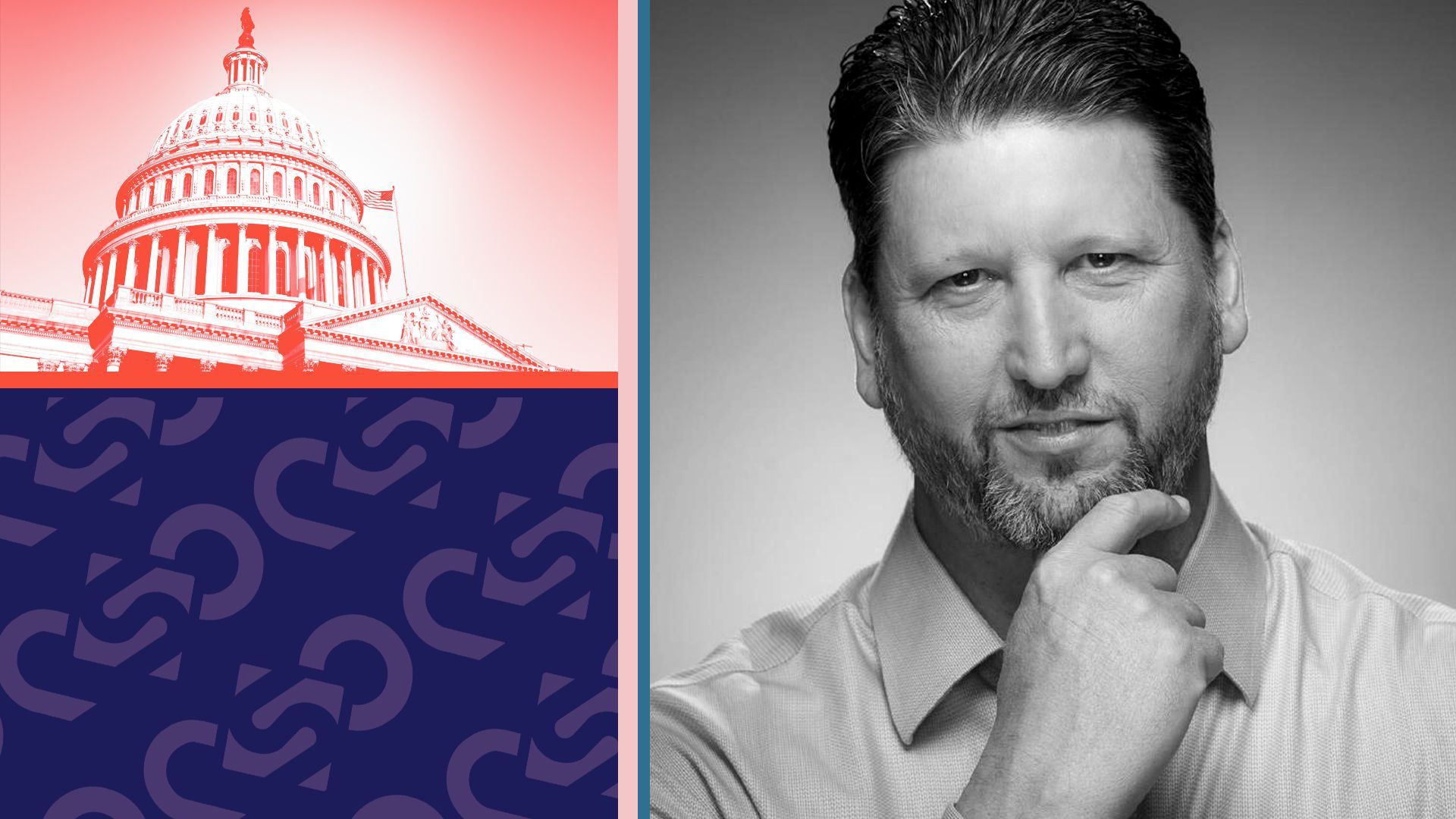
Embattled Israeli spyware company NSO Group was in D.C. last week trying to make the case it is helping fight crime. However, the company faces long odds in trying to get skeptical U.S. lawmakers and human rights activists on board, Axios' Sam Sabin reports.
Zoom out: NSO's Pegasus phone-hacking spyware gained widespread attention in 2021 following an investigation from a consortium of news organizations detailing the ways governments have used the tool to spy on journalists, human rights activists and high-ranking politicians.
- Unlike typical forms of malware, Pegasus is "zero-click," meaning it can sneak onto targets' devices without them even having to click on a malicious phishing link.
- Since 2021, the company has been placed on a U.S. trade blacklist and inspired a UN call for a global moratorium on spyware sales.
The big picture: NSO's Washington tour comes as the administration pieces together a forthcoming spyware executive order, and shortly after lawmakers gave the intelligence community new powers to protect against certain commercial spyware.
Yes, but: NSO chief executive Yaron Shohat told Axios that he believes NSO can still win over skeptics with a simple argument: "Our product saves lives around the world," he said.
Catch up quick: Shohat started as CEO in August as part of a larger company restructuring following years of scrutiny of the Israeli spyware firm's product use.
Details: Shohat told Axios that NSO is now cash-flow positive due to its mostly Western European government customers that use the tool to track down terrorists, child sex abusers and other criminals.
- NSO has now terminated 10 customer contracts for abusing Pegasus following internal investigations, he said.
- NSO, which claims to sell only to government customers, says it has tweaked its products and internal auditing programs to better flag abusive use.
The other side: Without specifics about how exactly NSO is preventing abuse or providing retribution to victims, the new CEO's arguments aren't budging human rights activists and researchers.
- "The cat is out of the bag: The world now knows that a major use of Pegasus is to monitor journalists and human rights groups," John Scott-Railton, a senior researcher at the University of Toronto's Citizen Lab who closely monitors NSO's work, told Axios. "It's a tool of espionage that has nothing to do with crime or terror."
- "If we look at the direct record of the company, that's just patently untrue," said Roman Gressier, an American journalist working for Salvadorian outlet El Faro who was targeted with Pegasus, about NSO's claims that it focuses solely on crime and terrorism. "How can anyone take them at their word?"
3. Quick takes: Chip tech export limits spreading
1. Japan and the Netherlands have both reportedly signed on to new export limits on technology used to manufacture chips, according to reports in the New York Times and elsewhere.
- Why it matters: Both countries are leaders in the gear needed to manufacture state-of-the art chips and their sign-on could significant strengthen U.S. efforts to limit sales to China.
2. Fidelity has again marked down the value of its stake in Twitter, Axios' Dan Primack reported. It's now valued 60% lower than when majority owner Elon Musk took the company private last year.
- Between the lines: The move comes as Musk is reportedly considering selling more equity in the microblogging service to help pay down debt.
4. Take note
On Tap
- It's a busy earnings report week, with Spotify, Snapchat and AMD reporting on Tuesday, Meta on Wednesday and Amazon, Apple, Google and Qualcomm reporting on Thursday.
Trading Places
- Salesforce added three new outside directors to its board, including Mason Morfit, the CEO of investor ValueAct.
ICYMI
- The White House on Friday released what it called a roadmap to mitigating the key risks posed by cryptocurrencies.
5. After you Login
When the Beatles toured the U.S. in 1964, it turns out Paul McCartney was carrying a 35mm camera. Now there are some never-before-seen images from then.
Thanks to Scott Rosenberg and Peter Allen Clark for editing and Bryan McBournie for copy editing this newsletter.
Sign up for Axios Login

Taking you inside the AI revolution, and delivering scoops and insights on the technologies reshaping our lives.