Axios Login

March 02, 2023

I hope you are thirsty for some tech news. Today's Login is 1,240 words, a 5-minute read.
1 big thing: U.S. cracks down even tighter on China's tech industry
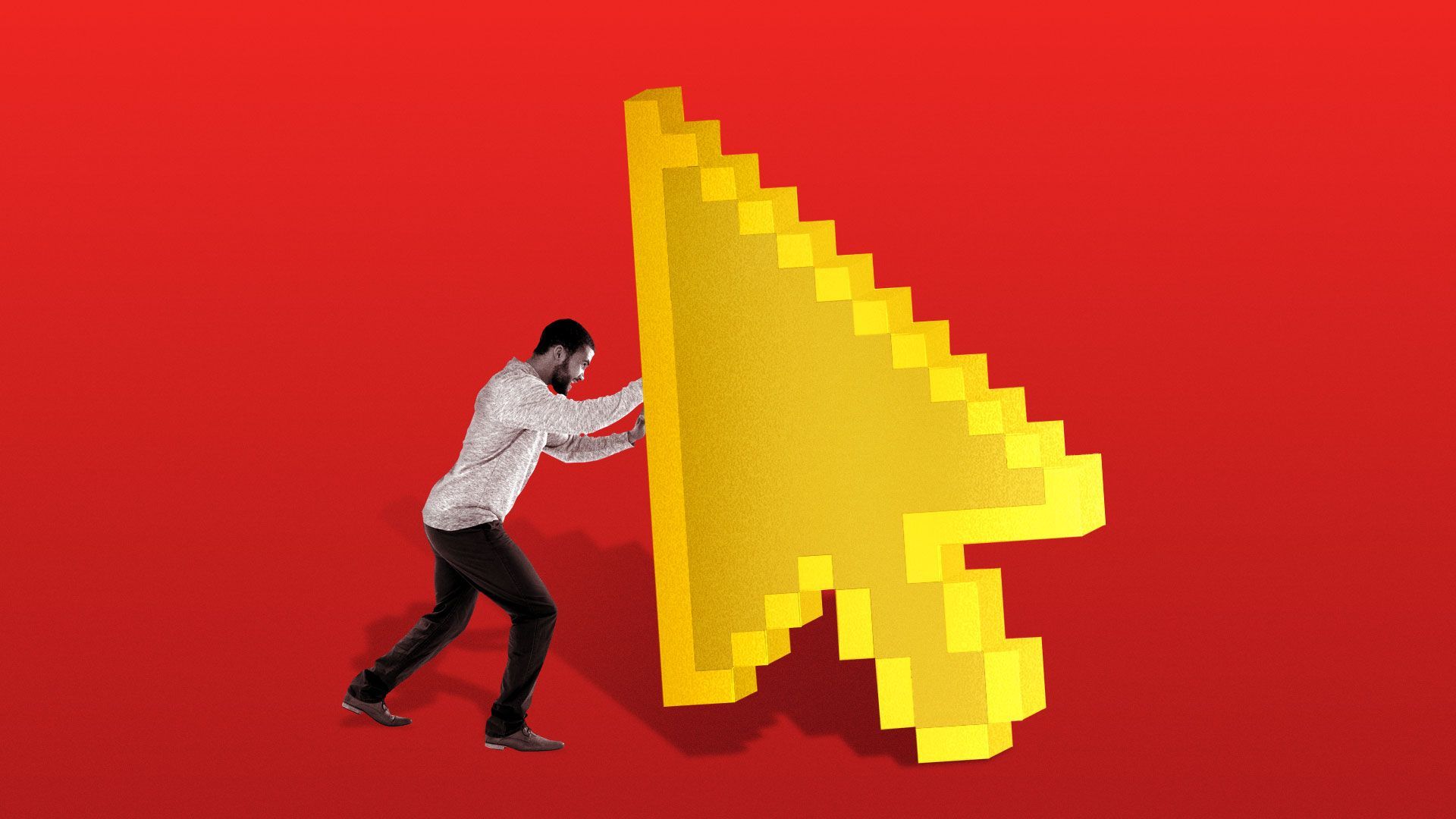
Illustration: Eniola Odetunde/Axios
With strict limits already in place on China's access to U.S. technology, the federal government is exploring how to further tighten the vise amid growing political and economic tensions.
Between the lines: Cracking down on China has support from both parties, though there isn't always agreement on exactly which steps to take.
Here are three areas where the latest crackdown is taking place:
Chips
In a move designed to significantly limit China's ability to grow its own semiconductor industry, the U.S. has convinced the Netherlands and Japan to greatly curtail their exports of leading-edge chipmaking gear to China.
Driving the news: In a new report out today and shared first with Axios, the Center for Strategic and International Studies says that the deal, struck last month, appears to limit sales of two key emerging chipmaking techniques — extreme UV and argon fluoride immersion.
- It also likely includes an agreement not to ship other gear to China that the U.S. has already said it won't sell to China.
Getting Japan and the Netherlands on board was key: Those two countries alone entirely control the market for the lithography tools needed to make the next generations of chips.
- "The United States maintains control of strong chokepoints for blocking China’s access to the future of AI and semiconductor technology, but the Dutch and Japanese chokepoints are even stronger," the CSIS report states.
TikTok
The House Foreign Affairs Committee on Wednesday advanced a bill that would effectively ban TikTok in the U.S.
- Even as legislators and regulators weigh a more complete ban of TikTok, the federal government is moving forward with plans to restrict the use of the service on government-owned devices after Congress approved those limits at the end of 2022.
- Earlier this week the Office of Management and Budget published guidelines on how agencies will implement such a ban, with most devices required to remove TikTok within 30 days.
Huawei
The U.S. has already significantly restricted Huawei's access to U.S. technologies, crippling the company's global smartphone business and significantly impacting other parts of its business.
- Earlier this week, the Wall Street Journal reported that the government is considering whether to revoke exemptions that allow some U.S. suppliers to sell certain goods to the Chinese telecom giant.
Yes, but: Each of these U.S. moves would inflict near-term pain on China, but at the risk of pushing it towards greater technological independence and potentially making it a stronger long-term global rival in areas like semiconductors and software.
The big picture: This decoupling, which has been under way since the Trump administration, is thorny given how dependent the U.S. is on China for tech manufacturing. Until recently, many U.S. companies also viewed China as a major emerging market for their products.
That's why the deal with the Netherlands and Japan was so important.
- "Whereas it would have likely taken China, by itself, decades to replace the equipment that the United States is no longer willing to sell, assistance from the Netherlands or Japan could have had China back up and running in as little as a year or two," CSIS says in the report.
2. Biden administration releases cyber strategy
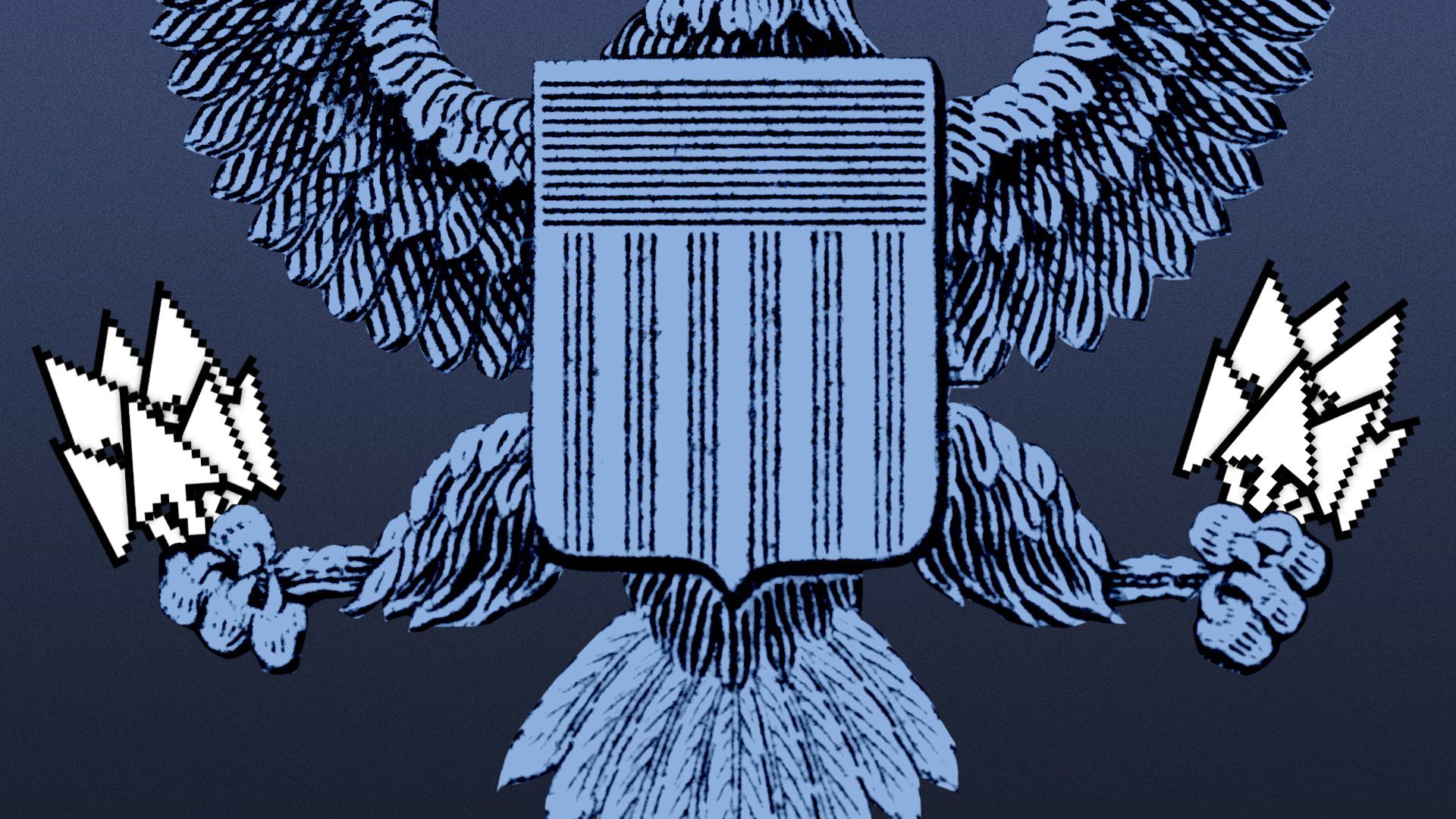
Illustration: Shoshana Gordon/Axios
The Biden administration is promising to hold software developers and critical infrastructure to tougher security standards and apply more pressure on ransomware gangs as part of a national cybersecurity strategy released Thursday, Axios' Sam Sabin reports.
Why it matters: The nearly 40-page document provides a roadmap for new laws and regulations over the next few years aimed at helping the U. S. prepare for and fight emerging cyber threats.
The big picture: The strategy — which was crafted by the two-year-old Office of the National Cyber Director (ONCD) — includes a wide range of tasks, from modernizing federal systems' cybersecurity defenses to increasing offensive hacking capabilities in the intelligence community.
The strategy also declares ransomware a "threat to national security, public safety and economic prosperity," opening a door to dedicating more intelligence community resources to fighting the problem.
Yes, but: A senior administration official told reporters the administration sees the strategy as a long-term, 10-year plan, rather than something that can be implemented overnight.
- Legislation to make software makers liable for data security issues would need to pass Congress and require input from the private sector, for example.
What's next: The Biden administration anticipates it will publicly release the implementation plan for the strategy in "the coming months," per the senior administration official.
3. Drink "printing" startup lands Patrick Stewart
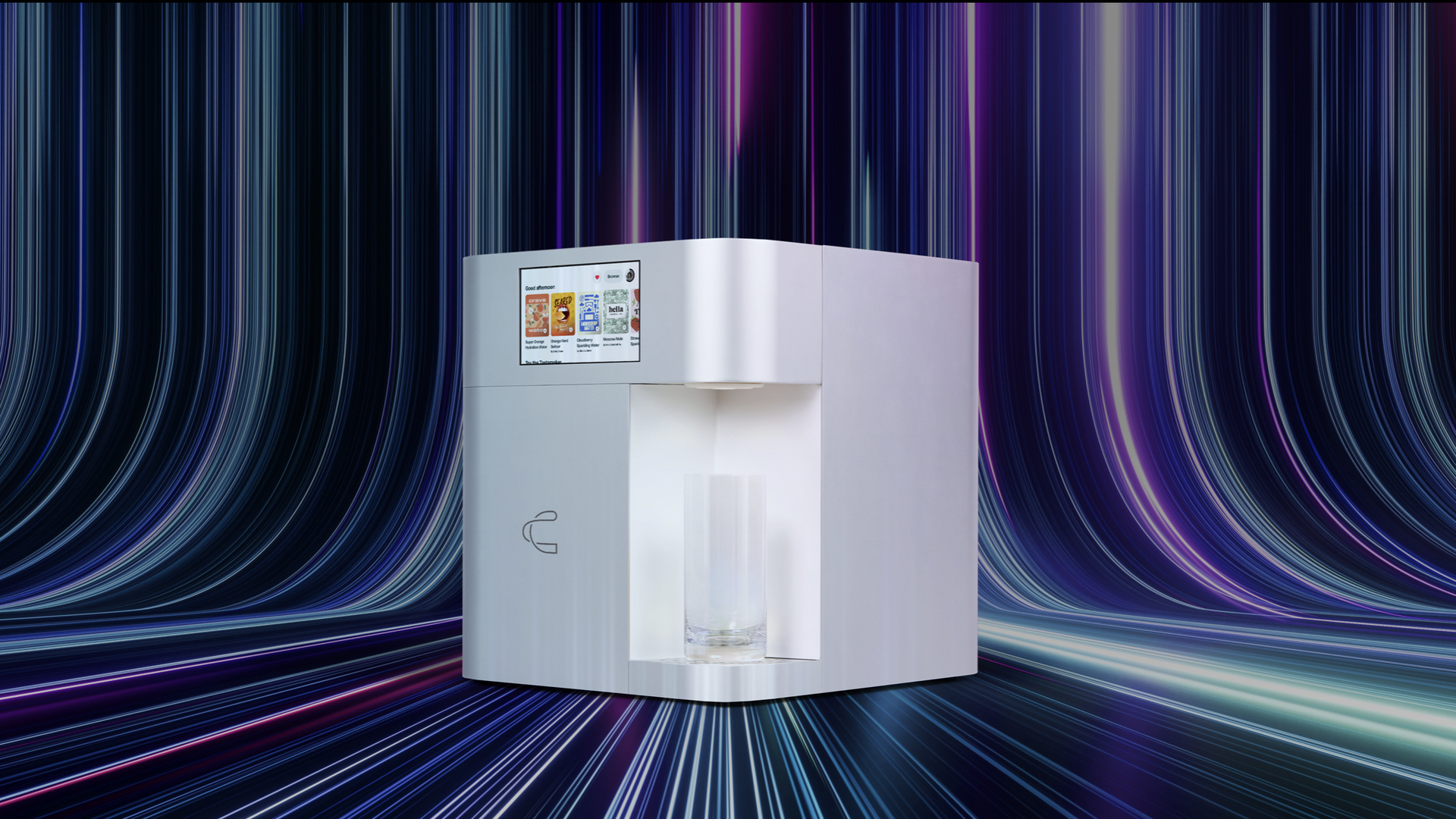
Image: Cana
San Francisco Bay Area startup Cana likens its beverage-making gadget to the replicator on "Star Trek." So it's not surprising that the firm has signed actor Patrick Stewart (the show's Captain Picard) to be an ambassador for the company, whose first device is scheduled to ship by the end of the year.
Why it matters: Cana pitches its countertop device, which can make everything from sparkling water to teas and coffees to alcoholic beverages, as not just versatile, but also good for the planet, replacing much of the packaging and waste that accompanies most drinks consumed at home.
How it works: The principle behind Cana's device is that most beverages are 95% water and the other ingredients can be broken down into a set of common components, such as salts, sugars and amino acids.
- The company even aims to turn water into wine — its name is the same as the place where Jesus performed the beverage miracle in the Bible.
The Cana One, the company's first device, aims to produce thousands of different drinks using water, carbon dioxide, sugar, alcohol and a replaceable cartridge that contains a total of 213 other ingredients.
- The device, which has a touch screen for choosing and customizing drinks, costs a fairly hefty $899 upfront. Then, rather than paying for the consumables, customers will pay per drink — maybe a dime for sparkling water up to a few dollars for an alcoholic drink.
- The current prototype takes about two minutes to make a drink, though the aim is to get that down to about 30 seconds by the time the final version ships.
- Cana is also looking to get influencers and drink brands to create their own recipes that can be sold to customers, with the drinks' creators getting a royalty on each drink sold.
Details: The company was incubated by The Production Board, which has poured $30 million into the project.
What's next: As someone who drinks gallons of Diet Coke/Coke Zero each week — and who has long coveted a Coca-Cola Freestyle machine for the home — I'm keen to try out Cana in the coming weeks, and will report back on how it tastes. (I got a demo of the Cana One making an orange-infused ginger ale during my briefing, but couldn't taste it over Zoom.)
4. Take note
On Tap
- Hewlett-Packard Enterprise is slated to report earnings after the markets close.
- Mobile World Congress concludes in Barcelona.
Trading Places
- Amazon's Ring unit hired Discord chief operating officer Elizabeth (Liz) Hamren as CEO, with founder Jamie Siminoff taking on the title of chief inventor. Hamren, who also spent time at Microsoft and Meta, will also be responsible for Blink, Amazon Key, and Amazon Sidewalk.
- Zendesk named Julie Swinney, who had been acting CFO, as its permanent financial chief.
ICYMI
- OpenAI announced an API that will let other companies integrate ChatGPT into their applications and services and also debuted Whisper, a speech-to-text tool. (The Verge)
5. After you Login
Check out this Twitter thread for portraits of every U.S. president reimagined as cool and sporting a mullet.
Thanks to Scott Rosenberg and Peter Allen Clark for editing and Bryan McBournie for copy editing this newsletter.