Axios Hill Leaders

May 07, 2026

Happy Thursday! Tonight's newsletter is 912 words, 3.5 minutes.
- ‼️ Schumer's multifront war
- 🥵 Upended by Trump
✅ Situational awareness: House Speaker Mike Johnson should have one more safe GOP seat this November after Tennessee Republicans passed a new map that draws out Democratic Rep. Steve Cohen's district. Go deeper.
1 big thing: ‼️ Schumer's multifront war
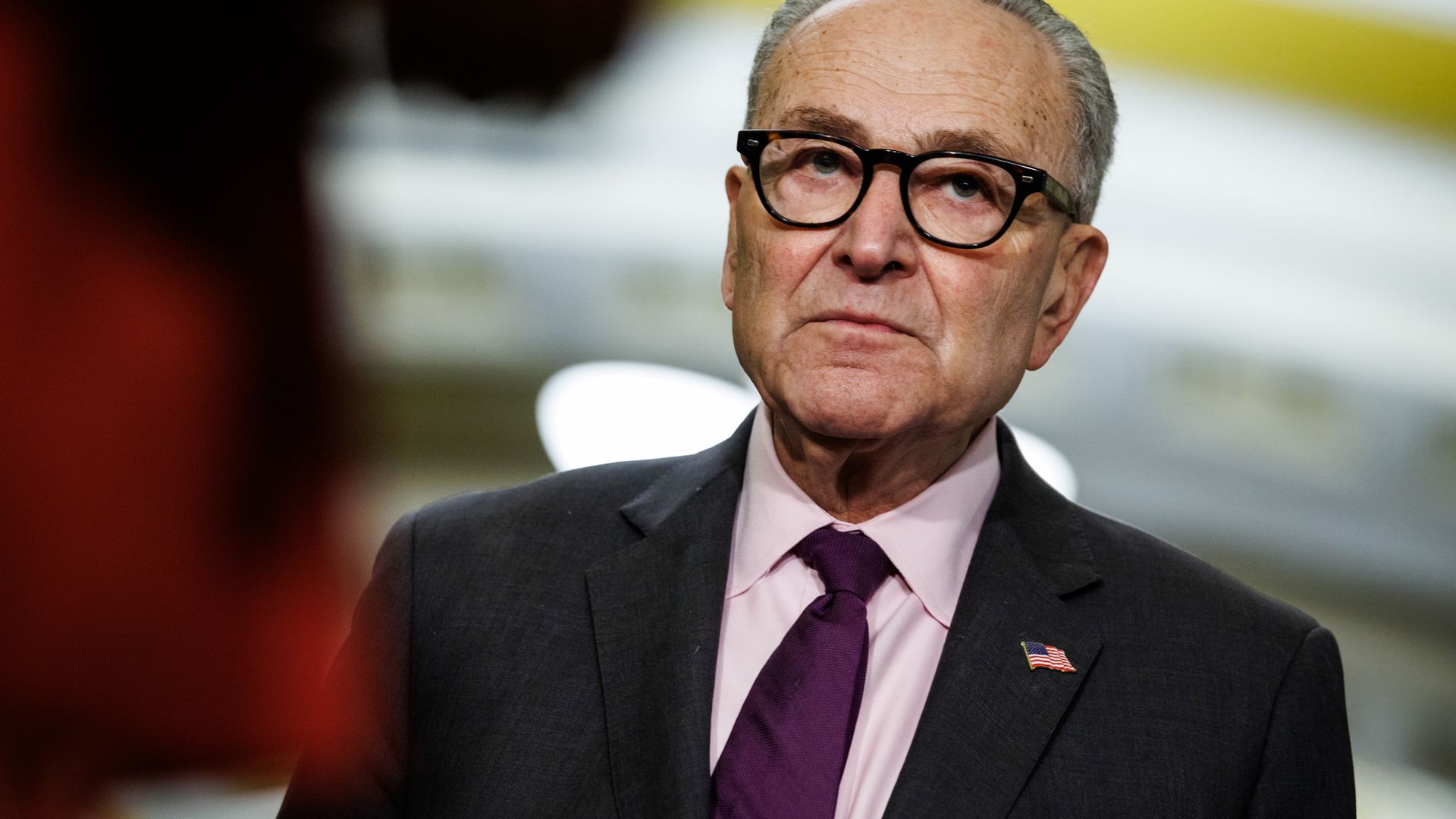
Chuck Schumer's headaches may only just be getting started after the Senate minority leader's handpicked candidate to take down Sen. Susan Collins was forced to drop out early in Maine's Democratic primary.
Why it matters: Progressive candidates are mounting serious, well-funded campaigns against more traditional Democrats in Senate primaries across the country.
- 🧳 Moderate Democrats are worried that progressive candidates, especially those with baggage, will hurt their chances of flipping key Senate seats if nominated.
- 🍪 Progressives argue that party leaders are relying on an outdated, cookie-cutter formula to determine who is "electable."
- 🦪 After oyster farmer Graham Platner became the Democrats' presumptive Senate nominee in Maine over Gov. Janet Mills, Senate leaders have more anti-establishment fights ahead.
Zoom in: Here's a guide to the biggest upcoming Democratic Senate primaries that exemplify the party's civil war:
- ⛴️ Michigan: Rep. Haley Stevens is the establishment favorite and is seen by the Democratic Senatorial Campaign Committee as the strongest candidate in the fall. Polls show she's locked in a tight race with the Bernie Sanders-backed former public health official Abdul El-Sayed and the digitally savvy liberal state Sen. Mallory McMorrow.
- 🏕️ Minnesota: Rep. Angie Craig, a battle-tested swing-seat Democrat, is viewed by liberals as the party leaders' preferred candidate. Peggy Flanagan, the progressive lieutenant governor who has attacked Craig as too squishy on ICE, has led in polling.
- 🐷 Iowa: Schumer and his allies believe Josh Turek, a state lawmaker and Paralympic gold medalist, has the best chance in the general election. Recent polling conducted by a group supporting Turek shows him ahead by a comfortable margin. But Turek's progressive opponent, Zach Wahls, matched him in first-quarter fundraising, and past polls have shown him as more competitive.
The other side: Even though Schumer whiffed in Maine and faces messy primaries in the near future, he also successfully recruited top Democratic candidates in Ohio, Alaska and North Carolina.
- Former Sen. Sherrod Brown, former Rep. Mary Peltola and former Gov. Roy Cooper, respectively, are widely seen in the party as star recruits.
- Schumer and Platner have spoken over the phone since Mills exited the race. Also, the DSCC has not endorsed any candidates in Michigan, Minnesota or Iowa.
The bottom line: "If you spend any time on the ground in Iowa, in Michigan, in Minnesota ... you will be absolutely floored with the intensity and the anger of Democratic primary voters," Bill Neidhardt, a Democratic strategist working to elect some of the anti-establishment Senate contenders, told us.
- Their fury is "not comprehended in the least by a lot of folks in D.C.," he said.
- "Our focus is on winning a Democratic Senate majority in November," said DSCC spokesperson Maeve Coyle. "We created a path to do that this cycle by recruiting formidable candidates, expanding the map and disqualifying Republican opponents — and we are confident those strategies will lead us to victory."
— Holly Otterbein
2. 🫠 Upended by Trump
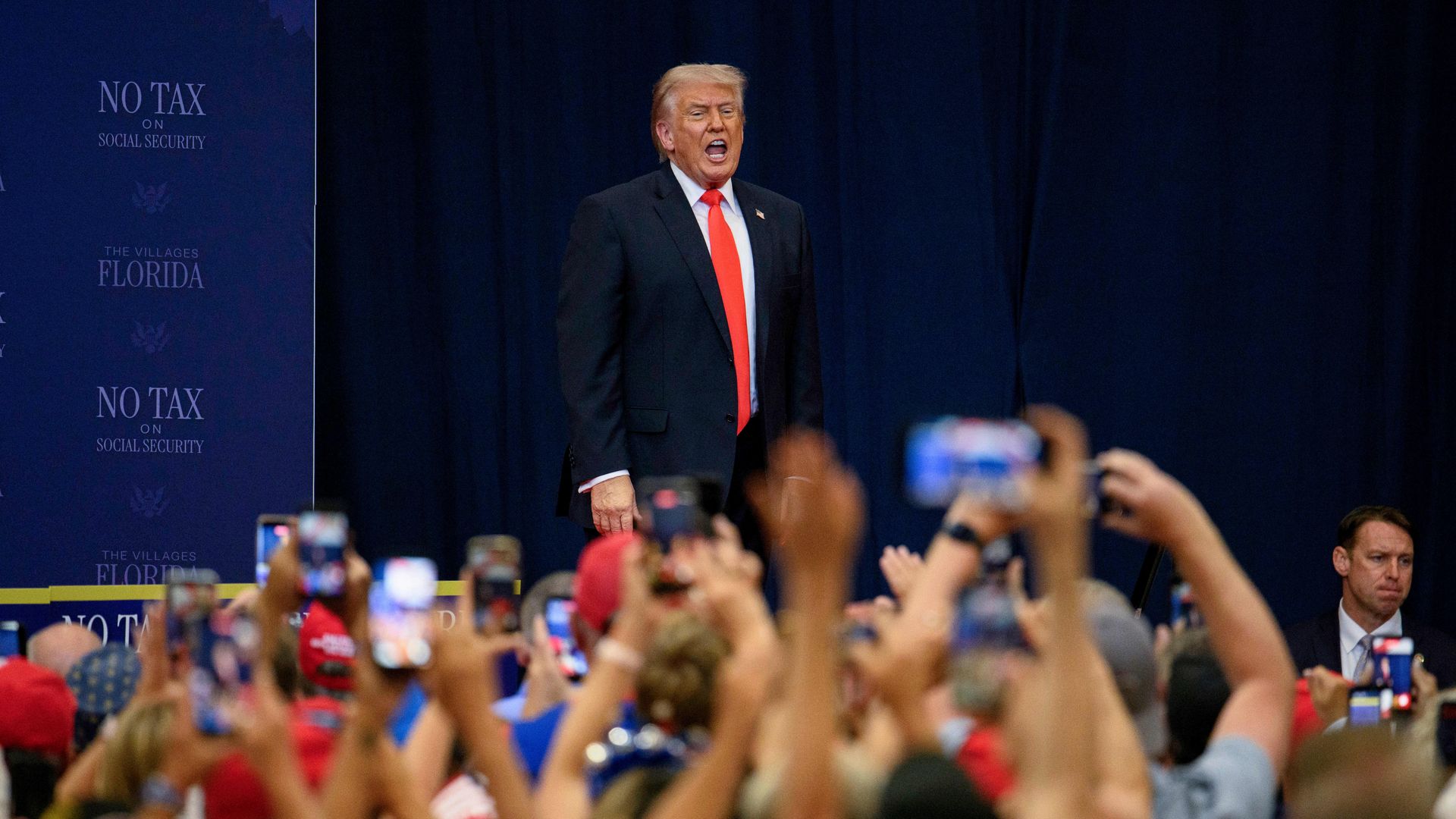
President Trump's declaration that hostilities with Iran are "terminated" has thrown Democrats' strategy around congressional war powers into turmoil.
🗳️ Why it matters: House Democrats had been planning to force a war powers vote every day. It is now unclear whether that will — or even can — happen.
- Lawmakers have been quietly reassessing how to approach the matter when Congress returns next week, according to multiple aides and lawmakers familiar with the matter.
🔚 Driving the news: Trump sent Congress a notification last week that the hostilities the U.S. initiated against Iran on Feb. 28 "have terminated."
- Trump cited the April 7 ceasefire he brokered with Iran, writing that there has "been no exchange of fire between United States forces and Iran since" then.
- Democrats roundly rejected that framing of the situation, pointing to the U.S. military's blockade of Iranian vessels in the Gulf of Oman.
- "With an active blockade and shooting, plus threats of resuming bombing at any moment, I don't know anyone who takes that argument seriously," Rep. Jared Huffman (D-Calif.) told us.
The latest: The U.S. launched airstrikes on Iran's Qeshm port and the coastal city of Bandar Abbas today, but it does not see the operation as restarting the war or breaking the ceasefire, an American official told Axios' Barak Ravid.
😈 Between the lines: The congressional notification was Trump's way of bypassing a War Powers Act requirement that he seek approval for continued operations in Iran within 60 days of the conflict's inception.
- But some Democratic lawmakers fear it may also be used by Republicans as a pretext to shut down their efforts to force votes on war powers resolutions.
- A spokesperson for Speaker Johnson did not respond to a request for comment on the matter.
What to watch: Spokespeople for several of the House Democrats who introduced war powers resolutions in recent weeks did not respond to questions about whether their bosses still plan to try to force those votes or declined to give a definitive answer.
- "We'll see if there's any reconsideration of strategy when we get back," Huffman told us.
- A spokesperson for Rep. Jason Crow (D-Colo.) noted that he and Rep. Seth Moulton (D-Mass.) introduced a war powers resolution even after Trump's declaration — potentially signaling plans to forge ahead.
— Andrew Solender
This newsletter was edited by Justin Green and copy edited by Kathie Bozanich.
Sign up for Axios Hill Leaders