Axios Hill Leaders

May 13, 2025

1 big thing: 😬 Exclusive: Dems' tough medicine

A jarring message is coming for congressional Democrats this week: It may feel good to focus on President Trump's alleged corruption. But its effectiveness has its limits.
Why it matters: Swing voters aren't biting at language that worked like a charm in prior elections, according to Impact Research focus groups in battleground states.
- 1️⃣ Swing voters are "more difficult to convince" on Trump corruption messages, said Tiffany Muller, the president of End Citizens United, an anti-corruption organization. "They've heard 'drain the swamp' before," she told us.
- 2️⃣ They agree "threats to democracy" are bad news. But they disagree over what that means, watering down its effectiveness.
Zoom in: Trump isn't making it easy with his family's multibillion-dollar crypto deals or thanking Qatar today for offering to give him an Air Force One replacement.
- But he still has some "inoculation" on corruption messaging thanks to DOGE and his longstanding anti-D.C. rhetoric, according to an Impact Research memo shared with us.
👀 The intrigue: Generic politicians are far more vulnerable to the corruption critiques than Trump or Elon Musk specifically, the focus groups suggest.
- But that's only if Democrats can put on a muscular anti-corruption demonstration. The focus group participants view Democrats as weak.
- Muller and Molly Murphy, the president of Impact Research, will be on the Hill this week to brief congressional Democrats and progressive allies on their findings.
- While a focus group is not a statistically significant sample like a poll, the responses show how some voters are thinking and talking about current events.
Zoom out: Populists on both parties' ideological extremes have already cracked the code, even when that means going after their own.
- The clearest example: Stock trading bans for lawmakers and their families, with bills attracting cosponsors that range from Rep. Alexandria Ocasio-Cortez (D-N.Y.) to MAGA firebrand Rep. Cory Mills (R-Fla.).
Among Democrats, the guidance comes as the party's traditional split between progressives and centrists is giving way to a divide between young and old, fighters and compromisers, those who understand the urgency of the moment and those who appear unaware.
- Some younger centrists, for instance, have found themselves pleading with older colleagues to be less complacent.
- But many in the party's older guard have refused to shift tactics, leading some lawmakers to openly bemoan their party establishment in ways that were once taboo.
— Justin Green and Andrew Solender
2. 🏎 Scoop: Senate moving on Trump judges
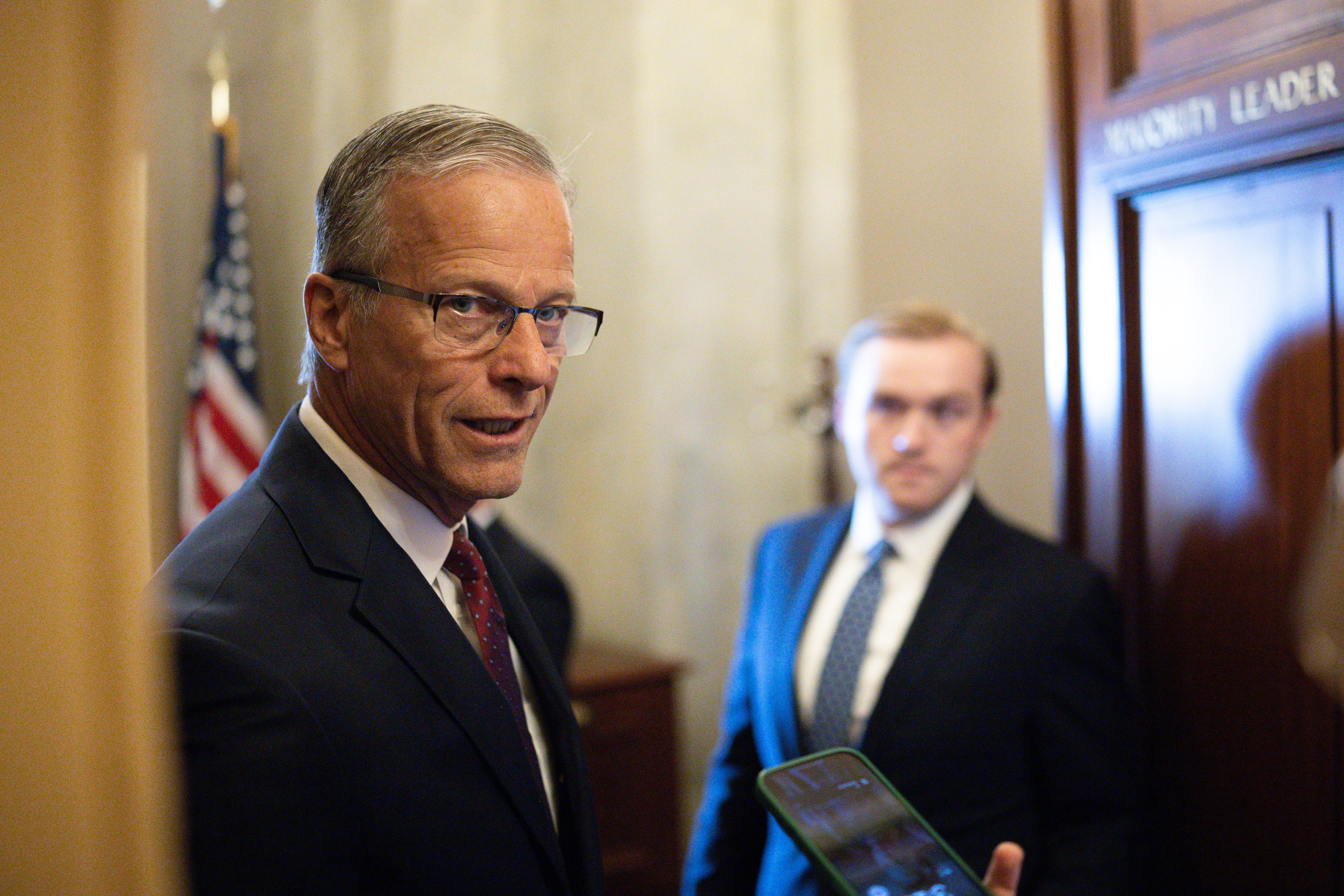
Senate Judiciary Chair Chuck Grassley (R-Iowa) is scheduling a June 4 hearing for the first slate of nominated judges of Trump's second term.
Why it matters: Trump and his allies, including Grassley, have railed against federal courts hamstringing the administration. Now, Senate Republicans aim to put more GOP-friendly judges on the bench.
- Trump took longer to nominate judges this time around than he did in 2017 or former President Biden did in 2021.
- This is the earliest date possible for Grassley to set a hearing. Committee rules require him to wait 28 days after receiving the nominations.
What he's saying: "Far too many judges are attempting to play policymaker instead of plainly interpreting the law, as our Constitution requires," Grassley said in a statement provided to us.
- "It's clear the federal judiciary needs more constitutionalist judges, and that's what President Trump's judicial nominees will deliver."
Zoom in: All five current nominees will be questioned in the same committee hearing.
- Trump has nominated Zachary Bluestone, Joshua Divine, Maria Lanahan and Cristian Stevens to serve on the U.S. District Court in Missouri.
- He also nominated Whitney Hermandorfer to serve on the 6th U.S. Circuit Court of Appeals.
The big picture: It will be difficult for Senate Majority Leader John Thune to beat his predecessors when it comes to confirmed judges, barring a wave of retirements leading to more judicial vacancies.
- There are just 46 judicial vacancies for Trump to fill right now — far fewer than at the start of his first term.
- Former GOP leader Mitch McConnell made judges a top priority. He set a then-record of 234 confirmed judges in one presidential term, which included three Supreme Court justices.
- McConnell's record was beaten in late December by then-Majority Leader Chuck Schumer, who confirmed 235 judges for Biden.
— Stef Kight
3. 💣 Exclusive: Governors blast "impossible" GOP plan

Democratic governors warned en masse today that it will be "impossible" for states to make up for the hundreds of billions of dollars in Medicaid spending cuts that House Republicans are proposing.
Why it matters: The country's 23 Democratic governors are trying to amplify their Medicaid message by speaking in a unified voice.
- The proposed spending cuts are "disastrous," the governors said in a statement first shared with us.
- The group includes seven Democratic governors who run states won by President Trump in 2024. They also represent five of the seven swing states and more than a majority of the country's population.
Driving the news: House Republicans today released the text of their plans to cut billions from Medicaid, including imposing work requirements and cutting reimbursement rates for states that offer services to undocumented migrants.
- They will start to mark up the legislation in committee tomorrow.
- The CBO has not calculated the exact amount Republicans would reduce spending by, but it estimated today the overall cuts from the Energy and Commerce committee — which covers the Medicaid budget — would be more than $880 billion.
The bottom line: "The notion that states will respond to massive cuts to federally appropriated dollars by backfilling with state resources is simply inaccurate and impossible," the Democratic governors said.
— Stephen Neukam and Hans Nichols
Axios Hill Leaders