Axios Hill Leaders

April 03, 2026

🌶 Spicy Friday send below. 577 words, 2 minutes.
- 🤑 You're paying for this
- 💸 Trump's no-butter budget
1 big thing: 🤑 You're paying for this
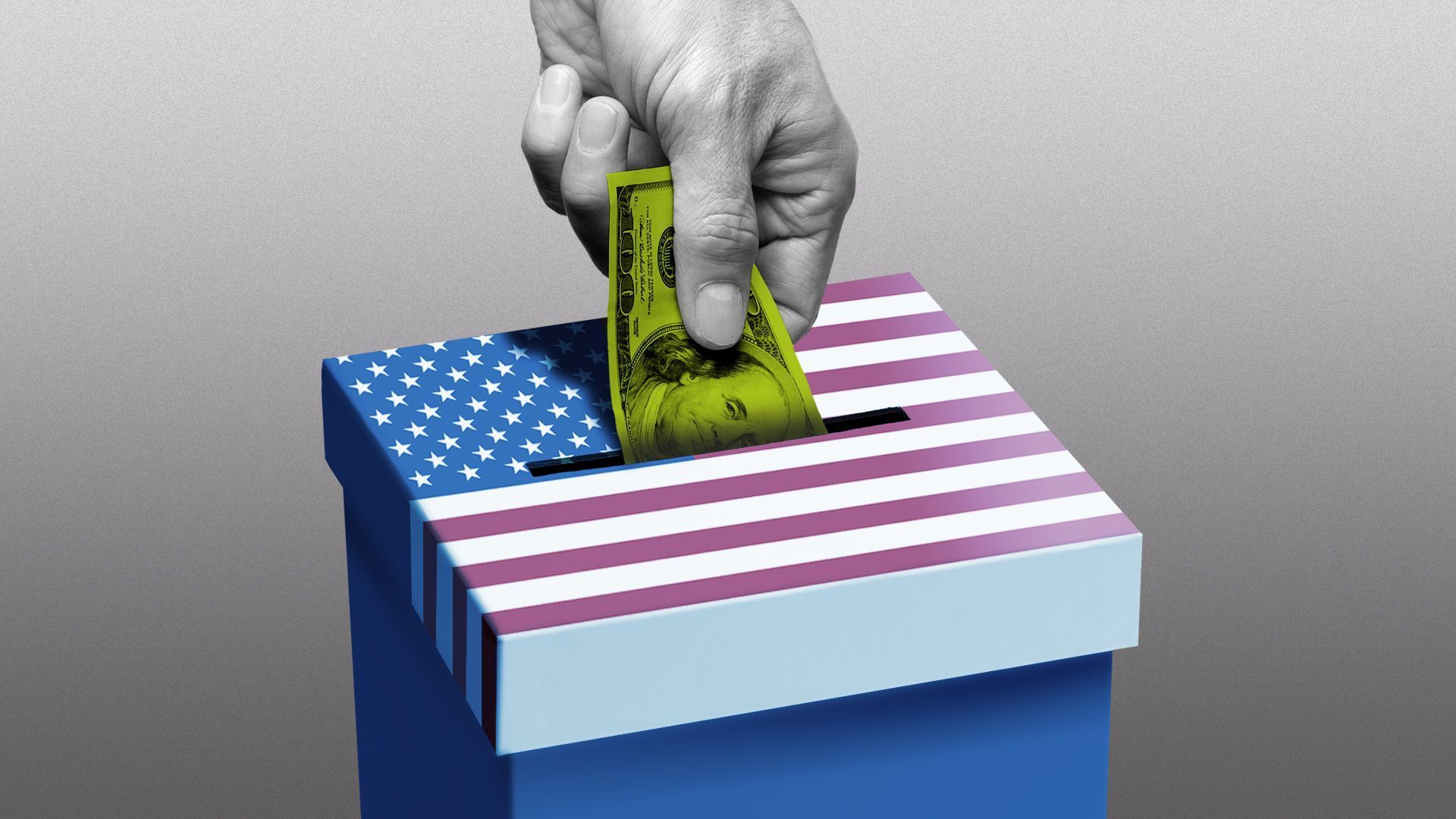
👀 Keep a close eye on the ads that inundate your screens as the 2026 midterm elections heat up:
- You, the taxpayer, paid for some of them.
Why it matters: Each election cycle, incumbent House members use a privilege called "franking" to put millions in taxpayer dollars toward giving their reelection campaigns a thinly veiled boost.
- "People will say, 'This is an ad paid for by the United States Congress?'" House Administration Committee ranking member Joe Morelle (D-N.Y.) told us about some of the franked ads his colleagues are running.
- Morelle said the issue's on his agenda if Minority Leader Hakeem Jeffries' Dems retake the House in November. Franking is overseen by the House Administration panel.
Zoom in: In the 2024 election cycle, House offices spent a combined $44 million on franked mail and another $19 million on other forms of franked communications, such as ads, an Axios analysis of congressional disbursement forms found.
- Around $5 million of that was spent on television and digital ads, which are marked as "paid for with official funds authorized by the House of Representatives," according to AdImpact.
- "Next year ... I want a review of this, in a bipartisan way, to see if we can't tighten up what I think are some things that are really on the edges of what is appropriate," Morelle said.
- House members have already spent nearly $1.4 million in official congressional funds running ads like those since the start of the 2026 cycle, according to AdImpact.
Between the lines: Most House members who have blanketed the airwaves with taxpayer-funded ads this election cycle fall into one of three groups.
- Battleground-district members: Reps. Tom Barrett (R-Mich.), Laura Gillen (D-N.Y.), Mariannette Miller-Meeks (R-Iowa), Henry Cuellar (D-Texas), Nick Begich (R-Alaska), Sharice Davids (D-Kan.), David Valadao (R-Calif.), Kristen McDonald Rivet (D-Mich.) and Susie Lee (D-Nev.).
- Higher-office seekers: Reps. Robin Kelly (D-Ill.), Wesley Hunt (R-Texas), Mike Collins (R-Ga.), Josh Gottheimer (D-N.J.) and Nancy Mace (R-S.C.).
- Primary targets: Reps. Shri Thanedar (D-Mich.), Grace Meng (D-N.Y.), Brad Sherman (D-Calif.), John Larson (D-Conn.), Dan Goldman (D-N.Y.) and Steve Cohen (D-Tenn.).
Zoom out: House members can use franked funds to pay for billboards, digital ads, robocalls, texts and radio ads.
- Under federal law, members can send out these unsolicited mass communications until 60 days before their next election — the "blackout period."
- Former Rep. Carolyn Maloney (D-N.Y.) faced public scrutiny for sending just under 500 franked mailers a day in the run-up to her 2022 primary — narrowly skirting the limit that would qualify them as prohibited mass communications under blackout rules.
- Ethics experts concluded Maloney's actions, commonly known as the "499 rule," were in line with the letter of the law if not the spirit.
The bottom line: "While PSAs about constituent services have their place, it's unlikely that many taxpayers would want politicians to spend public funds on shameless self-promotion," said Michelle Kuppersmith, the executive director of Campaign for Accountability.
— Andrew Solender
2. 💸 Trump's no-butter budget

The White House is out today with a 2027 budget proposal that's all guns and no butter, as Axios chief economics correspondent Neil Irwin puts it.
- 🚀 Defense spending would skyrocket 42%.
- 🧨 Non-defense spending would plunge 10%.
- 🌹 GDP growth is assumed to be far higher than projected, and interest rates far lower.
Between the lines: It's April 3, and the 2026 budget's still not fully set.
This newsletter was edited by Justin Green and copy edited by Kathie Bozanich.
Sign up for Axios Hill Leaders