Axios Hill Leaders

September 30, 2026

🔥Spicy one tonight in 760 words, 3 minutes.
- 🏈 College sports hits House wall
- 👀 Dems eye extra leverage
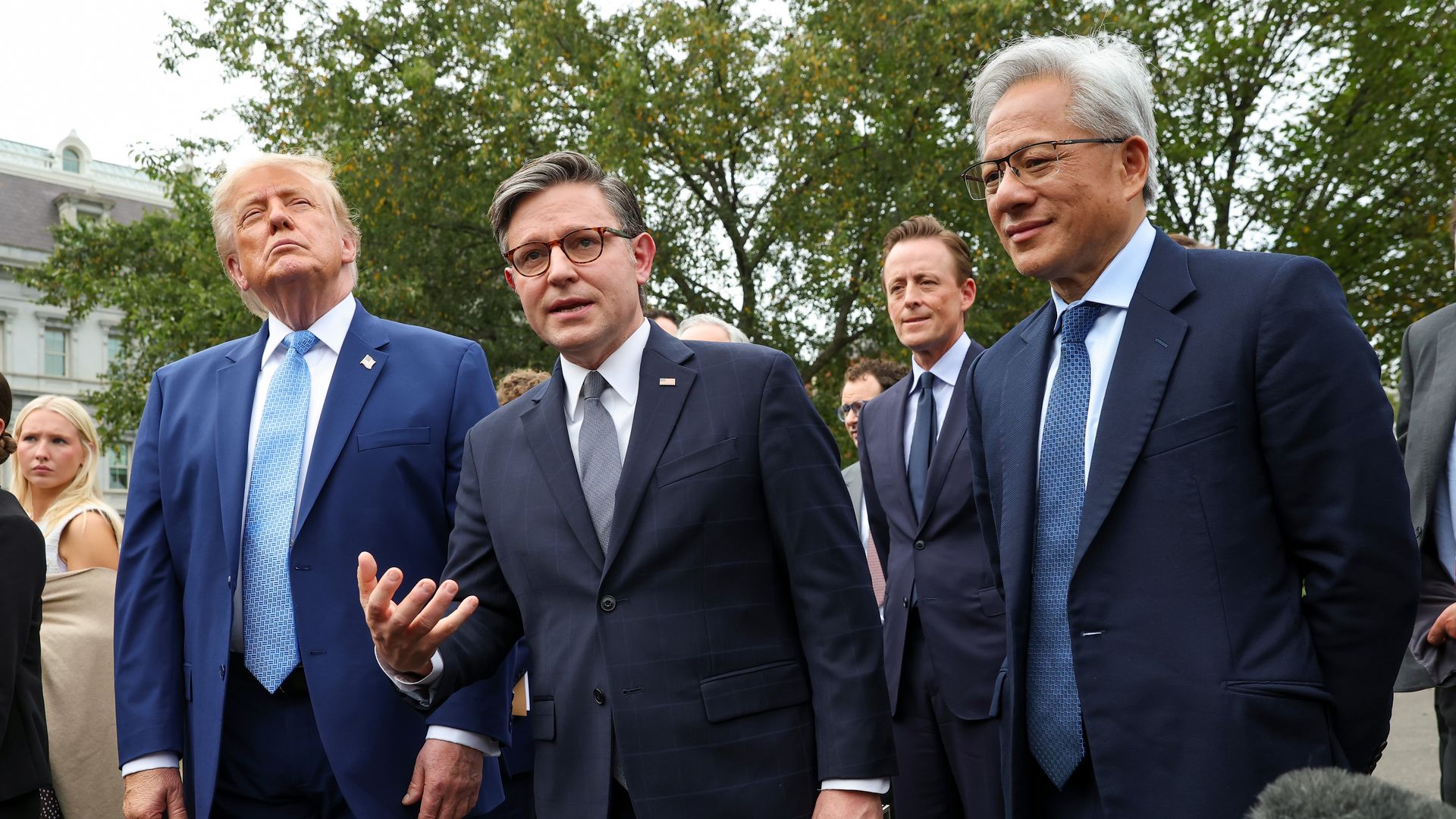
🤖 Situational awareness: Speaker Mike Johnson and President Trump announced after today's AI summit that several tech titans signed an "accord" outlining standards for reviewing their systems.
- "This is a statement of principles ... a statement of standards, commitments that are voluntary on behalf of the industry. It sets forth expectations," Johnson told reporters.
1 big thing: 🏈 College sports hits House wall
The most significant congressional action on college sports in decades is about to run into trouble in the House of Representatives.
🥵 Why it matters: The House has already scrapped one major overhaul of college sports this Congress, and Speaker Johnson has a huge priority — government funding — to get passed during the lame-duck session.
- The Congressional Black Caucus is opposed over concerns about exploiting students of color, so Republicans can't count on Democratic support to quickly move the bill under suspension of the rules.
- Some conservative House Republicans want to add restrictions on foreign athletes — a change that would jeopardize the bipartisan coalition behind the measure in the Senate.
- The Senate bill also doesn't resolve the contentious question of whether college athletes should be considered employees: A group of Republicans has raised concerns that would leave the door open to possible unionization efforts by players.
🔙 Between the lines: Johnson told reporters that he would bring the House back on 48 hours' notice if the Senate moved on any major legislation before the election.
- But GOP leadership currently has no plans to do so to deal with the college sports bill.
- An early return would tee up a pre-election vote on Rep. Thomas Massie's (R-Ky.) privileged resolution to force a vote on impeaching Defense Secretary Pete Hegseth.
- Lawmakers could also use a return to Washington to force action on other issues GOP leaders would rather not litigate in the final weeks of the campaign season.
🛑 Flashback: House GOP leaders tried to bring their own college sports bill, the SCORE Act, to the floor in May, but pulled it after opposition from the CBC and a few Republicans left them short of the needed votes.
- The bill was a top priority for Majority Leader Steve Scalise (R-La.), but its collapse shifted the action to the Senate, where lawmakers negotiated their own bipartisan version.
— Kate Santaliz
2. 👀 Dems eye extra leverage
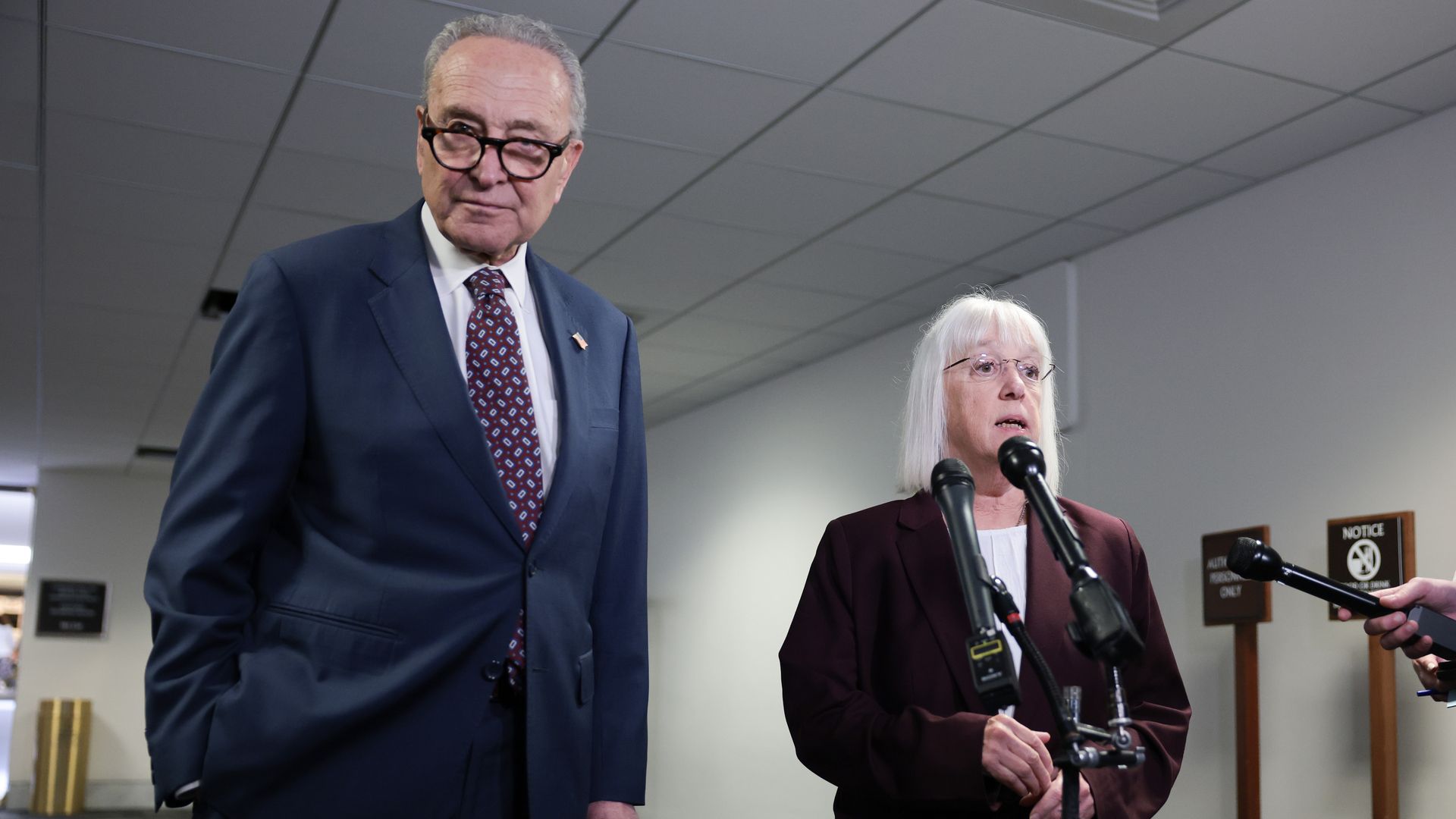
Sen. Patty Murray (D-Wash.) is eyeing the year-end appropriations process to force Senate Republicans and the White House to accept new restrictions on the Office of Management and Budget's use of "pocket rescissions."
💰 Why it matters: Congress needs to reach a bipartisan agreement to fund the government before Dec. 11, when a short-term stopgap expires.
- Senate appropriators in both parties are furious over OMB's Friday night notification that it will cancel $810 million that Congress and Trump agreed to spend in fiscal 2026.
- For Democrats, OMB's decision to use pocket rescissions for a second time was entirely predictable — and is fresh evidence that Congress needs to put clear guardrails around their use.
🎤 What they're saying: "I have been saying throughout all of our appropriations process, throughout all the CR negotiations, we have to have language in there about rescissions," Murray, the top Democrat on the Senate Appropriations Committee, told reporters today.
- "I have been told 'no' time and time again."
- "That will be our demand when we come back on any bill we pass later on this year."
💸 Zoom out: In his first year, Trump initially worked with Congress to claw back roughly $9 billion in foreign aid and public broadcasting funding, which Congress passed in July 2025.
- But in August 2025, Trump took a different route, using a "pocket rescission" to target roughly $5 billion in foreign aid.
- When congressional Democrats laid out their terms for funding the government in the following month, they included restrictions on "pocket rescission," which they called illegal.
😤 Flashback: Senate Appropriations Chair Susan Collins (R-Maine) and Senate Minority Leader Chuck Schumer blasted the August 2025 maneuver, with Democrats warning at the time it could complicate negotiations to fund the government. Collins called it a "clear violation of the law."
- The government ultimately shut down at the end of fiscal 2025 amid a separate fight centered on Democrats' push to extend enhanced Affordable Care Act subsidies.
What's next: Collins said yesterday that appropriators are "already looking at language" to restrict the use of pocket rescissions.
- Today, she floated one possible response: giving the Government Accountability Office authority to sue the administration under the Impoundment Control Act of 1974.
— Hans Nichols
This newsletter was edited by Justin Green and copy edited by Kathie Bozanich.
Sign up for Axios Hill Leaders