What is pocket rescission, Trump's bid to cancel $5 billion in foreign aid?

Add Axios as your preferred source to
see more of our stories on Google.
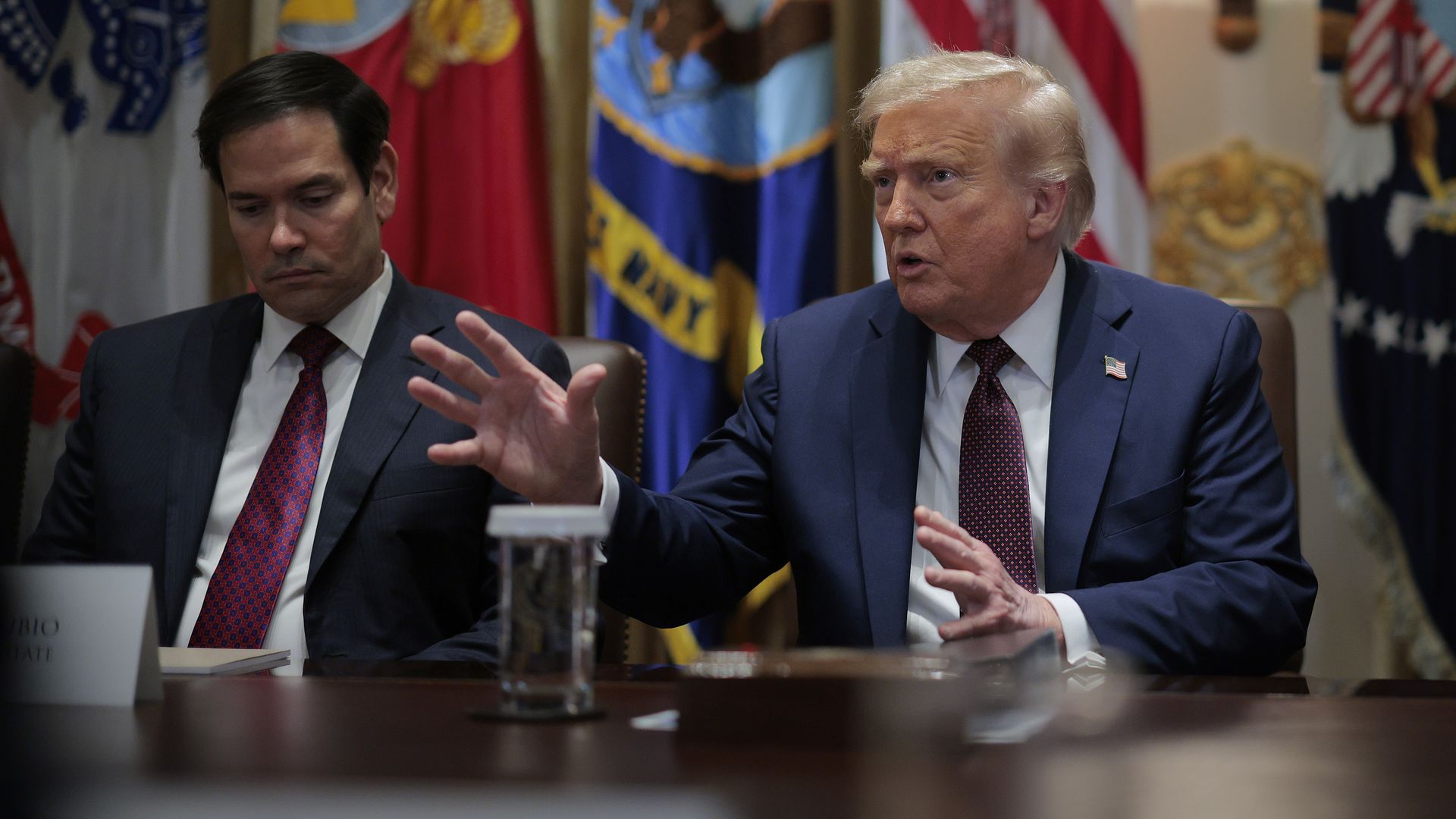
President Trump speaks at a cabinet meeting on Aug. 26. Photo: Chip Somodevilla/Getty Images.
President Trump wants to cancel roughly $5 billion in foreign aid through a process known as a pocket rescission, the White House budget office confirmed to Axios on Friday.
Why it matters: The government's internal watchdog reiterated this month that pocket rescissions are illegal because they undermine Congress' power of the purse, further eroding the systems of checks and balances that govern American democracy.
Driving the news: Trump wants to cut $4.9 billion in funds allocated to the U.S. Agency for International Development (USAID), America's humanitarian aid and assistance program.
- The president essentially gutted the agency this year, turning USAID into a skeleton crew.
- An Office of Management and Budget spokesperson told Axios that the president is deploying a pocket rescission for the first time in nearly 50 years to cancel the "$4.9 billion in woke and weaponized foreign aid money that violates the President's America First priorities."
Here's what you need to know about the laws governing the pocket rescissions process:
What mechanisms exist to cancel or delay funding?
Congress has the power to dictate America's budget and decide how much money is given to individual federal agencies.
- Each time Congress appropriates funding, it also determines how long that money is available before it expires.
The Impoundment Control Act provides a process for the president or any executive official to seek the delay or cancellation of congressionally approved funding, according to the Government Accountability Office.
- When an executive official withholds funding, whether through action or inaction, that is an impoundment.
- If an executive agency doesn't spend all of the money designated for a project because the contract came under budget, that doesn't count as impoundment.
When is it legal for the president to impound money?
The president can ask Congress to delay or withhold funds over policy disagreements or cost-saving measures by sending Congress a "special message" with details on why the funding should be canceled.
- It is then up to Congress to decide if it wants to make a rescission or claw back some of the unused funds.
By the numbers: There have been 243 special messages issued by Democratic and Republican presidents since the impoundment law was enacted in 1974 as of March 2025, according to the Government Accountability Office.
Yes, but: The president can't withhold certain funds under any circumstances, such as money for Social Security and Medicare.
What's a pocket rescission?
The president can pause distributing funds for up to 45 days after issuing a special message, according to the GAO.
- A pocket rescission occurs when the president sends that special message so close to the end of the fiscal year on Sept. 30 that the funds will expire before those 45 days are up, effectively canceling the money.
Are pocket rescissions legal?
Pocket rescissions are illegal because they circumvent Congress' power of the purse, according to GAO.
What they're saying: A spokesperson for the OMB told Axios that pocket rescissions are a "lawful tool available to the executive branch to reduce unnecessary spending."
- The spokesperson noted former Presidents Ford and Carter both effectively made pocket rescissions while in office, which led the GAO to urge Congress to change the ICA to prevent such actions from happening again in the future.
- While Congress never officially acted on the GAO's request, the office has been extremely clear that pocket rescissions violate the impoundment law.
The other side: "Instead of this attempt to undermine the law, the appropriate way is to identify ways to reduce excessive spending through the bipartisan, annual appropriations process," Sen. Susan Collins (R-Maine), chair of the Senate Appropriations Committee, said in a statement.
- Collins said that Congress regularly approves rescissions as part of the appropriation process, and the current year-long funding bill under which the U.S. is operating includes 70 rescissions.
- Senate Minority Leader Chuck Schumer (D-N.Y.) and Sen. Patty Murray (D-Wash.), the ranking member of the Appropriations Committee, also rejected the White House's reasoning Friday, Axios' Hans Nichols reported.
Go deeper: Why this Nixon-inspired law says Trump can't freeze federal funding
