
Axios Generate

August 29, 2022
🍩 Welcome back! Today's newsletter, edited by Carlos Cunha, has a Smart Brevity count of 1,195 words, 4.5 minutes.
☢️ The UN's nuclear watchdog is sending a team to the Russian-occupied Zaporizhzhia power plant in Ukraine as reports of nearby shelling raise concerns of a potential disaster. Go deeper
🎶 Exactly 34 years ago, Tracy Chapman was No. 1 on the Billboard album charts with her stunning debut that has today's intro tune...
1 big thing: Europe's energy outlook darkens

Illustration: Brendan Lynch/Axios
With the days turning shorter, Europe is facing a dire energy crisis that is increasingly testing political leaders and the public, Andrew writes.
Why it matters: The ability of European countries to keep the lights and heat on this winter depends on how this crisis is managed.
- A failure to secure adequate energy supplies could lead to political unrest and economic turmoil.
The big picture: The narrative has shifted from a threatening situation requiring urgent action to near certain peril that could cause the EU to dive into the depths of a recession, with worldwide knock-on effects.
Threat level: Energy prices continue to spike to record levels nearly every day, as Russia throttles back its shipments of natural gas to the EU in retaliation for Ukraine-related sanctions.
- Last week, the U.K.'s energy regulator announced an 80% hike to the price cap that gas suppliers can charge customers, with another increase to come in January.
- Price spikes could threaten lives this winter, as people have to choose between food and heat.
- According to Reuters, the benchmark European gas price has jumped by at least 550% in the past year.
What's next: European Union energy ministers are likely to hold an emergency meeting in coming days.
- Some leaders, such as the prime minister of the Czech Republic, are seeking an EU-wide solution.
- The EU's 27 member states agreed in July to voluntarily cut gas consumption by 15% through March 2023.
- Under that agreement, there is an option to impose mandatory gas consumption cuts.
Yes, but: Such measures may be difficult, given the diverse energy mix of countries within the bloc.
- Also, it is clear that countries like Germany are rushing to fill their natural gas reserves for the cold season. But Europe will still need considerable imports — this time in the form of liquified natural gas— to get through the winter.
Between the lines: The situation in the U.K. illustrates the political pressures on leaders to act.
- After last week's price hikes, a debate is raging over whether to cut taxes to reduce costs on residents, make direct payments to help people withstand the price spikes, or both.
What's we're watching: With energy markets blinking red, the actions taken in the next few weeks will help determine how Europe fares this winter, and how high citizens' bills will climb.
2. Honda and LG unveil plans for U.S. battery plant
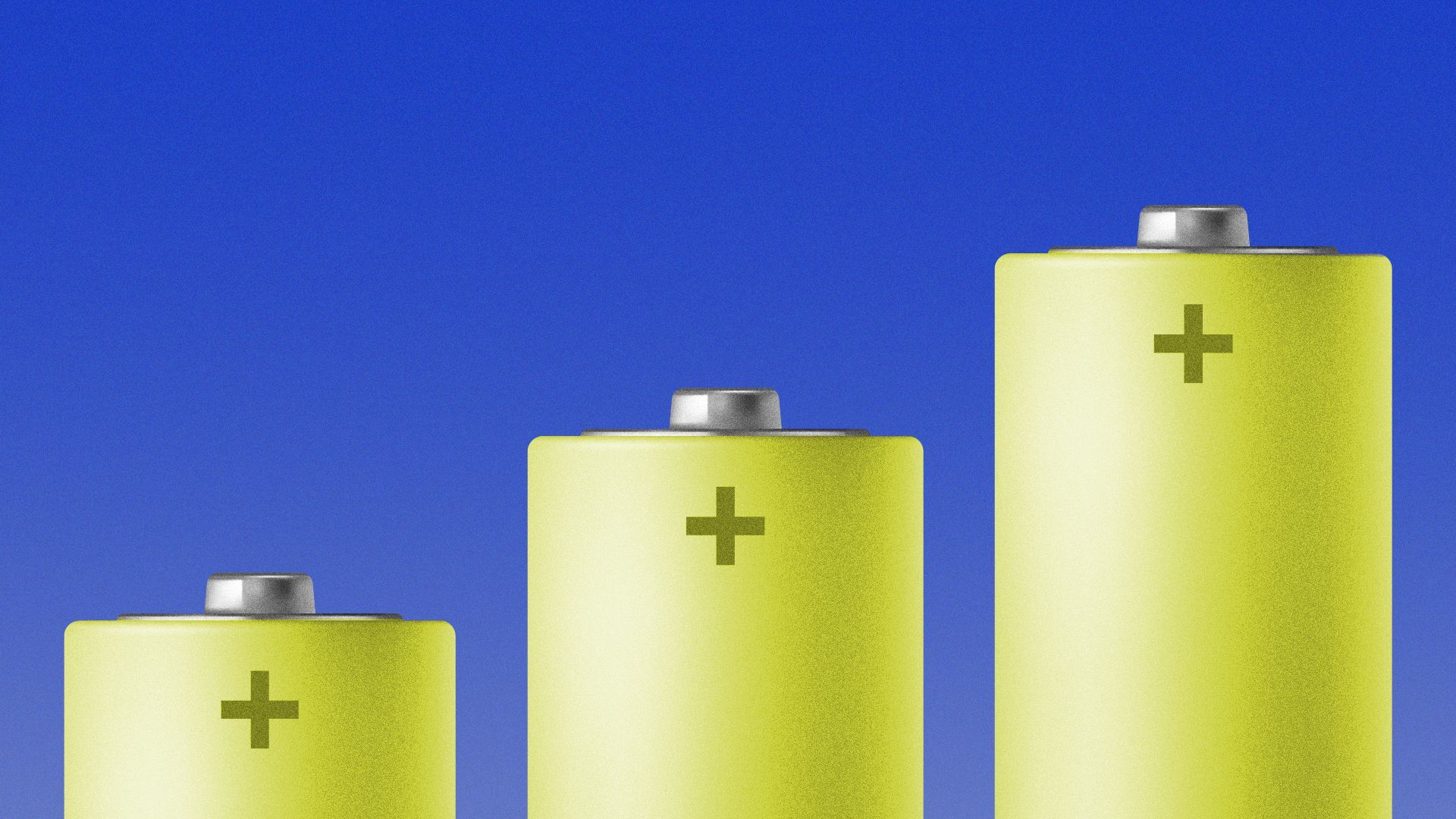
Illustration: Gabriella Turrisi/Axios
Honda and Korea's LG Energy Solution said Monday they're investing $4.4 billion in a new U.S. plant to build electric vehicle batteries, Ben writes.
Driving the news: The factory is slated to start construction in early 2023 and produce batteries for Honda and Acura electric vehicles sold in North American markets.
- The location was not disclosed, but Ohio is an option, per several reports.
Why it matters: It's the latest in a slew of major battery projects underway or planned in the U.S. And that was true even before passage of the new climate law.
- The law ties consumer subsidies to automakers meeting rules on sourcing batteries and materials from North America and other free-trade partners.
The intrigue: "With battery prices surging on the back of rising demand and skyrocketing raw material costs, more inter-industry partnerships are likely to form over the next few years," the Wall Street Journal reported.
3. Biden team warns refiners on exports
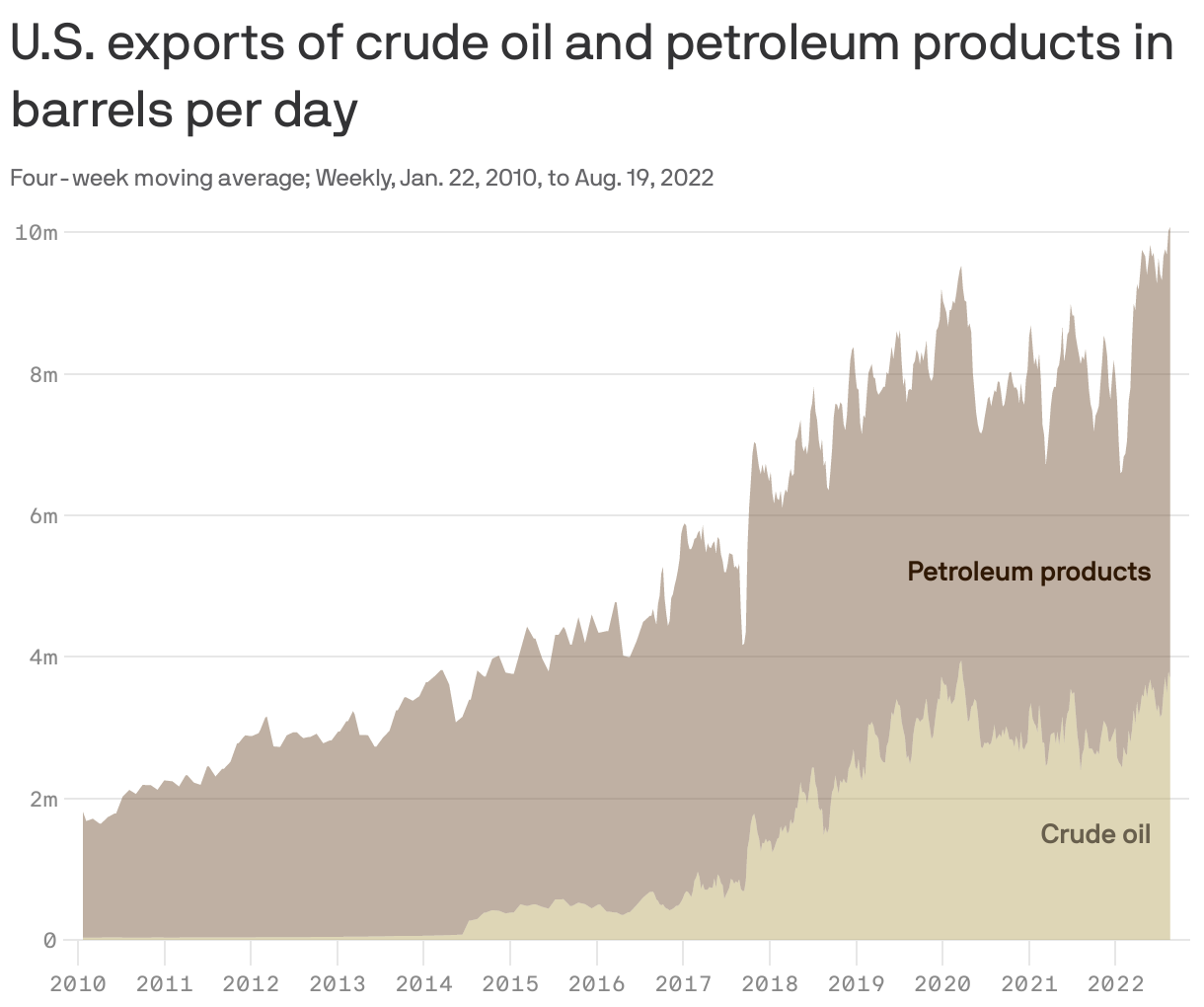
The Energy Department is urging big refiners not to continue increasing fuel exports and instead focus on boosting domestic stockpiles, Ben writes.
Driving the news: Energy Secretary Jennifer Granholm, in Aug. 18 letters to several companies revealed in recent days, warns of "historically low" gasoline and diesel inventories in some regions.
- "As we enter peak hurricane season and look to the winter heating season just a few months away, these low inventory levels pose heightened risks."
- The letters went to refiners like Chevron, Exxon, Valero and Shell, per published reports and a copy viewed by Axios.
Why it matters: This summer has seen historically high exports of refined products, and increasing crude oil exports, too.
- Granholm encourages a near-term focus on building U.S. inventories, "rather than selling down current stocks and further increasing exports."
What's next: She urges companies to "proactively" address the issue, or the Biden administration will "need to consider additional Federal requirements or other emergency measures."
4. "Overwhelming" floods in Pakistan
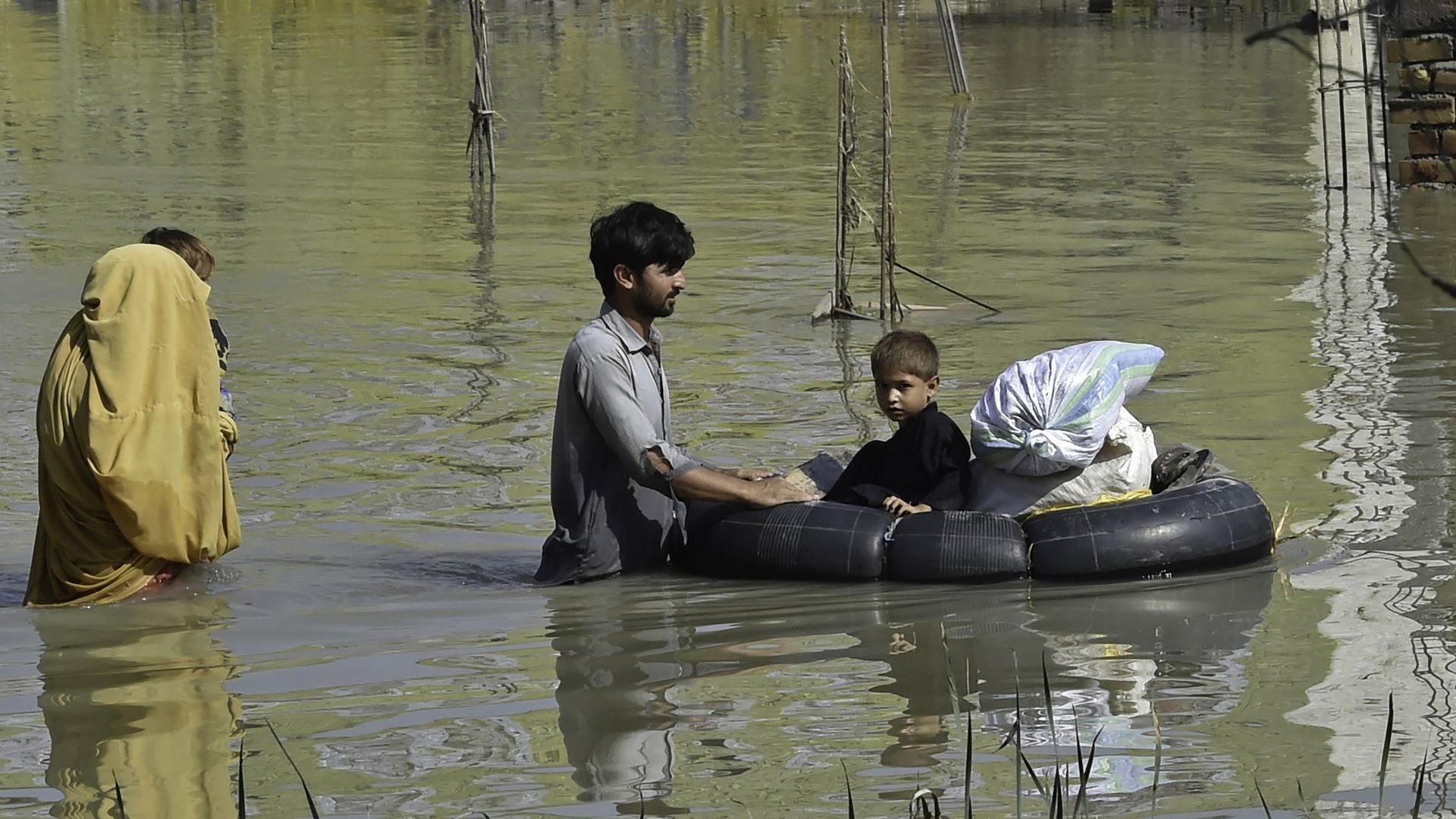
A family wades through flood waters in the Charsadda district of Khyber Pakhtunkhwa, Pakistan, on Aug. 29. Photo: Abdull Majeed/AFP via Getty Images
Pakistan is reeling from unrelenting monsoon rains that are affecting tens of millions and threaten to inundate up to one-third of the country, Andrew writes.
The big picture: The flooding has killed more than 1,000 people, with the death toll likely to increase.
While some flooding is typically associated with the South Asia Monsoon, this year’s rains have been unusually persistent and prolific, drawing comparisons to disastrous flooding in 2010.
- The floods have destroyed nearly 300,000 homes, caused widespread electricity outages and made roads impassable, Axios’ Ivana Saric reports.
- Pakistan Foreign Minister Bilawal Bhutto-Zardari told Reuters Monday the scale of the destruction is "overwhelming" and the country is appealing for international assistance, Axios’ Rebecca Falconer reports.
Context: Studies show that climate change increases the frequency and intensity of extreme rainfall events, as warmer air holds more moisture, adding energy to storms.
5. Oil giants announce carbon capture deal

Illustration: Sarah Grillo/Axios
A trio of energy heavyweights — Shell, TotalEnergies and Equinor — this morning announced a deal with a major chemical producer to transport and store CO₂ subsea off Norway's coast, Ben writes.
Driving the news: Northern Lights, the companies' joint venture on CO₂ storage, signed an agreement with Yara to handle CO₂ from a big ammonia and fertilizer plant in the Netherlands.
Why it matters: It's the world’s "first commercial agreement on cross border CO₂ transportation and storage," the companies said.
Zoom in: Starting in 2025, 800,000 metric tons of CO₂ from the Yara plant are to be trapped, compressed and liquefied in the Netherlands for shipment each year, the companies said.
- The first phase of the Northern Lights geologic storage project is slated to come online in 2024 with an annual capacity of 1.5 million metric tons. The partners are eyeing expansion to 5-6 million.
The big picture: The global project pipeline is growing. But CO₂ capture and storage is nowhere near the commercial deployment scale-up called for in the International Energy Agency's climate-friendly scenarios.
6. One tech thing: electric fire trucks
Illustration: Aïda Amer/Axios
They're not common (yet!) but electric fire engines are starting to become a thing, Axios' Alan Neuhauser reports.
Driving the news: Toronto Fire Services has ordered two all-electric fire trucks from Spartan Emergency Response, a South Dakota manufacturer owned by REV Group. They each cost roughly US$1.5 million.
Why it matters: Electric vehicles carry an upfront premium, and emergency apparatuses are no exception.
- But local governments are increasingly asking for them, and U.S. manufacturers are finally catching up with their European counterparts to meet the growing demand.
Zoom in: The Madison Fire Department in Wisconsin last year became the first in the U.S. to deploy an all-electric fire truck: the Volterra model from Pierce Manufacturing, based in Wisconsin.
- Earlier this year, the Los Angeles Fire Department began using an all-electric model from Austrian manufacturer Rosenbauer.
Subscribe to Axios Pro Climate Deals to read the whole story.
📬 Did a friend send you this newsletter? Welcome, please sign up. Thanks for reading and we'll see you back here tomorrow.
Sign up for Axios Generate

Untangle the energy industry’s biggest news stories


