Axios Generate

August 23, 2024

šŗ Made it! We're closing the week with 1,250 words, 4.5 minutes.
š¶ This week in 1998, Lauryn Hill released her classic "The Miseducation of Lauryn Hill," which provides today's intro tune...
1 big thing: On climate, a short riff grows in Chicago

There's a striking consistency in the way Kamala Harris and Tim Walz offered just glancing references to climate change in their DNC speeches.
Why it matters: The framing in the context of "freedom" could preview their strategy for the balance of the short campaign.
Driving the news: Harris' speech very briefly touched climate in a much wider riff on what she called "fundamental freedoms at stake" in November.
- It's the "freedom to breathe clean air, and drink clean water and live free from the pollution that fuels the climate crisis," she said.
- That's the same construction that Tim Walz used a night earlier, when he said the election is about "freedom."
- He didn't even mention climate but tucked in the allegation that Republicans want corporations "free to pollute your air and water."
The big picture: Convention acceptance speeches aren't designed as wonky policy blueprints.
- But climate was muted in Harris' address even compared to other policy areas.
- My colleague Zachary Basu saw "ruthless triangulation" in her speech.
What they're saying: Bloomberg explores why Harris only gave climate a quick cameo.
- "While climate activism could energize young voters, it also risks alienating potential supporters in the gas-rich swing state of Pennsylvania, said Kevin Book, managing director of the Washington consulting firm ClearView Energy Partners LLC," they report.
What we're watching: Whether this "freedom" framing remains the strategy.
- I also expect the campaign to stitch low-carbon energy into their wider economic message, focusing on swing state investments flowing under the 2021 infrastructure law and the IRA.
Yes, but: Fighting climate change did get some love in earlier speeches and videos on the DNC's final day.
- Interior Secretary Deb Haaland and Rep. Maxwell Frost both focused on it.
What's next: With the convention over, Reuters notes the ticket is about to face much more policy scrutiny.
2. Exclusive: Fuels group launches swing state EV attack on Harris

A major refining industry group has launched a $3 million swing state ad buy claiming that Kamala Harris would seek to end sales of gasoline-powered cars.
Why it matters: The American Fuel & Petrochemical Manufacturers' broadcast TV ads are the latest sign that EVs are part of the 2024 elections.
Driving the news: The spots open saying "there may be someone new in the driver's seat, but the destination is the same: a ban on most new gas cars."
- They don't explicitly urge votes against Harris but focus on her 2019 campaign positions.
- And they urge people to contact several Democrats in competitive Senate races and tell them to "stop the Biden-Harris car ban."
Yes, but: Federal regulations and policies don't currently "ban" gasoline-powered cars but do seek to phase them down.
- One major part: EPA estimates that under its CO2 standards, fully electric models would be 56% of new passenger vehicle sales in 2032.
- Plug-in hybrids would be another 13% in EPA's "central" analysis, but they also see a range.
State of play: The ads are running in Michigan, Wisconsin, Montana, Pennsylvania, and Nevada.
- It's the latest part of a $20 million-plus AFPM campaign against federal policies to hasten the transition to EVs.
The intrigue: Then-Sen. Harris, when seeking the Democratic White House nod in 2019, said she would ensure that 100% of passenger vehicle sales were zero-emissions by 2035.
- Her 2019 plan said this would happen via strong incentives. But it also backed an "accelerated" version of legislation she co-sponsored that would require 100% zero-emissions vehicle sales by 2040.
- "Until the Vice President says otherwise, we have to believe she still stands for everything that was in her 2019 policy plan and for every policy she cosponsored as a Senator," AFPM president and CEO Chet Thompson said in a statement.
3. Meet Harris' allies in Congress
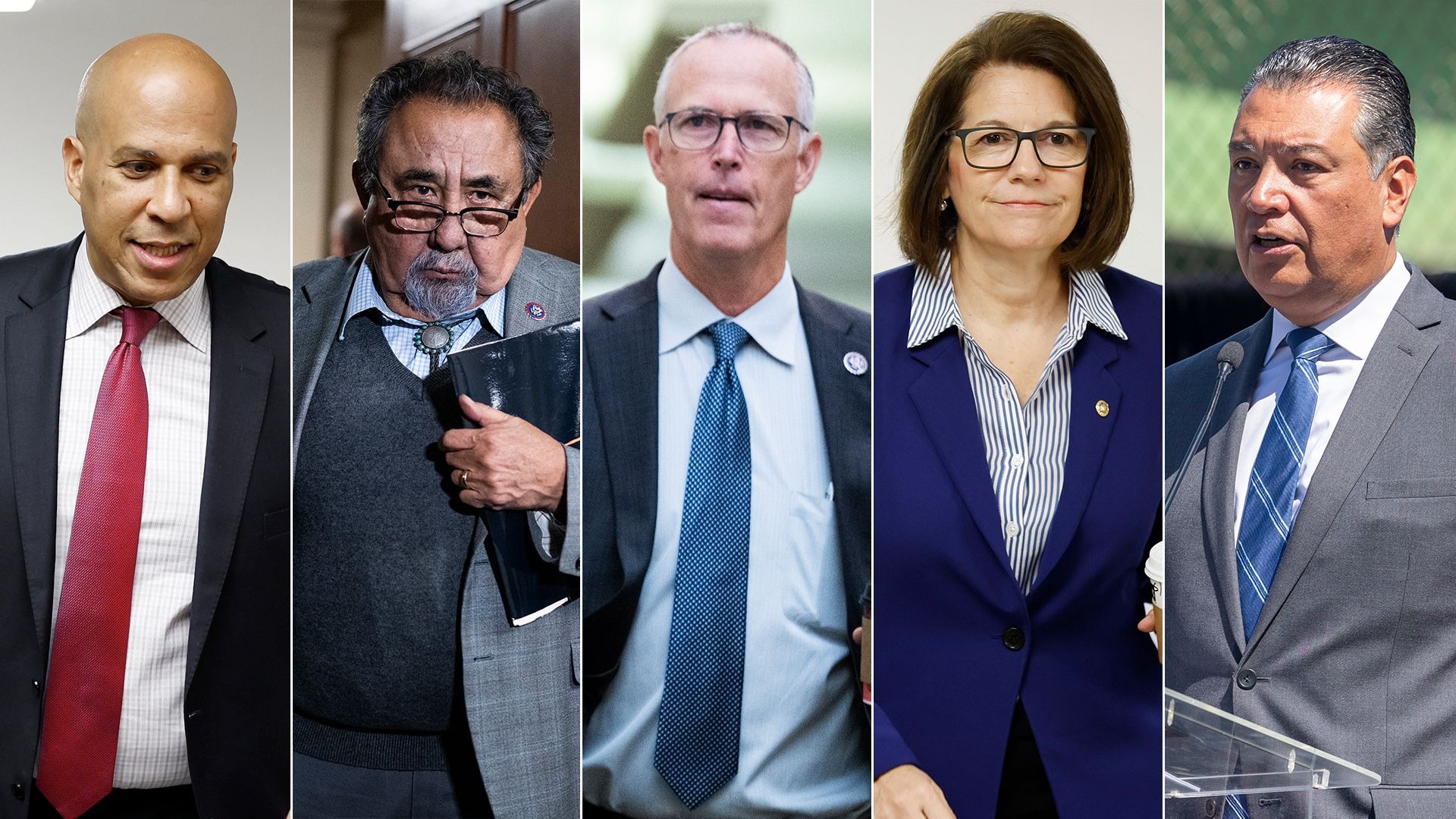
Kamala Harris has forged relationships with several mostly progressive Democrats who can help make her case to green-minded voters.
Here's a rundown from Axios Pro:
Catherine Cortez Masto: The senator from Nevada ā a battleground state ā helped Harris vet VP candidates last month, and Axios reported that she is rumored to be in the running for attorney general.
Cory Booker: The New Jersey senator served with Harris during her two years in the Senate and cosponsored legislation such as the Environmental Justice for All Act that Harris introduced in 2020.
Jared Huffman: He advised Harris when she ran for California attorney general and has "developed a close political and policy alliance ever since," the Northern California congressman told Axios.
Alex Padilla: He succeeded Harris in the Senate when she became vice president and has remained aligned with her on climate issues.
RaĆŗl Grijalva: House Natural Resources' top Democrat is the architect of the Environmental Justice for All Act's House companion.
Unlock details, and if you need more smart, quick intel on energy and climate policy for your job, get Axios Pro.
4. Mapped: the early days of the IRA
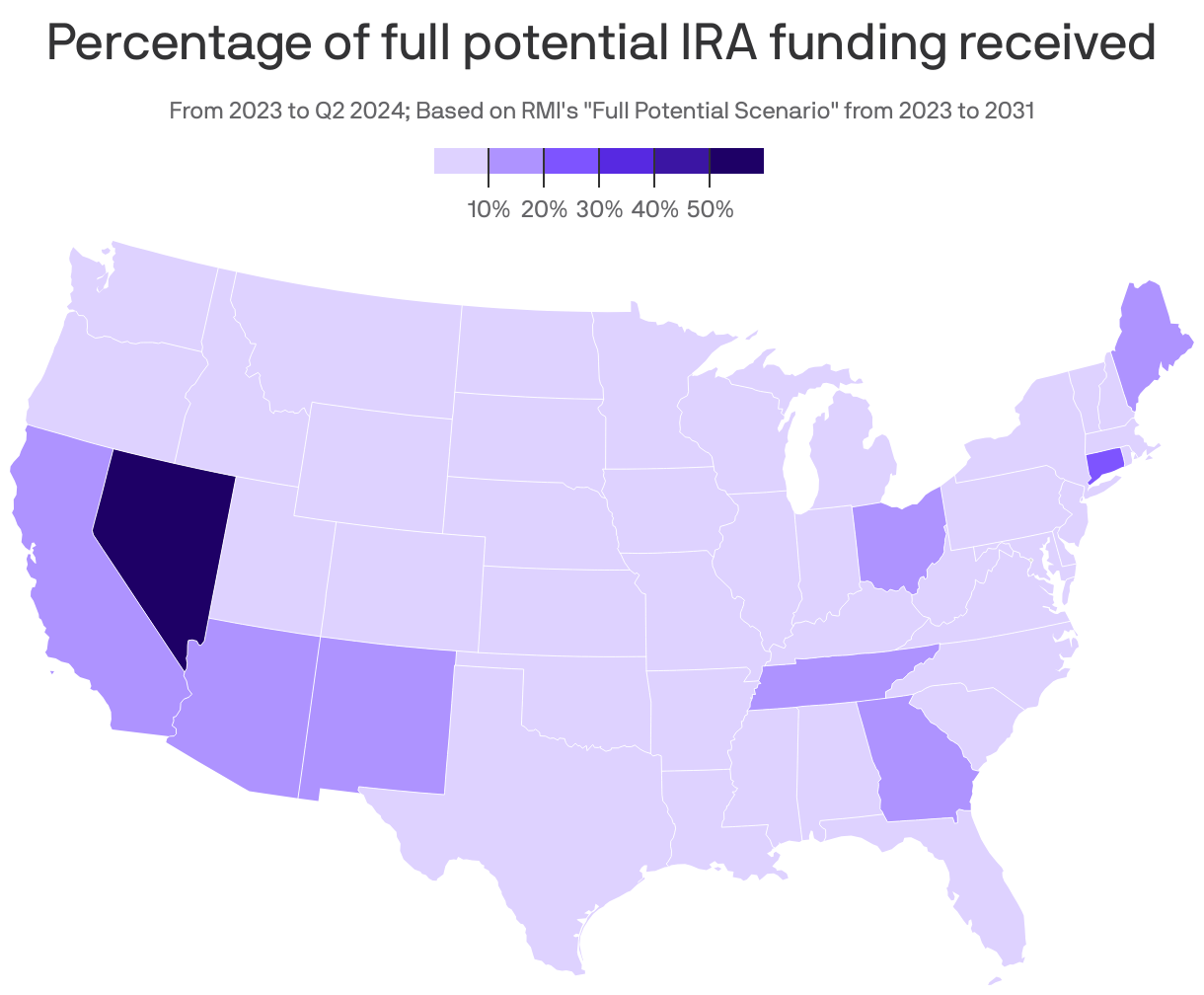
This map is from a new analysis that highlights the political yin-yang of the IRA.
Why it matters: There's potential for lots of tax credits and other finance to flow to red and blue states alike, the energy think tank RMI shows.
- But just a small share of the financing has occurred thus far.
- A successful bid to weaken the law, or slow-walk executive implementation, could leave many resources untapped.
The big picture: My deep thoughts aside, the RMI report itself is focused on helping states fully tap IRA resources.
- It explores which sectors ā electricity, industry, transportation, or buildings ā have the most potential in different states.
- The analysis also steers readers to literature that helps states secure investments.
RMI is tracking metrics like the percent of states' taxes potentially "returned" via IRA credits, per-capita spending through the IRA to date, and more.
- The report analyzes funding thus far against states' "full potential scenario."
- For the IRA's uncapped tax credits, that's based on technology milestones to get on a net-zero emissions pathway.
The bottom line: While substantial resources have begun flowing, "most states are ... not on track to achieve the full potential, and more work will be needed to realize it."
5. La NiƱa helps shape the fall outlook

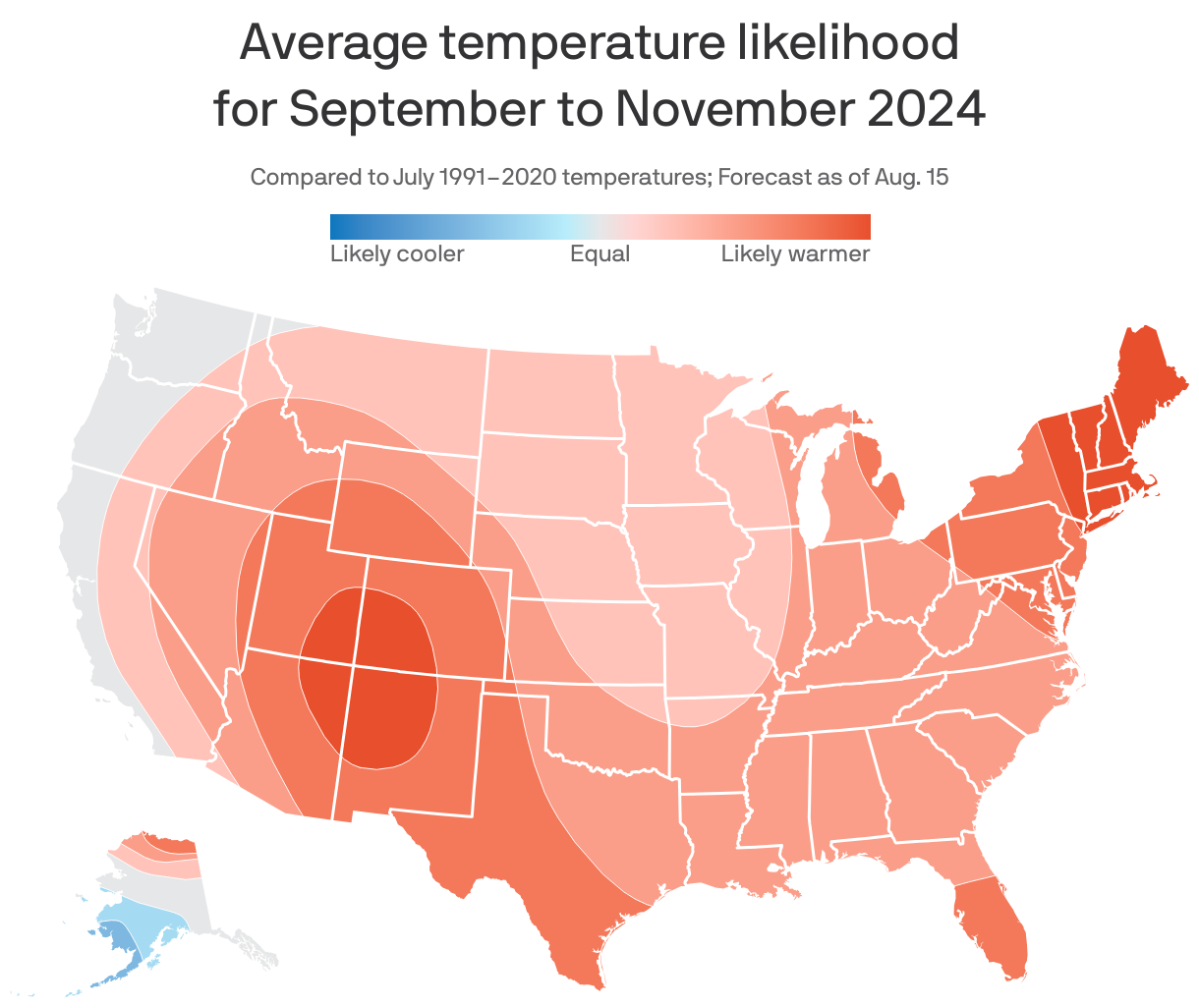
The new climate outlook for the U.S. this fall reflects the expected influence of a coming La NiƱa event in the tropical Pacific Ocean, along with longer-term trends.
Why it matters: Prevailing weather conditions during the September-through-November period could clinch records for the warmest year in some cities while affecting multibillion-dollar industries such as agriculture.
The big picture: According to the NWS' Climate Prediction Center, the September-through-November period is likely to feature above-average temperatures across much of the country, particularly in the Northeast and Southwestern states.
- The Southwest is also projected to see below-average precipitation during this period.
- La NiƱa is a natural climate cycle featuring below-average ocean temperatures in the eastern equatorial tropical Pacific Ocean.
- According to the latest predictions, there is about a 66% chance of a La NiƱa developing during the fall, and about a 70% chance of it lasting through the winter.
Yes, but: The outlook does not depict any effects of landfalling tropical storms or hurricanes, which could alter some of these projections.
6. š³ļø Number of the day: 4%
That's the percentage of shareholder proposals on environmental and social topics that BlackRock supported in the proxy year that ended June 30.
Why it matters: It's a slight decline from last year and far below the 47% in 2021.
- Most resolutions were "overreaching, lacked economic merit, or sought outcomes that were unlikely to promote long-term shareholder value," BlackRock said.
The intrigue: Wall Street giants have faced criticism for allegedly slowing their roll on climate.
But BlackRock also opposed resolutions to weaken policies that address sustainability-related risks, it said.
šØ Did a friend, colleague or even a frenemy send you this newsletter? Welcome, please sign up.
š Thanks to Chris Speckhard and Chuck McCutcheon for edits to today's edition, along with the brilliant Axios Visuals team.
Sign up for Axios Generate