Axios Generate

March 18, 2025

ā Tuesday. We start with a look at oil demand before diving into lots of news, all in just 1,138 words, 4.5 minutes.
š¶ This month marks 35 years since Bell Biv DeVoe dropped the new jack classic "Poison," so take precaution with today's intro tune...
1 big thing: China's oil slowdown is a global wild card
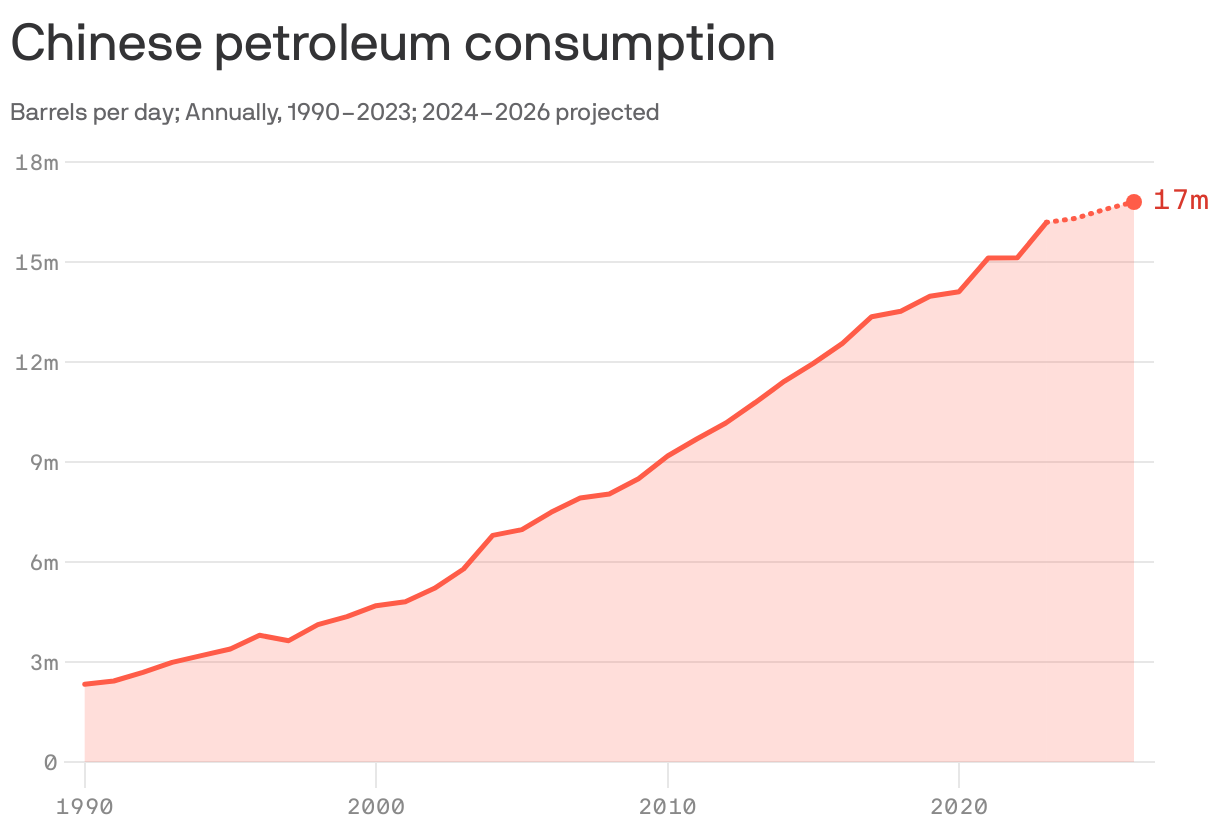
The growth of China's oil thirst is slowing, and whether it's a brief downshift or something deeper will influence the future of global petro-demand.
Why it matters: China's economy, stumbling in recent years, and its commodity markets have outsize sway.
When it comes to oil, it's the largest importer and second-largest consumer behind the U.S.
- Oil is the second-biggest source of China's CO2 emissions, which are by far the world's largest, though those emissions are well behind coal.
The big picture: China accounted for a stunning 60%-plus share of global oil demand growth from 2013-2023, but it fell to under 20% last year, per the International Energy Agency.
- That's largely because soaring EV adoption has halted the rise in motor fuel demand, a helpful new IEA primer notes.
State of play: Combined gasoline, diesel and jet fuel use was 2.5% below 2021 levels last year, though the aviation side was higher.
- Pivoting from manufacturing to service-based growth is sapping momentum, too.
- By last fall, EVs, plug-in hybrids and traditional hybrids together surpassed 50% of China's passenger car sales.
"[T]he data strongly suggest that the combustion uses of petroleum fuel in China have already reached a plateau and that the potential for future growth may be very limited," the IEA analysts write.
Yes, but: I have just one word for you: plastics. Or actually petrochemicals more broadly, now the main reason China's oil use is still heading upward.
- But building a crystal ball on this is tricky. And that was even before Trump 2.0 trade policies introduced new headwinds to global economic growth.
- "Petrochemical demand has a really high correlation to GDP growth around the world," Rob Thummel, a senior portfolio manager with Tortoise Capital, said in an interview.
What we're watching: IEA sees China's total oil demand reaching a plateau later this decade.
- If that comes to pass, it will help determine the time when global thirst reaches its peak or at least plateau.
- A roundtable I watched at last week's CERAWeek by S&P Global conference explored the complexity of these predictions, and the analysts were divided.
The bottom line: "We are moving into a new era of uncertainty," said Roger Diwan, a top S&P analyst, name-checking China as a key reason.

2. š° Bonus petro-notes: LNG and Chevron
šµ Argent LNG is raising $150 million in equity and meeting with Wall Street banks to close $20 billion in project financing to open a natural gas export terminal in Louisiana, Axios Pro Deals (sign up!) scooped yesterday.
- Why it matters: The export project, which plans to dedicate a larger share of production to spot market sales, is one of more than two dozen betting on strong overseas demand for U.S. liquefied natural gas.
š Chevron disclosed that it amassed a 5% stake in Hess, the firm it plans to buy outright in a deal that's ensnared in a dispute with Exxon.
- Why it matters: Chevron said it shows "continued confidence" in the arbitration over Hess' stake in jointly held assets with Exxon in a massive field off Guyana.
3. ā©ļø Trump's coal pledge and more policy notes

š¤ President Trump said via Truth Social that "I am authorizing my Administration to immediately begin producing Energy with BEAUTIFUL, CLEAN COAL."
- What we're watching: For any specifics ā like whether Trump officials will seek to use emergency powers to prevent planned retirements of coal-fired power plants.
- The big picture: His energy team has made clear it sees coal as a way to help meet rising power needs, including from data centers as AI booms. But coal's share in the U.S. power mix has long been sliding. It's unclear whether officials can meaningfully change the trend.
- Zoom in: Coal supplied over 50% of U.S. electricity in 2000, but has steadily declined, falling to 16% last year.
š¼ DOE, EPA and NOAA hired back many probationary employees who had been laid off in a round of cuts last month.
- Why it matters: Yesterday's rehirings are aimed at complying with recent court rulings that the firings were carried out illegally.
- What's next: These employees aren't being put back to work but placed on paid administrative leave while court cases play out. Full story.
āļø The Energy Department released another $56.8 million of up to $1.5 billion in loan guarantees for Holtec Palisades to revive a Michigan nuclear plant shuttered in 2022.
- Why it matters: The planned restart would be the first retired nuclear plant brought back into service. Support from Trump's DOE marks rare continuity with Biden officials, who approved the finance in 2024.
4. š Microsoft backs Al Gore's push on "natural climate solutions"

Microsoft and CalSTRS are lead backers of $175 million for the Just Climate fund to invest in "natural climate solutions" ā land use practices that slow CO2 release and absorb emissions.
Why it matters: The money will bolster Just Climate's Natural Climate Solutions strategy, which it unveiled in 2023 and publicly announced its first investment early this year.
Catch up quick: Just Climate is a low-carbon venture firm launched by Al Gore's Generation Investment Management.
What we're watching: "We believe a rapid land transition, with the potential to be as profound as the energy transition, is coming," Eduardo Mufarej, Just Climate's co-chief investment officer, said in a statement.
Go deeper: Full announcement...Bloomberg coverage
5. š The latest sign of China's EV lead: charging speed

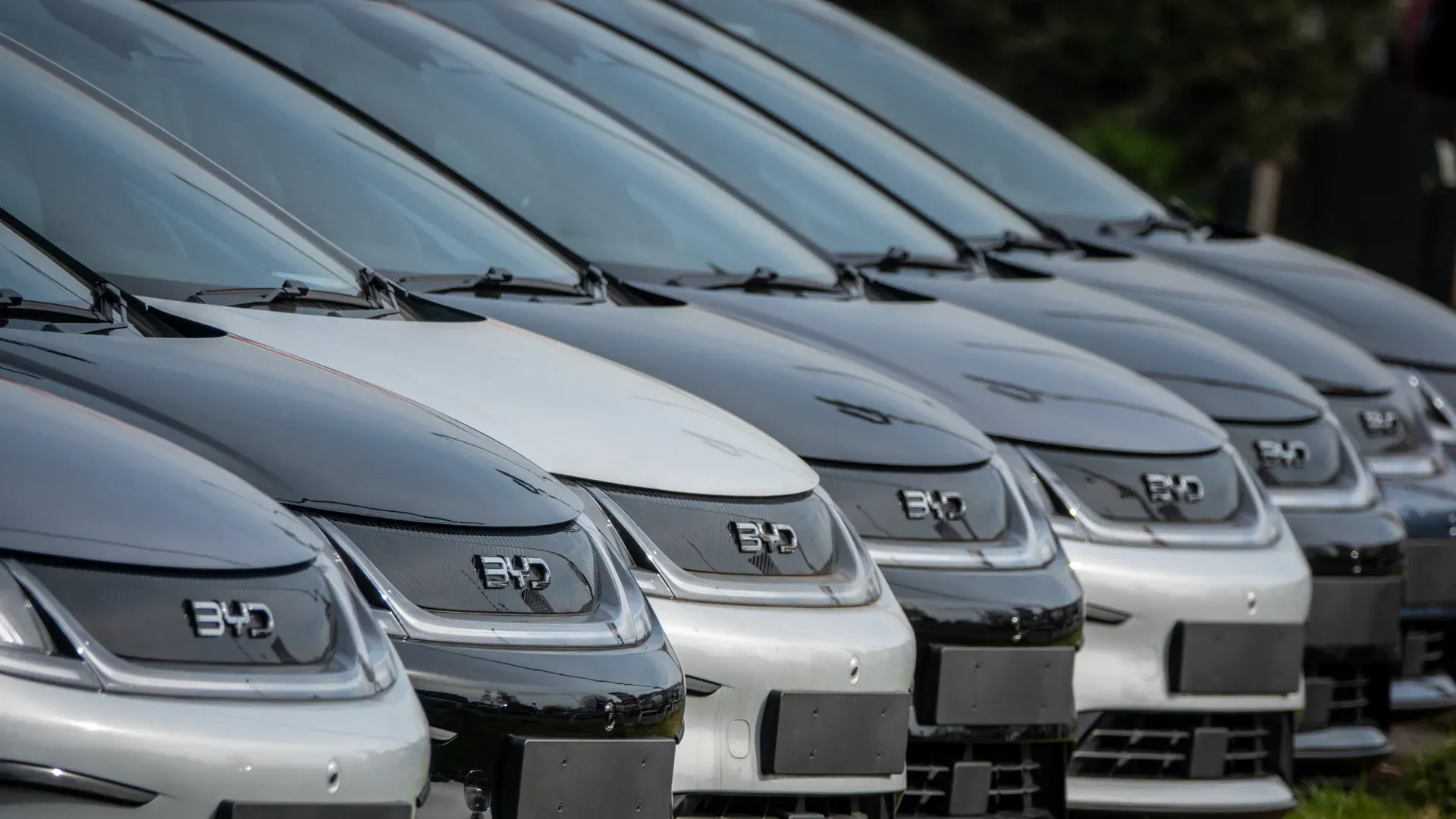
China just raised the bar again on EVs, with BYD unveiling a new EV platform that can be recharged roughly as fast as refueling a gas-powered car.
Why it matters: Making charging as painless as visiting a gas station is one less hurdle for consumers and could help spur widespread EV adoption.
- It's another sign of BYD's growing dominance, while Tesla's fortunes wane, both in China and the rest of the world.
Driving the news: BYD's new battery and charging system can provide nearly 300 miles of range in 5 minutes, chairman and founder Wang Chuanfu said yesterday, Bloomberg reported.
- The 1,000-volt Super e-Platform will underpin BYD's next-generation vehicles, starting with the Han L sedan and Tang L SUV.
- BYD also said it would build more than 4,000 ultra-fast chargers across China to match the new EV platform.
Yes, but: The rollout was light on specifics.
The bottom line: BYD cars aren't available in the U.S. amid heavy tariffs and other restrictions.
- But Chinese manufacturers are outpacing U.S. and EU competitors on costs and now charging tech, so consumer pressure could eventually build.
6. š¬ Quote du jour: climate litigation edition
"Legal experts are watching closely to understand the extent to which this is going...to set a strong precedent."ā Attorney Sebastien Duyck of the Center for International Environmental Law, quoted in Reuters' coverage of a Peruvian farmer's litigation against German energy giant RWE
7. ā¬ļø Renewables number of the day: 5.4 gigawatts
That's the amount of new U.S. wind power capacity added in 2024, marking the fourth consecutive annual decline and the lowest amount in a decade, per BloombergNEF data.
The bottom line: Even before the anti-wind President Trump took power, forces like long turbine delivery lead times, transformer shortages and high interest rates together spelled trouble.
š§ Did a friend, colleague or an AI chatbot send you this newsletter? Welcome, please sign up.
š Thanks to Chris Speckhard and Chuck McCutcheon for edits to today's edition, along with the brilliant Axios Visuals team.