Axios Generate

September 11, 2024

🐪 Halfway! Today we've got 1,087 words, 4 minutes.
🔥 Situational awareness: Several California wildfires exploded in size amid a heat wave yesterday, forcing harrowing evacuations.
- Officials issued a rare, dire fire weather warning in Nevada for today.
🎶 Exactly 40 years ago, Billy Ocean was No. 1 on Billboard's R&B chart (and would later top the Hot 100) with today's perfect intro tune...
1 big thing: A chilly debate climate

A few things stood out from last night's first Kamala Harris-Donald Trump contest ...
🎯 Harris aimed for the center. She embraced the U.S. oil boom in her latest pivot from her 2019 call for a fracking ban, and later shouted out record gas output.
- When she touted investment in "diverse" sources, Harris called this a way to ease reliance on foreign oil.
- She made a pocketbook pitch when climate surfaced far later, noting extreme weather makes home insurance expensive or unavailable. Harris also touted "clean" energy as a U.S. manufacturing and jobs driver.
- Trump ignored climate in his answer but argued that Biden-Harris policies hurt the auto industry.
⚡ Trump sees energy as a Harris weak spot. Despite today's record oil and gas production, he repeatedly said Harris would thwart U.S. development.
- If Harris wins, "oil will be dead, fossil fuel will be dead," he said.
- The former president urged viewers not to trust Harris' claim that she's no longer interested in ending fracking. It's an important topic in Pennsylvania, a pivotal battleground and massive gas producer.
- He also knocked Joe Biden for killing the Keystone XL pipeline (recall that Biden revoked its federal permit).
🤷 It wasn't a banner night for facts. Trump inaccurately claimed, for instance, that solar power requires a "whole desert to get some energy to come out."
- He also suggested U.S. oil production would be four to five times higher today had he won in 2020. Politico nicely takes this apart this wild claim.
- Harris shaded the truth by asserting she "made very clear" in 2020 she would not ban fracking. She's referring to a VP debate when she said "Joe Biden will not ban fracking."
- Reminder: a "ban" has never been in the offing — it would never clear Congress. But producers chafe at White House restrictions and regulations, arguing they deter investment in future output.
🧑🤝🧑 Climate change has been friend-zoned in White House debates — it's on the scene, but network anchors don't embrace it.
- Climate questions have been standard in general election debates from 2020 onward. That's a change! They were simply absent in 2012 and 2016.
- But last night's lone question surfaced at the very end of the 90+ minutes.
- It's a pattern: these climate queries surface late in the night. That happened in both Biden-Trump 2020 debates and their lone 2024 rematch.
2. Hurricane Francine closes in on Louisiana
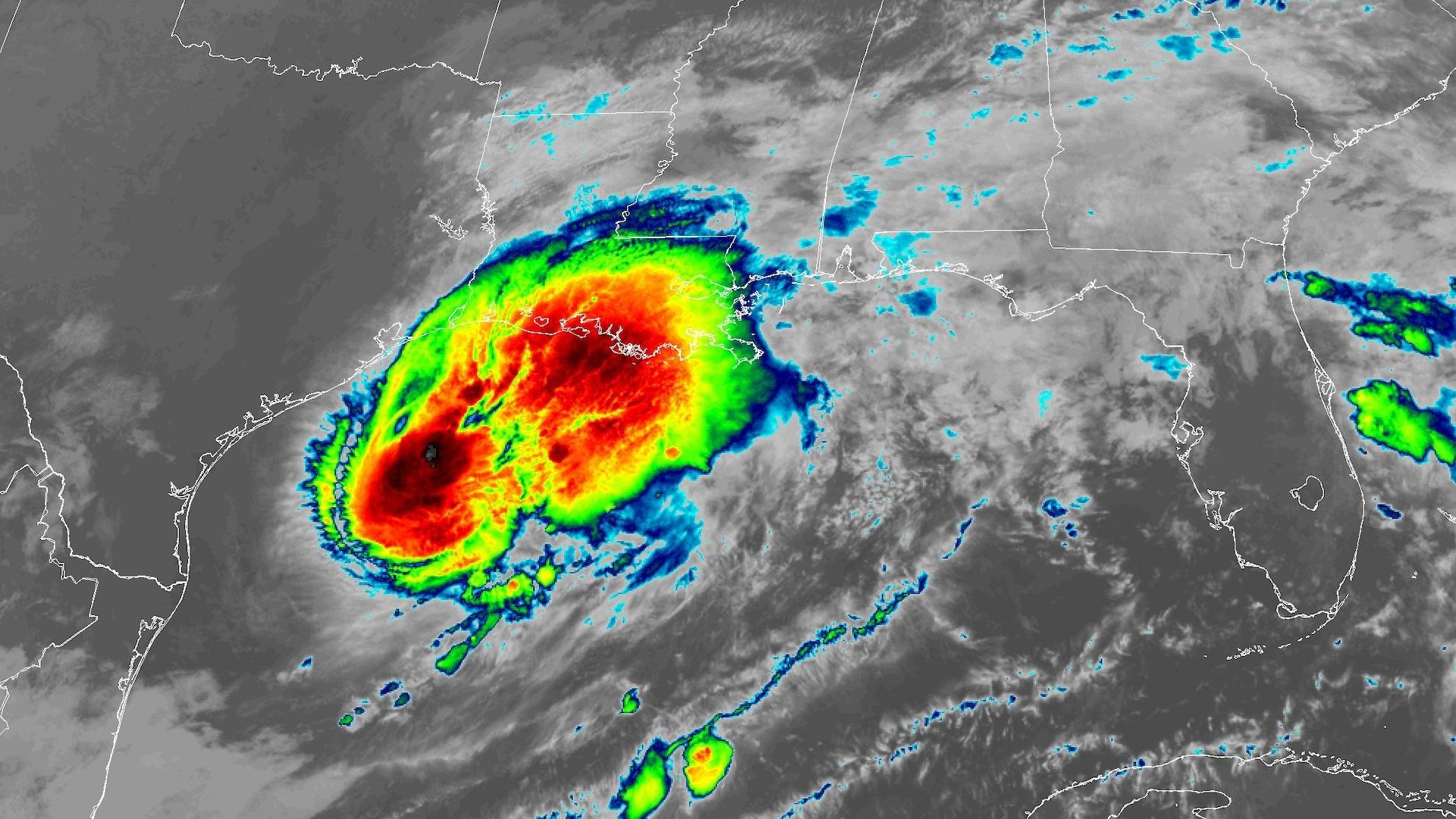
Hurricane Francine intensified overnight and is closing in on the Louisiana coast, where it will bring damaging winds, cause potentially widespread power outages, and yield "life-threatening" storm surge and inland flooding.
Threat level: A slew of hurricane, storm surge and tropical storm watches and warnings are in effect in Louisiana, Mississippi and Alabama.
- The center of the storm is expected to make landfall in east-central Louisiana, to the southwest of New Orleans, this afternoon or evening.
- The city is under a tropical storm warning as well as a hurricane watch given its potential proximity to the storm's inner core.
- The Category 1 Hurricane Francine was packing maximum sustained winds of 90 mph and located more than 200 miles southwest of Morgan City, La., per a 5am ET National Hurricane Center advisory.
Zoom in: Hurricane Francine will hit a part of the Gulf Coast uniquely vulnerable to storm surge flooding, due to sinking land, sea level rise and the shape of the coastline.
- Predictions call for 5 to 10 feet of water above normally dry ground along the central Louisiana coast, if the peak surge hits a high tide.
- Lake Pontchartrain, which borders New Orleans, is forecast to see a 4-to-6-foot surge.
Context: The storm has been feeding off unusually warm waters of the Gulf of Mexico, which has the highest level of ocean heat content on record for the region at this time of year.
- Climate change is making tropical cyclones deliver more rainfall and intensify more rapidly while also causing storm surge flooding that's more damaging through rising sea levels.
3. Notes from oil's big swoon


🐻 Oil prices have plummeted to their lowest levels since late 2021, despite Hurricane Francine forcing evacuation of some Gulf of Mexico platforms.
Why it matters: The slide has political ramifications, putting downward pressure on gasoline prices.
- That could be good news for Kamala Harris, who trails Donald Trump on the economy.
- And it's complicating life for OPEC+, which has already delayed plans to add barrels until December.
State of play: The global benchmark Brent crude fell below $70 per barrel yesterday but has rebounded somewhat, trading at over $70 as we hit send this morning.
The intrigue: OPEC yesterday slightly trimmed its demand growth forecast to roughly 2 million barrels per day this year and 1.7 mbd next — and even that's still higher than some other key analysts.
What they're saying: OPEC's revision and new data showing lower Chinese oil imports compared to last year "delivered the knockout blow" to prices, Mizuho's Robert Yawger said in a note yesterday.
What's next: The International Energy Agency's closely watched supply and demand outlook drops tomorrow.
4. 👟 Catch up quick on tech: data centers and charging
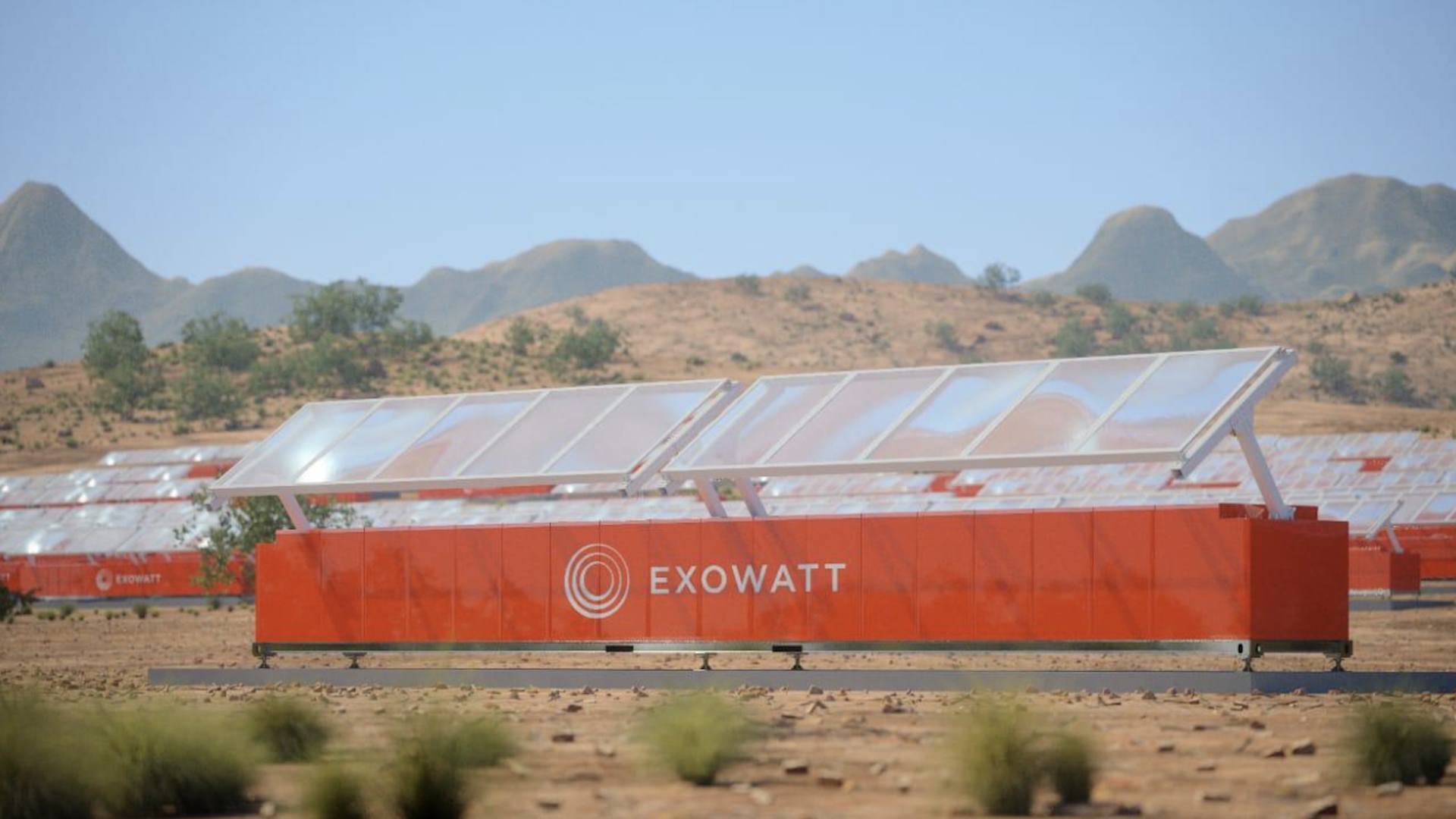
🖥️ Exowatt, a solar and storage startup whose backers include Sam Altman, just launched a product designed to economically power data centers with carbon-free energy.
- Why it matters: There's massive interest in how to meet surging data center growth, driven partly by AI, without lots of new CO2 emissions.
- State of play: Exowatt says the P3 system's compact footprint and modular design make it applicable to data centers and other commercial needs of varying sizes.
- What's next: The company claims a demand backlog of over 1.2 gigawatts and plans to begin deployments later this year. Bloomberg has more.
🚗 Lucid Motors CEO Peter Rawlinson isn't shy about jabbing former boss Elon Musk, but that's not stopping Lucid from ensuring buyers can use Tesla chargers.
- The latest: Its forthcoming Gravity SUV will have a built-in NAC port for using Tesla's big Supercharger network, Lucid said yesterday. That means no adapter is needed. TechCrunch has more.
- The intrigue: Lucid also teased the first image of a sub-$50,000 vehicle slated for production launch in late 2026.
5. 😬 Quote of the day: methane edition
"Right now, the goals of the Global Methane Pledge seem as distant as a desert oasis. We all hope they aren't a mirage."— Stanford climate scientist Rob Jackson, in a statement alongside new research on rising global methane emissions.
Why it matters: At least two-thirds of all emissions of the powerful planet-warming gas are now human-caused, the research finds.
Accelerating emissions belie the international Global Methane Pledge launched in 2021 to sharply cut output by 2030.
📨 Did a friend, colleague or even a frenemy send you this newsletter? Welcome, please sign up.
🙏 Thanks to Chris Speckhard and Chuck McCutcheon for edits to today's edition, along with the brilliant Axios Visuals team.
Sign up for Axios Generate