Axios Generate

October 25, 2024

🕺 Made it! We're closing the week with 1,307 words, 5 minutes.
⛏️ Situational awareness: The Interior Department approved the Rhyolite Ridge lithium mining project in Nevada.
- Why it matters: It's the first domestic lithium extraction the Biden team has greenlit. AP has more.
💿 This week in 1995, Groove Theory released the eponymous album "Groove Theory," which provides today's exquisite intro tune...
1 big thing: Why this climate report is different


The report card came back for world leaders heading into next month's UN climate summit, and it gives a failing grade. After countries agreed to a goal of "transitioning away from fossil fuels in energy systems," emissions are still increasing.
Why it matters: The world is running out of time to slash emissions at rates that would meet Paris Agreement climate targets, with each passing year guaranteeing that even more daunting cuts are required.
The big picture: The UN Environment Program's "Emissions Gap Report" is meant to inform diplomats who will wrestle over negotiating text next month. But game-changing progress isn't expected in Baku.
Zoom in: The latest report finds that global average surface temperatures are likely to warm by about 2.6°C to 3.1°C (4.68°F to 5.58°F) compared to preindustrial levels through 2100.
- The lower part of this range reflects the full implementation of current emissions reduction commitments submitted under the Paris Agreement. The higher figure reflects the path the world is on under current policies.
- To limit warming to below 2°C, emissions must fall 28% below 2019 levels by 2030 and 37% by 2035. Further delays only steepen the slope at which emissions must fall, making them increasingly costly.
There's "virtually zero" chance of limiting warming to the 1.5°C target if countries don't live up to all of their most ambitious plans, including nebulous net zero targets, the report finds.
The intrigue: Emissions curbs, the increasing deployment of renewable energy sources and improved scientific understanding have brought expected warming down by 0.5°C (0.9°F) since the Paris Agreement was struck in 2015, Anne Olhoff, chief scientist at the UNEP Copenhagen Climate Center, told Axios.
- However, such temperature projections are still twice as high as the 1.5°C target contained in the agreement, Olhoff said.
- This year's emissions gap report leaves the temperature projections essentially unchanged from last year's analysis, reflecting the lack of emissions cuts since last year.
- In other words: the fuzzy goal of moving away from fossil fuels — struck at COP28 in Dubai — hasn't been translated into sufficient action.
This message of stasis goes against the typical UNEP Gap Report message of "progress made, but not enough."
Between the lines: Even the good news of a slight warming decline through the end of the century compared to 2015 isn't comforting.
- That's because of the scope and severity of climate change impacts today, especially in the developing world.
- Already, some scientists have sounded the alarm at a possible tipping point approaching in the Amazon rainforest.
- And there's increasing discussion about the viability of the highly influential ocean current that includes the Gulf Stream.
2. Volkswagen's long-range electric compromise

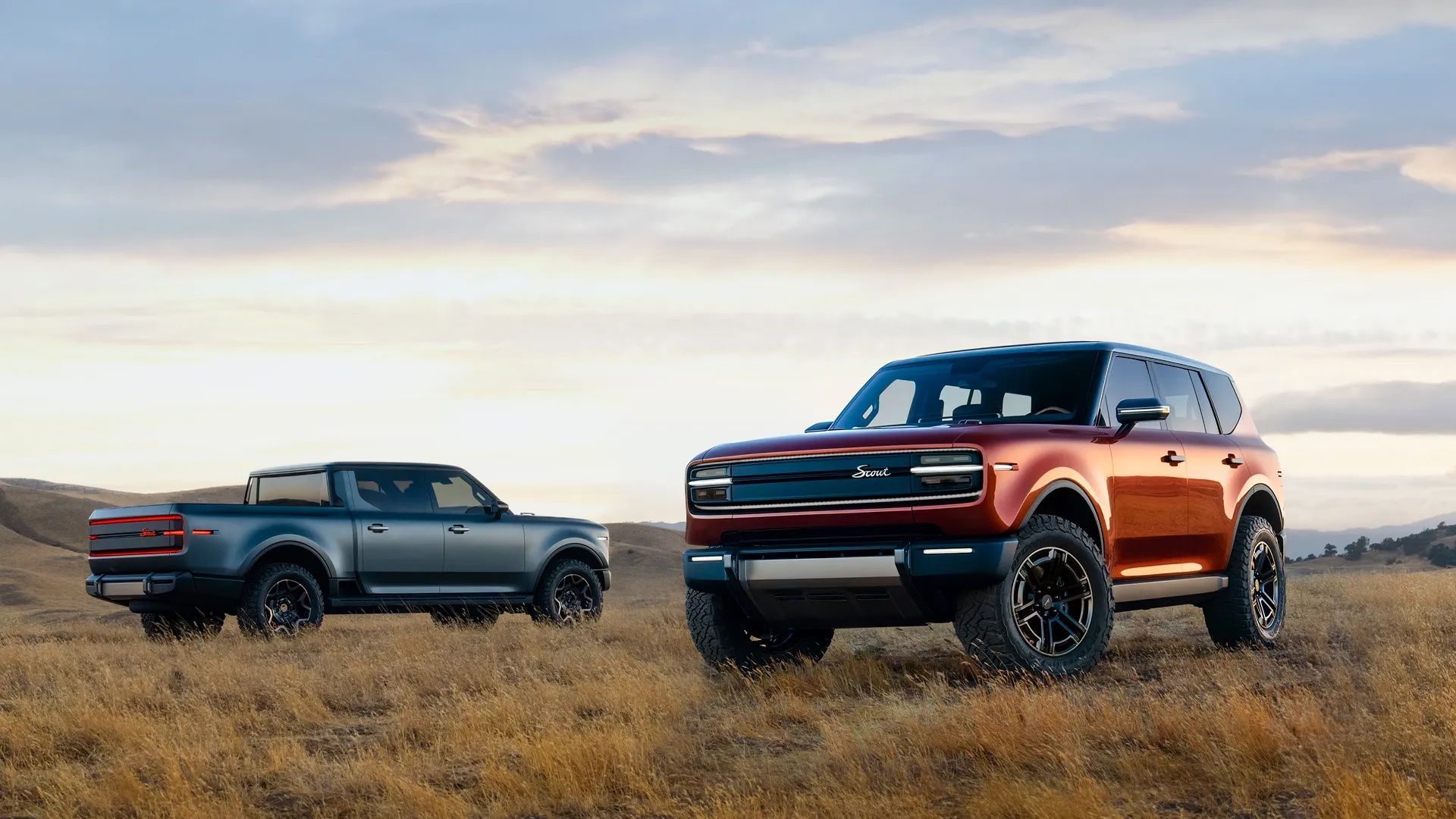
Scout Motors, Volkswagen's new electric off-road vehicle brand, said its first models will be available with a backup gasoline generator — an acknowledgment of many Americans' anxiety about going fully electric.
Why it matters: As a bit of a latecomer to the EV market, Scout has the advantage of learning from the mistakes of other companies that made big bets on electrification, only to walk back their EV ambitions amid slower-than-expected sales.
- While rival carmakers are now scrambling to add hybrids and plug-in hybrids to their lineups as a bridge technology, Scout is offering an option to ease into EVs from the get-go.
Driving the news: Scout yesterday unveiled concepts for a pickup truck and an SUV that are nearly identical to the actual vehicles that will go on sale in 2027.
- The Terra pickup and Traveler SUV will be offered in two variants: a fully electric model with a 350-mile driving range and an extended range version with a built-in, gas-powered generator capable of more than 500 miles.
- The trucks, with starting prices below $60,000 (before federal and state tax incentives) are aimed at the most profitable segments of the U.S. auto market.
- They'll be built in a new factory now under construction in South Carolina that could eventually employ 4,000 people.
Between the lines: Extended-range electric vehicles are a new breed of EV that is already popular in China and coming soon to North America.
- An EREV runs entirely on battery power but includes a small internal combustion engine that automatically recharges the battery when it runs low.
3. On my screen: Battery competition angst
A provocative new analysis says the U.S. is doing battery policy wrong by trying to match China's dominance of incumbent, lithium-ion tech.
Why it matters: It's high stakes stuff! Better batteries are essential for global competition in EVs, storage, military applications and more.
Driving the news: A report via the Carnegie Endowment for International Peace calls for reorienting policy around leapfrogging China.
- That means more resources for developing and commercializing next-generation, solid-state models that are better and safer.
- The U.S. has "critical advantages thanks to its world-leading innovation ecosystem."
Friction point: The U.S. funding explosion instead supports current tech despite China's likely insurmountable lead.
- 90% of the $24 billion in DOE grants and loan guarantees in recent years back making li-ion batteries, and so do IRA tax credits, they find.
State of play: It's written by Varun Sivaram — a senior White House climate aide from 2021-2023 — along with Noah J. Gordon and Daniel Helmeci.
What we're watching: They want more R&D funding and manufacturing finance, and use of federal procurement, including the Pentagon, to boost demand.
- "Washington has already lost the race for current-generation batteries, but it can't afford to squander the opportunity to win the next one," a Foreign Policy essay alongside the report warns.
4. ⛏️ The early fallout from Treasury's mining move
New Treasury Department rules are a split decision for advocates of domestic extraction of minerals used in climate-friendly energy tech.
Why it matters: Final "clean" manufacturing tax credit rules unveiled yesterday arrive as U.S. officials look to counter China's dominance of supply chains.
- One change after heavy lobbying extends credits to extraction that's part of processing projects. But it doesn't subsidize stand-alone mining.
The big picture: That's a benefit for vertically integrated projects. But it's "not a clear win" for domestic miners — especially because processors can use foreign supplies, TD Cowen analysts said in a note.
- "The final rule is a game-changer for companies refining, smelting, and processing materials at home — especially in today's low-price market," Abigail Hunter of Securing America's Future Energy said in a statement.
Yes, but: An array of environmental groups had urged Treasury not to subsidize mining.
The intrigue: Treasury's inclusion of some mining costs could help politically vulnerable Senate Democrats — including Jon Tester — who sought the change, Axios Pro's Daniel Moore reports.
Friction point: National Mining Association CEO Rich Nolan called the rules a barrier to U.S. extraction projects.
- Nolan said Treasury should encourage competition against Chinese and Russian materials mined with poor labor and environmental standards.
- "Made-in-America should also mean mined-in-America," he said in a statement.
What we're watching: TD Cowen said Congress could seek amendments that exclude supplies from "foreign entities of concern" i.e. China and Russia.
5. 🛩️ An electric aviation player on the brink


Shares of electric air taxi startup Lilium collapsed by 62% when the company warned yesterday that its two main subsidiaries are heading for insolvency.
💭 Our thought bubble: Axios' aviation expert Alex Fitzpatrick tells me...
A thinning of the air taxi startup herd is inevitable as the category matures — expect the startups with better partnerships with (and investments/orders from) big airlines and automakers to be the long-term winners.
6. ⚡ Number of the day: 31%
That's the share of prospective U.S. car buyers who say Elon Musk makes them less likely to buy a Tesla, an Edmunds survey finds.
Why it matters: While Tesla's shares are soaring on its upbeat Q3 report, it's a data point suggesting Musk's foray into politics, and outlandish behavior, turn off some potential buyers.
Yes, but: The August survey released this week has a small-ish sample (500) and finds Musk makes 20% of these buyers more likely to go Tesla.
📨 Did a friend, colleague or even a frenemy send you this newsletter? Welcome, please sign up.
🙏 Thanks to Chris Speckhard and Chuck McCutcheon for edits to today's edition, along with the brilliant Axios Visuals team.
Sign up for Axios Generate