Axios Generate

April 11, 2025

🕺 Happy Friday! We've got the latest in tech and policy, all in just 1,350 words, 5 minutes.
🚨 Situational awareness: EV startup Lucid snagged bankrupt electric and hydrogen truck firm Nikola's Arizona factory and product development center at auction.
- Why it matters: It adds to Lucid's manufacturing footprint and assets as the company ramps up production and prepares to roll out new vehicles. TechCrunch has more.
🎶 Exactly 15 years ago, Rihanna was No. 1 on Billboard's Hot 100 with today's killer intro tune...
1 big thing: Microsoft's big new carbon removal deal
Breaking today: Microsoft inked a multimillion-ton CO2 deal with CO280, a startup that says it has cracked the code to scaling large-scale removal tethered to pulp and paper mills.
Why it matters: CO280's offtake deals with Microsoft and other buyers could advance integration of carbon removal into huge, incumbent industrial sectors.
Driving the news: Microsoft's deal is for 3.7 million tons over 12 years. It follows CO280's smaller, $48 million deal with the Frontier consortium to remove 224,500 tons of CO2 between 2028 and 2030.
How works: The startup is working with a Gulf Coast pulp and paper mill owned by a big public company — it's not yet saying which one.
- The project would be a joint venture with the paper company to attach carbon capture to the mill's boiler stack and pipeline the CO2 to sequestration sites.
- OK, that's CCS. The removal part is that CO2 absorbed by the trees is never re-emitted at the plant when biomass waste is combusted.
"The trees do the heavy lifting. They absorb the CO2," CEO and co-founder Jonathan Rhone tells Axios.
- When trees are turned to pulp and paper at mills, wastes are burned in huge "recovery boilers" that would now be fitted with CO2 capture.
- "That's why the CO2 is biogenic. So basically we're leveraging off of that entire existing value chain," Rhone said.
State of play: It's the first of what Rhone called a dozen-plus projects in "active development" with mills.
- Rhone said private financing — enabled by the certainty of offtake revenue — for the first project should be finished in six to nine months. A final investment decision should come in 2026, he said.
- They hope to have the project's first phase of 400,000 tons of annual capacity running in early 2029.
- He said there's one more removal buyer, yet to be disclosed, after Frontier and Microsoft. They together have deals for all the CO2 for the first 12 years.
Reality check: There's a long, uncertain road for transforming removal startups' methods into meaningful weapons against global warming.
- But Brian Marrs, Microsoft's senior director of energy & carbon removal, said CO280 has "proven how to combine innovative engineering with strong commercial development."
The intrigue: Rhone didn't disclose the finances of the Microsoft offtake deal, but CO280's site says their services are under $200 per ton.
- The phase one capital costs are in the hundreds of millions of dollars, he said. The capture tech comes via SLB Capturi.
Catch up quick: CO280 was founded in 2021 and has raised seed and Series A rounds, but hasn't disclosed how much.
- Equity investors are NPG Energy Capital Management, the Grantham Foundation, the Business Development Bank of Canada, and Toyota Ventures.
The bottom line: The purchase deals are a milestone, Rhone said.
- "It validates the business model and it provides us with that long-term, bankable offtake agreement. ... We can proceed and create a playbook and scale this up."
2. 🏃 Catch up quick on policy: DOE, NOAA, EPA, NASA cutbacks

📉 Via Reuters, more than 2,600 Energy Department employees are accepting the second round of resignation offers, "with offices on power grid stability and loans for high-tech energy projects hit hard."
- The latest: The news service separately reports that the National Oceanic and Atmospheric Administration has fired over 800 previously reinstated probationary workers.
🏭 Via ProPublica, EPA is eliminating requirements that industries collect and report their greenhouse gas emissions data to the agency.
- Why it matters: Dismantling the Greenhouse Gas Reporting Program would "effectively leave the federal government blind" when trying to track thousands of industrial and power facilities, the NYT reports.
- An EPA spokeswoman called the ProPublica story "factually inaccurate." On March 12, EPA said it was "reconsidering" the program and argued that companies could better use resources to improve environmental controls.
❌ NASA confirmed to Axios that it has canceled ICF International's support contract for the U.S. Global Change Research Program.
- State of play: The scope of the National Academies' separate support contract is under review, a NASA spokesperson said.
- Catch up quick: NASA previously told Axios it was "streamlining" the ICF contract.
3. 🧁 Bonus policy notes: IRA, Interior



🛡️ The wholesale dismantling of IRA tax credits in Congress is looking less likely as four GOP senators go public opposing the idea.
- Why it matters: The letter from Sens. Lisa Murkowski, John Curtis, Thom Tillis and Jerry Moran — if translated into votes — would be enough to sink party-line legislation.
- Catch up quick: Twenty-one House Republicans have a similar posture. But don't rule out major weakening of some incentives in budget talks.
🛑 The White House yanked the nomination of Kathleen Sgamma to be director of the Bureau of Land Management.
- Why it matters: The withdrawal of Sgamma, longtime president of the Western Energy Alliance, is a setback for the White House hoping to lean on BLM to expand drilling and mining leases.
💼 Former Energy Secretary Jennifer Granholm has joined DGA Group as a senior counselor.
4. 🍨 Scoop: Avalanche prepping $100M raise for tiny fusion reactors

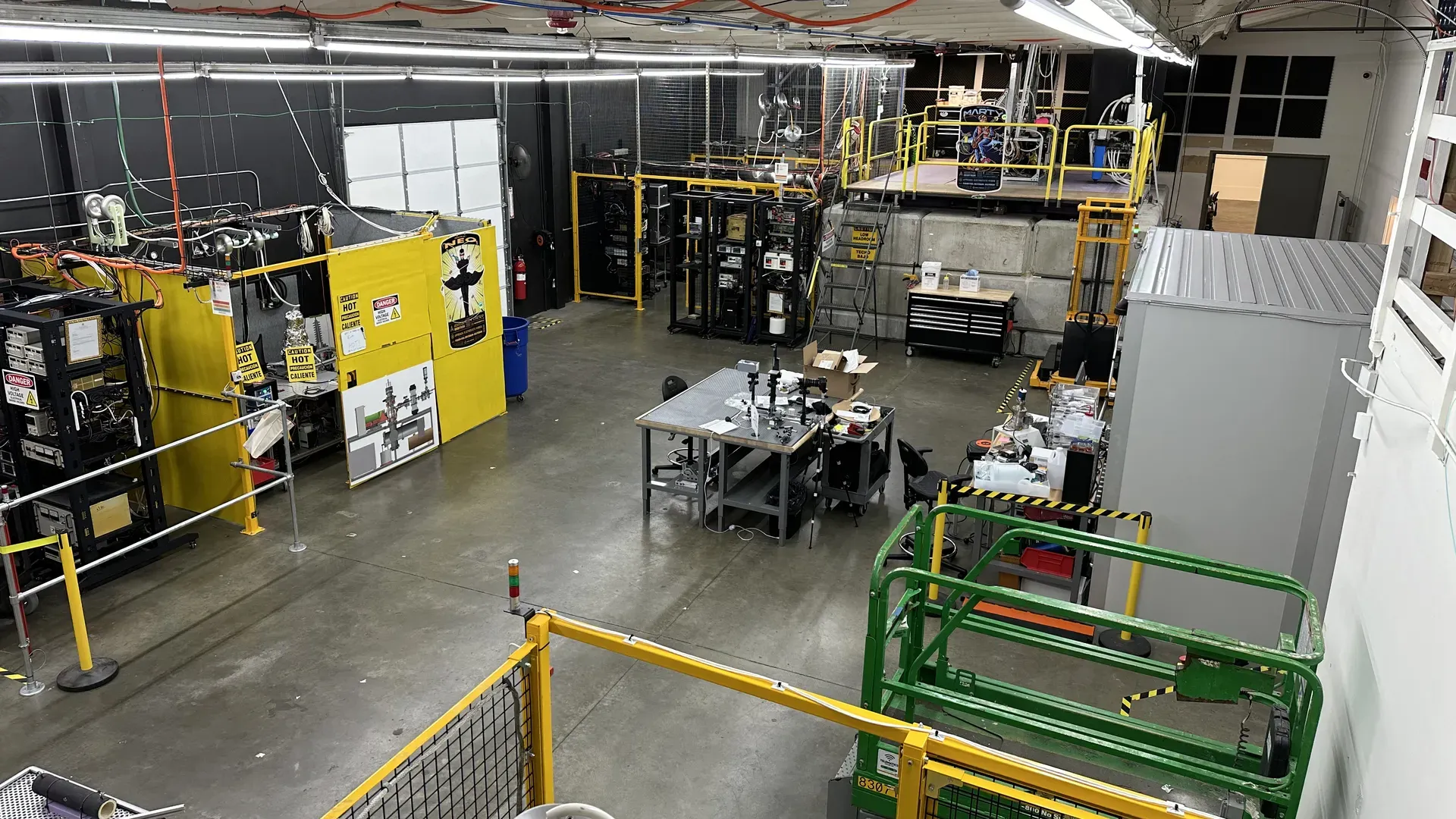
Avalanche Energy, a startup developing small fusion energy reactors, expects to begin raising up to $100 million in a Series B this year, a source familiar with the plans tells Axios.
Why it matters: Modular fusion reactors could offer an off-grid alternative to the massive systems seeking to connect to the power grid.
Driving the news: Avalanche opened a commercial test facility in Washington State yesterday to generate revenue while pursuing its long-term moonshot technology.
- The approach parallels other fusion energy developers that have opened near-term revenue streams, such as by producing isotopes for cancer treatments and equipment inspections.
Between the lines: The test site will be key to the Series B, the source says, as it allows Avalanche to "play with a lot more traditional VCs because it has a path to revenue."
- Avalanche closed a $40 million Series A in 2023, led by Lowercarbon Capital, joined by Founders Fund.
What we're watching: Avalanche is developing modular 5 KW fusion systems, each small enough to fit atop an office desk.
Unlock the whole story, and talk to our sales team about Axios Pro Deals for a steady diet of scoops and smart analysis.
5. 📐 Senior Dem lays down marker on data centers and climate

Sen. Sheldon Whitehouse is introducing a bill today aimed at addressing rising greenhouse gas emissions from AI data centers and crypto operations.
Why it matters: The bill — shared with Axios — is a stage-setter for larger conversations on AI and power use in years ahead.
- It has a near-zero chance of moving in the current Congress. But the ideas should bubble up as lawmakers discuss the topic and political dynamics shift.
Driving the news: The Clean Cloud Act, cosponsored by Sen. John Fetterman (D-Pa.), would assess an emissions fee on power consumption by data centers and crypto miners.
- "It's a marker for where this industry needs to be," Whitehouse said. "[I]f you're the AI [or] crypto industry coming in, you've got to think long and hard about what you want your public reputation to be if you intend to stick around for a while."
How it works: The bill would direct EPA and EIA to survey electricity consumption from data centers and crypto mining operations annually.
- The government would collect a fee, starting at $20 per ton of CO2e and rising at least $10 annually, based on how facilities' emissions profiles compare to their regional power grid.
- The revenue would help ease residential electricity rates and fund "clean firm" generation — like battery storage and nuclear.
The bottom line: This topic isn't going away.
Unlock the whole story, and if you need smart, quick intel on energy and climate policy for your job, get Axios Pro Policy.
6. 🛢️ Number of the day: -400,000 barrels of oil daily
That's how much DOE's independent stats arm just knocked off its 2025 global oil demand growth estimate, moving it down to 900,000 barrels per day.
Why it matters: Trade policy tumult is expected to hit the global economy enough to make a real dent in consumption growth.
What we're watching: The International Energy Agency's closely watched demand estimates arrive Tuesday.
The bottom line: The situation is, well, fluid.
- "[B]ecause the recent updates to trade policy widen the range of possible GDP growth outcomes, this forecast is subject to significant uncertainty," the Energy Information Administration's outlook cautions.
📧 Did a friend, colleague or an AI chatbot send you this newsletter? Welcome, please sign up.
🙏 Thanks to Chris Speckhard and Chuck McCutcheon for edits to today's edition, along with the brilliant Axios Visuals team.