Axios Generate

September 16, 2024

š„ Welcome back! We're sprinting into the week with just 1,050 words, 4 minutes.
šµ Breaking in finance: DOE plans to provide a $1.56B loan for Wabash Valley Resources' low-carbon ammonia project in Indiana, the WSJ reports.
- Why it matters: Ammonia is a crucial fertilizer input, and there's growing interest in use as a climate-friendly fuel.
š» This week marks 35 years since Janet Jackson released the classic "Rhythm Nation 1814," which provides today's intro tune...
1 big thing: The worldwide fallout of China's oil slowdown
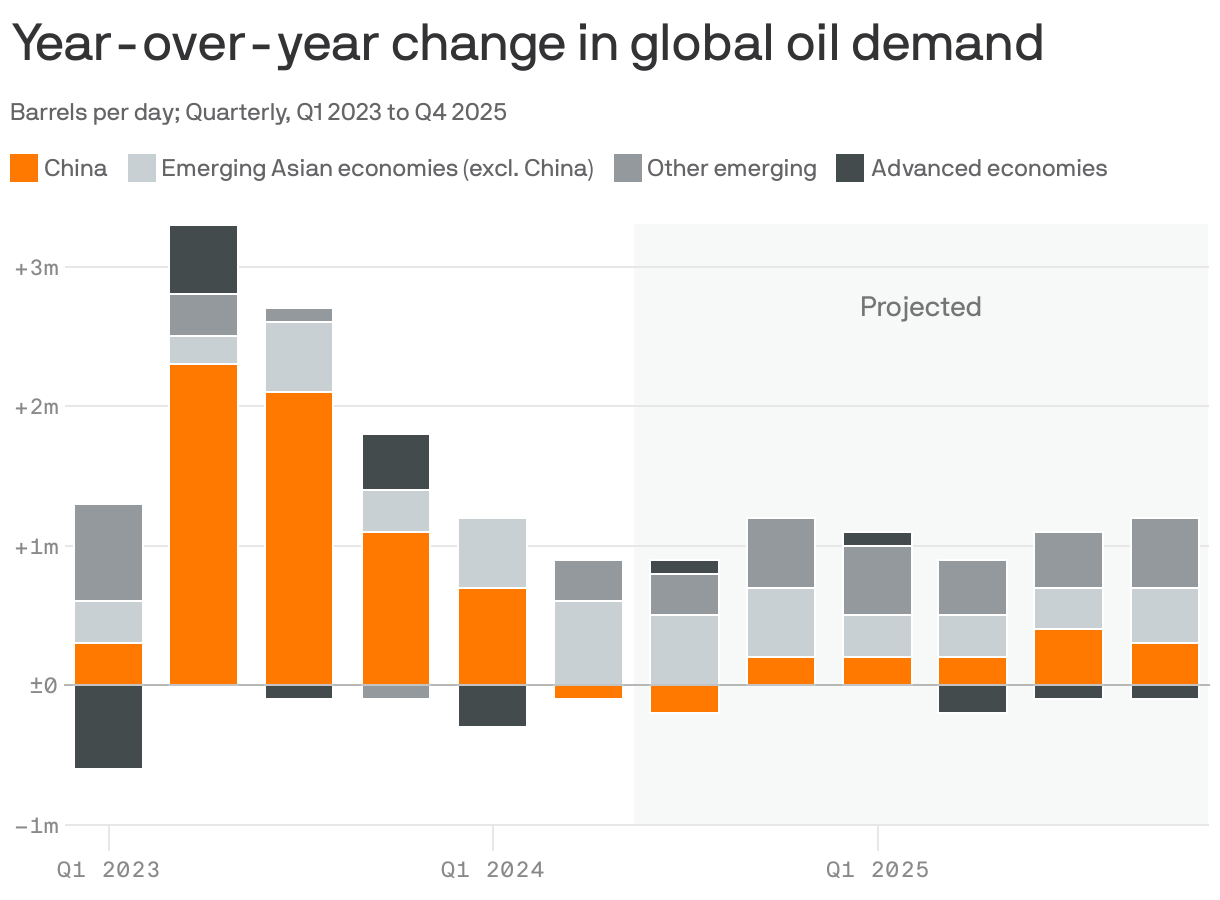
The recent slide in oil prices is putting a fresh spotlight on China's sway in global petro-markets ā and a seismic change that may be unfolding.
Why it matters: It's by far the world's largest oil importer, so stalling demand growth is helping push down global prices.
- China's future oil thirst will also help dictate when total worldwide demand peaks.
State of play: China's recent downturn has been "even more acute than expected," the International Energy Agency analysts write in a new post.
- It's the main reason the global consumption rise in H1 2024 was the smallest since 2020, per IEA, which sees the softness continuing.
- With global supplies ample, prices have fallen to their lowest levels since late 2021, despite geopolitical risks in the Middle East and Ukraine.
"China sneezes, oil catches a massive cold," veteran oil analyst Paul Sankey tells CNBC.
š¼ļø The big picture: China's crude imports doubled between 2013 and 2023, reaching well over 11 million barrels per day.
- Now decades of surging growth appear over.
- "From a structural perspective, China now looks unlikely to be the behemoth for oil demand and perhaps even for other commodities that it once was," Energy Aspects Ltd. analysts said in a note, per Bloomberg.
The intrigue: China's weak economy explains some of the change. But IEA sees much more afoot.
- Electric cars' rapid rise is constraining road fuel demand, while more high-speed rail is limiting domestic air travel, IEA analysts note.
- And heavy trucks are increasingly using natural gas or batteries.
š What's next: China's path brings up the wider question of when global demand will stop growing ā a debate with implications for markets and the climate.
- IEA analysts write that China's new era reinforces their view that oil thirst will finally stop growing this decade.
- It's joining with "lackluster" growth or even declines in many nations, they say.
Friction point: Longtime oil analyst Arjun Murti is doubtful that China's nearing a permanent demand peak, noting road fuel is just a piece of its oil use.
- That said, his weekend post says China's "demographic maturity" and macro-economic picture indeed mean it will "likely stop being the dominant driver of oil demand in coming years."
- But Murti, a Goldman vet now with Veriten LLC, doesn't see global demand peaking for a long time (I wrote more about his take last year).
The bottom line: As we're fond of saying, China is the straw the stirs the drink in energy markets.
2. šØ Scoop: BP to build EV fast-chargers in urban parking garages

More high-speed charging stations for EVs will be available in urban parking garages under a deal to be announced today between BP Pulse and LAZ Parking, a leader in digital parking technology.
Why it matters: Finding a place to charge is especially difficult in densely packed cities, where many people live in apartment buildings and don't have access to a home charger.
- Ride-share and taxi drivers also need a place to quickly recharge their EVs so they can get back to earning fares.
Driving the news: LAZ, which has parking facilities in 477 cities in the U.S. and Canada, will work with BP Pulse to deploy ultra-fast public charging hubs across 20 U.S. cities over the next five years.
- Among them: Boston, Chicago, New York, San Francisco, Los Angeles, Dallas, Washington and Las Vegas.
- The high-speed chargers, rated 250kW or higher, can fully charge an EV in 30-45 minutes.
- The hubs will operate 24/7 and be open to the public.
- An hour of free parking is included when drivers charge using the BP Pulse app.
Between the lines: Figuring out where to build chargers is challenging, and access to the right real estate is important, BP Pulse Americas CEO Sujay Sharma tells Axios via email.
- The relationship with LAZ will allow the U.K.-based company to get a foothold in urban centers where it's traditionally been hard to build EV infrastructure.
- The LAZ locations are in addition to BP's own real estate footprint and its recently announced deal with U.S. mall operator Simon Property Group.
The bottom line: The U.S. still has a long way to go before there's sufficient charging infrastructure to support a shift to EVs. Urban parking garages are a good place to start.
3. The climate link to Central Europe's flooding catastrophe
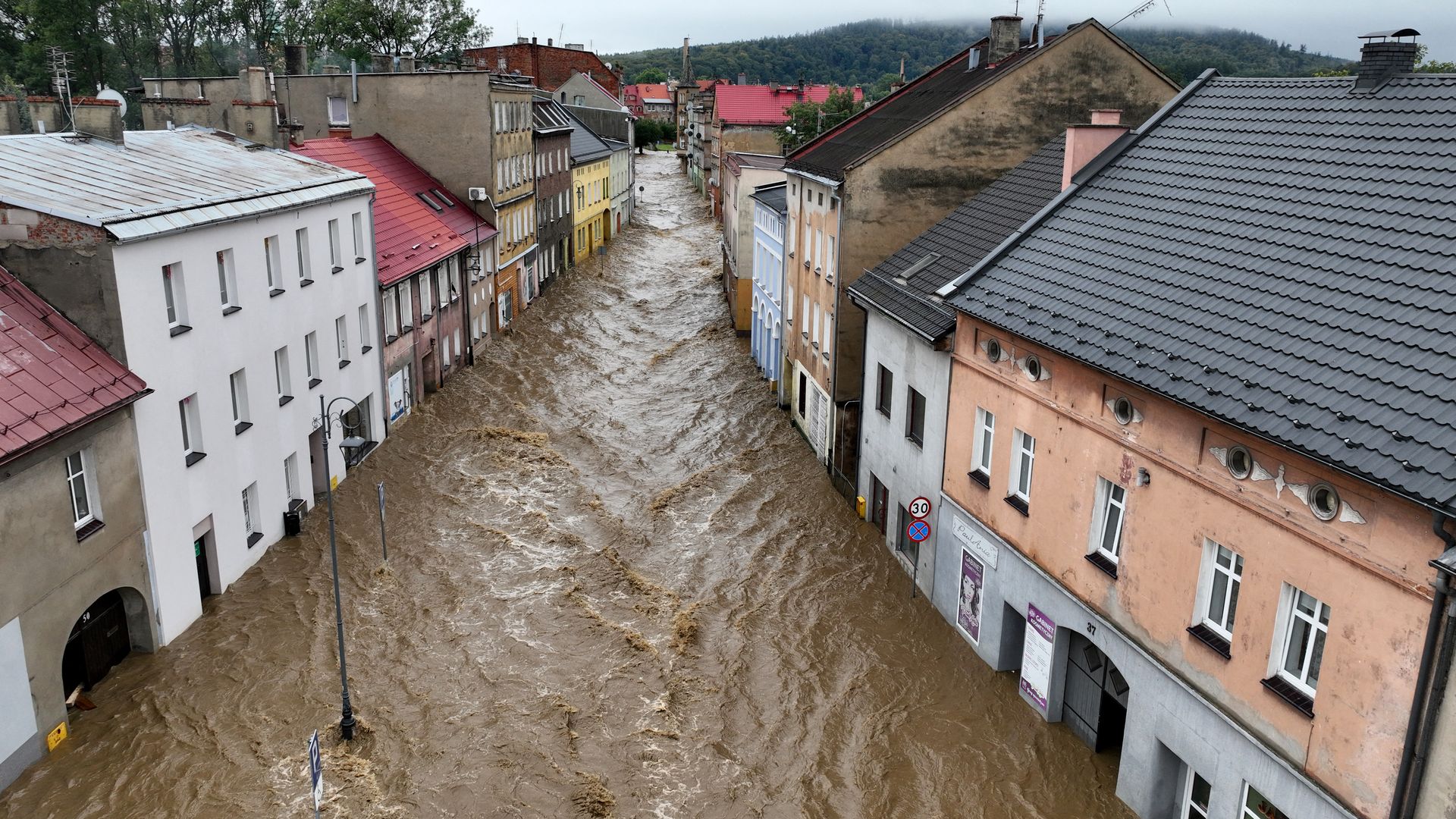
Central Europe is reeling from catastrophic floods from an unusually intense mid-September storm that regional weather authorities have dubbed "Boris."
Threat level: At least 15 people have died so far as dams have broken, cities and towns flooded, and Alps communities buried in several feet of snow.
Zoom in: The storm has brought months' worth of rain in just four days to locations in Austria, the Czech Republic, Germany, Hungary, Italy, Poland, Romania and Slovakia. And it's not over yet.
- Storm Boris formed from an epic clash of air masses, likely worsened by climate change.
- First, unseasonably cold air dove southward from the Arctic, across the U.K. and France, until it collided with warm, moisture-rich air flowing north-northeast off the record-warm waters of the Mediterranean Sea.
- The area of low pressure that spun up got stuck ā pinned in place by high pressure to the east and west.
Context: Climate change is yielding more frequent and severe heavy precipitation events in the U.S., Europe and other parts of the world.
- The record-hot Mediterranean, itself a climate change feature, likely added moisture and boosted precipitation totals.
- According to one report, a weather station in the Czech Republic saw half a year's worth of rain in just the past 4 days.
- Studies have also shown an increase in the prevalence of "blocking" weather patterns tied this to climate change, though this is an emerging area of research.
4. One tech thing: Wind-aided LNG
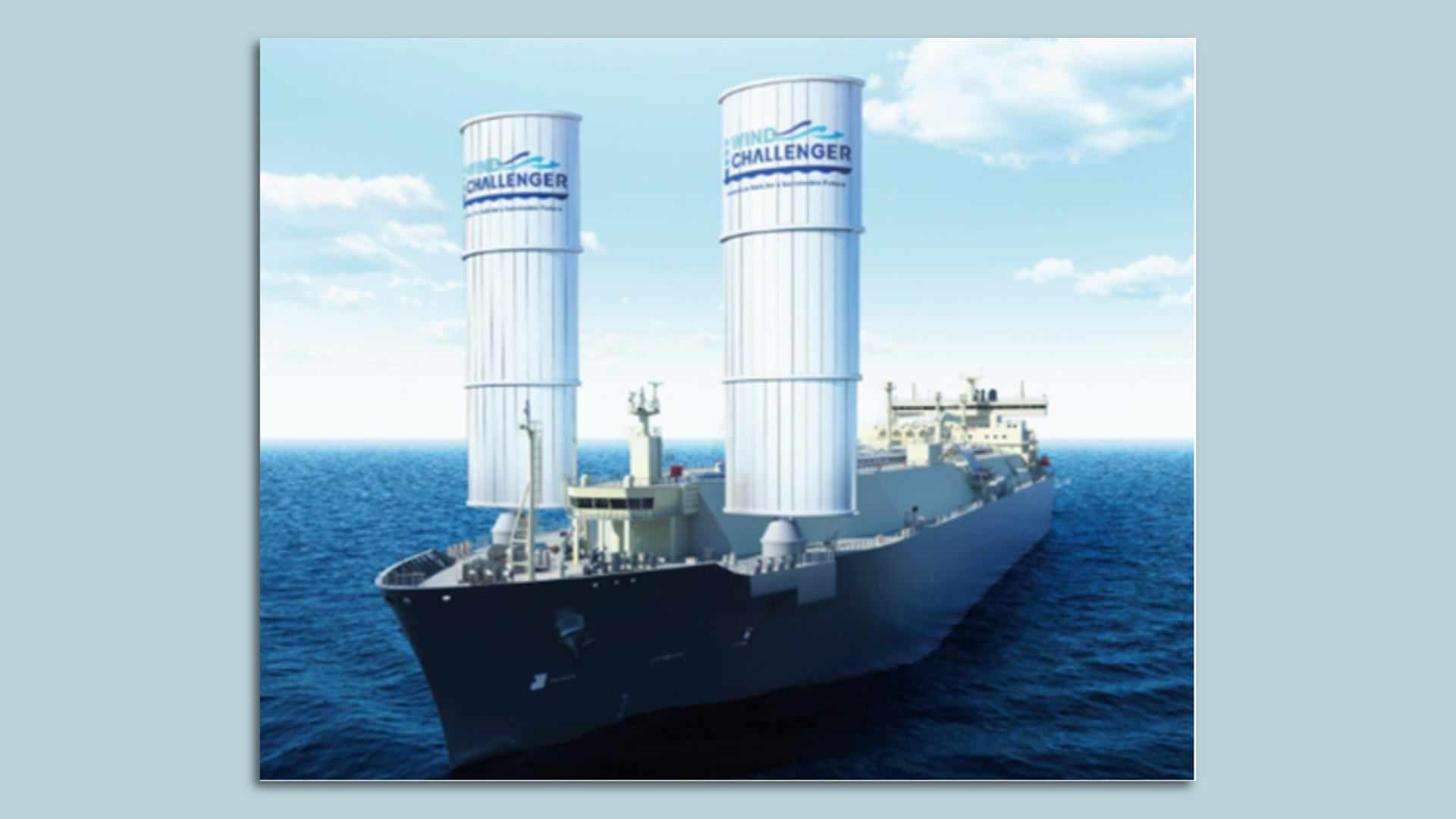
A Chevron-chartered LNG tanker will boast a "hard sail wind-assisted ship propulsion system" that cuts fuel use.
Why it matters: It will be the world's first LNG carrier equipped with this kind of system, Chevron and shipping giant Mitsui O.S.K. Lines said in announcing the plan.
What's next: The vehicle is under construction and slated for delivery in 2026, they said. Maritime Executive has more.
5. š Quote of the day
"The sense of urgency is so high because the $5 billion loss is so visible."ā Ford CEO Jim Farley, quoted in the WSJ about the company's EV division bleeding red ink
That's part of the paper's deep dive into Ford's EV posture and the need to adapt to China's rise.
šØ Did a friend, colleague or even a frenemy send you this newsletter? Welcome, please sign up.
š Thanks to Chris Speckhard and Chuck McCutcheon for edits to today's edition, along with the brilliant Axios Visuals team.
Sign up for Axios Generate