Axios Generate

October 11, 2024


👋 Hello readers, hello Friday. We're sprinting toward the weekend with just 1,224 words, 4.5 minutes.
🧹 Housekeeping note: We'll be off Monday for the holiday. See you Tuesday!
📻 Exactly 35 years ago, Soul II Soul ruled Billboard's R&B chart with today's incredible intro tune...
1 big thing: Hydrogen reality checks
New reports together present a sobering view of the potential for large-scale hydrogen production using renewable electricity.
Why it matters: Climate-friendly hydrogen can slash carbon from heavy industries, power, and moving freight. But volumes today are tiny.
Driving the news: A Harvard study finds "green" hydrogen won't go beyond "niche" uses without big cost reductions.
- The paper in Joule says many analyses don't adequately weigh the expense of storage and distribution infrastructure — not just production.
- Reminder: "Green" hydrogen means using renewable electricity to power equipment that splits water into hydrogen and oxygen.
State of play: Elsewhere this week, the International Energy Agency projected hydrogen made with renewables will be just 4% of the world's total in 2030.
- And risk management firm DNV — looking at all forms of hydrogen — downgraded its 2050 projection of its share in the global energy mix by 20%. But that said, they do see various low-carbon methods taking up growing shares.
The big picture: The Harvard paper estimates that today, total costs are between $500–$1,250 per ton of CO2 avoided using green hydrogen.
- That's so high that even if predicted production cost declines materialize, the wider basket of expenses make it uncompetitive beyond limited applications like making ammonia.
Yes, but: None of this is destiny!
- A separate IEA report last week noted major growth in project announcements, though few have reached final investment stage.
- It calls for stronger national policies to stimulate demand.
And the peer-reviewed Harvard study doesn't rule out green hydrogen one day becoming widely used.
But there's an "urgent need" for R&D to cut storage and distribution costs.
What they're saying: Carnegie Mellon University's Valerie Karplus tells me the paper provides an important look at costs across the value chain — and the uncertainty bands around them.
- "If we look longer term, the potential for both technological innovation and clever business models to bring down some of these costs is enormous," said Karplus, a professor in the engineering and public policy department who wasn't involved with the Harvard study.
What we're watching: In the U.S., the Treasury Department plans to complete rules this year for tapping major IRA hydrogen tax subsidies.
2. Hurricane Milton's unusually accurate forecasts
/2024/10/11/1728609460558.gif?w=3840)
The National Hurricane Center's track forecasts for the eventual path of Hurricane Milton were unusually accurate, starting from the first storm advisory.
Why it matters: The early confidence in the eventual path of Hurricane Milton allowed officials time to warn the public and prepare communities for the powerful storm.
Zoom in: Milton, which made landfall Wednesday night in Siesta Key, Fla., as a Category 3 storm, was always predicted to end up coming ashore near Tampa Bay.
- This never wavered, despite typical uncertainties in track forecasts at long lead times. In fact, the NHC's track forecasts for Milton outperformed their typical average error rates for such storms, according to Brian McNoldy, a hurricane researcher at the University of Miami.
- "The track forecasts of the landfall location were exceptional," McNoldy told Axios. "I think we all wish they could always be that accurate for so long. It doesn't change the fate of the eventual impacts, but it certainly helps with preparation and evacuation."
Yes, but: While the track forecast itself was on point, significant storm timing errors occurred even on the day of landfall, said Michael Lowry, a hurricane specialist and storm surge expert at WPLG Local 10 in Miami.
- "The models really struggled with landfall timing, which we did see reflected in the forecast," he noted.
- Forecasts on Wednesday morning had the storm coming ashore at 2am ET on Thursday morning, about 6 hours behind the actual landfall timing, Lowry said.
3. The early fallout from Elon Musk's "Cybercab" reveal

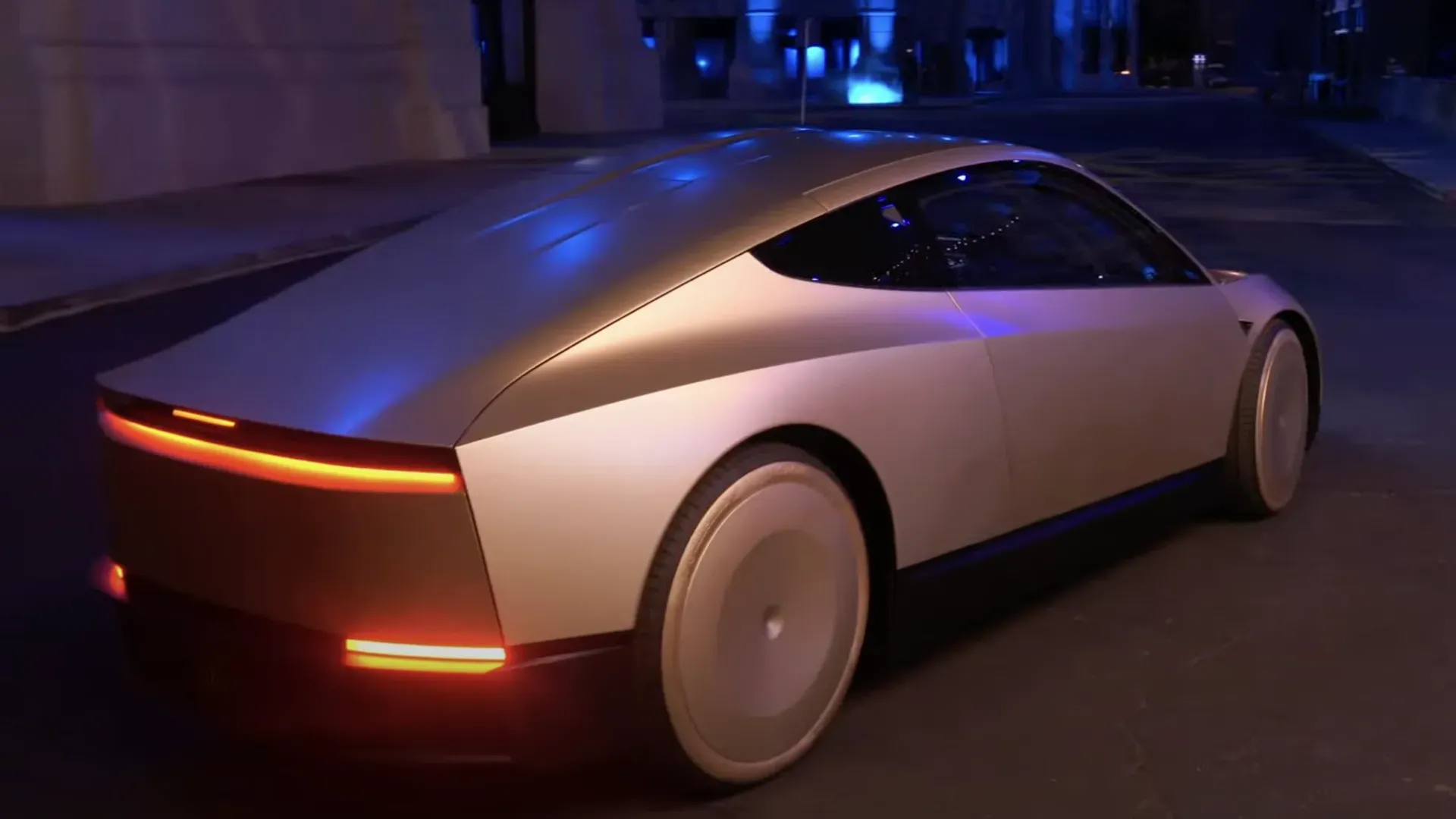
Without any help (yet) from the humanoid robot Elon Musk hopes to eventually sell worldwide, let's quickly break down Tesla's big robotaxi reveal.
Why it matters: Musk has made no secret that he sees Tesla's future value as an autonomy and AI play, so the stakes are high.
Catch up quick: Tesla unveiled a self-driving vehicle with no steering wheel or pedals last night that Musk optimistically hopes will start production before 2027.
- The Cybercab will eventually cost "below $30,000" and "we'll make this vehicle in very high volume," Musk said at the Hollywood rollout.
- It will use inductive charging, so there's no cord.
- Tesla unexpectedly also revealed a "robovan," a self-driving van capable of carrying up to 20 passengers or being configured for cargo purposes.
Reality check: Tesla's stock is down over 6% is pre-market trading.
- "[A]nalysts at Barclays said that the revelations had failed to highlight any near-term opportunities for Tesla," CNBC reports.
- And the WSJ notes: "Musk provided few new details about Tesla's business model for driverless taxis, such as projections for revenue or market size."
Yes, but: Wedbush Securities' Dan Ives, in a note, called the Cybercab "very impressive up close" and "lays the foundation for one of the future growth drivers for Tesla" that could boost profits and margins.
The bottom line: "Musk did a fantastic job of painting an ideal future for transportation that promises to both free up our time and increase safety," Edmunds analyst Jessica Caldwell wrote after the event.
But she added: "Many questions remain about how this will be achieved from a practical standpoint," citing regulatory approvals and public buy-in needed.
4. On my screen: fracking and carbon removal

🗳️ Pennsylvania is less economically tied to oil and gas than other big producing states, despite being the second-largest gas source behind Texas, new analysis argues.
- Why it matters: The finding, via Resources For the Future's Daniel Raimi, comes amid fracking drama in the critical swing state.
- State of play: The oil and gas industry accounted for 1.3% of the state's GDP last year, and 0.1% of wages and benefits for workers in 2022, Raimi notes.
- Yes, but: Gas plays a larger role in several rural economies, even if the overall state has many big sectors — like info tech and health care — and cities. Full analysis.
🛒 Major growth of the direct air capture market could stall without stronger federal demand-side policies to complement support for building projects, Breakthrough Energy's Jack Andreasen writes in a new post.
- Why it matters: We're attuned to policy ideas flying around from connected groups as a new presidency looms.
- The big picture: His ideas include creating a demand program for the DAC hubs modeled on DOE's efforts to help create markets for the multibillion-dollar hydrogen hubs. Full post.
5. One tech thing: GM debuts Tesla Powerwall competitor

General Motors is launching a battery-powered home-energy storage system, placing the company in direct competition with Tesla.
State of play: The GM Energy PowerBank went on sale yesterday.
- It comes in 10.6 kilowatt-hour and 17.7 kWh options. Customers can pair two of the larger units to power the average U.S. home for up to 20 hours.
- GM is also launching a kit that enables its EV owners to power their homes and a system capable of converting solar power into electricity stored in the PowerBank.
State of play: The PowerBank starts at $10,999 for the 10.6 kWh version, including the power inversion system and reverse EV charging.
6. ⚡ Number of the day: 7%-26%
That's how much U.S. utilities must boost annual generation by 2028 compared to last year, a Bain & Co. report finds, citing data center growth as a major reason.
- Even the low end is "far beyond the largest five-year generation boost of about 5% that US utilities achieved from 2005 through 2023."
📨 Did a friend, colleague or even a frenemy send you this newsletter? Welcome, please sign up.
🙏 Thanks to Chris Speckhard and Chuck McCutcheon for edits to today's edition, along with the brilliant Axios Visuals team.