
Axios Generate

January 15, 2025

🐪 Halfway there! Let's sail over the hump with just 1,139 words, 4.5 minutes.
🚨 Situational awareness: A rare "Particularly Dangerous Situation" Red Flag Warning is in effect for Southern California as the region faces the last day this week of strong Santa Ana winds.
- Read our story on how climate change contributes to the LA wildfires.
🎹 This week marks 30 years since hip-hop legends The Roots released the album "Do You Want More?!!!??!," which provides today's intro tune...
1 big thing: 🛢️Trump's "drill, baby, drill" problem
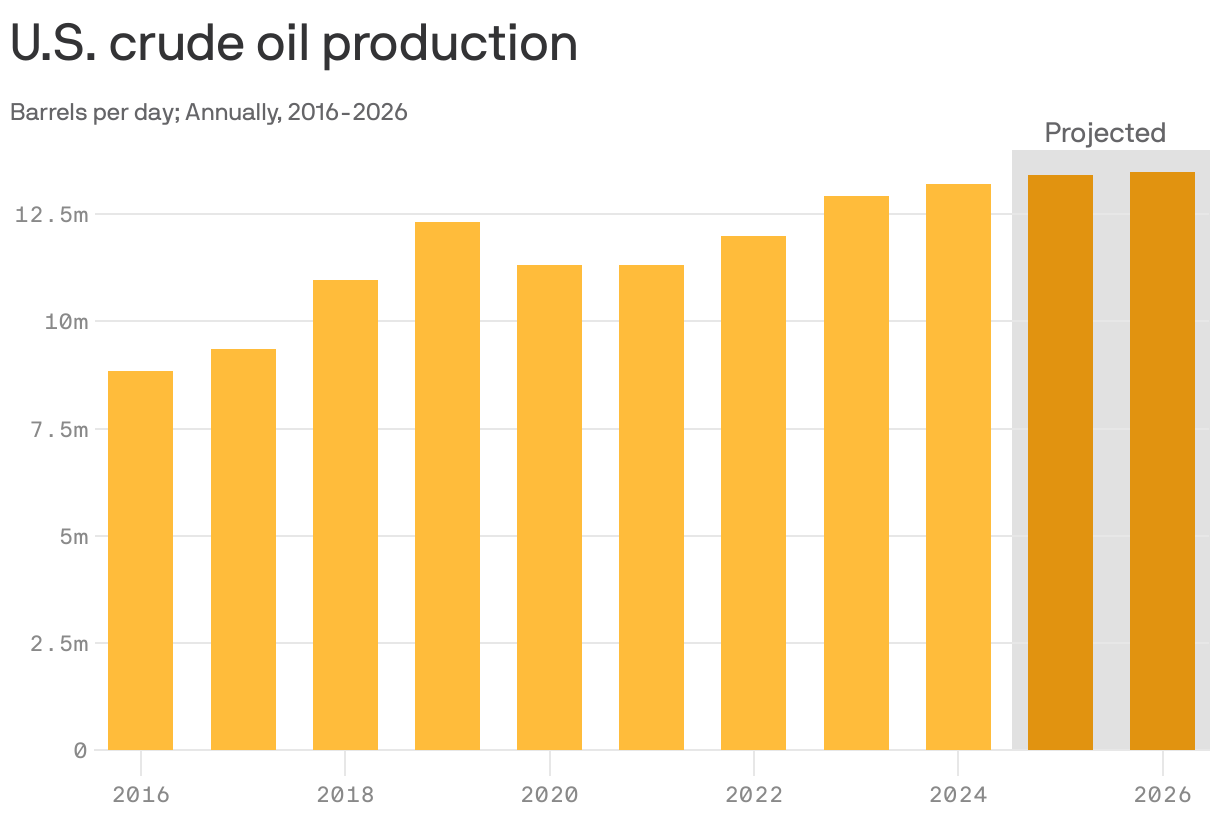
This chart ☝️ helps explain why President-elect Trump won't have an easy time delivering on pledges to surge U.S. oil production — at least anytime soon.
⚽ State of play: The latest analysis from the Energy Department's independent stats arm sees just modest output growth this year and next (albeit from already record levels).
- It sees production rising less than 1% in 2026 "as operators slow activity due to price pressures."
Why it matters: Market fundamentals hold the cards on producers' decisions — and for now, they probably work against a U.S. surge.
- The Energy Information Administration sees global supply outstripping demand growth over the next two years.
- And it sees falling prices, with the U.S. benchmark WTI averaging $70 per barrel this year but falling to $62 in 2026.
Yes, but: These look-aheads are written in faint pencil and change all the time. There's a reason major forecasting bodies do them monthly.
- Trump's vow to ease regulations could make more barrels economic to produce, though prices and investor goals are typically bigger drivers.
🗺️ And the global picture is fluid. Think variables like the effect of new sanctions on Russian shipments; Trump's plan to tighten enforcement of Iranian sanctions; and whether OPEC+ adds barrels.
- The International Energy Agency this morning said expanded U.S. sanctions against Russia unveiled this month could "significantly disrupt" the country's supply.
- But for now, IEA is keeping its Russian supply forecast unchanged.
The big picture: It may take years to assess Trump's effect.
- One big thing to watch: efforts to expand oil and gas leasing in the Gulf of Mexico and frontier areas in Alaska.
- Those kinds of projects have decade-long timelines.
🔍 What's next: Look for executive orders on Trump's first day that launch time-consuming bureaucratic work to loosen restrictions.

2. 😮 Bonus: A remarkable oil stat
Obviously the Permian Basin of Texas and New Mexico is the heart of American oil, but this is still wild: its share of total U.S. production should top 50% in 2026 (!).
🏈 State of play: That nugget is part of EIA's latest short-term outlook. "The expected production growth in the Permian in 2026 will be offset by contraction in other regions," EIA finds.
- It sees the Permian producing nearly 7 million barrels per day by the end of 2026. It was under 1 million 15 years ago.
3. 📘 Between the lines of the DOE nominee's message today
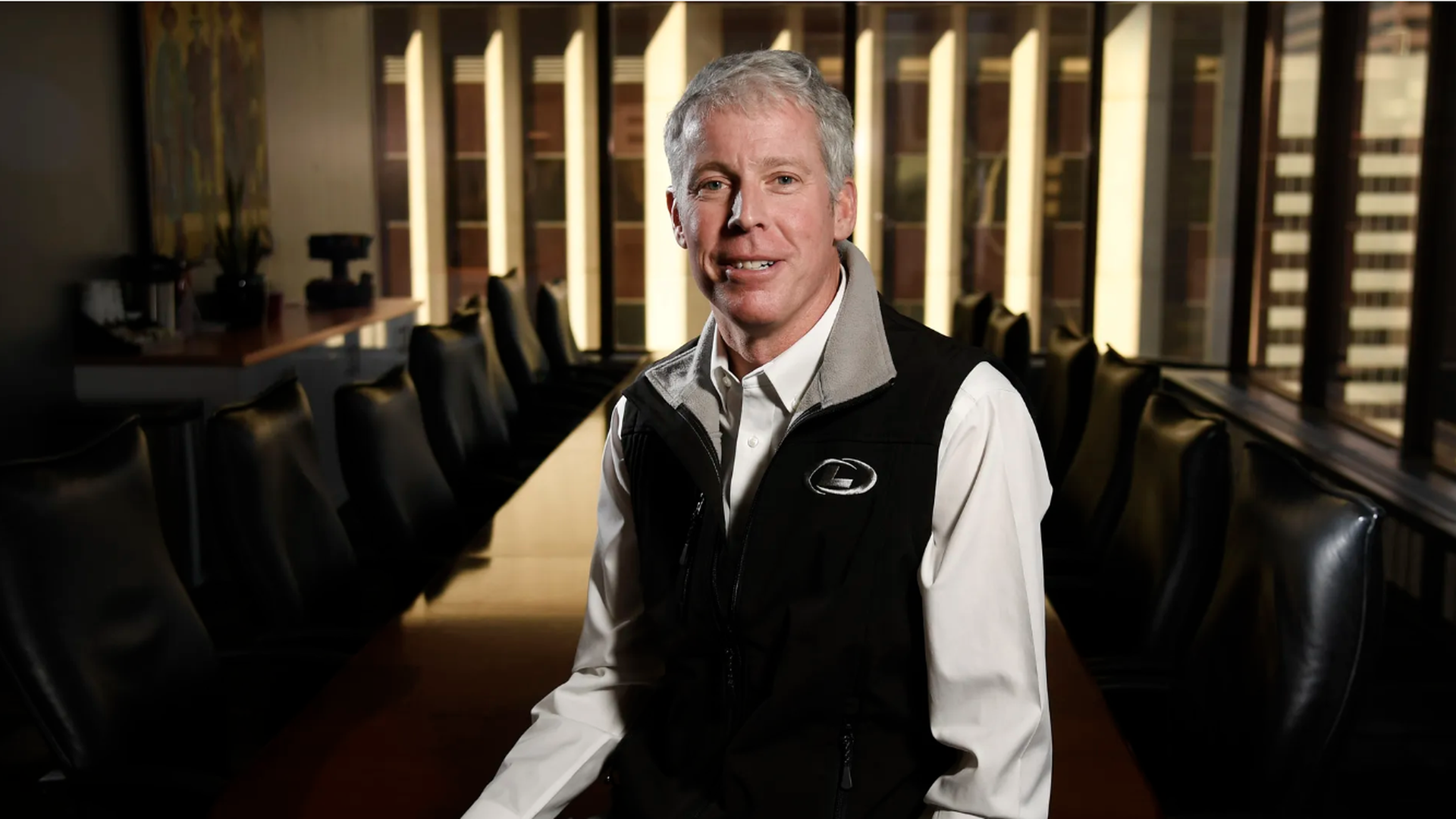
There's rather short text and plenty of subtext in Chris Wright's message to Congress and the public today.
Why it matters: The nominee for Department of Energy secretary is poised for an influential role in Trump 2.0 as the new president emphasizes U.S. energy output and exports.
Quick thoughts on Wright's statement for his Senate energy committee appearance later today...
🛢️It's fossil first — but not fossil only. His statement tracks Donald Trump's vow to unleash U.S. "dominance."
- But it also endorses "all sources of affordable, reliable and secure American energy."
- Wright notes the oilfield services company he founded, Liberty Energy, works in geothermal and has partnerships around next-wave reactors and battery tech.
↩️ Brace for a U-turn. The statement doesn't mention climate change. And it's consistent with Wright's views on the benefits of fossil fuels — including for developing nations.
- "A low energy society is poor. A highly energized society can bring health, wealth, and opportunity for all," it states.
🤔 There's room for interpretation. Wright says "we must lead the world in innovation and technology breakthroughs."
- But it specifically focuses on protecting and accelerating the work of DOE's national labs.
- So keep an eye on today's hearing for hints at Wright's views on other DOE programs, especially IRA-backed grants and loans.
Go deeper: Trump nominee Chris Wright to lay out top 3 goals as Energy secretary
4. 🌡️ Mapped: America's hottest year


The Lower 48 states had their hottest year on record in 2024, in keeping with global trends.
Why it matters: The year featured numerous extreme weather events in which record warmth played a role — from the obvious, like deadly heat waves, to torrential rains.
Zoom in: Virtually the entire contiguous U.S. was unusually warm in 2024, NOAA found.
- Specifically, the country was 3.5°F above the 20th century average.
- A total of 1,117 counties across the Lower 48 states and Alaska — one-third of all counties — were record warm for the year.
By the numbers: According to NOAA, more than 300 million people experienced a top-10 warmest year, with more than 140 million people affected by the warmest year on record.
- A staggering 17 states from the Upper Midwest to the Northeast, south into the Mid-Atlantic and southern U.S. had their record warmest year in 2024. All but two of the rest of the states had a top-five warmest year.
The heat milestones set last year were significant.
- In Caribou, Maine, for example, the NWS issued its first-ever excessive heat warning for a heat index near 110°F on June 19.
- Las Vegas saw its all-time hottest temperature of 120°F on July 7.
- In Deadhorse, Alaska, the high of 89°F on Aug. 6 set an all-time high temperature record and milestone for the highest temperature so far north in that state.
5. 🏃Catch up quick on policy: Pentagon, offshore wind, CO2 pipelines

🪖 Pete Hegseth, Trump's nominee for defense secretary, is no fan of Pentagon climate change efforts.
- Why it matters: He could pare back work on low-carbon fuels and analyzing the nexus between climate change and security.
- State of play: The military must "confront the reality and perception that it has become too focused on political issues of social justice, political correctness, critical race theory, climate change, etc," he said in written comments to the Senate Armed Services Committee.
- Yes, but: The Pentagon is a big place and unwinding longstanding programs is no sure thing — even if it climbs onto the priority list.
🛑 Donald Trump is prepping an executive order to thwart offshore wind development on the East Coast, GOP Rep. Jeff Van Drew of New Jersey said in a release.
- What's next: It would "lay the groundwork for permanent measures against the projects" and is "expected to be finalized" in a few months. Heatmap has more.
🖋️ Federal pipeline safety regulators have proposed stronger standards for carbon-dioxide pipelines in the Biden administration's waning days, Axios Pro's Daniel Moore reports.
- Why it matters: It's a long-awaited effort to address safety concerns around pipelines needed to scale up carbon capture and storage projects. But it could be easily swept aside by the incoming Trump administration. Full story.
6. 🌊 Number of the day: 200,000 tons
That's the size of ocean-based carbon removal startup Gigablue's four-year agreement with sustainable aviation investor SkiesFifty.
Why it matters: It's the "largest marine carbon dioxide removal offtake agreement to date," the companies said.
- Financial terms were not disclosed, a reminder to see if volumes sought by young startups really come to pass.
Go deeper: Axios Pro: Climate Deals' Alan Neuhauser first broke the news.
- Check out Axios Pro for a steady diet of scoops and smart analysis.
Did a friend, colleague or someone whose LinkedIn profile makes you second-guess your career choices send you this newsletter? Welcome, please sign up.
🙏 Thanks to Chris Speckhard and Chuck McCutcheon for edits to today's edition, along with the brilliant Axios Visuals team.
Sign up for Axios Generate