Axios Generate

January 29, 2024

🥞 Good morning! This edition has a Smart Brevity count of 1,006 words, 4 minutes.
🎸 This week marks 45 years since punk pioneers Stiff Little Fingers dropped their debut "Inflammable Material," which provides today's intro tune...
1 big thing: State of play after Biden's LNG move
Photo Illustration: Natalie Peeples/Axios. Photo: Anna Moneymaker/Getty Images
Here's a few more things we know (and don't) after President Biden jolted the energy and climate worlds by pausing liquefied natural gas export approvals, Ben writes.
Catch up fast: The Energy Department said Friday it's freezing new permits as officials reassess the climate, energy security and market effects.
🗳️ It's already part of Trump vs. Biden, the sequel. After we hit send Friday, the former president and presumptive GOP nominee released a statement bashing the decision.
- And he vowed to approve new projects "on my very first day back" during a rally Saturday.
🔍 Capitol Hill probes are starting. An unhappy Joe Manchin, the Senate's Energy Committee chairman, vowed a hearing in coming weeks.
- Expect oversight from House Republicans, too.
- There's little chance Congress can thwart Biden, but Capitol Hill critics will look to put the White House on the defensive (Check out Axios Pro: Energy Policy this afternoon for new details on the Capitol Hill outlook).
⏰ It's about the future ... but the future is now. The freeze won't stop the U.S. export surge thanks to new projects authorized and under construction. The Energy Department points out that export capacity is already slated to double over the next few years.
- Still, some analysts see near-term commercial consequences, given that buyers look to secure supplies far in advance.
- A Center for Strategic and International Studies primer notes that buyers "will turn their attention from projects now in limbo" to the U.S. projects already given the green light.
- "The decision could also aid other LNG suppliers, such as Qatar, that are seeking to lock up their own commercial deals," it adds.
🤷 Specifics are scarce. The White House and DOE have divulged little about how they'll undertake the probe, what sources they'll consider, and so forth.
- Documents thus far have largely offered high-level information and messaging about the move.
⚖️ This battle could head to court. Nobody has announced a case yet (to my knowledge), and this isn't formal regulation of the sort that's commonly litigated.
- But attorney Scott Segal of the firm Bracewell points to state-led court battles over Biden's attempted pause on oil and gas leasing early in his term.
- While different statutes were in play there, "the regulated community is still owed the full measure of administrative due process and a predictable business environment," said Segal, whose firm represents industry clients.
- "Court action is highly likely in this case," he said via email.
2. Bonus: what they're saying about the LNG pause
Here are a couple snapshots from the ferocious battle over LNG exports that we'll be covering going forward, Ben writes.
⚠️ A progressive private equity watchdog called it a warning to pension funds and other investors with exposure to LNG.
- "With delays in issuing DOE permits, many of these proposed LNG terminals may not get built, despite hundreds of millions in pension capital tied up in them," Nichole Heil of the Private Equity Stakeholder Project said in a statement.
- "We encourage all investors to seriously consider the financial risks of having their capital tied up in these terminals," adds Heil, whose group opposes LNG on climate grounds.
📬 Major business groups in the U.S., Europe and Japan released an open letter to President Biden.
- It touts LNG's energy security role and environmental record, adding that failure to approve authorizations "would send a troubling signal to allies, investors, and energy markets that could reverberate for many years to come."
- The letter — from the U.S. Chamber of Commerce, BusinessEurope, and the Japan Business Federation — shows how the policy faces business sector opposition well beyond the oil industry.
3. What's thwarting wind and solar projects
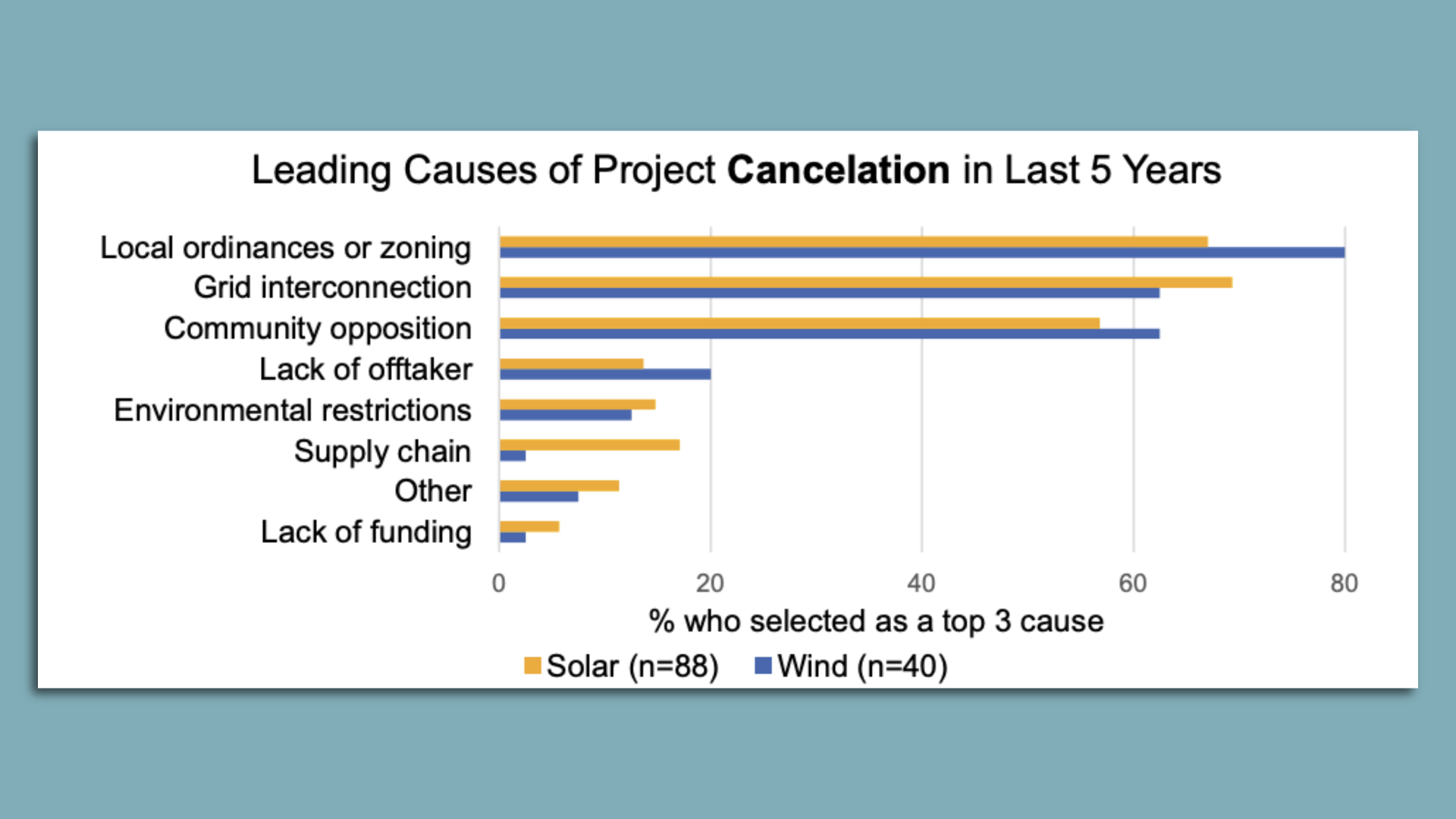
Image courtesy of Lawrence Berkeley National Laboratory
While solar and wind are growing, a substantial number of U.S. projects are withering on the vine — and new survey results drill down on the biggest risks, Ben writes.
The big picture: Roughly one-third of siting applications submitted in the last five years were canceled, while about half saw delays of six months or more, according to Lawrence Berkeley National Laboratory findings on utility-scale solar and onshore wind.
Threat level: "4 out of 5 developers are at least moderately concerned that community opposition will get in the way of decarbonization goals," they found.
4. On our petro-radar: Big Oil and OPEC

Illustration: Sarah Grillo/Axios
There's plenty to discuss when Shell, Exxon, Chevron and others report fourth quarter earnings this week, Ben writes.
What we're watching: Aside from the obvious metrics, I'm curious about topics including...
- Whether Exxon is queried by analysts about its wider posture toward shareholder advocacy after it filed suit against activist investors over a climate resolution.
- What the heavyweights, who all have hydrogen business lines, think of the closely watched Treasury Department plan for implementing climate law credits.
- Their response to the new White House LNG policy.
Meanwhile: Via Reuters, "OPEC+ will likely decide its oil production levels for April and beyond in the coming weeks, OPEC+ sources said, adding that a meeting of a key ministerial panel ... Thursday would take place too early to take decisions on further output policy."
5. Escalating Mideast conflicts just nudge oil market
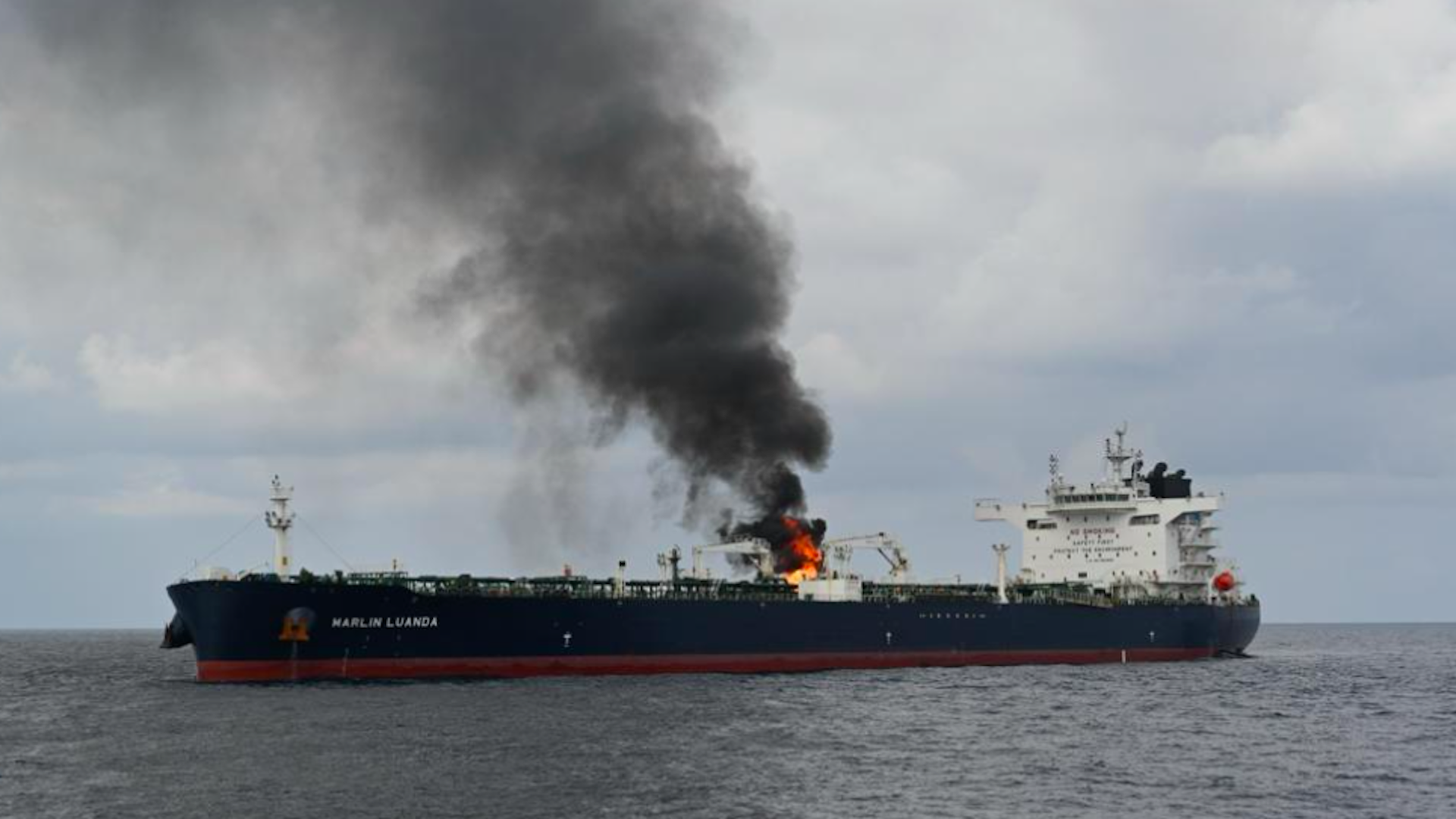
An oil tanker in the Gulf of Aden was reportedly struck Friday by a missile fired from a Houthi-controlled area of Yemen. Photo courtesy of India's Navy
Oil prices inched up to new 2024 highs to start the week following fresh violence in the Middle East, but then fell back, Ben writes.
The big picture: Brent prices added to last week's gains following the fatal weekend strike by pro-Iranian militia on a U.S. outpost in northeast Jordan that killed three American soldiers.
- In addition, Houthi rebels struck a tanker carrying the petroleum product naphtha in the Gulf of Alden Friday, causing a fire but no reported casualties.
Yes, but: Crude then retreated this morning as economic headwinds remain. Brent is trading at $83, roughly where it left off Friday.
- The collapse of Chinese property giant Evergrande may be adding to demand concerns in the world's largest oil importer.
What they're saying: "Geopolitical risk has rapidly evolved into geopolitical reality," RBC Capital Markets analyst Michael Tran tells Bloomberg.
- "While global oil prices have yet to fully reflect the escalating tensions in the Red Sea, the events of the weekend are likely to catalyze a rebasing of expected outcomes for both the security of supply as well as for oil prices."
📬 Did a friend send you this newsletter? Welcome, please sign up.
🙏 Thanks to Chris Speckhard and Javier E. David for edits to today's edition, along with the talented Axios Visuals team.