Axios Generate

September 17, 2024


🐣 Good morning! Today we've got a wide-ranging but quick 1,214 words, 4.5 minutes.
🎸 This week marks 30 years since Liz Phair dropped her second album "Whip-Smart," which provides today's intro tune...
1 big thing: Unusual ingredients seed deadly African floods
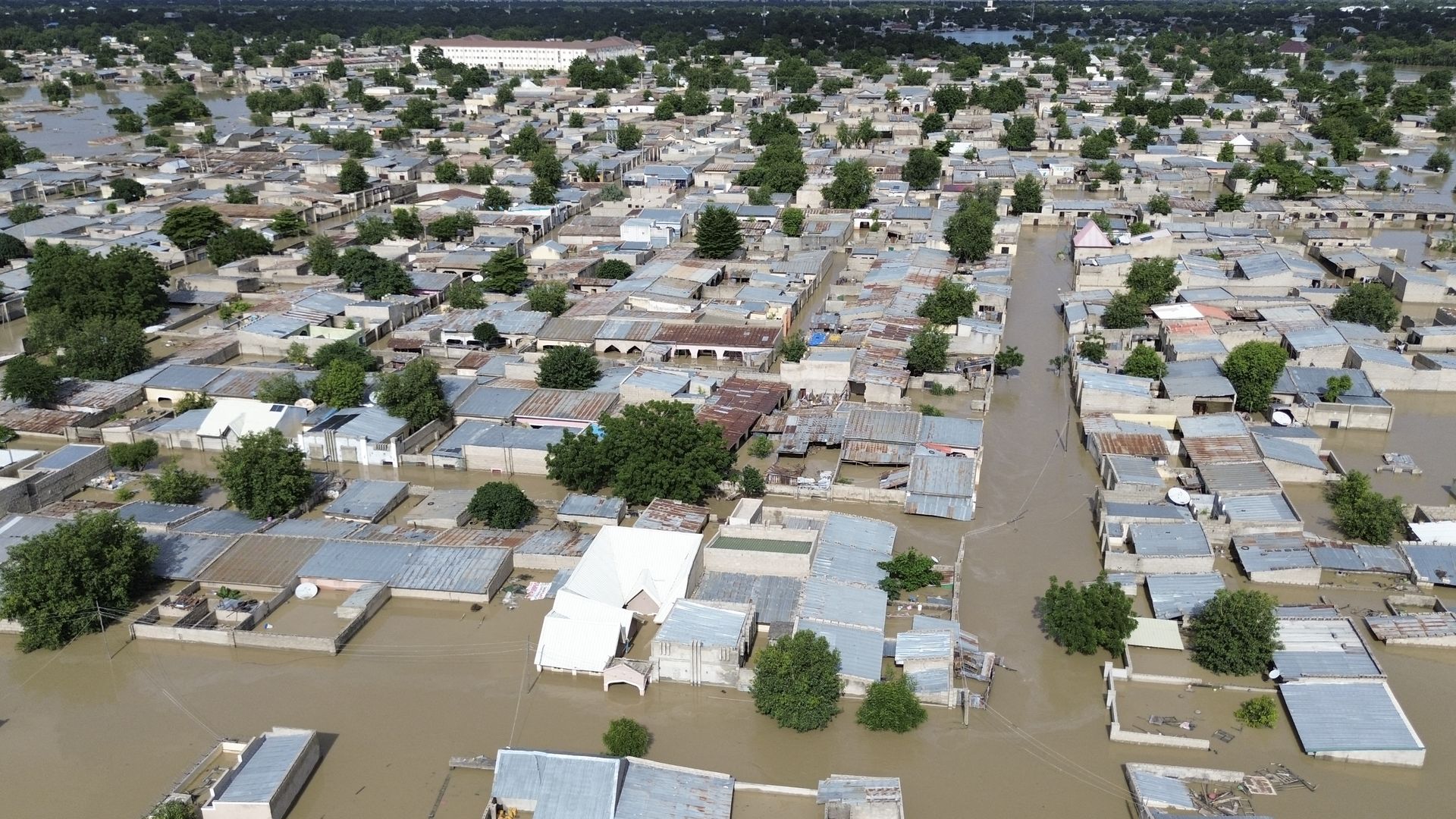
At least 1,000 people have been killed and millions more displaced by floods across Central and Western Africa. Parts of Nigeria, Mali, and Niger have been particularly hard hit by some of the heaviest rains in decades.
Threat level: The flooding has displaced large groups of people and drowned many who could not escape swiftly moving water in time.
- In recent weeks, flooding has hit many other areas that don't typically see more than an inch of rain at this time of year, including Chad, Morocco and Algeria.
- The threat for additional flooding continues in this semi-arid Sahel region.
The big picture: There are clear climate change ties to the extreme rains, but formal studies will have to be done to tease out the climate signals from the background noise of natural climate variability.
- Particularly, there is the trend toward more frequent and intense heavy precipitation extremes, which is occurring globally as air and ocean temperatures warm. This sends more moisture into the atmosphere, which storms can tap into to deliver punishing downpours.
- Those studies will not be an easy task in Africa, where long-term weather observing stations — along with early warning systems — are especially lacking.
The intrigue: The northerly displacement of the Inter-Tropical Convergence Zone has brought repeated bouts of rainfall to the heart of the Sahara Desert, where such rains are rare and the land is unable to absorb large amounts of moisture. Instead, heavy rain runs off the surface and surges into communities.
Between the lines: Some studies show the potential for human-caused climate change to trigger a northward movement of the ITCZ.
- Because it has a greater land area, the Northern Hemisphere is heating up faster than the ocean-dominated Southern Hemisphere.
- This may, in turn, be affecting the location of atmospheric features that help drive the ITCZ.
Yes, but: It is not yet clear if a climate change-driven, long-lasting northward shift in the ITCZ is taking place, or if this season is an aberration, driven more by natural climate variability.
The bottom line: Anomalous background conditions can lead to unusual, and unfortunately deadly, outcomes when it comes to extreme weather and climate change.
2. COP29 hosts show new cards as summit looms

A new open letter from COP29 head Mukhtar Babayev offers a description of his hopes for the November UN climate talks.
Why it matters: The memo, which invites input, is a newly detailed, one-stop-shop elucidation of many goals.
Catch up quick: The agenda's dozen-plus areas include a proposed "Climate Finance Action Fund" that would be capitalized by fossil fuel-producing states and companies.
- A "COP29 Global Energy Storage and Grids Pledge" that calls for 1,500 GW of installed storage by 2030, which the letter calls six times 2022 levels.
- The "COP29 Hydrogen Declaration" to harmonize standards and create new targets.
- A "COP29 Declaration on Reducing Methane from Organic Waste" to supplement the broader, existing Global Methane Pledge.
Reality check: Countries will no doubt link arms on various pledges.
- But fights loom over the biggest agenda item: coming up with a formal new goal for climate finance from industrialized to developing nations.
And as another oil-producing country hosts climate talks, Babayev and his deputies will face suspicion from NGOs and some delegations over their appetite for strong language on transition from fossil fuels.
- The new memo doesn't address this head-on, though several agenda items endorse competing sources.
- Still another stretch goal is getting all nations to honor the "COP Truce Appeal" that urges a pause in military conflict from seven days before COP29 starts until seven days after the close.
3. DOE taps NextEra for solar over nuclear waste site

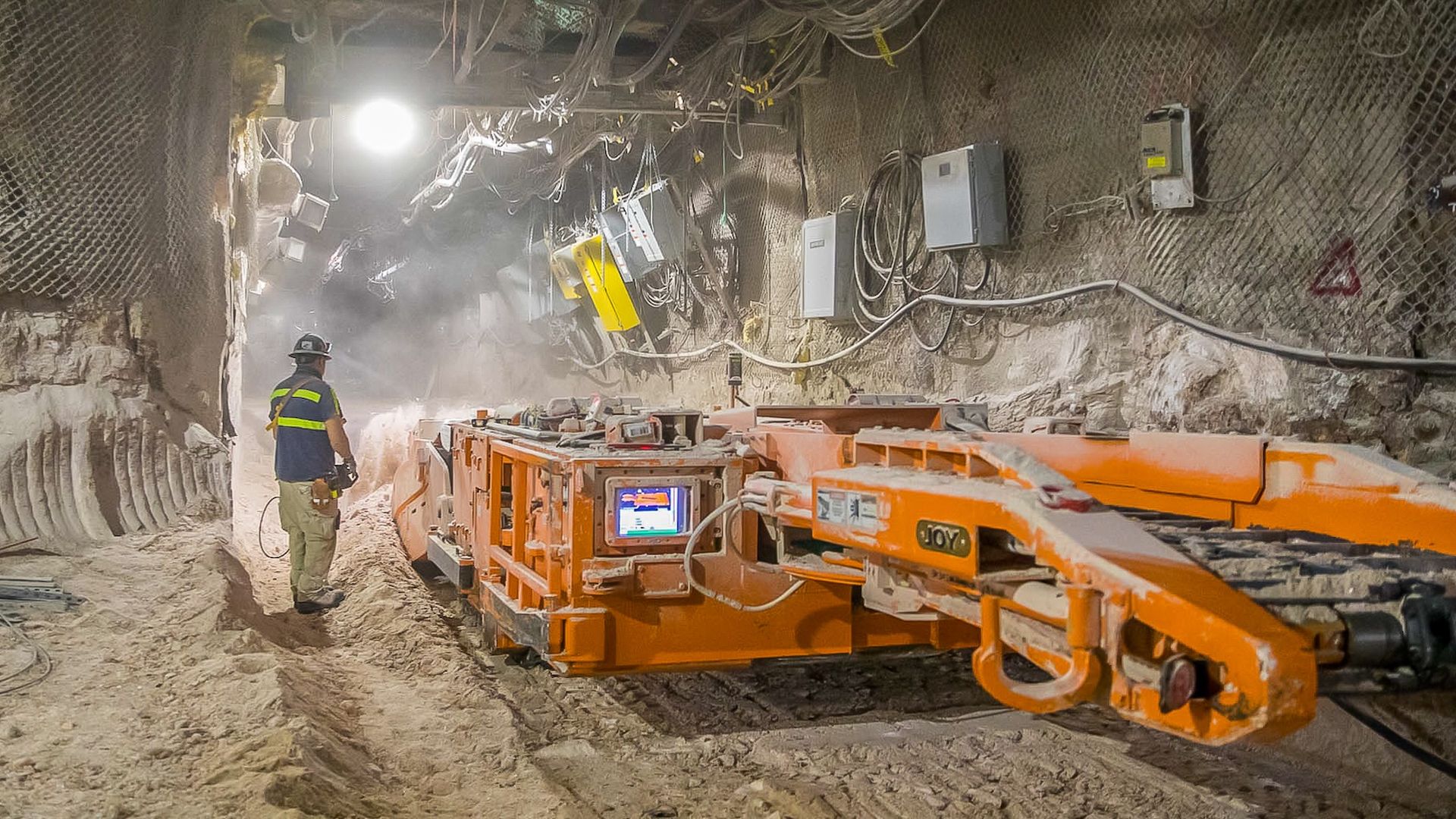
The Energy Department wants to see solar panels built above the only place in the nation where nuclear waste is buried deep underground.
Why it matters: The Biden administration is trying to demonstrate the potential for new energy sources at sites across the DOE's nuclear weapons complex.
Driving the news: The department announced today that it chose NextEra Energy Resources Development to negotiate a deal to deploy at least 150 megawatts of electricity to the grid with a 100-megawatt storage system.
- The project would be located on up to 1,800 acres at the Waste Isolation Pilot Plant (WIPP), a repository in southeast New Mexico where tools and other discarded items from nuclear bomb factories are buried in salt caverns 2,150 feet below ground.
- WIPP was the last DOE site to get a developer contract in the agency's year-old "Cleanup to Clean Energy" initiative.
- The others are South Carolina's Savannah River Site; Washington state's Hanford Site; Nevada National Security Site and Idaho National Laboratory.
The intrigue: Economic development-minded officials in Carlsbad, N.M., one of the cities closest to WIPP, have been eager to lure other types of energy-related development to the area, including a potential small modular reactor or interim storage site for commercial nuclear waste.
- But environmentalists and many of the state's Democratic leaders contend that New Mexico is already doing its part by hosting WIPP.
4. Bonus policy notes: CO2 removal and LNG

📝 A carbon removal industry group just unveiled ideas to build a "fit-for-purpose" U.S. regulatory system for marine-based methods.
- Why it matters: Their proposals for so-called mCDR could inform the brewing White House approach to the tech.
- State of play: The Carbon Removal Alliance's memo gets in the weeds while urging more funding, interagency cooperation, and permitting clarity.
- Catch up quick: Methods of mCDR include enhancing ocean alkalinity to increase CO2 uptake while fighting acidification; sequestering CO2 removed through seaweed cultivation; and electrochemical methods. But all face questions around whether they truly work and can scale.
🤝 U.S. LNG exporter Venture Global today announced a deal for capacity at the Alexandroupolis import terminal in Greece that amounts to roughly 12 cargoes per year.
- Why it matters: The State Department calls Greece's expanding import capacity important for European energy security as the continent has moved away from Russian supplies.
- The intrigue: Cargoes under this deal would come from Venture's Plaquemines LNG project in Louisiana but also its proposed CP2 project that's caught up in the White House pause on new export approvals.
- What we're watching: Pressure from all angles on the White House over the pause. The latest: 12 House Democrats, including several in competitive races, are urging President Biden to expedite projects that would supply Ukraine and Eastern Europe.
5. Catch up quick on biz and finance: Tesla and BP

🧳 Another Tesla departure: Lobbyist Joe Mendelson has decamped for solar manufacturer Qcells, where he'll head public policy and government relations.
- Why it matters: He's an experienced Washington hand as Qcells navigates evolving tax and trade policies. Mendelson was a senior Senate Democratic aide before joining Tesla nine years ago.
👋 BP's decision to shed its U.S. onshore wind business is the latest sign of the company trying to streamline its energy transition strategy.
- Catch up quick: BP will divest from 10 U.S. sites where it owns a combined 1.3 gigawatts of capacity and focus its global renewables business through the solar-focused Lightsource BP. The company called the move part of plans to "deliver a simpler, more focused, higher value company." Reuters has more.
6. 🧮 Number of the day: 6%-7%
That's data centers' projected share of global copper demand in 2050, mining giant BHP's chief financial officer Vandita Pant tells the FT.
Why it matters: Sure, any 2050 projection needs boulders of salt. But analysts already see a future scramble for the metal used in renewables, EVs and other transition tech. Data centers add more competition.
📨 Did a friend, colleague or even a frenemy send you this newsletter? Welcome, please sign up.
🙏 Thanks to Chris Speckhard and George Moriarty for edits to today's edition, along with the brilliant Axios Visuals team.