Axios Generate

April 06, 2023

☕ Good morning! Today's newsletter has a Smart Brevity count of 1,055 words, 4 minutes.
🌡️ Last month was tied for the second warmest March globally behind 2016 in multiple lines of detailed measurements dating back to 1950, per Europe's Copernicus climate service.
🎶 This week in 2015, Kendrick Lamar was #1 on the Billboard album charts with "To Pimp a Butterfly," which provides today's intro tune ...
1 big thing: “Extrapolations” is a cautionary climate change tale

Actress Sienna Miller seen in a smoky forest in an episode of the Apple TV+ series "Extrapolations." Image: Apple TV+
"Extrapolations," a new, star-studded Apple TV+ series, depicts humanity’s future under ever-worsening — yet largely realistic — climate change scenarios in strikingly ambitious ways, Andrew writes.
Why it matters: The series is arguably the most far-reaching and experimental portrayal of climate change yet attempted.
- It sputters in some respects, with characters weaving in and out of episodes in sometimes confusing arcs.
- But it is startlingly well-grounded in climate science and specifically references likely consequences of higher emissions scenarios from U.N. Intergovernmental Panel on Climate Change reports.
Driving the news: Creator, producer and writer Scott Z. Burns told Axios in an interview that the show explores the “messy middle” of the climate story.
- "Extrapolations" is not an end-of-days, apocalyptic disaster series, where nothing can yet be done to rein in global warming.
- Rather, it examines timeframes in which humans still have some agency to shift course on greenhouse gas emissions.
The big picture: For climate professionals, it may be a show that stays with you long after it is finished, be it a rabbi struggling to save his congregation’s place of worship in a sinking Miami; or a frighteningly realistic rogue geo-engineering (featuring Edward Norton).
What he's saying: “I was really interested in the kinds of stories that were going to occur in the messy middle, not the post apocalyptic moment, not in the final analysis, but in the human-sized increments that a person might experience, that a couple might experience that a child and a parent might experience,” Burns said.
Catch up fast: Burns, known for producing Al Gore’s “An Inconvenient Truth” and serving as a writer on “The Report” and “Contagion,” said he was most heavily influenced by an essay by Amitav Ghosh called the “Great derangement.”
- He also consulted with Gore, along with climate activist and writer Bill McKibben, former NASA climate scientist James Hansen, among others.
2. “Unprecedented” coral disease relief

A close-up of polyps of a great star coral colony on a reef near Fort Lauderdale, Florida. Photo: Valerie Paul via the Smithsonian’s National Museum of Natural History.
Scientists have discovered a new tool for treating and preventing a deadly disease that has wreaked havoc on coral reefs in Florida and the wider Caribbean for years, according to new research, Axios' Ayurella Horn-Muller reports.
Why it matters: Stony coral tissue loss disease, or SCTLD, is a fast-acting, plague-like affliction that is made worse by climate change.
Context: Much about SCTLD remains unknown. Just last year, a lead scientist at NOAA Florida Keys National Marine Sanctuary described coral disease research as being "in the Dark Ages."
- What scientists do know: Once infected, large corals that can take “hundreds of years to grow" can die in weeks, according to Valerie Paul, head scientist at the Smithsonian Marine Station and co-author of the paper.
- Plus, the mysterious disease is an added stressor endangering the future of coral reefs worldwide, compounding with the damaging effects of pollution and climate change — which increases marine temperatures that are likely to exacerbate it.
What they found: Led by Smithsonian Marine Station researchers and funded in part by NOAA, the study published Thursday found that a bacterial probiotic treatment effectively stopped or slowed SCTLD in nearly two thirds of tested infected coral fragments.
- It also prevented the infection from spreading in all transmission experiments.
3. The "largest community solar purchase" in the U.S.
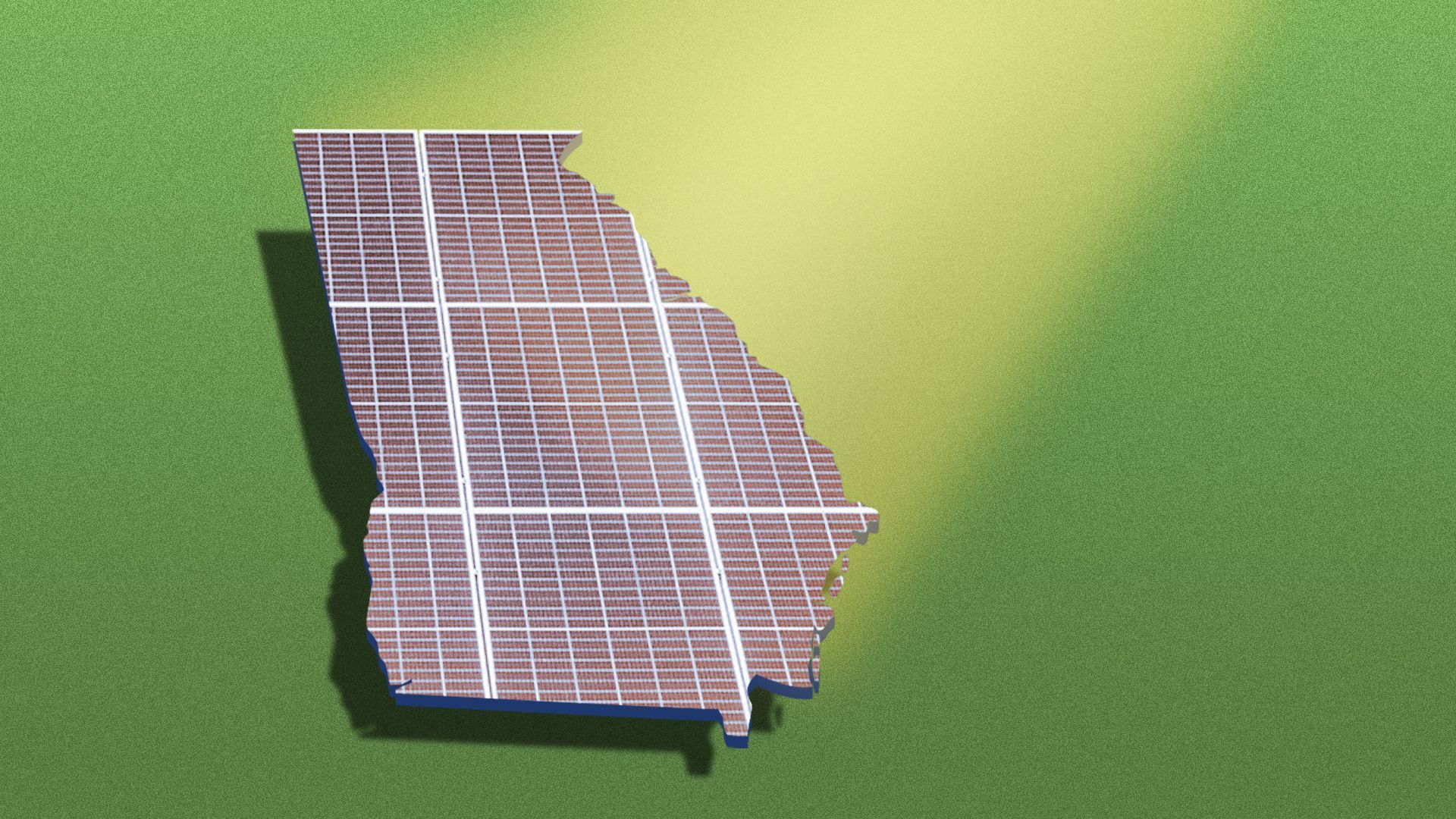
Illustration: Lindsey Bailey/Axios
Solar manufacturer Qcells and developer Summit Ridge Energy will today unveil plans to deploy 2.5 million panels worth of projects across several states, Ben writes.
Why it matters: The 1.2 gigawatt deal will use incentives under the climate law, administration officials said ahead of VP Kamala Harris visiting a Qcells plant in Georgia later Thursday.
How it works: The 2.5 million panels will support "community solar" projects in Maryland, Illinois and Maine that are together large enough to power 140,000 homes and businesses, officials said.
- Community projects are a way of providing solar to people who can't install panels because they live in multi-unit buildings or aren't homeowners.
- This form of solar typically allows multiple customers to subscribe to power from a project and receive credits on their bills.
The big picture: It's the "largest community solar purchase in American history," an official said Wednesday evening. The Atlanta Journal-Constitution has more.
Catch up fast: In January, Qcells — an arm of Korean industrial giant Hanwha — said it's investing $2.5 billion to expand manufacturing in Georgia.
Bonus tech finance news: a VC fund to watch
🌍 The new firm Equator announced initial close of its first VC fund at $40 million as it backs energy, agriculture and mobility startups focused on sub-Saharan Africa, Ben writes.
Why it matters: "Africa accounts for less than 3% of the world's energy-related carbon dioxide (CO2) emissions to date, but Africans will be among the world's most affected by the negative impacts of climate change," yesterday's announcement states.
The big picture: Equator's fund will back seed and series A rounds, and the firm has teams in Nairobi, Lagos, London and Colorado. TechCrunch has more.
4. Rough seas for financial sector climate push
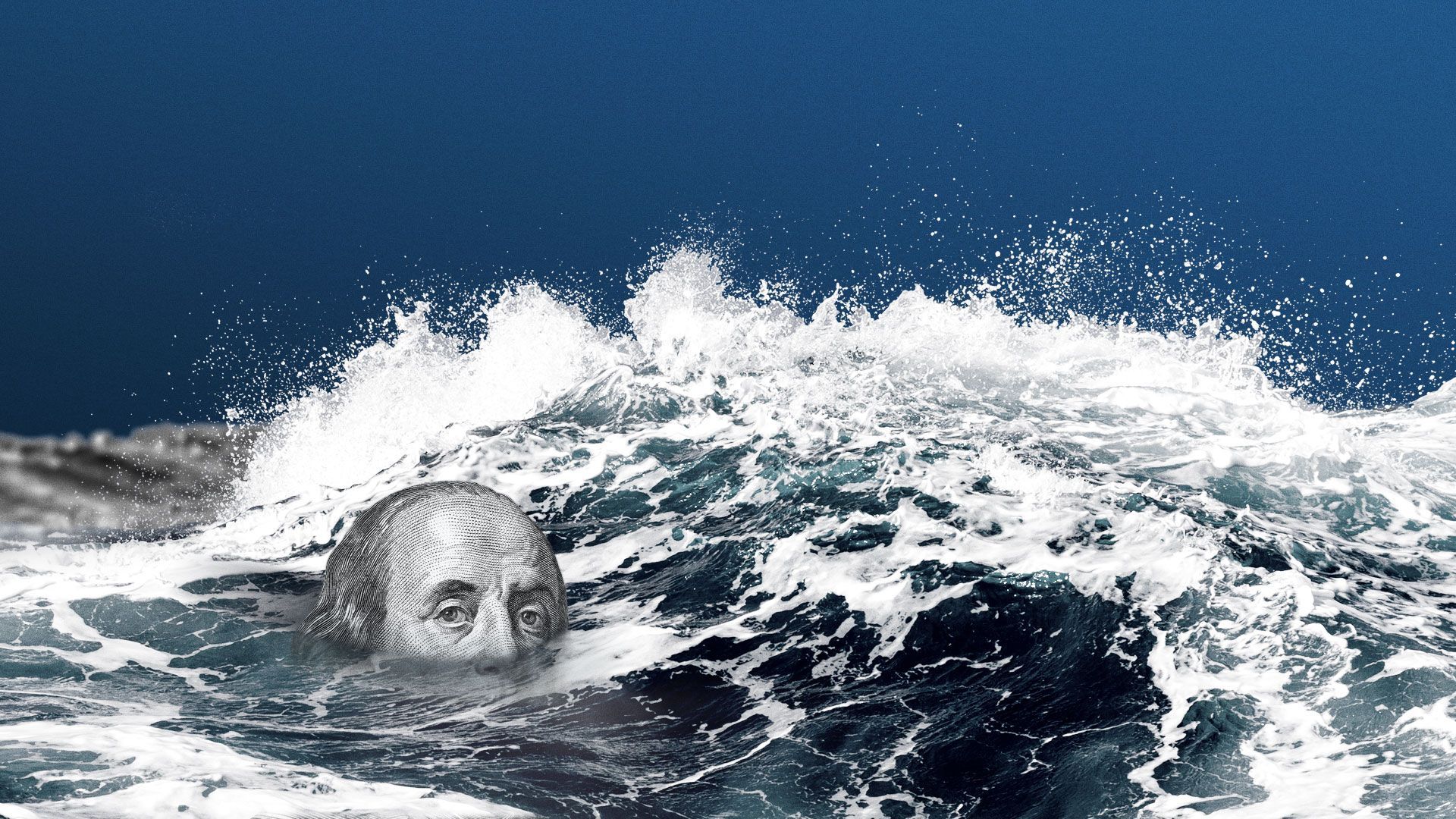
Illustration: Eniola Odetunde/Axios
Groups of banks and insurers under the umbrella of the huge Glasgow Financial Alliance for Net-Zero (GFANZ) are facing growing pains, Ben writes.
Driving the news, part 1: Zurich Insurance yesterday said it's leaving the Net-Zero Insurance Alliance, making the second industry heavyweight to depart the group after Munich Re's announcement Friday.
- Zurich said it would focus resources on helping customers with their low-carbon transition and remain "fully committed to our sustainability ambitions." Reuters has more.
- Munich Re offered a different reason, citing legal risks, while also affirming its climate ambitions.
Driving the news, part 2: The Financial Times reports on internal debates within another sub-group: the Net-Zero Banking Alliance, who's members pledge to "align" lending and portfolios with net-zero emissions by 2050.
- They report the dispute is partly about the coalition's metrics used to show progress on financed emissions — specifically whether to focus on absolute emissions or "intensity" (i.e. emissions per unit of output).
- GFANZ did not provide immediate comment on the FT report.
The bottom line: GFANZ's 550+ members represent a vast swath of private financial weight behind cutting emissions. But gaining consensus in the sprawling industries is looking tricky.
5. Number of the day: 500 miles

The 2025 Ram 1500 REV. Image: Courtesy of Stellantis.
That's the range on the larger battery-pack option of the Ram 1500 REV electric pickup unveiled at the New York International Auto Show, Ben writes.
Between the lines: Ram is late to the electric pickup race. So the company (part of Stellantis) decided to shoot for 500 miles to try to leapfrog the competition — and remove any customer worries about range anxiety, Axios Joann Muller notes.
📬 Did a friend send you this newsletter? Welcome, please sign up.
🙏 Thanks to Lisa Hornung and Javier E. David for edits to today's edition.
Sign up for Axios Generate
Untangle the energy industry’s biggest news stories