Axios Generate

May 18, 2023
🍓 Good morning! Today's newsletter has a Smart Brevity count of 1,269 words, 5 minutes.
⚡ Situational awareness: Over two-thirds of North America is at risk of summer power shortfalls during periods of "extreme demand," an industry oversight body warned. Full analysis... Reuters coverage
🎶 At this moment 45 years ago, The Isley Brothers were #1 on Billboard's R&B charts with today's intro tune...
1 big thing: Corporate heavyweights unveil major carbon removal deal
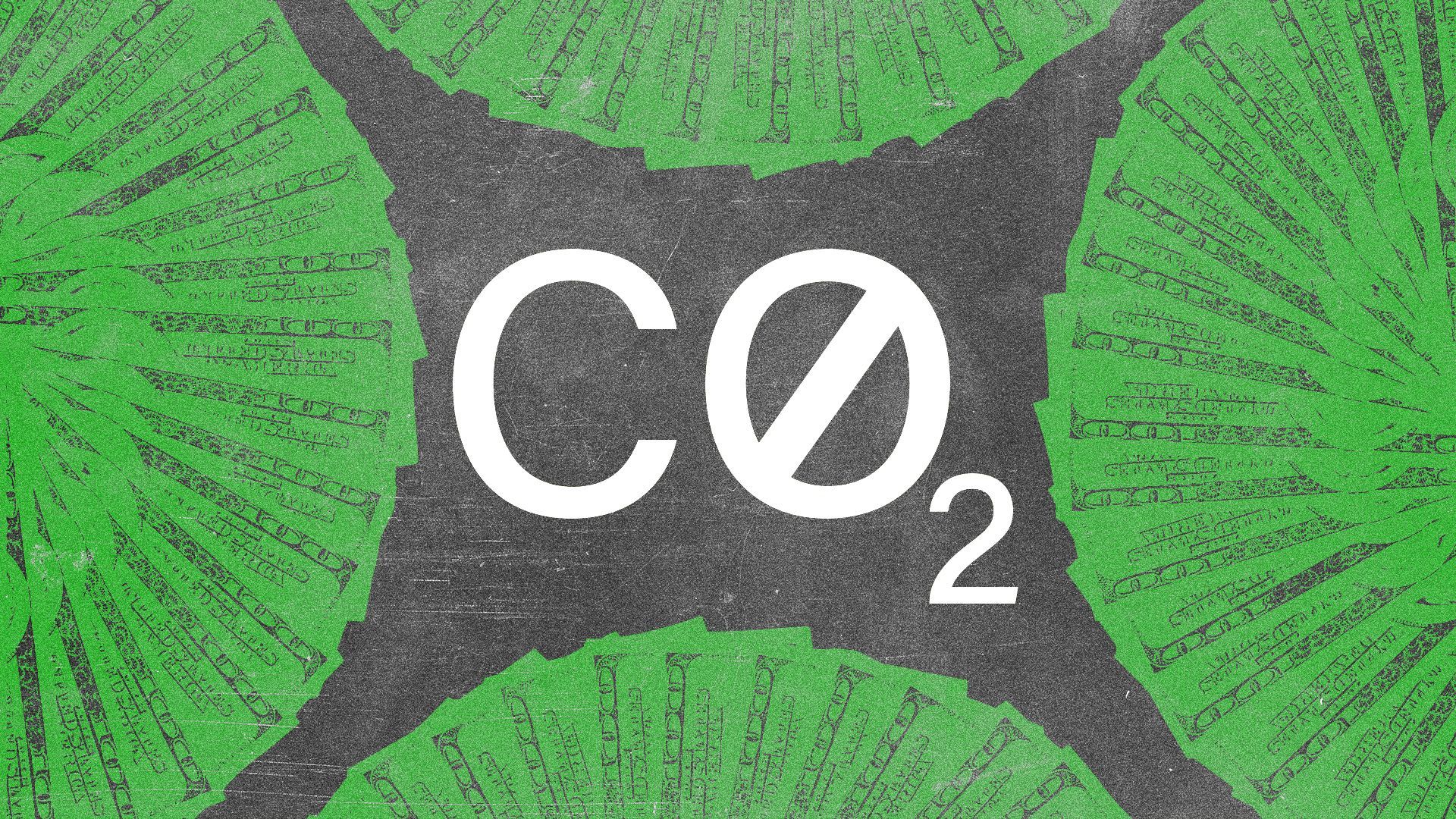
Illustration: Shoshana Gordon/Axios
Breaking: Frontier, the group of corporate giants helping to expand the carbon removal market, just unveiled its largest deal by far, Ben writes.
🗞️Driving the news: Buyers working through Frontier have binding contracts for $53 million with the startup Charm Industrial to remove 112,000 tons of carbon dioxide between 2024 and 2030.
Why it matters: That's big in the nascent market for various technologies and methods that can remove CO2 already in the atmosphere.
- Rapid growth and cost declines for the expensive tech are key for removal to become a real weapon against global warming, which is hardly a sure thing.
🧮 One wild stat: The contracted volumes are roughly 10 times the amount of permanent atmospheric removal worldwide to date, per Frontier.
- And those 112,000 tons outweigh the combined, smaller contracts negotiated through Frontier for future removal with roughly a dozen startups thus far, which amount to roughly 9,000 tons.
How it works: Charm uses waste biomass from farming and forest management, and heats it to extremely high temperatures to create "bio-oil" that's permanently injected underground.
- It has delivered roughly 6,000 tons of removal thus far under prior contracts.
State of play: Frontier founders Meta, Alphabet, Stripe, Shopify and McKinsey are contracting with Charm, as are members and affiliates of the coalition launched in 2022.
- Frontier isn't just a buyers club. It provides technical and scientific aid, and careful vetting of startups using a wide array of technologies.
- The price per ton for the Charm deals was not disclosed, but the contracts envisions big cost declines over the lifetime of the agreement.
Reality check: Still, the Frontier-brokered deals with Charm for 112,000 tons are a drop in the bucket compared to the multi-billion ton annual global scale envisioned to make removal a meaningful tool in future decades.
- That's not lost on companies like Charm. But CEO Peter Reinhardt tells Axios the deal is a milestone — for his company and beyond.
What they're saying: "For us, talking to investors and so on, it demonstrates really clear and significant demand for carbon removal, and specifically our approach and bio-oil sequestration," he said, emphasizing Frontier's rigorous vetting process.
- "Today we sell carbon removal at $600 a ton. And in the very long run, we think we can get down under $100 a ton."
- The deal with Frontier buyers is "really helpful in the early, steep part of that cost curve."
The bottom line: "For the industry overall... it's exciting to see that things are starting to transition out of very small, early stage purchases to something that's more material and starting to be more representative of early commercial scale."
2. No quick resolution seen to Canada's wildfire crisis
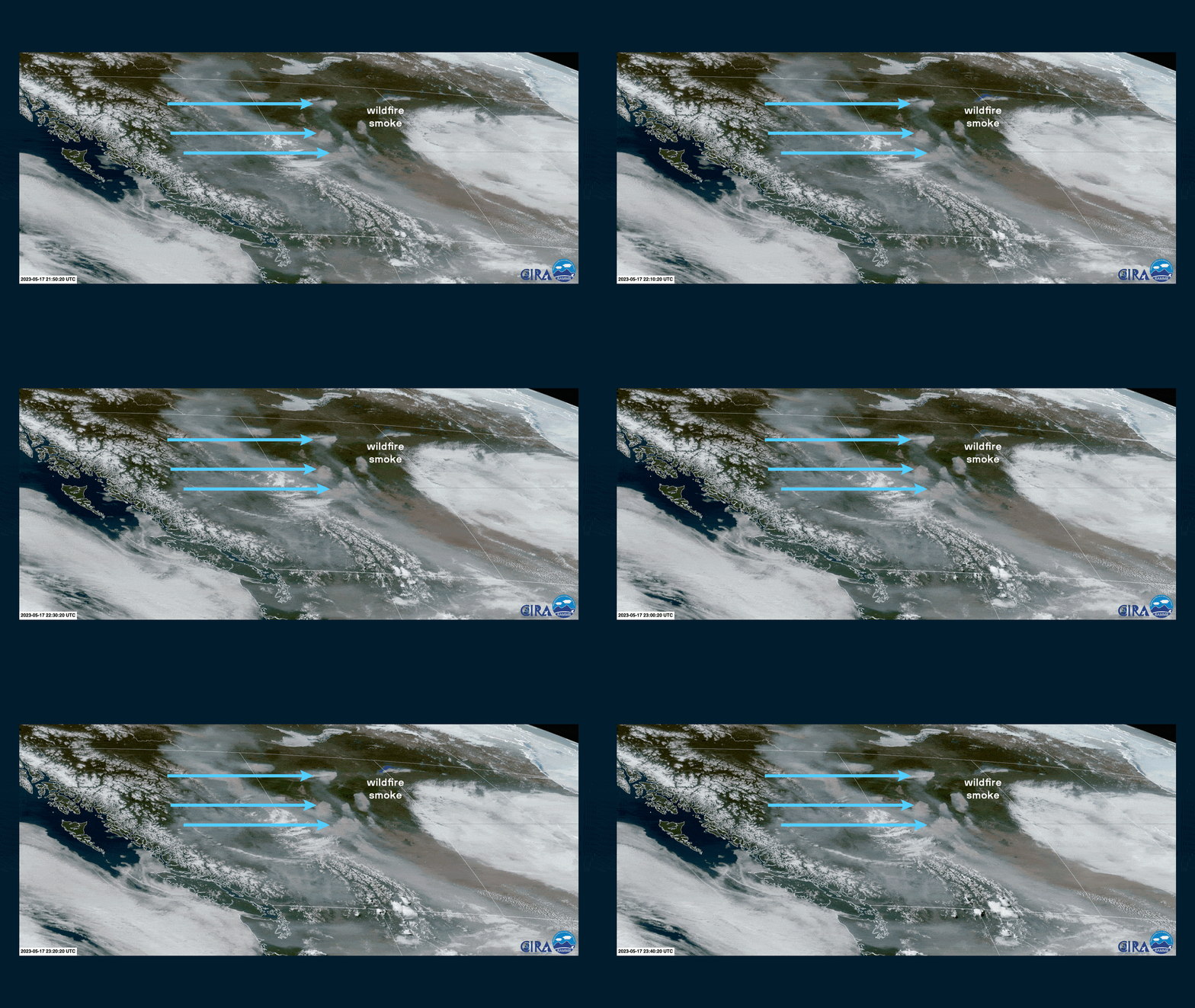
Animation of smoke plumes from wildfires in Alberta and British Columbia on May 17. Image: CIRA/RAMMB
Canada’s wildfire crisis is continuing, propelled by record heat and unusually dry weather, Andrew writes.
The big picture: The fires are increasingly disruptive to the country’s oil and gas industry. As of Wednesday evening, at least 92 wildfires were burning in Alberta alone, with just under 30 classified as out of control.
- Thousands of people remain evacuated in western Canada, as strong winds and dry air fan the flames.
- Wildfire smoke has created hazardous air quality in Calgary and parts of the U.S.
Between the lines: Alberta is the heart of Canada’s oil and gas industry, and the fires have forced some operations to shut down.
- Chevron halted production at its Kaybob Duvernay oil operations in northern Alberta Tuesday evening, as wildfire conditions "evolved rapidly," the company said in a statement. "All personnel have safely left the area and are accounted for.”
- Rystad Energy found it is likely that more than 300,000 barrels of oil equivalent per day are currently shut down in Alberta, and nearly 2.7 million barrels per day of oil sands production in northeastern Alberta is located in "very high" or "extreme" wildfire risk zones.
Our thought bubble: There is a modicum of irony to this.
- Burning oil and gas for energy is not only the biggest cause of modern climate change, but is also a significant contributor to the trend toward larger, more destructive wildfires, according to a new study published Tuesday.
What's next: Given the number of fires burning and dry conditions, Alberta fire officials said Wednesday they are digging in for a fight that lasts all summer.
3. A "regulatory blind spot" on oil and gas emissions


Tracking emissions when oil giants sell assets is a game of hide-and-seek with planetary stakes, Ben writes.
Driving the news: A new Columbia University analysis explores transactions involving upstream — that is, exploration and production — assets from some of the largest companies between 2017 and 2021.
The big picture: Corporate disclosure standards in Europe and the U.S. are "insufficient to track fossil fuel asset sales by the supermajors," per the authors with Columbia centers on sustainability and climate law.
- The analysis calls it a "regulatory blind spot," despite some increases in transparency.
Threat level: They see a few problems...
- Asset buyers are often lower profile, and sometimes governed by less rigorous emissions reporting requirements.
- Buyers tend to have lower environmental performance. Emissions intensity — that is, per unit of output — of sold assets tend to rise, "which indicates that they operated less efficiently."
- Meanwhile, oil giants are using asset sales to "support claims that they are making progress" on climate, even though operations continue.
What we're watching: It pushes a bunch of regulatory changes to boost transparency and cut emissions, rather than move them around.
- For instance, one idea is altering disclosure protocols to capture emissions from use of energy from oil majors' divested assets.
- Another is requiring more granular emissions disclosure focused on specific assets.
4. Future of food production hinges on water

A team of 40+ USDA scientists has listed the most significant looming challenges facing water resources and agricultural production nationwide, Axios' Ayurella Horn-Muller writes.
Why it matters: Their new plan provides a 30-year roadmap for mitigating some of the biggest threats to water sustainability before they become full-blown crises.
What they found: According to a summary of their findings in the Journal of Soil and Water Conservation, the main challenges through the year 2050 are supply shortages, flood risk and water quality.
- Led by scientists at the Agricultural Research Service, the article highlights how continued development of irrigated agriculture is "diminishing critical aquifers," as limited water resources confront increasing demand under rising temperatures.
Threat level: Water levels in the Ogallala Aquifer — one of the world’s largest fresh groundwater sources — are already plummeting, per KMUW.
- Much of the most agriculturally productive areas of the aquifer are facing risk of depletion by 2100 due to drought, farm irrigation and decades-long over-allocation.
- "Water in the Ogallala Aquifer has been severely depleted, particularly in the southern end of the aquifer. Continuing typical water withdrawals puts the aquifer, and the agricultural economy that relies upon it, at risk," says Emile Elias, director at the USDA Southwest Climate Hub and lead author of the article.
5. Catch up fast: Lithium edition

Illustration: Gabriella Turrisi/Axios
🤝🏼"The European Union is working on deals with Argentina and Chile that will widen its access to critical minerals and metals such as lithium needed for electric vehicle batteries," Bloomberg reports.
⛏️"The Biden administration says it has completed a court-ordered review that should ensure construction continues at a Nevada lithium mine, despite legal challenges brought by conservationists and tribal leaders," the Associated Press reports.
🌎 As the race toward global electric vehicle adoption heats up, many Latin American countries with bountiful lithium reserves are adopting a cautious approach to mining the metal, Marina E. Franco of Noticias Telemundo reports for Axios.
- The big picture: Latin American governments hope to more broadly and directly reap the benefits, partly driven by concerns of the socio-environmental impacts of mining it. Read the whole story
📬 Did a friend send you this newsletter? Welcome, please sign up.
🙏 Thanks to Nick Aspinwall and Javier David for edits to today's edition, along with the talented Axios Visuals team.


