Axios Future of Mobility
November 18, 2026

🚨 BIG NEWS from me today: After 43+ years in journalism, I'm planning to retire next month.
- I'll have lots more to say when that day arrives, but in the meantime, meet Nora Eckert, previously with Reuters and the Wall Street Journal, who will take over as author of this newsletter in January.
- ☕️ For the next month, the two of us are having a giant mind meld. If you want to grab coffee, in person or on Zoom, give us a shout: [email protected] or [email protected].
😢 I'm not good at goodbyes, so let's table that for now. Instead, let's get back to the mobility news that matters, including Toyota's growing interest in space.
🚀 Ready to blast off?
1,787 words, a 6½-minute read.
1 big thing: Toyota's next frontier
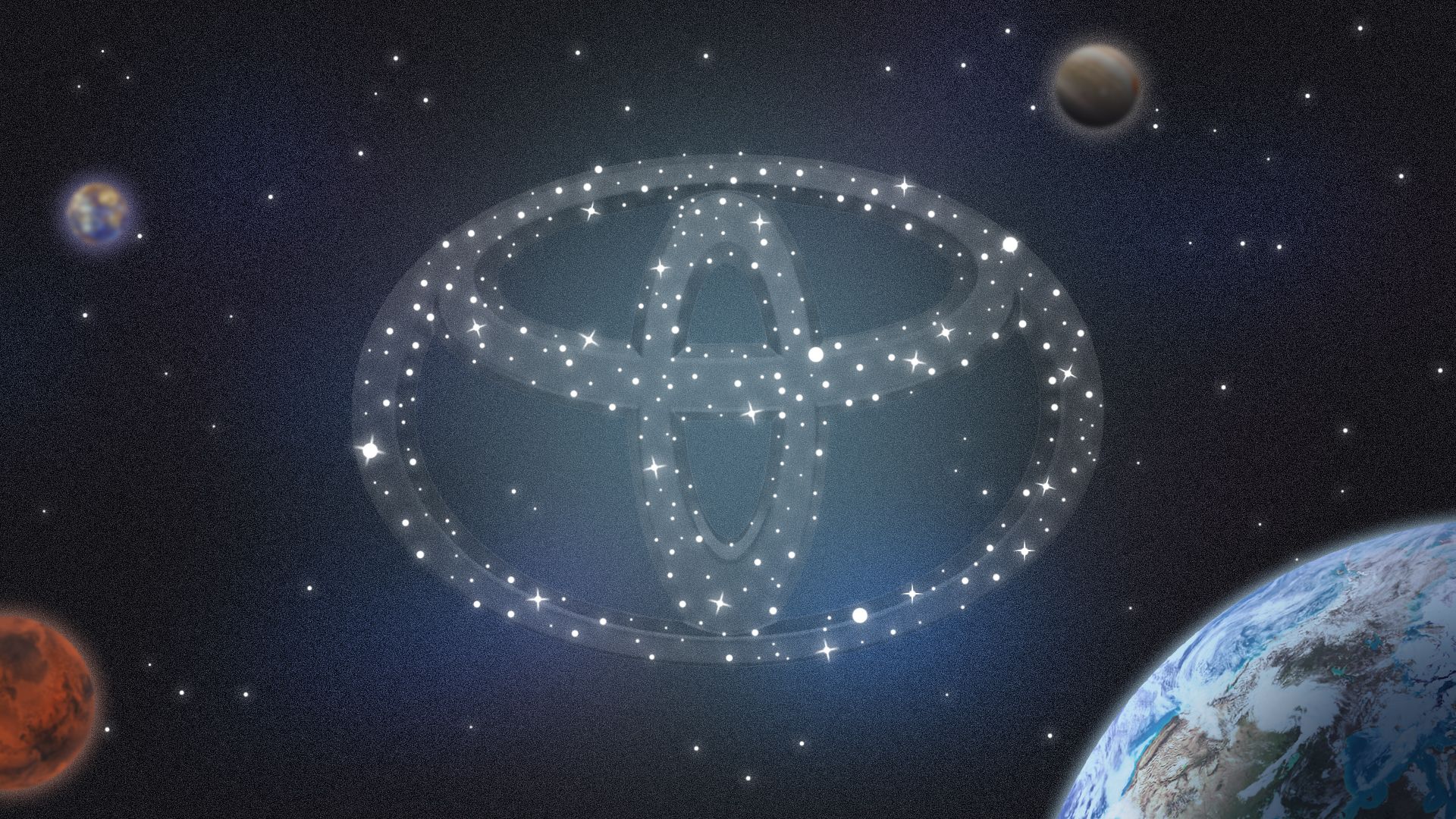
Toyota, the 100-year-old Japanese industrial giant that evolved from making textile looms to building cars, is exploring another potentially transformative business opportunity: space.
Why it matters: The booming space industry has a manufacturing problem — and Toyota thinks it can help solve it.
- As demand for satellites soars, Toyota sees an opportunity to apply its expertise in efficient, high-volume manufacturing to an industry that has traditionally relied on expensive, custom-built spacecraft.
- It's part of Toyota's broader ambition to become a mobility company beyond cars, opening the door to potentially lucrative new businesses.
Driving the news: The leaders of Toyota's three investment arms revealed the company's space ambitions in an exclusive interview with Axios, disclosing for the first time that they've invested more than $240 million in 11 space-related startups.
- The investments, through Toyota Ventures, Woven Capital and Toyota Invention Partners, span satellite manufacturing, communications, navigation, rocket launches and spacecraft servicing.
- Among them: reusable rocket developer Stoke Space; satellite platform manufacturer Apex Space; and Xona Space, which is developing a more precise alternative to GPS.
Between the lines: Toyota's space investments could benefit both its automotive business and the emerging space industry.
- For Toyota, they could mean better satellite connectivity, more precise navigation and new revenue streams beyond automobiles.
- For space companies, Toyota brings established supply chains and manufacturing expertise that could help them overcome production bottlenecks and lower costs.
- "It's not just what the space opportunity can do for an automotive company like Toyota. It's what Toyota could do for the space industry," Jim Adler, founder and general partner of Toyota Ventures, tells Axios.
The big picture: Cheaper, more accessible rocket launches are fueling demand for large constellations of smaller satellites, replacing the industry's traditional reliance on a handful of costly spacecraft.
- But manufacturing capacity hasn't kept pace, creating an opening for companies like Toyota that know how to produce sophisticated machines efficiently and at scale.
- The boom is also fueled by geopolitical competition. Chinese automaker Geely is building its own satellite network, while U.S. automakers, spurred by the Trump Administration, are collaborating with defense companies.
Zoom in: Toyota's partnership with Los Angeles-based Apex Space offers an early glimpse of how its investments could become new businesses.
- While working at Palantir, Apex co-founder Ian Cinnamon recognized the need to manufacture satellites more like automobiles.
- "Somebody needs to build the Toyota of spacecraft," he recalls thinking. He founded Apex in 2022 to produce standardized satellite platforms — essentially everything except the cameras, communications equipment or other payloads.
- Toyota Ventures became an investor in 2023 and helped connect Apex with Toyota Racing Development (TRD), which began manufacturing specialized satellite components for the startup in 2025.
- Adler says the collaboration could put the first Toyota logo in space as soon as next year.
The precedent: Toyota's partnership with electric air-taxi developer Joby Aviation shows how early investments can evolve into substantial manufacturing relationships.
- Toyota has committed nearly $900 million to Joby since 2017, including $250 million tied to a new joint venture aimed at scaling production of its electric vertical takeoff and landing (eVTOL) aircraft.
- "Toyota's engineers have worked shoulder to shoulder with us in California as we've developed our early manufacturing capabilities," Joby founder and CEO JoeBen Bevirt says of the partnership.
What's next: Adler believes Toyota could eventually play a much larger role in space, potentially comparable to its involvement with Joby.
- "Do we think space mobility is in our future? Absolutely," says Adler.
The bottom line: Toyota is moving toward the launchpad. But sending customers into orbit has yet to be cleared for liftoff.
2. In Vegas, Uber eyes new robotaxi option
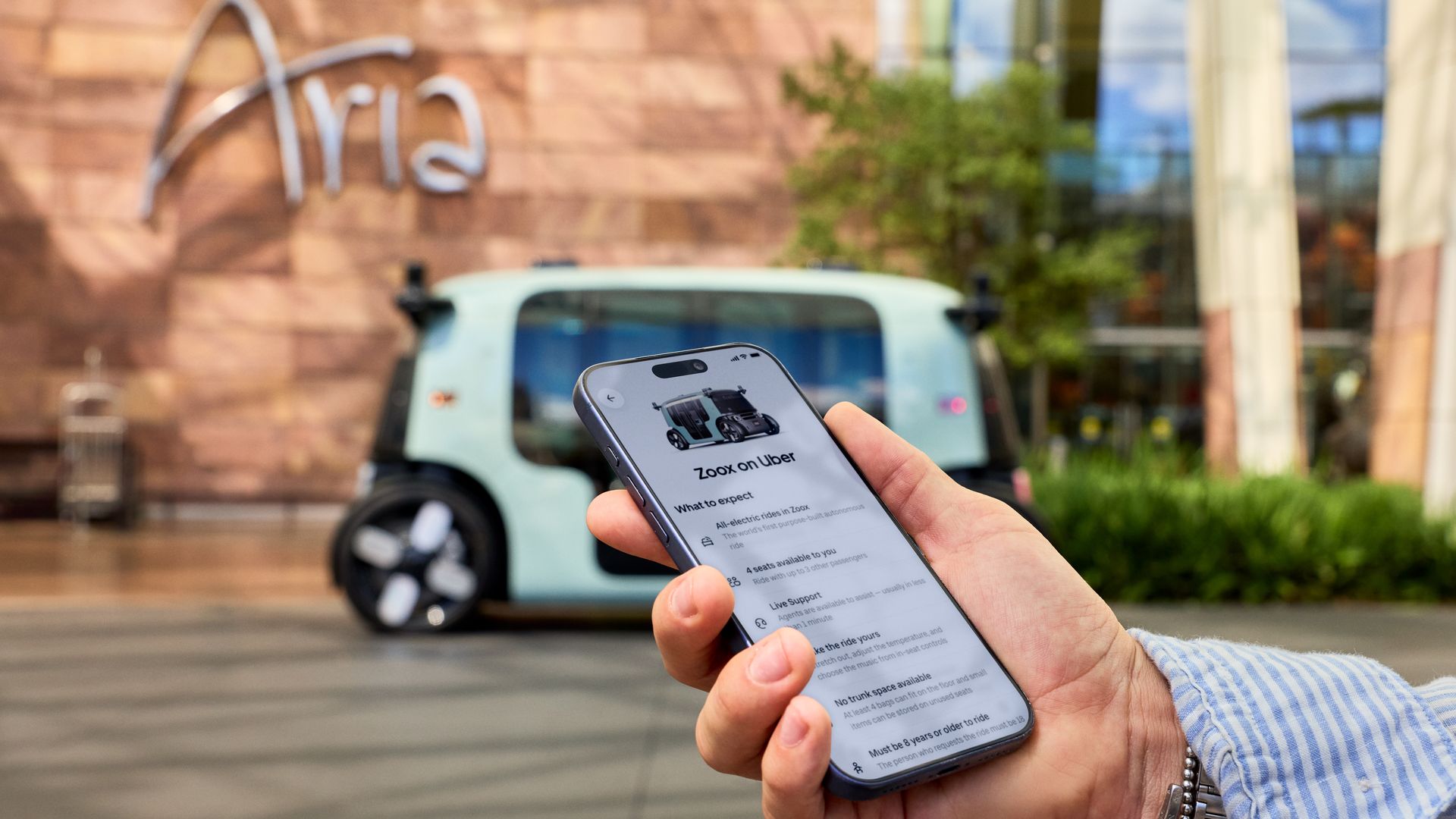
Uber is laying the groundwork for a dedicated robotaxi option in its U.S. app, starting in Las Vegas, where autonomous vehicles from two competing companies will soon be available on the ride-hailing platform.
Why it matters: Uber wants to become the go-to marketplace for robotaxis, regardless of who makes them. But first it needs enough driverless vehicles on its network to offer a reliable alternative to traditional rides.
Driving the news: Starting this week, Zoox robotaxis, which are already operating in Las Vegas, can also be hailed on Uber's app.
- Another AV competitor, Hyundai-backed Motional, is on track to remove safety drivers from its vehicles in Las Vegas in the next few weeks and they, too, will be available via Uber.
- Las Vegas will become the first U.S. city where Uber riders can access fully driverless vehicles from two different companies through the same app.
Yes, but: For now, Uber has no "Robotaxi" service listed among its ride options such as UberX, Comfort or Premier.
- Instead, customers requesting a ride might be matched with a robotaxi and they have the option to accept or decline.
- Riders who prefer a robotaxi sometimes have to summon — and cancel — rides many times until they are eventually matched with a driverless vehicle.
Friction point: That "robotaxi lottery" became a flashpoint between Uber and Waymo, which decided to end their exclusive arrangement in Austin and Atlanta in January 2028.
- Waymo co-CEO Tekedra Mawakana told Bloomberg that customers want more consistency than the "crapshoot" of hoping to get a Waymo through Uber.
- Waymo plans to offer rides through its own app in both cities, giving it a direct customer relationship.
State of play: Uber wants to offer a dedicated robotaxi option as soon as there are enough AVs deployed on its network.
- CEO Dara Khosrowshahi told investors that in Las Vegas, Uber will begin with limited fleets and gradually expand supply, introducing the dedicated option as availability and reliability improve.
- "We want to surface that tier only when we feel confident that we can actually deliver on the value prop," Uber's Samarth Kejriwal told Axios, emphasizing price and reliability.
Zoom out: Uber already offers a dedicated robotaxi option in the Middle East, where it partners with Chinese companies WeRide and Baidu.
3. Tesla's Cybercab: Your car, Tesla's rules
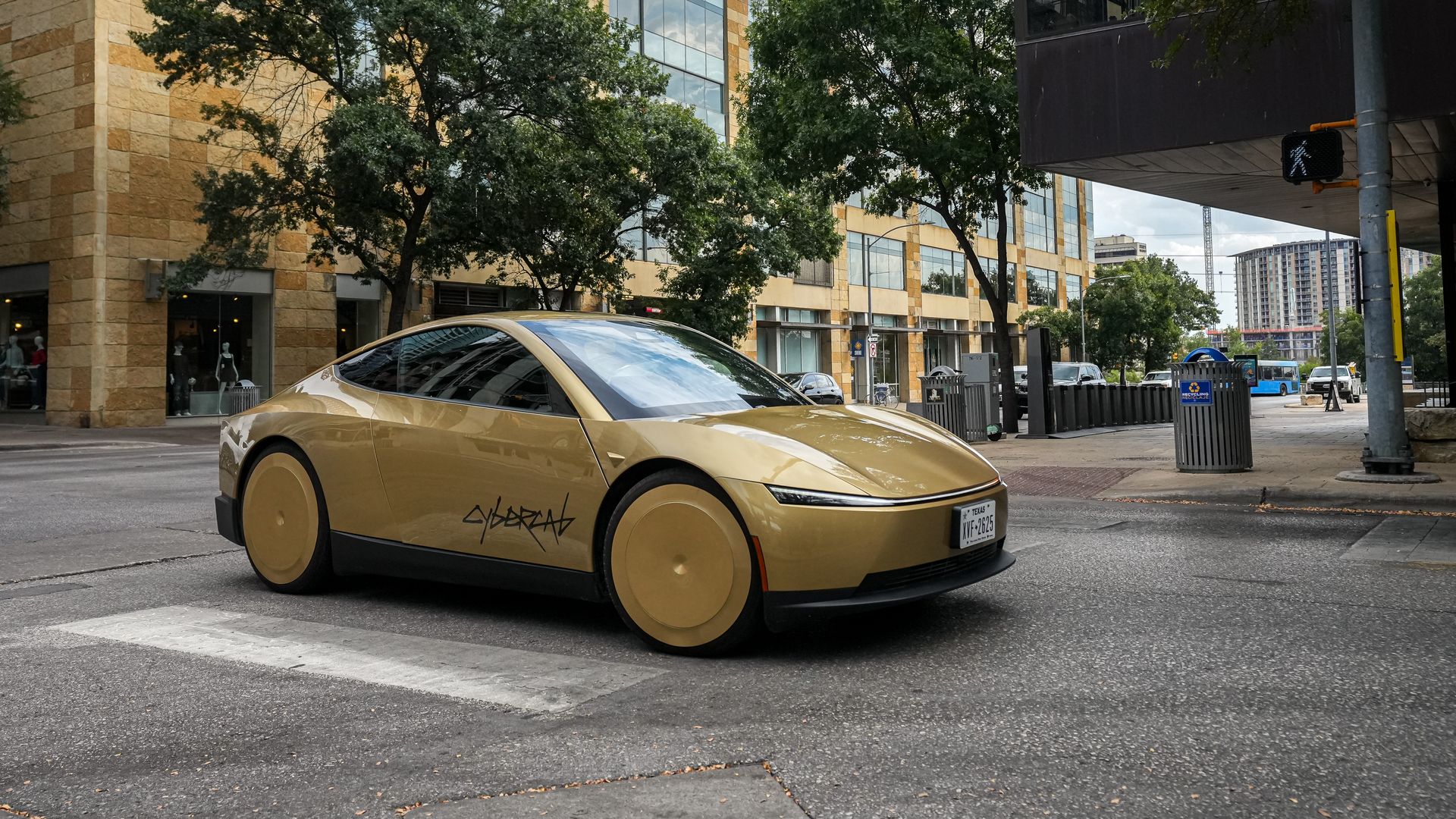
Tesla is inviting select customers to buy its futuristic Cybercab, promising the freedom of owning a car that drives itself.
- The intrigue: The fine print suggests owners may have surprisingly little control over their vehicles.
The big picture: The dawn of personal autonomy could transform transportation, but Tesla's initial purchase agreements raise fundamental questions about what it means to own a car when the manufacturer controls the driving technology.
Driving the news: Tesla is offering its two-seat, steering-wheel-free Cybercab for $29,990, plus a mandatory $299 monthly autonomy subscription.
- The subscription includes autonomous driving, connectivity, roadside assistance and routine maintenance, including tires and windshield replacements.
The fine print: Tesla retains extraordinary control over the vehicle even after selling it.
- Owners cannot sell or transfer their Cybercab without Tesla's permission. Violators face a contractual penalty of at least $50,000, and Tesla can remotely disable the vehicle.
- Owners generally cannot lend their Cybercab to someone else unless they're riding along, although Tesla can authorize exceptions through its app.
- They also can't use their Cybercab to earn money through ride-hailing or delivery services without Tesla's authorization.
Three big questions remain unanswered:
Who's responsible when a Cybercab crashes? Tesla requires owners to obtain their own insurance, even though its software does all the driving.
- It's unclear which insurers will cover privately owned, fully autonomous vehicles — or how liability will be divided between Tesla and the owner when something goes wrong.
Where and how can Cybercabs operate? Tesla limits them to approved geographic areas and reserves the right to change those boundaries.
- Plus, it's not clear how governments will regulate personally owned robotaxis.
How much freedom will owners really have? Can they send a Cybercab to pick up their spouse or teenager without riding along?
- What about road trips? Under Tesla's initial sales agreements, obtained by Axios, those freedoms are restricted or subject to its approval.
The bottom line: Tesla is selling the freedom to stop driving. But for now, that could mean surrendering some of the freedoms that traditionally come with owning a car.
4. Drive-thru
⛔️ Waymo suspended all U.S. freeway driving after California's DMV said the company's driverless operation on that state's freeways posed "an imminent hazard to public safety."
- Among the DMV's concerns: Waymos drove into a construction zone and also interfered with police clearing a crash site. (Bloomberg)
🔍 General Motors is working with an executive search firm to identify possible outside candidates to succeed CEO Mary Barra. (WSJ scoop)
🇨🇳 Congress is pressing Mercedes-Benz to answer questions about its ties to two Chinese automakers, saying their 20% stake in the German automaker presents risks to U.S. national security. (Reuters)
🚐 The slow-selling Volkswagen ID. Buzz is getting a new job as a robotaxi, with May Mobility saying it will deploy 10,000 self-driving minivans over the next five years. Uber and VW's MOIA subsidiary also plan to deploy ID. Buzz robotaxis. (InsideEVs)
5. 🚘 What I'm driving
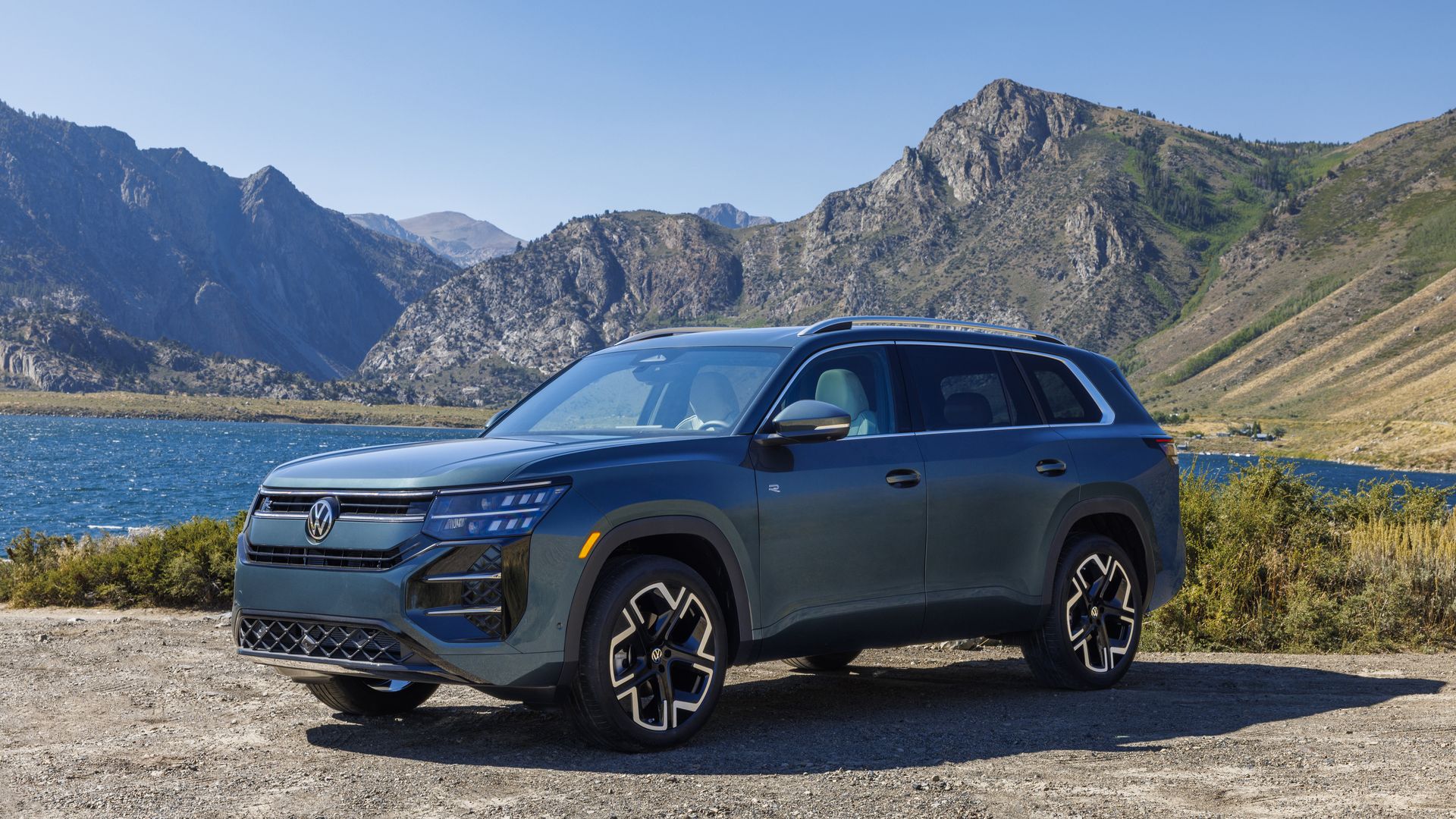
2027 Volkswagen Atlas
- MSRP: Starts at $41,610 for base SE models with front-wheel drive. As tested: $58,431 for loaded SEL Premium R-Line, including destination fee.
- Under the hood: Upgraded 282-hp turbocharged 2.0-liter four-cylinder engine; 25 mpg city/highway (23 mpg for all-wheel-drive version).
- Manufacturing site: Chattanooga, Tennessee.
What's new: Fresh styling, upgraded interior plus available 15-inch display, leather seats and front-seat massage.
- New standard features: power tailgate, rear sunshades and 2 wireless charging pads.
- A new $149 premium subscription includes online navigation features, Wi-Fi hotspot, generative AI voice control and gaming options.
What I loved: The cabin, decked out in real wood, lends an upscale feeling to the interior. And the Atlas continues to be one of the most spacious mid-size SUVs on the market.
What I didn't love: No hybrid option.
The bottom line: The redesigned, family-friendly VW Atlas gets my vote for one of the year's best SUVs.
What to watch: Finalists for car, truck, SUV and — new for 2027!— technology of the year will be announced Thursday at Automobility LA.
I test-drive vehicles in my role as a juror for the North American Car and Truck of the Year awards. Opinions are my own.
Thanks to editors Pete Gannon and Bill Kole. If you're a fan of this newsletter, please ask your friends to sign up, too.
Sign up for Axios Future of Mobility