Axios Future of Mobility

January 21, 2026

❄️ It's another snowy Wednesday in Detroit. At least the weekend is in sight!
🇨🇳 Today we're diving into the likelihood that Chinese cars will soon be arriving in the U.S., and what that means for car buyers, automakers — and national security.
1,437 words, a 5½-minute read.
1 big thing: Flipping the script on Chinese carmakers
With Chinese cars closing in on America, Washington might use lessons from China's own playbook to try to limit the threat to the U.S. domestic industry.
Why it matters: China used to copy American cars. Now, Chinese vehicles are as good or better than U.S. models, and cheaper, too.
- Automakers fear that low-cost Chinese models, already exported around the world, will soon take over American driveways as well.
Catch up quick: Chinese cars will soon be driving both north and south of America's borders.
- Canada slashed tariffs on imported Chinese EVs last week as part of a broader trade deal, marking China's official entrance there.
- Mexico just raised tariffs on Chinese cars to 50%, but it could be too late. They've already taken 20% of the market.
President Trump, reacting to the Canada deal, told reporters last week that he would welcome Chinese automakers to build factories in the U.S. too — as long as they hire American workers. "I love that," he said. "Let China come in."
Threat level: Not everyone is as enthusiastic about opening America's car doors to China, however.
- "It would have potentially catastrophic impacts on our automotive industry, have ripple effects on our entire defense industrial base, and make every American less secure," said Avery Ash, CEO of SAFE, a nonpartisan lobby group pushing policies that advance U.S. national and economic security.
- U.S. Sen. Bernie Moreno (R-Ohio), a former car dealer, put it more bluntly, per Reuters: "As long as I have air in my body, there will not be Chinese vehicles sold in the United States of America — period."
Yes, but: Despite resistance, most industry experts agree it's only a matter of time before Chinese cars arrive in America.
- At CES, an official with China's Geely Group, owner of Volvo and Polestar, told Autoline Network: "The big question for us is when and where will we go to the USA. I think we'll have an announcement on that in the next 24 to 36 months."
Here's how that might play out, per one longtime China auto expert:
- "To access the market, Chinese automakers will need to build in America, (with) terms taken directly from China's own playbook" in the 1990s when global automakers entered China, Michael Dunne, CEO of Dunne Insights, tells Axios.
Zoom in: The U.S. could even require Chinese companies to partner with American carmakers as a condition for entering this market, as China's government did back then, he says. (More on this below.)
- They'd have to build U.S. supply chains and meet specific tech transfer milestones over time.
- "Failure to do so would mean forfeiting their licenses to operate," Dunne says.
"They'd take that deal in a heartbeat," Dunne says, "because they're desperate for (U.S.) market access."
- Chinese carmakers are struggling at home because of overcapacity and a three-year price war. Exports have been keeping them alive, he says.
- "They look at the U.S. as oxygen," Dunne says. "That's our leverage in the U.S. You need oxygen? If you come here, it's going to be very expensive."
2. Yes, but: "The TikTok problem"
There's still "the TikTok problem," as AlixPartners automotive consultant Dan Hearsch called it, referring to national security concerns over Chinese ownership of the popular social media platform.
Between the lines: What happens to data collected by Chinese cars on American roads?
- The Biden administration effectively banned Chinese cars from the U.S. by prohibiting key Chinese software and hardware in connected vehicles, beginning with the 2027 model year.
- Trump hasn't lifted those restrictions.
- "Until some pretty fundamental things can be solved there, I think that's what will keep Chinese cars from being made and sold here," Hearsch told Axios.
The intrigue: In Norway, officials discovered that 1,300 Chinese electric buses could be remotely accessed from China and even stopped in their tracks.
- Officials in Oslo are working to prevent the risk of hacking.
TikTok could wind up being a template for how to manage those concerns, says Dunne.
- The U.S. struck a deal that forced ByteDance to sell the app's U.S. operations to an American owner and wall off U.S. user data on domestic servers. The U.S., meanwhile, will monitor TikTok's software and algorithms to prevent foreign access or influence.
- The U.S. might try to fashion something similar with Chinese cars, Dunne says. "Let's get some American ownership and control the beast."
Of note: Stellantis already bought a stake in China's LeapMotor and VW owns a stake in XPeng.
3. How China's carmakers got so good

The spectacular rise of China's auto industry was ignited by the hungry ambitions of global automakers in the 1990s.
Flashback: The Chinese government allowed foreign automakers to enter its emerging market if they formed a joint venture with a Chinese partner and gave them at least 51% control.
- It was a steep price, but companies like GM, Ford and Volkswagen were willing to pay.
- For years, the JV structure proved beneficial for both sides — Western carmakers pocketed billions of dollars selling cars to China's growing middle class, and fledgling Chinese carmakers got to learn from the world's best.
Then the balance tipped in China's favor. By 2009, China overtook the U.S. as the world's largest vehicle market. As China kept growing, U.S. demand remained flat.
- Then, in 2015, China introduced a sweeping industrial plan — "Made in China 2025" — to upgrade its industrial base across various sectors, with "new energy vehicles" (NEVs) as a core pillar.
Zoom in: China spent the next decade lining up battery supply chains, including raw materials and processing, and perfecting its capabilities in vehicle engineering and advanced manufacturing.
- Backed by government subsidies and easy access to capital, a growing crop of Chinese carmakers built factories all over China.
State of play: China surpassed Japan in 2023 as the world's No. 1 auto exporter. Last year, it shipped 7.1 million vehicles from its pool of domestic automakers, according to the China Association of Automobile Manufacturers, up from 5.9 million the previous year.
Between the lines: Chinese carmakers today have a 30 percent to 40 percent cost advantage over their competitors, says Terry Woychowski, president of benchmarking analysis firm Caresoft Global.
- They're more vertically integrated than traditional automakers, producing most components in-house, for example. They also use common parts across more vehicles, enabling lower prices.
- Plus, they've developed simplified chassis designs that cut down on the number of parts that go into each vehicle.
Yes, but: U.S. industry officials point out that Chinese carmakers are heavily subsidized, receiving $231 billion in government support between 2009 and 2023, according to the U.S.-based Alliance for Automotive Innovation.
What really alarms people like Ford CEO Jim Farley, though, is China's speed of development.
- "Everyone talks about how good they are or how cheap they are. What they should be talking about is how fast they are," Farley told investors last year.
Where it stands: China built too many factories at home, however, which is why they're so intent on exporting vehicles around the world.
4. 👀 Recognize these Chinese cars?
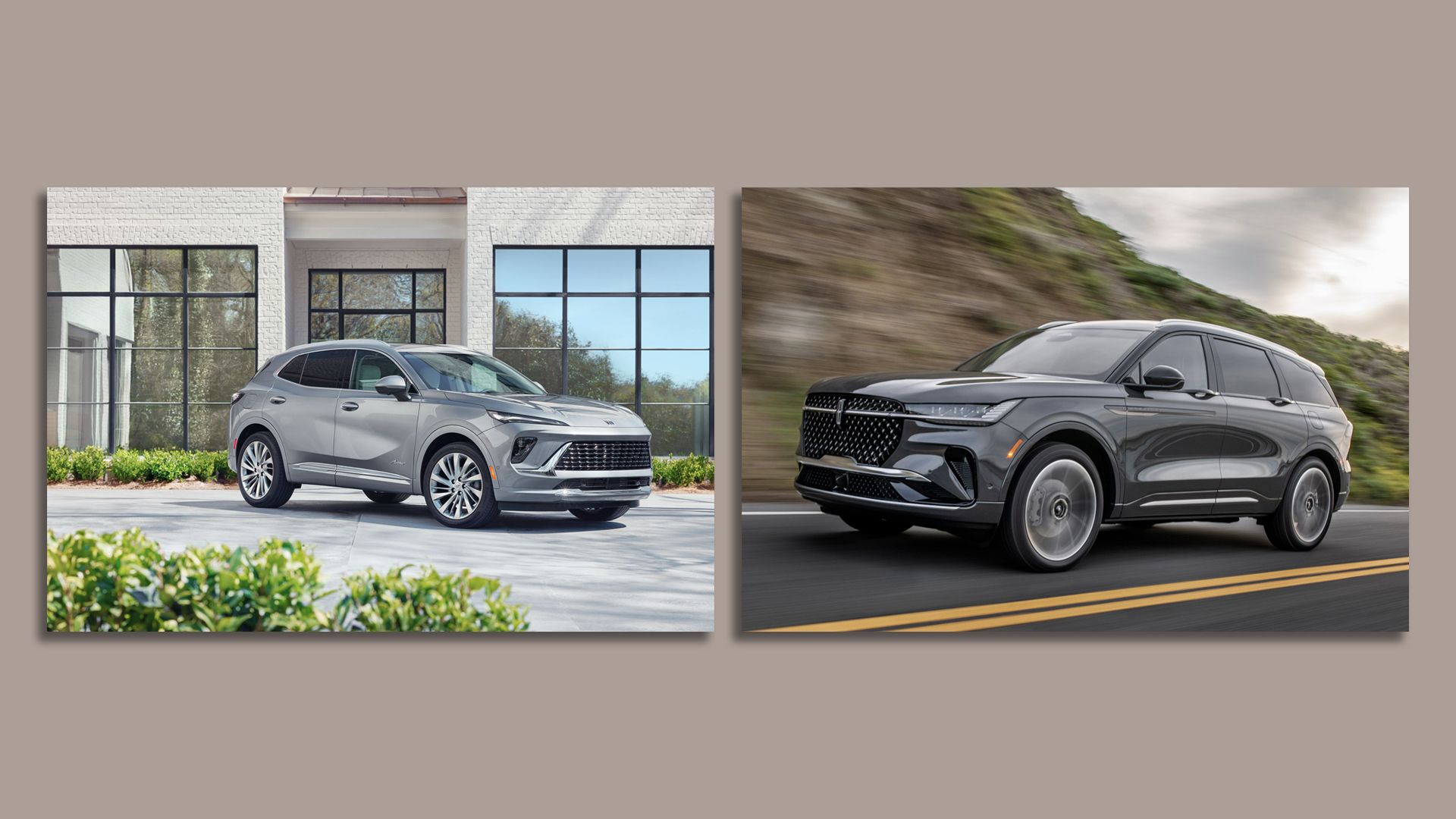
A few Chinese-built cars are already sold here under other brand names.
- GM imports the Buick Envision (pictured on the left) from China, where it's produced in a joint venture with SAIC.
- Ford produces the Lincoln Nautilus (pictured at right) with Changan Automobile Co., a Chinese state-owned automaker, at a factory in Hangzhou, China. It's been imported from China since 2023.
- The Volvo S90 and Polestar 2, both part of Chinese automaker Geely, are also imported from China.
5. Drive-thru
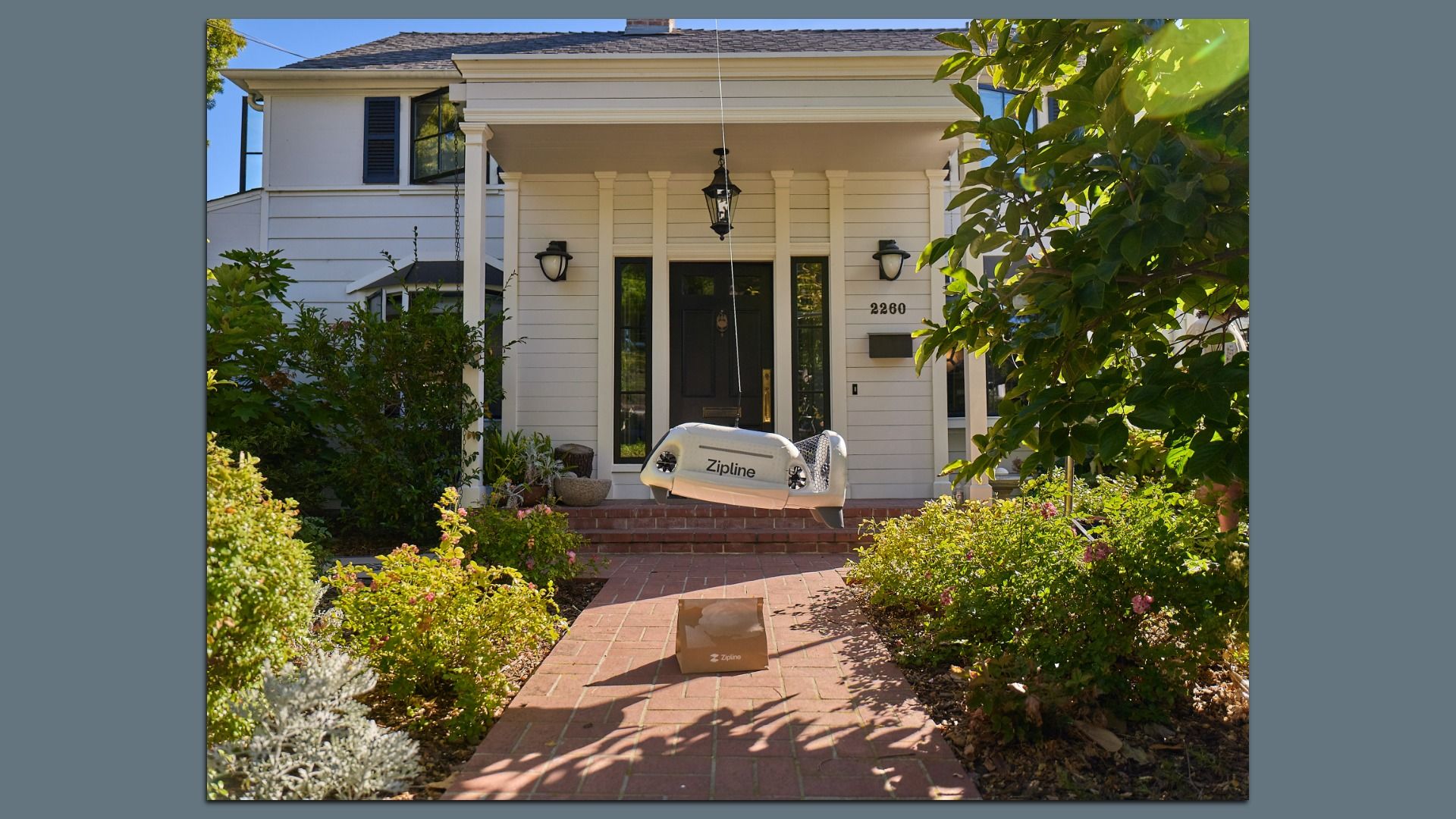
🚁 Zipline, the autonomous drone delivery company, raised more than $600 million and will expand operations to Houston and Phoenix in early 2026, followed by more cities later in the year.
- The company, which just surpassed 2 million deliveries (including medical supplies across Africa), says it's now valued at $7.6 billion. (Axios)
🏍️ Verge Motorcycles says it has produced the Holy Grail of batteries. Solid state batteries could store more energy, charge faster and last longer, while lowering fire risk — but industry experts have heard these claims before. (Washington Post)
🔎 Uber is facing mounting scrutiny across the country as lawmakers, investors and others move to hold the ride-hailing giant accountable for a pervasive pattern of sexual violence during rides. (New York Times)
🤖 Tesla CEO Elon Musk says the early production rate of the company's Cybercab robotaxi and its humanoid robot Optimus will be "agonizingly slow" before accelerating over time. (Reuters)
Thanks to Pete Gannon and Bill Kole for editing. Tell your friends to sign up here for Future of Mobility!
Sign up for Axios Future of Mobility