Axios Future of Mobility

February 04, 2026

Happy Wednesday! What's on your Super Bowl menu? ๐๐ญ๐ฎ
๐๏ธ Situational awareness: Tesla and Waymo execs are testifying today before the Senate Commerce Committee on autonomous vehicle policy.
- No doubt there will be safety concerns after a self-driving Waymo hit a child outside an elementary school last week (More on that below๐ ).
๐ This week, we look at EV charging. It's gotten a lot better in the last year. Want proof? Read on ...
1,466 words, a 5ยฝ-minute read.
1 big thing: Charging surge defies EV slowdown
America's EV charging infrastructure got a lot better in 2025, with more fast-chargers, improved reliability and increased standardization.
Why it matters: The record surge in public charging came despite a slowdown in EV adoption as federal tax credits dried up.
Driving the news: Public charging improved in multiple ways last year, according to Paren's new "US EV Fast Charging" report on the state of the industry.
- The number of high-speed chargers increased 30%, but so did network usage โ demonstrating there's ample demand for public charging.
- Charging speeds increased, with more stations offering power levels as high as 400 kW.
- Reliability improved and pricing stabilized, as maturing networks updated their equipment and figured out their business models.
- And more stations installed Tesla's North American Charging Standard (NACS) connectors, too, which means fewer customers will need adapters to charge in the future.
By the numbers: Networks added more than 18,000 new DC fastโcharging ports in 2025. The U.S. now has just over 70,000 public fast-chargers, according to Paren's data.
- The vast majority of new chargers were privately funded. Only about 500 were built with taxpayer funds under a program that began under the Biden administration.
- Tesla's Supercharger network grew the fastest, with nearly 6,800 ports added.
- Tesla now has close to 37,000 charging ports, accounting for about 52% of all fast-chargers nationwide.


New charging stations have more plugs, meaning fewer lines and more consistent utilization rates.
- Tesla, for example, deployed 353 stations with 10 or more ports in 2025.
- Stunning stat: The largest, in Lost Hills, California, has 164 stalls and is powered by solar energy.
Zoom in: One major player, EVgo, added about 1,100 new ports in 2025 between its own charging network and the chargers it operates for Pilot Flying J travel centers and truck stops.
Between the lines: Uber and Lyft drivers increasingly need high-speed chargers in convenient locations, which has helped power that growth, EVgo CEO Badar Khan tells Axios.
- A few years ago, about 10% of EVGo's network energy went to rideshare vehicles. Today, it's 25%, he says.
- "Charging your vehicle in 20 minutes or even 10 minutes, rather than 40 minutes, is a totally different experience," he says.
What we're watching: The big question now is whether the combination of better infrastructure and more affordable EVs will spur a resurgence in EV sales, absent the old incentives.
2. Avoiding the unavoidable in a robotaxi
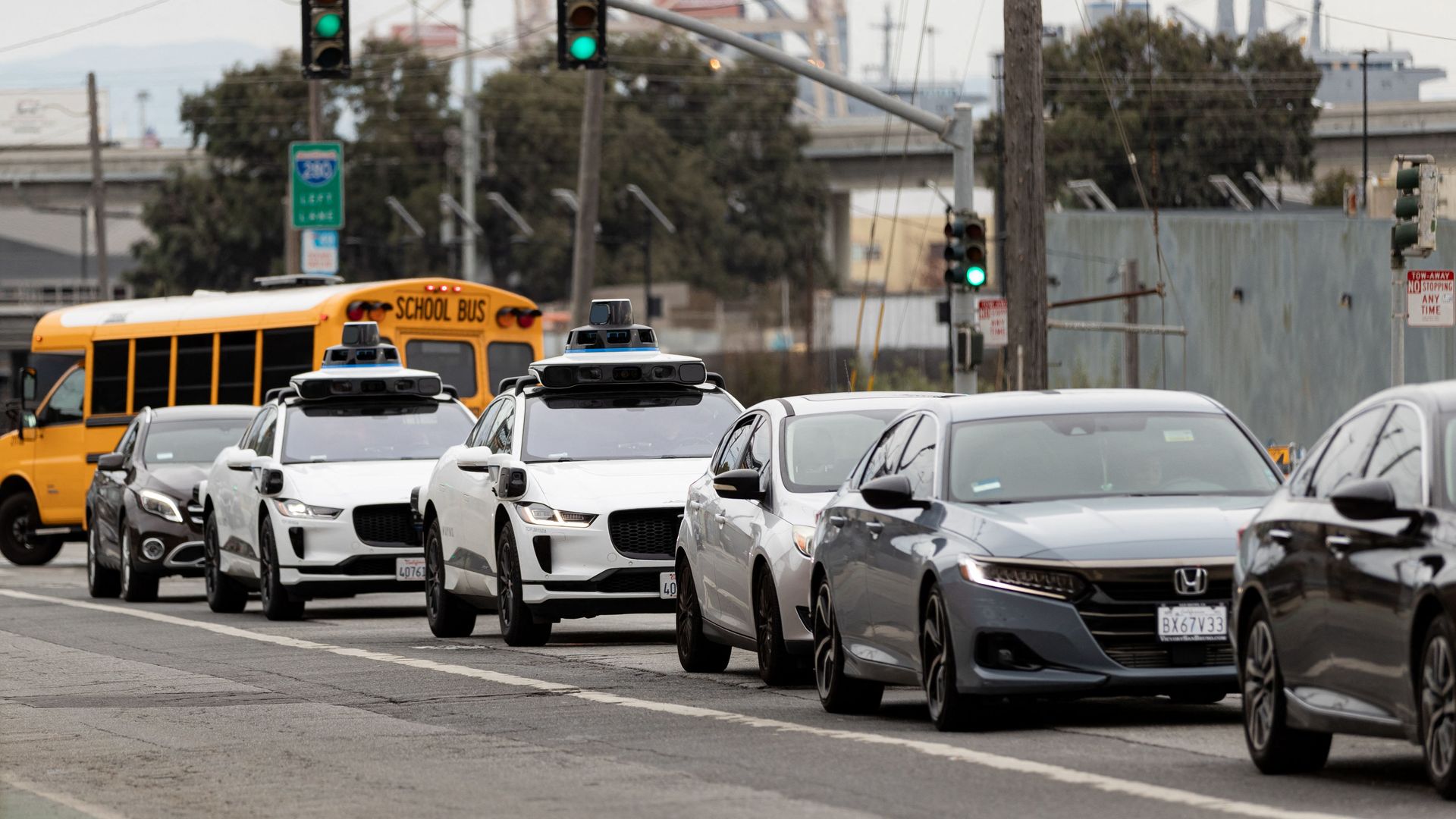
It's every driver's nightmare: A kid dashes into the street from behind a parked car and there's little time to react.
- A Waymo robotaxi incident outside a Santa Monica elementary school has ignited a debate over whether self-driving cars should be able to avoid accidents deemed "unavoidable."
Catch up quick: The National Highway Traffic Safety Administration is investigating after the robotaxi last month struck a child who ran across the street from behind a double-parked SUV near the school.
- Santa Monica police said first responders evaluated the student, with her parent present, and no injuries were reported.
The intrigue: Waymo claims its AI brain reacted faster than a human driver would, and that the incident could have been much worse.
What they're saying: The robotaxi behaved as expected, slamming the brakes as soon as it detected the child and slowing from 17 mph to under 6 mph before making contact, Waymo said.
- A "fully attentive human driver" in the same situation would have hit the child at approximately 14 mph, the company claims, according to its own computer modeling.
- "This significant reduction in impact speed and severity is a demonstration of the material safety benefit of the Waymo Driver, " the company wrote in a Jan. 28 blog post.
Reality check: Reacting quickly isn't the only way to avoid crashes, safety experts tell Axios โ context, judgment and driving experience matter, too.
- Young drivers have quicker reflexes, for example โ but old drivers have much better safety records, notes AV safety expert Philip Koopman, emeritus professor at Carnegie Mellon University.
- A careful, competent human driver would have avoided a panic stop in the first place by adjusting their driving behavior amid the chaos of school drop-off โ or taking a different route altogether, he argued.
Waymo should share video of the incident to provide more context, adds Missy Cummings, former senior safety advisor at NHTSA and now head of the autonomy and robotics center at George Mason University.
- NHTSA says it plans to investigate whether the Waymo robotaxi exercised appropriate caution in a school zone.
๐ญ My thought bubble: Anyone driving near a school during drop-off time ought to be crawling at a snail's pace, eyes darting in every direction, regardless of the posted speed limit.
3. Winter headache: a frozen EV
Extreme cold is hard on electric vehicles, but EV owners can avoid problems by being prepared โ and may even be able to tap their car's battery if the power goes out.
The big picture: EVs don't like cold weather any more than you do.
- Freezing temperatures reduce battery efficiency, cutting an EV's driving range by up to 30%.
- Charging also takes longer when it's cold because batteries accept power at a slower rate.
โญ๏ธ The most important thing you can do is to precondition the battery before charging or driving, using the car's app on your smartphone.
- Warming the battery for about 15 minutes ensures faster charging speeds, and protects the battery from long-term damage.
- Make sure the car is plugged in during preconditioning so energy to warm the battery comes from the grid, not from the car itself.
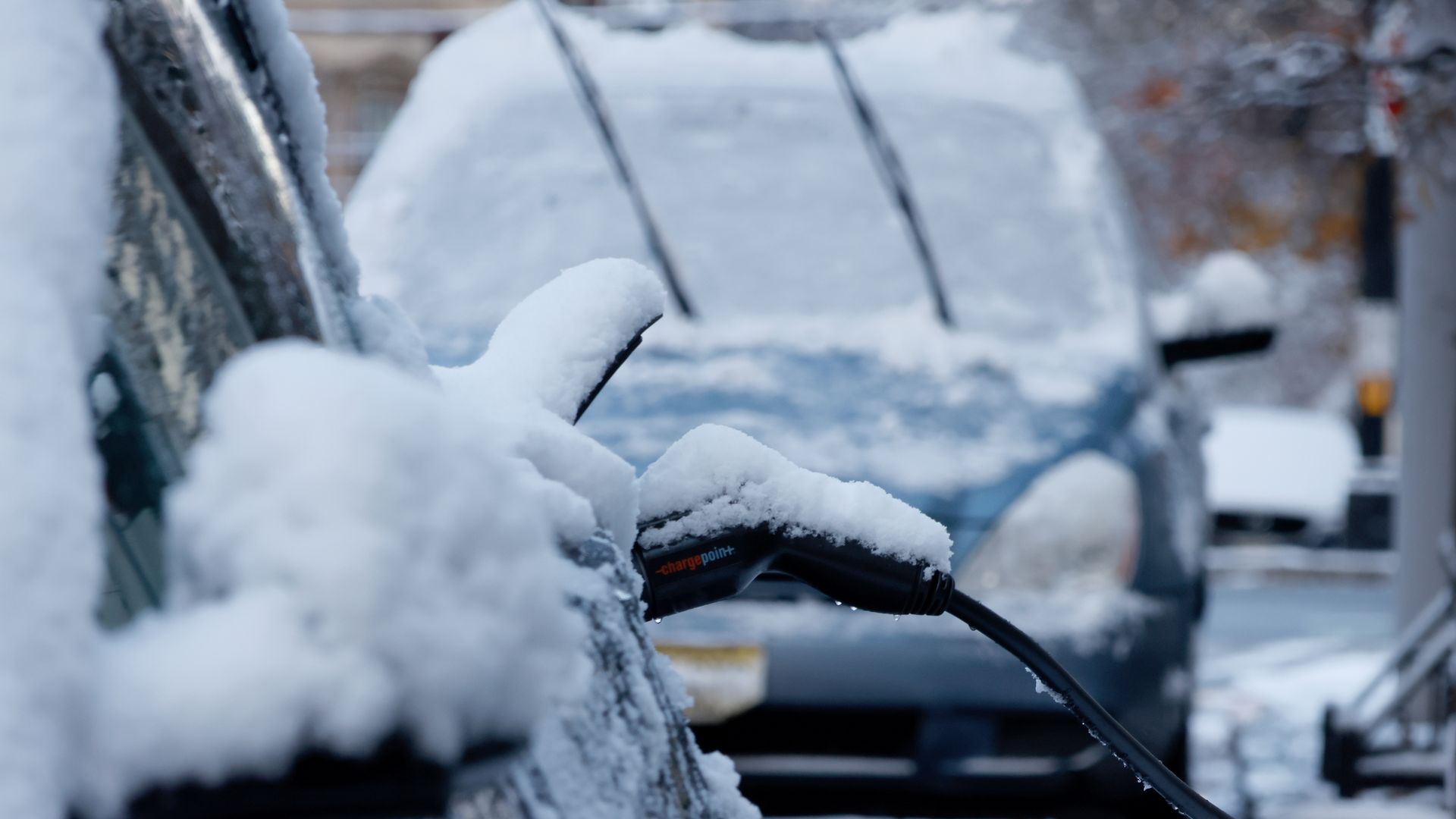
Another potential snag: Ice can build up around the charge port door and the connector, making it hard to unlatch the cable when charging outdoors.
- Amazon sells covers for people who park outside in the elements.
- Tesla is addressing the problem in its latest software update: Owners can release the frozen charge cable by pulling and holding the rear left door handle for 3 seconds.
Yes, but: That only works if the door handles aren't frozen, too.
The bottom line: Just precondition the battery.
4. Drive-thru
๐ China banned concealed door handles on EVs, the first country in the world to outlaw the sleek design popularized by Tesla and copied by other EV manufacturers. The action follows several deadly incidents in which people were trapped inside their cars after a crash. (Bloomberg)
๐ค The mashup of SpaceX and xAI โย and potentially even Tesla one day โ reflects the interlocking nature of Elon Musk's empire โ a sprawling mix of companies that have long competed for his attention and now look increasingly like a single enterprise. (Axios)
โก๏ธ The EV pullback is hurting factories and jobs in the South.
- "It's the single biggest capital allocation mistake in the history of the automotive industry," says Haig Partners managing director John Murphy, who predicts at least $100 billion in write-offs on EV investments. (CNBC)
๐ Carvana wants to become the Amazon of autos. (Bloomberg Businessweek)
5. What I'm driving: 2026 Ram 1500 Hemi V8
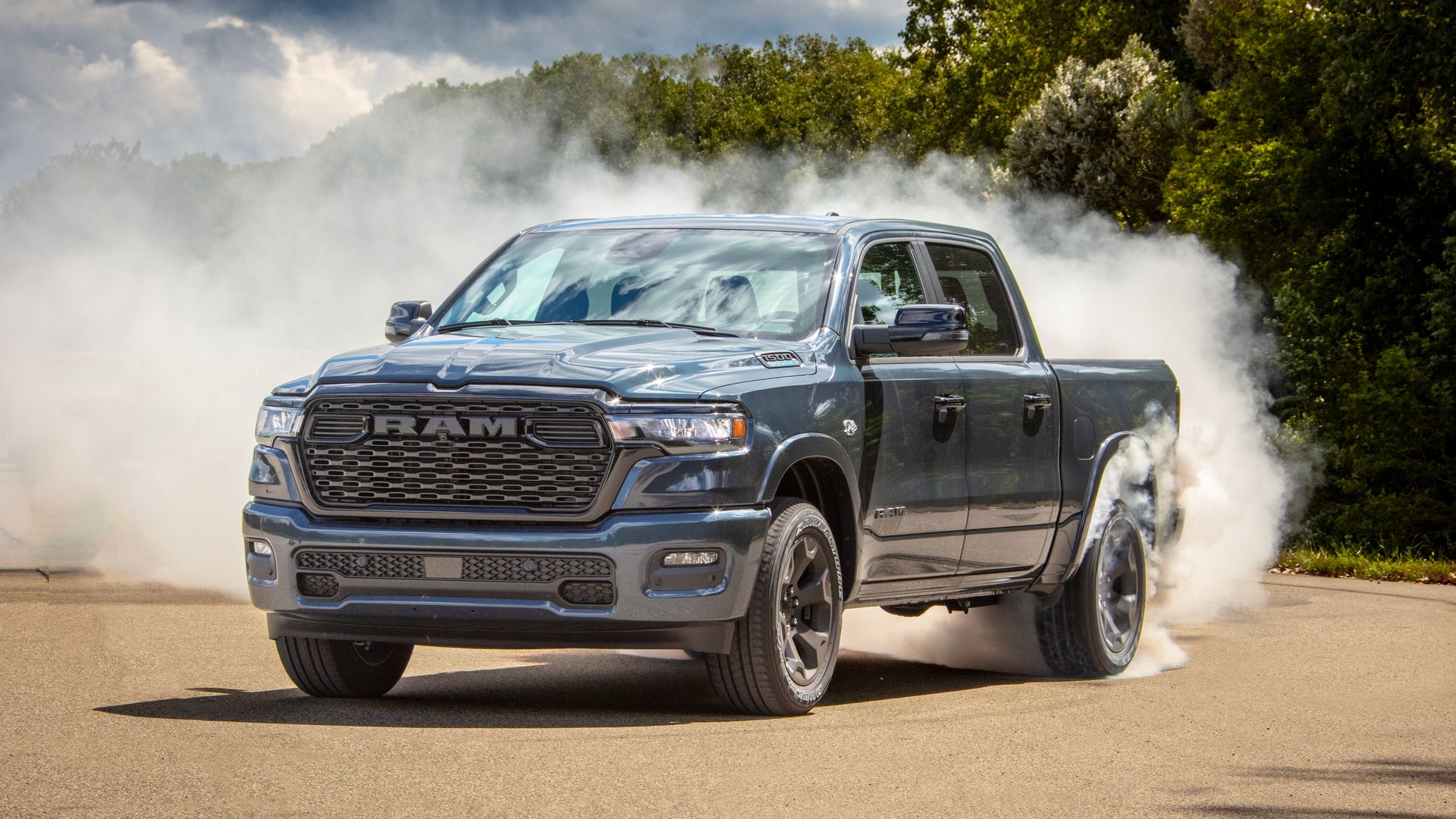
If people in my neighborhood didn't know the Hemi V8 engine is back in the 2026 Ram 1500 pickup, they do now, after hearing it rumble to life in my driveway for a week.
Why it matters: With a menacing roar, the Ram's 5.7-liter Hemi is a "symbol of protest" โย a response to loyal customers who complained loudly when Stellantis eliminated the iconic engine in the 2025 model.
- (To drive home the point, there's even a "Symbol of Protest" badge on the truck's fender.)
Never mind that the resurrected Hemi is less powerful and less fuel-efficient than Ram's new V-6 Hurricane twin-turbo engine family, or that it costs $1,695 more.
- Fans missed the iconic Hemi, and Stellantis listened.
- Now it's one of four powertrain choices for Ram's best-selling pickup.
Give the company credit for admitting its mistake.
- "Ram screwed up when we dropped the Hemi โ we own it and we fixed it," Ram CEO Tim Kuniskis said last June when announcing its comeback.
- In a matter of months, Stellantis made a host of engineering changes to accommodate the big V8 in the new electrical architecture Ram adopted in 2025.
- The Hemi is now paired with a 48-volt mild-hybrid system called eTorque for better efficiency and performance.
The bottom line: Always listen to the customer.
I test-drive vehicles in my role as a juror for the North American Car and Truck of the Year awards. Opinions are my own.
Thanks for reading! And thanks to Pete Gannon and Bill Kole for editing. Please send this free sign-up link to your friends. See you next week!
Sign up for Axios Future of Mobility