SpaceX deal for xAI puts Elon Musk to the test

Add Axios as your preferred source to
see more of our stories on Google.
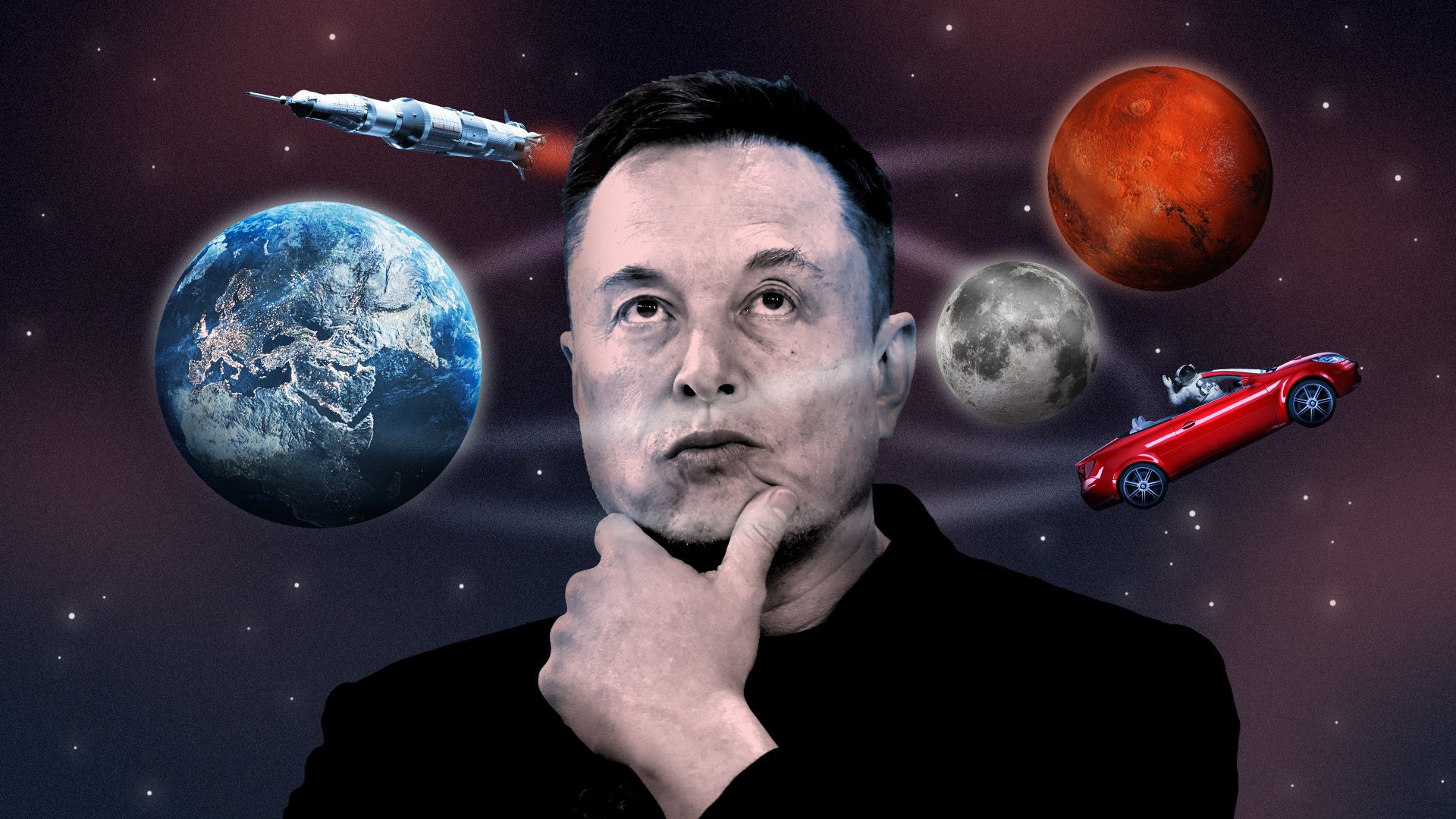
Photo illustration: Sarah Grillo/Axios. Photo: Krisztian Bocsi/Bloomberg via Getty Images
SpaceX's acquisition of xAI — likely to be followed by an IPO and possibly even a megamerger with Tesla — will serve as the ultimate test of Elon Musk's seemingly mystical ability to captivate investors based on far-out promises.
Why it matters: The mashup reflects the interlocking nature of Musk's empire — a sprawling mix of companies that have long competed for his attention and now look increasingly like a single enterprise.
Catch up quick: SpaceX — possibly the world's most valuable private company — is acquiring xAI, the cash-burning owner of chatbot Grok and social posting platform X.
- The deal could supercharge xAI's ambitions via data centers in space — someday, at least — while providing SpaceX with an AI partner to enable its own plans.
- Bringing Tesla into the fold would put humanoid robots into the equation, possibly staffing SpaceX missions and helping build out xAI's infrastructure.
- Musk did not respond to a request for comment on the possibility.
The big picture: Much like Musk has long benefited from a Tesla valuation that defies traditional Wall Street logic based on near-term earnings, he's asking investors to do the same thing once more — this time based on goals that are literally rooted in outer space.
- It's in many ways a bet on Musk himself and his track record, S&P Global Visible Alpha analyst Melissa Otto tells Axios — with investors once again pricing in his ability to turn ambitious visions into results.
A harder sell?
SpaceX could soon raise gobs of money through an IPO, possibly only months away, in a blockbuster deal that could set Wall Street records.
- The question is whether Musk just made that more difficult.
Zoom in: SpaceX generated around $8 billion in Ebitda last year, a key profit measure for investors, Reuters reported last week, citing people familiar with the private company's results. That's derived from revenue from its Starlink satellites and government contracts.
- But while xAI sells Grok subscriptions — it's said to be losing crushing amounts of cash.
What they're saying: "It's very much on investors' minds," Michael Sobel, co-founder and president of Scenic Management, told The Information.
- "If it was a clean SpaceX IPO, everyone is super stoked. If it's a multimerger combination of companies, they're curious and eager and mostly trust [Musk], but they're like 'Hmmm.'"
Others see a pitch. "It shifts the valuation story from a rocket company to a critical infrastructure plus platform business," according to Ali Javaheri, senior emerging spaces analyst at PitchBook.
- "The underappreciated angle is that connectivity, data, and compute are converging into a single stack where launch, global broadband, defense applications, and AI workloads reinforce each other," he added.
The intrigue: This wouldn't be the first time Musk arranged a merger that salvaged a money-losing operation in the name of a far-off vision.
- In 2016, Tesla acquired Musk's SolarCity in a $2.6 billion deal, scooping up a debt-laden business based on his vision for "solving the sustainable energy problem" in a deal that drew legal scrutiny.
- Today, solar is a minor part of Tesla's business, though Musk continues to champion it as a solution to future AI energy needs.
The bottom line: Musk's obsession with the future is driving stratospheric valuations — but it's the present that will determine the outcome.
- "I think it's pretty easy to let vision and imagination to go wild, but what has to happen is there needs to be discipline around how much and what it's going to take to actually execute that in a way that is aligned to shareholder values," Otto says.
