Axios Future of Mobility

October 21, 2026

👋 Hi again! Hope your Wednesday is wonderful!
🕑 Today's newsletter is arriving a little later than usual in order to include a bunch of technology news from GM this afternoon.
- 😔 Plus, I hate to disappoint, but you can't really buy a flying Tesla.
1,934 words, a 7½-minute read.
1 big thing: GM's tech future
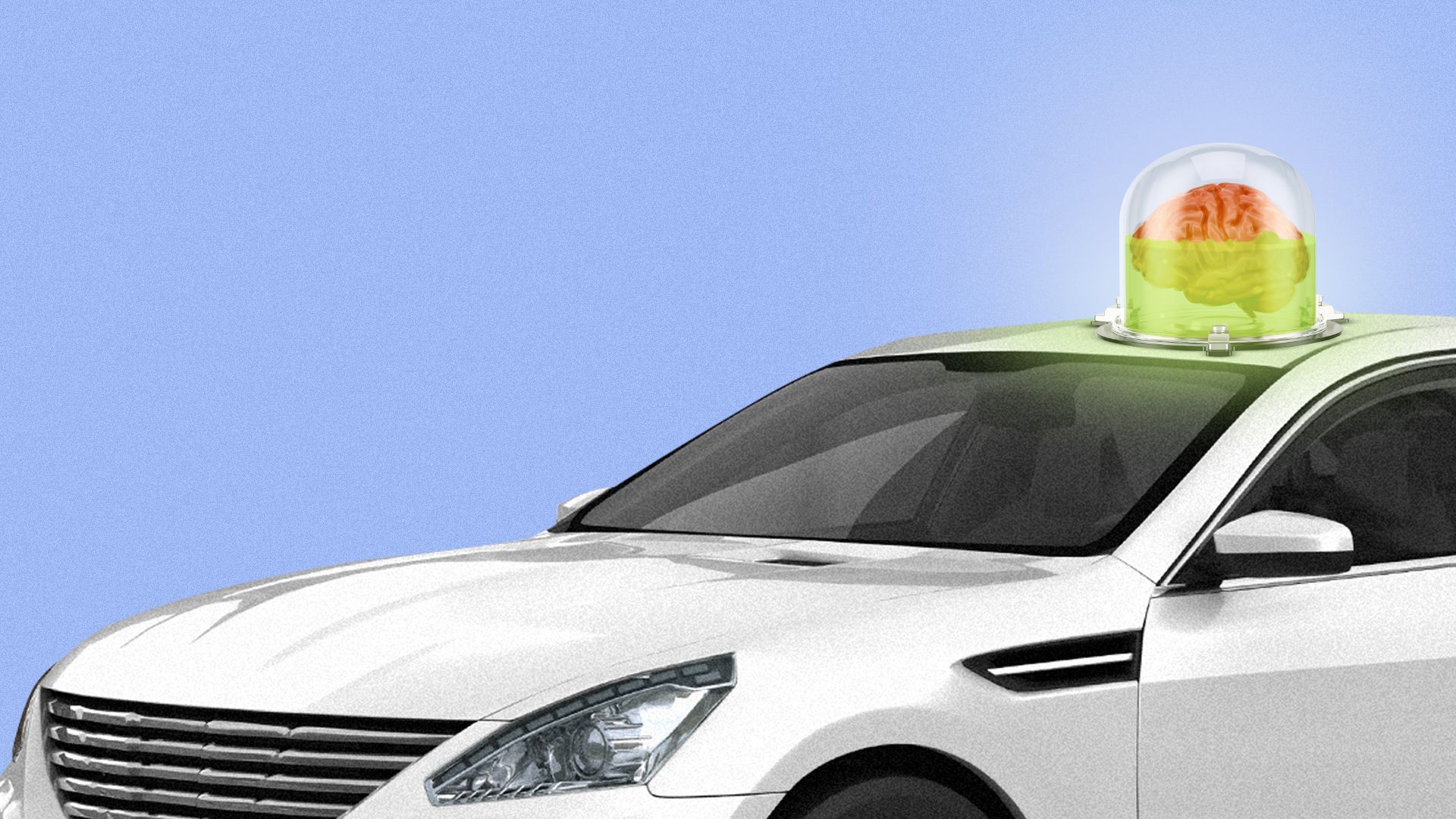
General Motors envisions a future where you can dispatch your car to pick up groceries, take your kids to soccer practice and handle other errands — all without you behind the wheel.
Why it matters: As software, AI and autonomous driving reshape the auto industry, GM is taking a big swing amid growing competition from Chinese rivals and leaders in the race toward self-driving cars.
Driving the news: GM today unveiled a sweeping technology strategy combining autonomous driving, artificial intelligence and a new centralized computing system that will underpin much of its future lineup.
Among the highlights:
- Its autonomous "eyes-off" highway-driving technology, slated to debut on the Cadillac Escalade IQ in 2028, will extend to its most popular gas-powered SUVs and pickups and its next crop of electric vehicles, too.
- OnStar, GM's 30-year-old emergency call service, is becoming an intelligent AI assistant to deliver more personalized, proactive experiences to passengers.
- And the company is leveraging AI and virtual engineering in an effort to halve the time it takes to develop new vehicles, crucial to competing more effectively with faster-moving Chinese rivals.
Among the most intriguing announcements is GM's new all-or-nothing approach to autonomous driving tech.
- Rather than offering increasingly capable driver assistance everywhere, GM is starting with fully autonomous driving on highways before expanding later to other types of roads.
- It's a guard against driver complacency, said GM chief product officer Sterling Anderson, who helped develop Tesla Autopilot.
Zoom in: Anderson argues that driver assistance systems that require constant supervision — like Tesla's FSD — often lead to drivers trusting the system more than they should.
- GM's fully autonomous highway system won't require drivers to monitor the road or suddenly retake control in an emergency. They'll be free to catch up on email or watch a show while cruising down the highway.
- "They can be complacent, and we will be safe," Anderson says.
GM's longer-term ambition is what Anderson calls "Mission Mode" — turning personal vehicles into autonomous assistants that can complete tasks for their owners — like picking up a friend from the airport or dropping off the dry cleaning.
- "Mission Mode is what we perceive as one of the killer apps of autonomy," Anderson told Axios.
A powerful new brain
Making this leap requires a more modern electrical and computing architecture in GM vehicles.
- The company is replacing dozens of scattered electronic control systems with a powerful central computer that can coordinate everything from propulsion and safety to AI and autonomous driving.
- The new architecture delivers 40 times more computing power with 30% less wiring, the company says.
OnStar is getting an AI makeover, becoming more proactive, GM says, by helping busy parents coordinate kid pickups or order takeout when everyone's running late, for example.
- Drivers will also be able to ask questions about their vehicles, troubleshoot problems or control features using natural language.
- Altogether, the new brain will enable the car to think and get smarter over time, the company says.
What's next: The OnStar AI Assistant debuts in the 2027 Cadillac Lyriq through a software update, with more models to follow.
- An OnStar smartphone app will replace GM's existing Chevrolet, Buick, GMC and Cadillac brand apps.
- GM's autonomous "eyes-off" highway-driving technology will appear first with the 2028 Escalade IQ, and will then be incorporated into GM's popular pickups, large SUVs and next-generation EVs.
The bottom line: GM is leaning into technology as it struggles to find new paths to growth.
2. Speed game

GM wants to slash the time it takes to develop a new vehicle in half, betting that AI can help it compete with China's much faster automakers.
The big picture: GM's Anderson acknowledges that Chinese automakers benefit from a deeply integrated supplier ecosystem that allows them to source common components quickly and efficiently.
- Western automakers lack that advantage, he tells Axios.
- But he says GM has other advantages, including decades of accumulated engineering and manufacturing data it can leverage to accelerate development.
GM aims to leverage that data to shrink its traditional four- to five-year vehicle development cycle to roughly two years by using AI and virtual engineering to streamline design, testing and manufacturing.
How it works: GM is using AI to replace what Anderson describes as slow, sequential engineering processes with faster, parallel development and virtual testing.
- For example, engineers were able to evaluate more than 300,000 designs for GM's new lithium manganese-rich (LMR) batteries virtually before building a physical prototype.
- That helped the team move from its first battery-pack concept to formal approval in just one month.
- GM is also using its vast records of component designs, material properties and manufacturing instructions to build digital models of vehicles and factories, enabling engineers to test changes before implementing them in the real world.
Between the lines: GM's enormous scale has historically made it difficult to change direction quickly. But that same scale has generated a treasure trove of data that could become an advantage in the AI era.
- "There is inertia in scale," Anderson acknowledged. But "with scale comes data."
- The challenge now is turning that data into faster development cycles — and ultimately better vehicles.
- "The faster you move, the more you iterate," Anderson tells Axios. "The more you iterate, the better the product gets."
The bottom line: GM isn't trying to copy China's manufacturing playbook. It's betting that AI can help it achieve similar speed through a different route.
3. No-fly zone
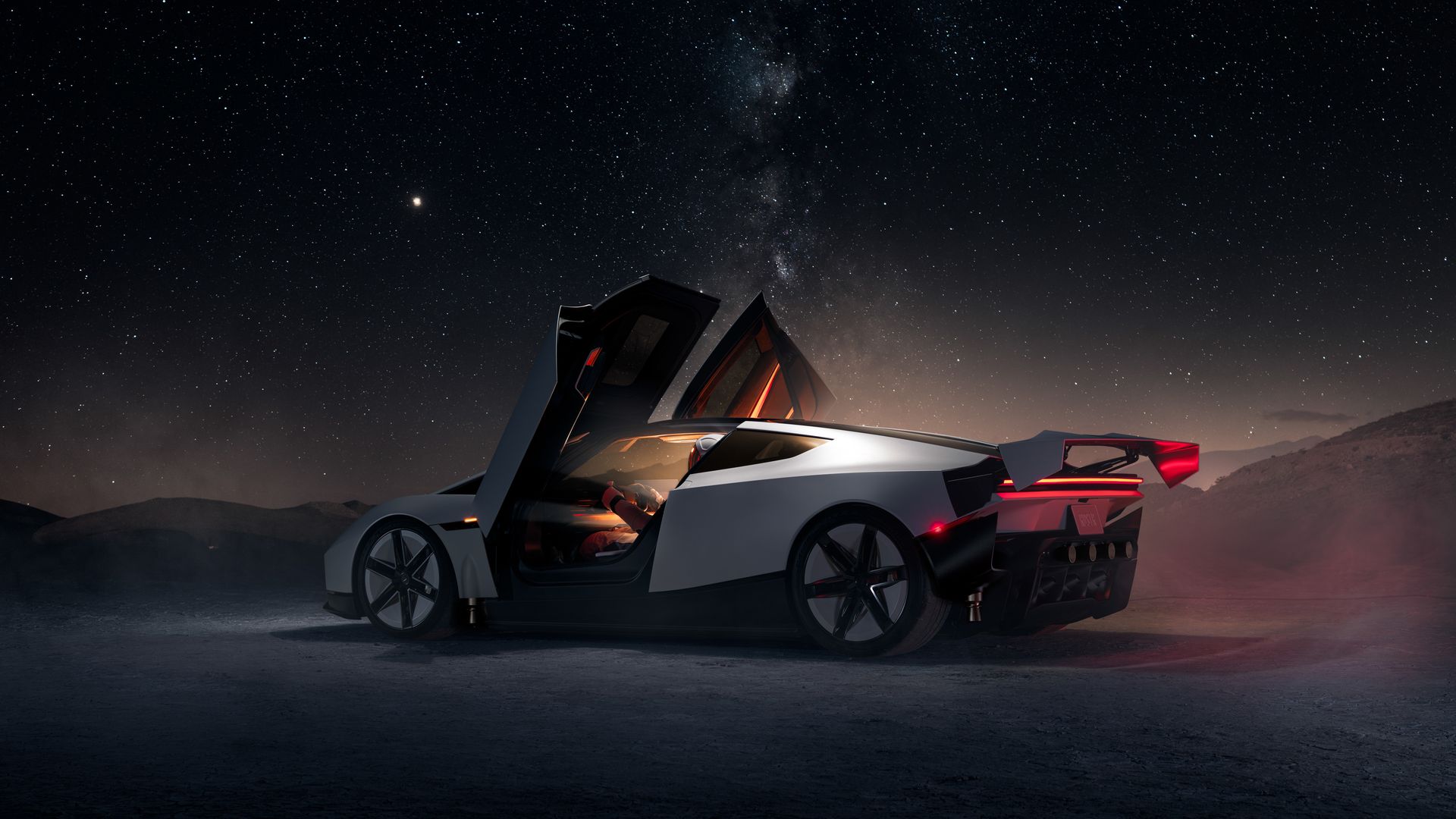
Elon Musk dazzled the world last week with a Tesla Roadster that defied gravity, flipped through the air and accelerated like a rocket.
Reality check: The Roadster that customers will actually be able to buy and drive on public roads won't be able to perform those stunts. But it does promise to be a very fast electric sports car.
State of play: Tesla unveiled three versions of the Roadster, but only one is being marketed as a conventional road-ready vehicle.
- The base model, marketed as the Performance version, is a two-seat electric supercar with powerful electric fans that suck air from beneath the vehicle, effectively gluing it to the pavement.
- That ground-hugging technology generates tremendous downforce to allow astonishing acceleration and cornering performance.
- The car also features lightweight construction, steer-by-wire controls, an adjustable suspension and an active rear spoiler for better aerodynamics.
The intrigue: Tesla also plans a limited-edition Thrust model equipped with rocket thrusters and a zero-to-60 mph time of less than one second.
- Tesla calls it "race ready," but hasn't clearly established whether anyone will be able to drive it on public roads.
And that flying Roadster? It's an invitation-only, single-seat Rocket version that Tesla explicitly acknowledges isn't approved for public road use.
- Whether it will ever exist beyond the flashy demo is questionable.
Follow the money: Tesla is now accepting reservations — $50,000 for the Performance Roadster and $250,000 for the Thrust version, but hasn't said how much either car will cost.
- Be forewarned: The fine print suggests you might never actually see the car.
- "You understand that Roadster is still under development at the time you entered into this agreement, and so we cannot guarantee when your vehicle will actually be delivered or if it will be delivered," Tesla's reservation agreement says.
The bottom line: At least reservations are fully refundable.
Go deeper: Elon Musk's flying Tesla is gloriously absurd
With flying Roadster, Tesla waves goodbye to the car business
4. Hertz's Oro Mobility gets billionaire backing
Billionaire hedge fund investor Steve Cohen is backing a new $80 million investment in Oro Mobility, a Hertz-owned business positioning itself to become the backbone of the robotaxi business, the company tells me.
Why it matters: Waymo, Tesla and Uber's race to deploy self-driving vehicles means somebody needs to buy, maintain, clean and manage their fleets. Hertz wants to be among the companies that keep them running.
Driving the news: The rental car giant is establishing Oro Mobility as a standalone company and has secured $80 million in strategic equity funding from a group of investors including Cohen Private Ventures, the family office of the New York Mets owner and Point72 founder.
Catch up quick: Hertz launched Oro earlier this year as part of Hertz CEO Gil West's strategy to turn the rental car company's century of fleet-management expertise into a new growth business.
- Oro already has a deal to manage Uber's planned fleet of Lucid robotaxis equipped with Nuro's self-driving technology, beginning in San Francisco.
- It also rents about 45,000 vehicles to Uber and Lyft drivers, including about 1,000 that are driven by Hertz employees for Uber — a stepping stone toward fully autonomous operations.
The bottom line: The robotaxi gold rush isn't just about who builds the best self-driving technology. There's money to be made keeping the vehicles on the road.
5. Drive-thru
💵 GM announced another $20 billion stock buyback, infuriating newly reelected UAW President Shawn Fain, who pointed out that's twice what GM is investing in factories and workers. "We will remember when we are back at the bargaining table in 2028," Fain warned. (Detroit Free Press)
- The intrigue: Veteran auto scribe Joe White, in his Substack column High Speed Rodeo, muses that GM, which has repurchased 45% of its shares since 2015, could be on a path to go private.
- 🚫 Meanwhile, Canadian auto workers authorized a strike against Stellantis. (Detroit News)
❓ A mysterious group is campaigning to block robotaxis in Washington, D.C., as a City Council vote nears. (The Washington Post)
🔋 GM led Peak Energy's Series B financing to expand U.S. production of sodium-ion stationary-storage systems, an alternative chemistry using more abundant domestic materials than conventional lithium-ion batteries. (Bloomberg)
6. 🚘 What I'm driving: everything!
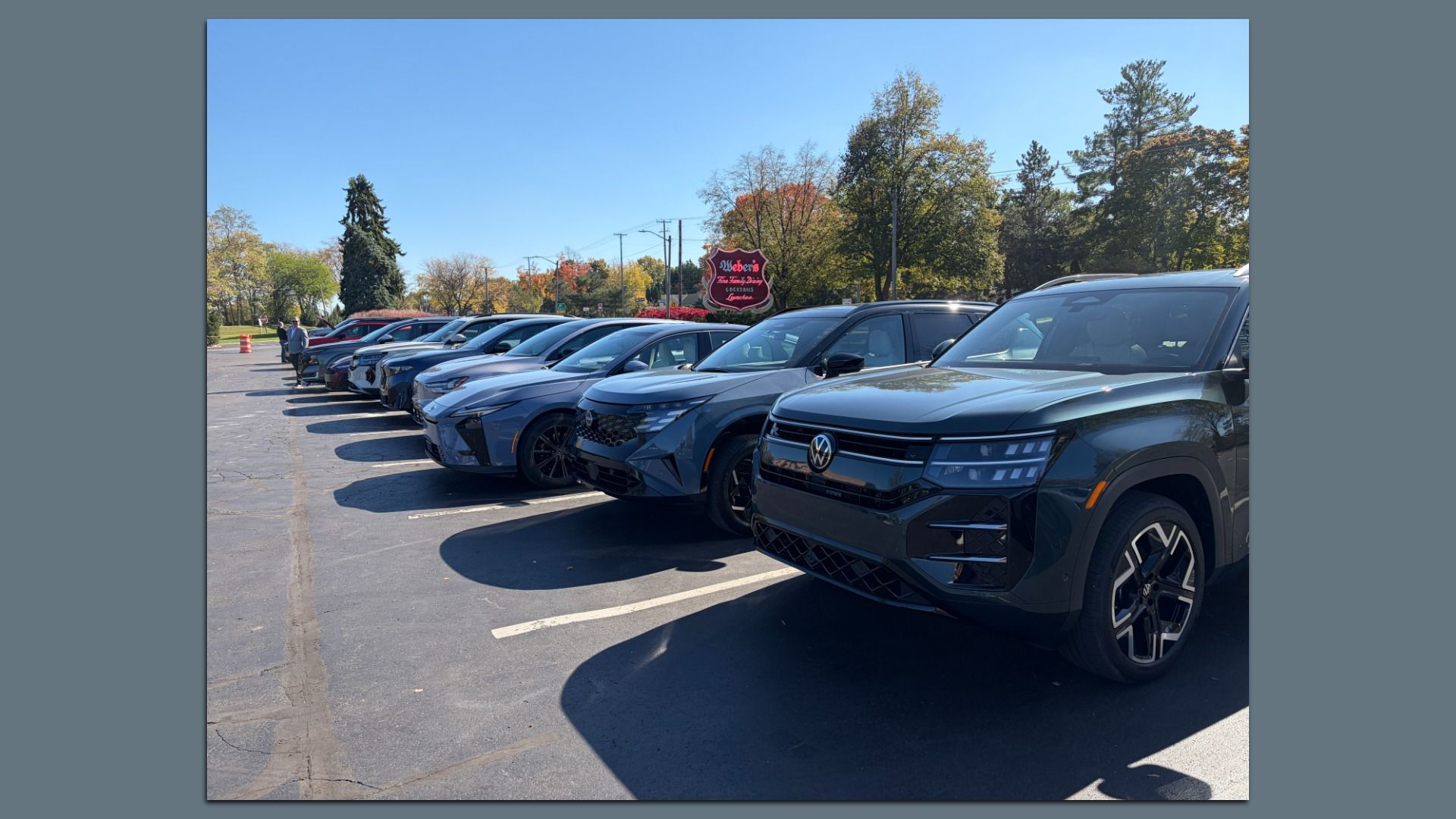
This week I'm in Ann Arbor, Mich., with about 45 automotive journalists from across the U.S., Canada and Mexico to evaluate the best new cars, trucks and SUVs for 2027.
- 🗳️ We're members of the jury for the North American Car & Truck of the Year awards, and this week is a golden opportunity to drive vehicles back-to-back under similar conditions before casting votes to determine the finalists.
The big picture: 24 semifinalists were chosen from a preliminary list of 56 eligible vehicles based on hundreds of hours of test driving, research and evaluation by jury members throughout the year.
- They include five cars, three trucks and 16 utility vehicles.
- Many offer different trim levels and power trains, which means we're driving more than 24 cars over the course of three days.
- Everyone has their own evaluation methods, but generally, we judge cars on factors like innovation, design, safety, performance, technology, driver satisfaction, user experience and value.
The intrigue: This year, there's a new award category for Automotive Technology of the Year.
- 14 new tech features were nominated by automakers and suppliers. A jury subcommittee narrowed the list to five semifinalists.
- Among them: a new adaptive seat belt from Volvo that provides personalized protection for different passengers and Rivian's adaptive beam headlights.
💭 My thought bubble: I'm looking forward to driving new or redesigned vehicles that I haven't tested before, like the Kia EV3, Audi A6, Chevrolet Silverado and Jeep Grand Wagoneer range-extended EV.
- I'm looking for cars that offer a lot of value for the money, simple-to-use controls and innovative technologies.
The bottom line: It's a jam-packed few days, but the chance to evaluate cars back-to-back and compare impressions with other jurors is invaluable.
Thanks to editors Pete Gannon and Bill Kole. If you're a fan of this newsletter, please ask your friends to sign up, too.
Sign up for Axios Future of Mobility