Axios Future of Mobility
August 19, 2026

😎 Hi again! I'm just back from a weekend trip to Wisconsin in the new Rivian R2, and boy was it illuminating! 💡Find out why below 👇 😉
- ⚡️ Plus, my latest EV road trip made me truly appreciate Tesla's seamless Supercharger network.
1,704 words, a 6½-minute read
1 big thing: Shape-shifting headlights
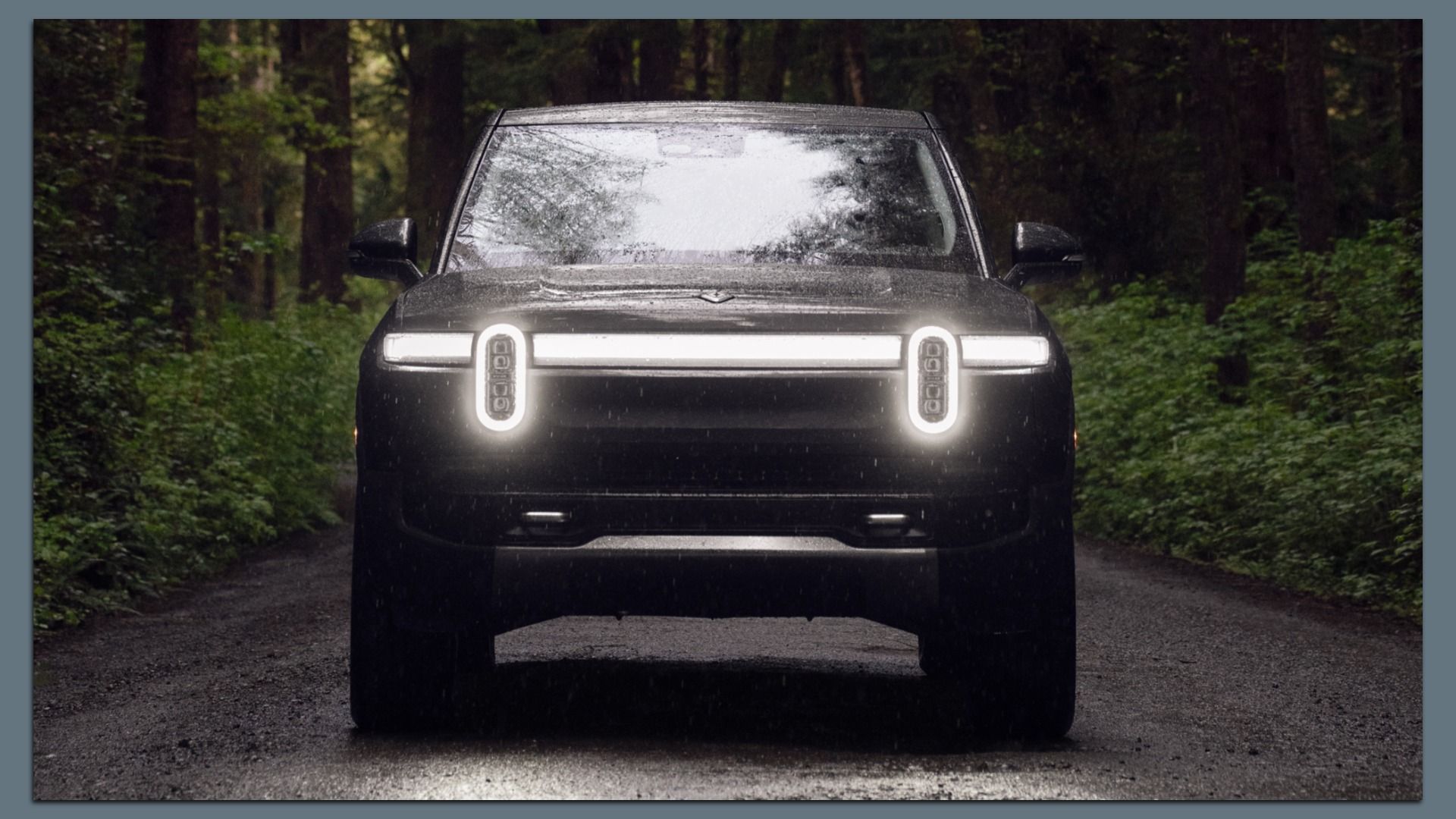
Rivian's headlights lit up a family of raccoons on a pitch-black Wisconsin road, then reshaped their beam around another car to avoid blinding its driver, without dimming the road ahead.
Why it matters: A decade after shape-shifting headlights changed nighttime driving in Europe, the technology remains remarkably scarce in North America — a case study in how U.S. regulations can slow the arrival of proven safety innovations.
Driving the news: Rivian has made "adaptive driving beam" headlights standard on its new midsized R2, which went on sale in June.
- The electric vehicle maker was the first to deploy ADB headlights in the U.S. in 2024, with its refreshed 2025 R1T pickup and R1S SUV models.
- Tesla is the only other manufacturer that offers them in the U.S. today, but just on newer vehicles equipped with its matrix LED hardware.
The big picture: The U.S. legalized ADB headlights in 2022, years after they became mainstream in other markets.
- But most existing systems still can't be deployed here because U.S. standards are more restrictive, says Matthew Brumbelow, principal research engineer at the Insurance Institute for Highway Safety.
- The testing process itself is burdensome for carmakers, say U.S. executives at supplier Forvia Hella, whose ADB technology is on several European models.
- "In fact, to meet the U.S. requirements, manufacturers would likely need to make a system that is more complex and less effective at the same time," Brumbelow tells Axios.
Between the lines: "Activating the feature in the U.S. is not simply a software update; it requires new hardware and the validation and system calibration that go with it to ensure full compliance with U.S. requirements," explains BMW spokesman Jay Hanson.
- "Everyone has to redesign their system," says Mark Dahncke, a spokesman for Audi, which introduced the world's first matrix LED headlamps in 2013 on the 2014 A8.
Rivian's solution — an advantage that comes from developing an entirely new electrical architecture — was to design glare-free ADB headlights from scratch to satisfy U.S. regulators.
- "Because we own our perception software stack and in-house testing equipment, we trained and iterated our software every two weeks to pass every NHTSA scenario," a Rivian spokesperson says.
How it works: Each headlight in the Rivian has 35 LEDs affixed to a printed circuit board.
- The vehicle's camera system continuously monitors the road ahead to detect oncoming headlights, trailing taillights and street lighting.
- When another vehicle enters the camera's field of view, the system dynamically turns off or dims only the specific LEDs pointed at the other vehicle, creating a moving "shadow box" around the car.
- Drivers can leave their high beams on, without blinding oncoming traffic.
My thought bubble: During a test drive of the new R2, I first noticed the unusually good visibility on road signs along I-43 heading north out of Milwaukee.
- Once I got onto the dark, two-lane roads in the Door Peninsula, I was truly wowed by the power of this technology.
What we're watching: Audi's upcoming Q7 and Q9, due later this year in the U.S., will feature ADB headlights, Dahncke said.
- BMW too is working on a system that will pass muster in the U.S., it tells Axios.
- Forvia Hella, meanwhile, expects its tech to be on additional vehicles in the U.S. over the next few years.
2. My latest EV road trip was missing something: charging anxiety
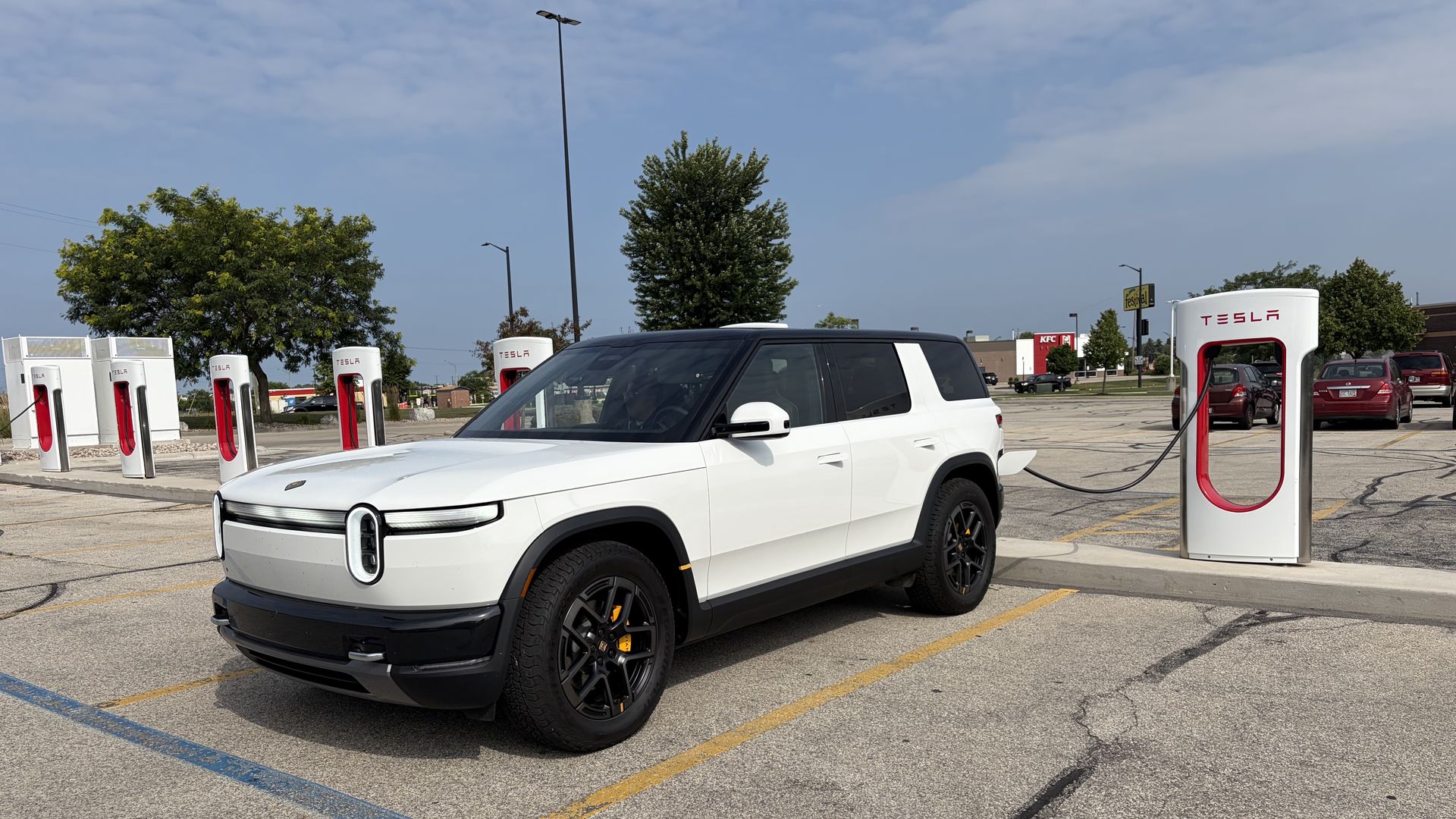
The best thing about my latest EV road trip was how little I thought about charging.
- I've taken enough of them to know that charging can dictate the journey.
- But driving a Rivian R2 from Michigan to Wisconsin and back, something was conspicuously absent: charging drama. And I have Tesla to thank for that.
The big picture: With Tesla's NACS plug built into the Rivian and plenty of Tesla Superchargers available along the way, charging increasingly felt like infrastructure rather than an obstacle.
Catch up quick: Tesla opened portions of its Supercharger network to other EV brands starting in 2022, and the rest of the industry has gradually moved to adopt its proprietary North American Charging Standard, or NACS.
- The R2 is among about a dozen non-Tesla models currently available with a native NACS port. Others must use adapters for now.
I test-drove an R2 on loan from the automaker's media test fleet about 800 miles, not including the 78-mile journey each way across Lake Michigan aboard the Lake Express ferry.
Charging at Tesla Superchargers made for a smooth experience.
- Not only does the R2 use the same NACS connector as Tesla, it supports seamless plug-and-charge capability at Tesla Superchargers.
- That means you just have to drive up, plug the Tesla cable into the car, and the session is automatically billed to your Rivian account. No fumbling between different apps, touchscreens or RFID cards.
There aren't many charging stations in Wisconsin's Door Peninsula, so the car urged us to add a little juice before proceeding to Sturgeon Bay for the night.
- It suggested a 13-minute stop at a Tesla Supercharger to get the battery up to 51%, but — surprise! — the car charged faster than it took my husband to return from the adjacent convenience store, so I just left it plugged in a little longer.
- When we got to Sturgeon Bay, it was great to see a Tesla Supercharger station in the parking lot of our hotel. We didn't even have to leave the car plugged in overnight — 20 minutes and it was back to 90% and ready to go for morning.
The bottom line: It was nice to relax on vacation and not worry about charging.
3. Drone delivery option coming to more checkouts
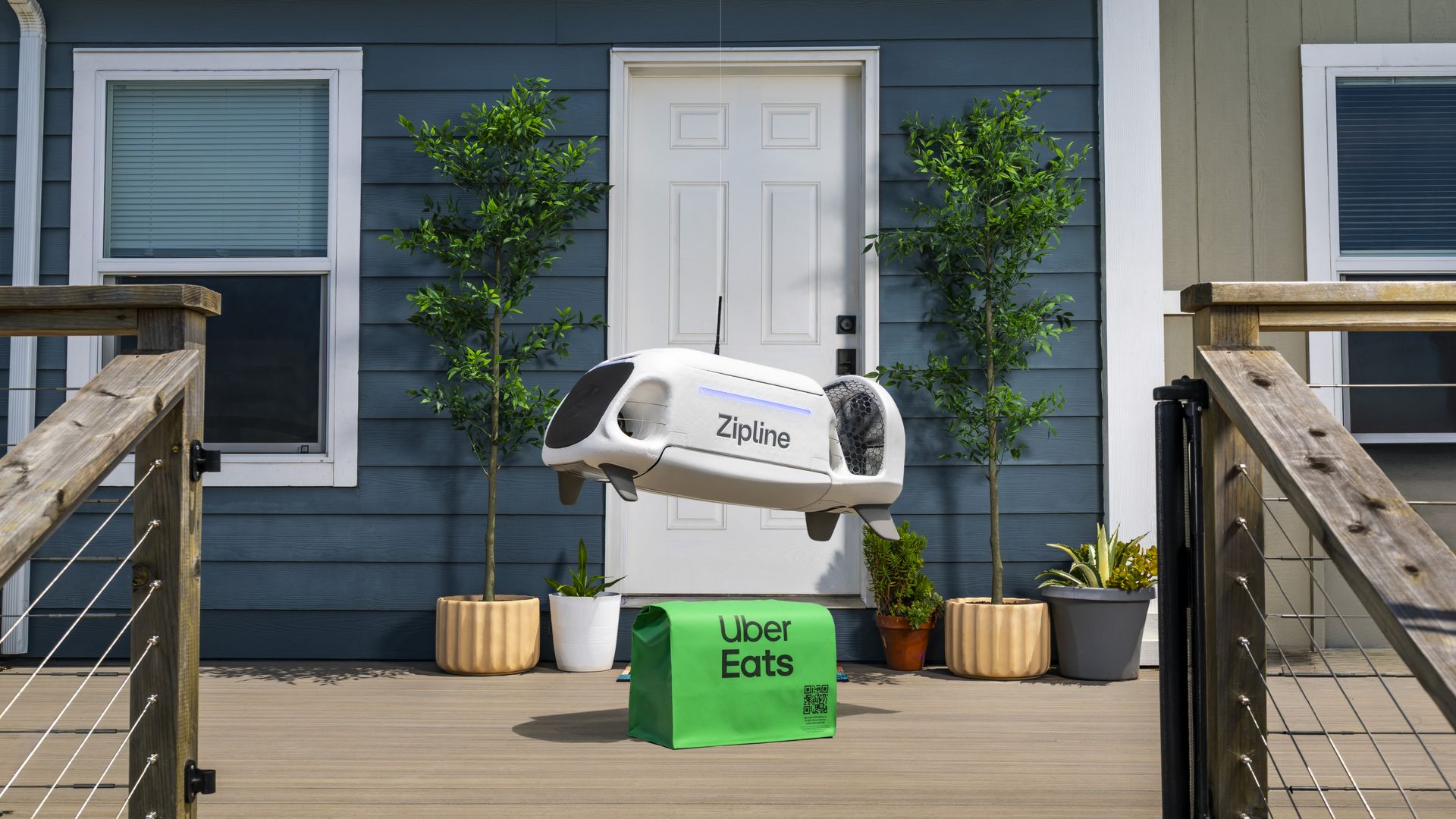
Two big announcements this week suggest drone delivery is finally poised to become a mainstream option for millions of Americans after years of small-scale trials.
- Amazon said today that it plans to expand its Prime Air drone delivery service sixfold, reaching nearly 500 U.S. cities and towns by the end of 2026.
- Uber, meanwhile, is investing in drone operator Zipline, with an ambitious goal of reaching 1 million Uber Eats drone deliveries per day by the end of 2029.
Why it matters: Waiting days for a package — or even an hour for dinner to arrive — is giving way to a new consumer expectation: delivery in minutes, sometimes from the sky.
- Uber CEO Dara Khosrowshahi described customer demand for rapid delivery as "insatiable," per WSJ.
Zoom in: Amazon says hundreds of thousands of packages have already been delivered by drone this year.
- Eligible customers can order millions of products weighing up to 5 pounds, with delivery in as little as 30 minutes.
- Prime Air drone delivery currently serves customers in cities across seven states, including Arizona, Florida, Kansas, Louisiana, Michigan, Nebraska and Texas, with plans to launch in Georgia, Ohio, Illinois, Idaho and New York soon.
Uber's service will launch in Houston and Dallas this year before expanding to dozens of other U.S. cities.
- Instead of downloading a special drone app, customers will see drone delivery integrated into Uber Eats.
Elsewhere, Google-owned Wing is offering drone delivery in nearly 20 U.S. markets through partners including Walmart, DoorDash and Papa Johns. By 2027, Wing expects to be operating at more than 270 Walmart stores, serving more than 40 million people.
What to expect: Suburban communities are likely to see drones first, where lower density, open yards and fewer tall buildings make operations easier.
4. Drive-thru

🚖 Waymo got approval from California's Public Utilities Commission to expand its robotaxi service across 18 counties from Sonoma to San Diego.
- While that's a big deal, Waymo said the rollout "will be gradual and guided by our safety framework." (Electrek)
🇨🇳 China's Pony.ai has a pipeline of more than 4,000 robotaxi deployments planned outside of China. Just last week, it announced a huge expansion with Uber in Europe. (Reuters)
🤖 Serve Robotics, the sidewalk robot maker, is trying to move past its broken Uber Eats relationship by adding another major delivery platform, entering new markets and expanding beyond food delivery. (Axios)
🛻 Tesla plans to begin rolling out its purpose-built Cybercab robotaxi as soon as this month in Austin, starting with rides for employees before opening up to the public. (Reuters)
5. 🚘 What I'm driving
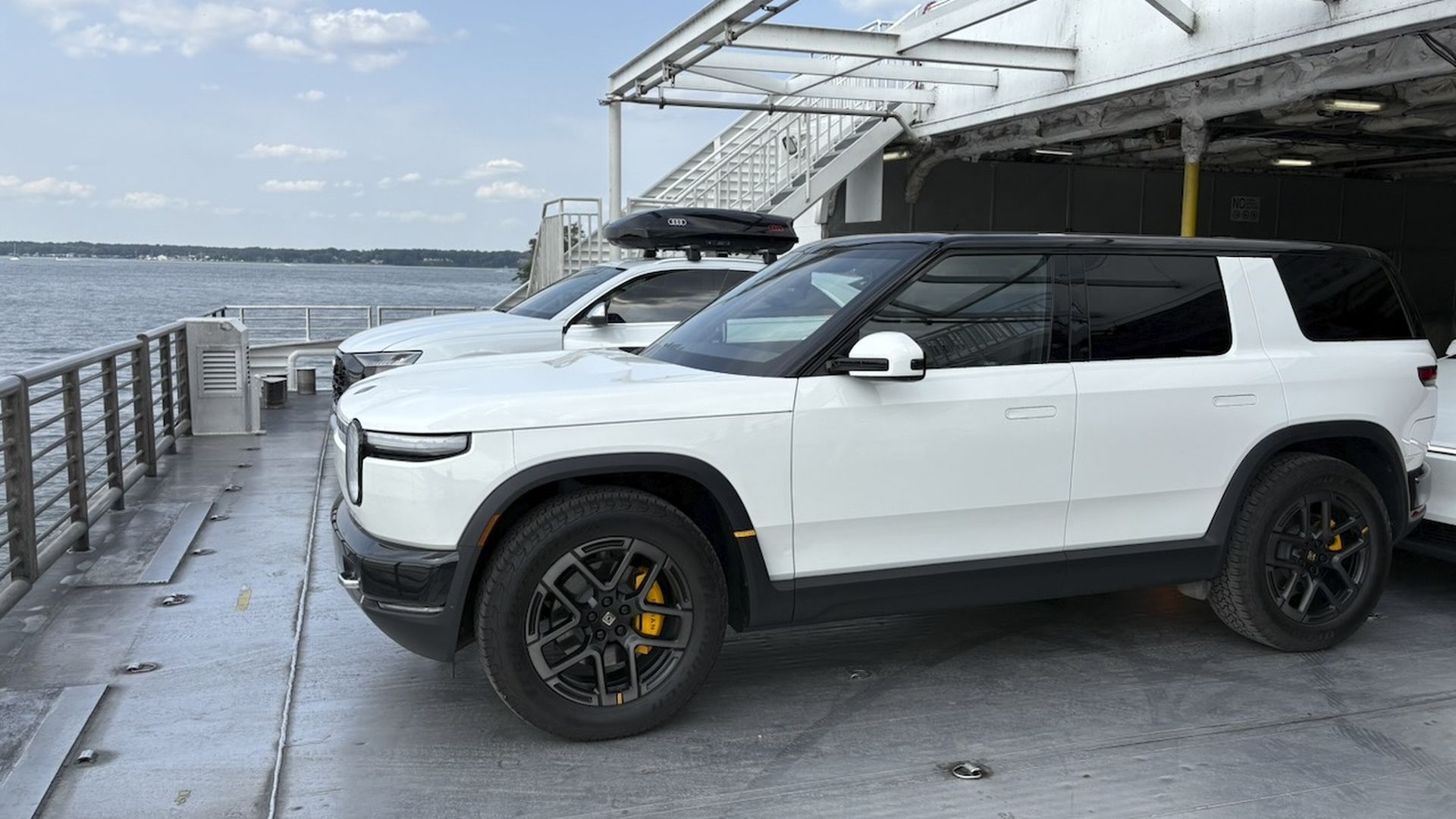
2027 Rivian R2
- MSRP: $57,990 for R2 Performance with Launch Package, plus $1,495 delivery. Lower-priced variants between $45,000 and $54,000 to follow over the next year.
- Under the hood: 656-hp dual motor all-wheel drive; 88 kWh battery; 330 miles of driving range
- Manufacturing site: Normal, Ill.
What's new: A smaller unibody platform for improved stability and a new streamlined electrical architecture for easy over-the-air software updates.
- Haptic "halo wheels" on the steering wheel are designed to control everything by scrolling, pushing, pulling and tilting.
- They take some getting used to; their function depends on the context at any given moment.
- You might think you're adjusting the volume, when in fact, you're changing the temperature or the mirrors.
What I loved (besides the headlights): Rivian's hands-free driving technology is vastly improved from a year ago, when I tried it on the R1S.
- It works wherever there are painted or dotted lines, which means our recent road trip to Wisconsin was almost entirely hands-free, even on two-lane country roads.
- The car will automatically change lanes when you turn on the blinker.
What I didn't love: Rivian doesn't offer Apple CarPlay or Android Auto, nor does it have an AM or FM radio receiver in the car.
- Everything is streamed via internet services like iHeart Radio and TuneIn, or you can connect your phone via Bluetooth or the built-in Spotify app to listen to your favorite music.
The bottom line: Rivian has a lot riding on the midsized R2, which is meant to transform the company from a niche EV manufacturer to a mainstream brand.
- Based on my experience, and the reviews of many other automotive writers, they're off to a great start.
I test-drive vehicles in my role as a juror for the North American Car and Truck of the Year awards. Opinions are my own.
Thanks to editors Pete Gannon and Amy Stern. If you're a fan of this newsletter, please ask your friends to sign up, too.
Sign up for Axios Future of Mobility