Serve Robotics plots new strategy after breakup with Uber Eats

Add Axios as your preferred source to
see more of our stories on Google.
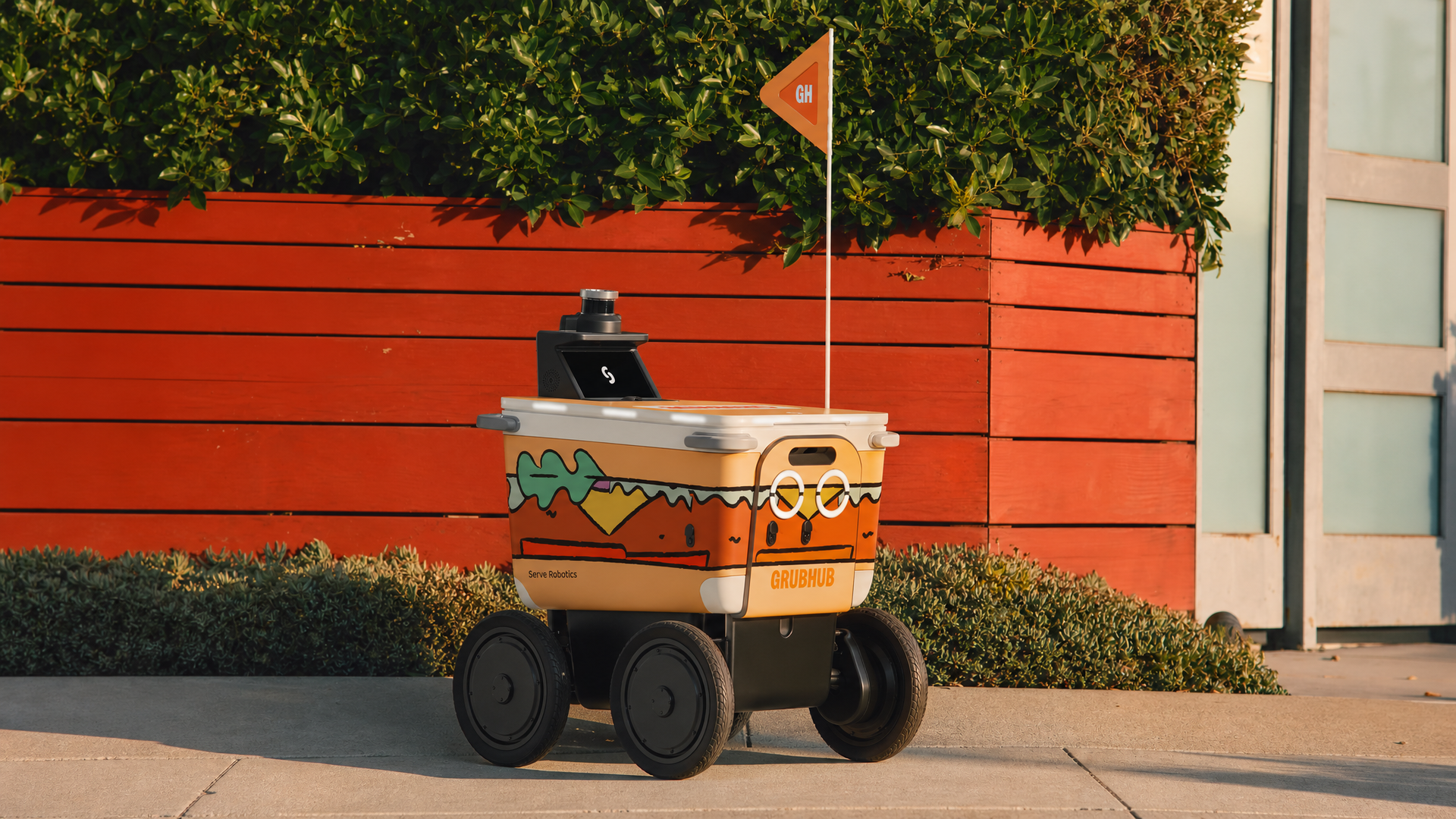
Chomp, a Serve Robotics sidewalk delivery robot for new partner Grubhub. Photo courtesy of Serve Robotics
Fresh off its breakup with Uber Eats, sidewalk delivery company Serve Robotics announced a slew of strategic moves Monday, including a new partnership with Grubhub parent Wonder.
Why it matters: Serve is trying to move past its broken Uber relationship by adding another major delivery platform, entering new markets and expanding beyond food delivery.
Catch up quick: The clash between Serve and Uber came to light last week, during Serve's second-quarter earnings call.
- Serve CEO Ali Kashani told investors the company doesn't intend to renew its agreement with Uber in 2027, citing "differing views" on how to deploy delivery robots.
- Kashani said quarterly delivery volumes through Uber declined for the first time since 2022, and as a result, the company had slashed its 2026 revenue guidance from $26 million to $9 to $10 million.
- A day later, Uber disclosed it had sold off its entire stake in Serve Robotics, which had spun out of the ride-hailing company more than five years ago.
What they're saying: Kashani, in an interview with Axios, skirted around the conflict and focused on his diversification plan.
- "I have a lot of respect for Uber...They kind of helped us bootstrap this," he said. "We just have a different idea for what we want next."
The big picture: The deal with Grubhub is part of a broader plan to squeeze more deliveries — and revenue — out of Serve's fleet of 2,000 robots, and to diversify beyond last-mile delivery into health care robotics.
- Serve robots will now be available to Grubhub customers in Chicago, Los Angeles and Alexandria, Va.
- The company is also adding two new DoorDash markets: San Jose and Washington, D.C.
Zoom in: Serve is introducing a "micro depot" model as part of the Washington rollout — using established parking facilities for charging, dispatch and maintenance, rather than newly built hubs. It's designed to allow the company to enter new neighborhoods faster and cheaper.
- And the company's introducing a new device called Beacon that lets more restaurants work directly with Serve, rather than through a third-party delivery app.
In health care, Serve announced initial shipments of Moxi 2.0, the next-generation hospital robot from recently acquired Diligent Robotics.
Meanwhile, Serve is doubling down on its advertising business, which accounted for nearly 50% of the company's food delivery revenue last quarter.
- While advertisers have long been able to wrap Serve robots in custom designs, the company is now launching Characters, which lets brands turn robots into AI-powered personalities that customers can talk with in real time.
- The first character, launched by Grubhub, is Chomp, a hamburger-wrapped robot that will appear across social media, marketing campaigns and select customer experiences with Grubhub gift cards and swag.
The bottom line: Serve is looking past its Uber split to a future with more delivery partners, new markets, health care robotics and advertising.
