Axios Future of Health Care

November 01, 2024

Good morning. As a huge Halloween fan, I hope some of you are nursing candy hangovers — sign of a holiday well-spent.
Today's word count is 1,029, or a 4-minute read.
1 big thing: The empowerment of health misinformation
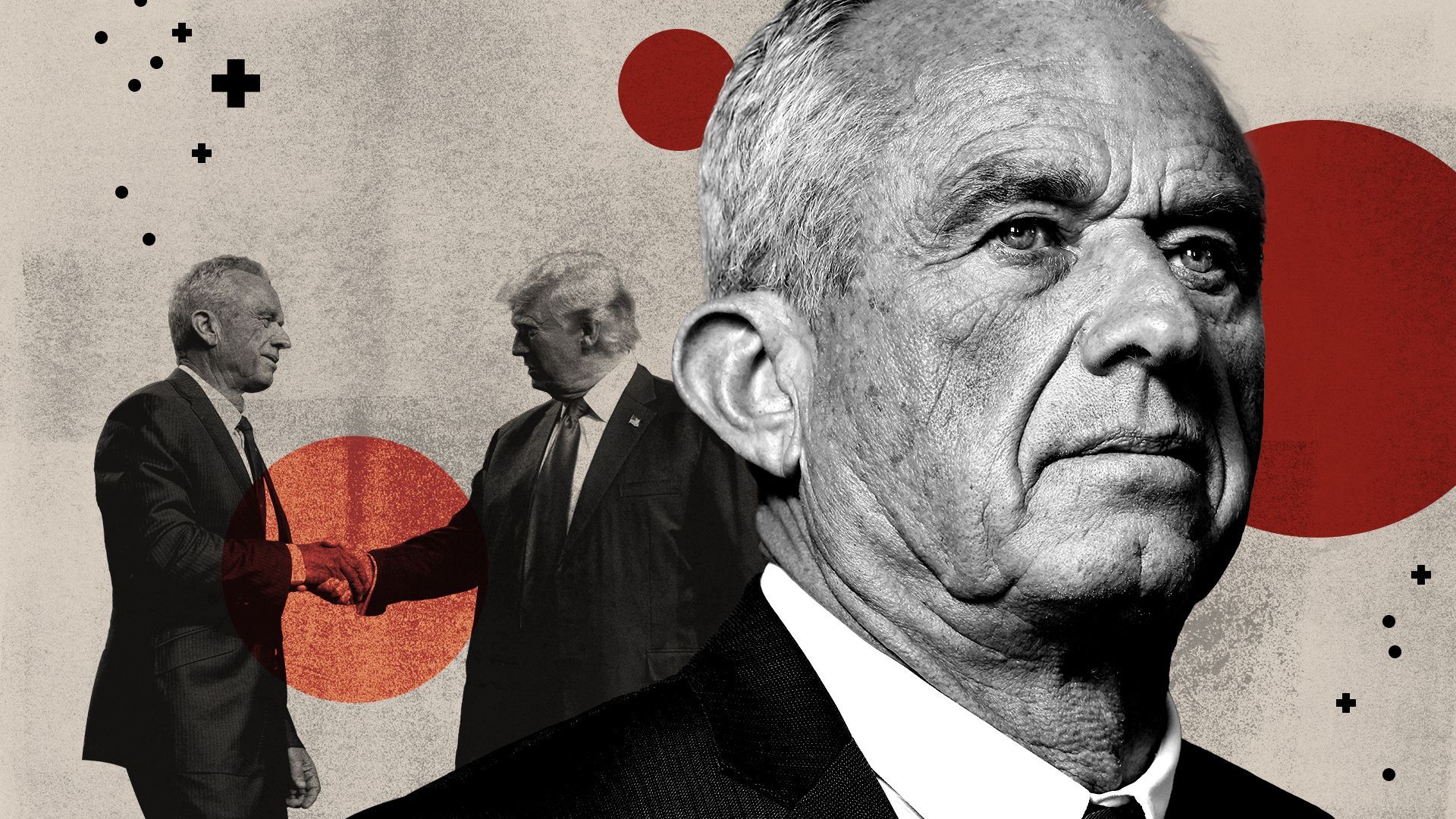
Rising vaccine hesitancy and rampant health misinformation may be facts of American life now, but former President Trump's embrace of anti-vaccine activist Robert F. Kennedy Jr. means that conspiracy-laden skepticism of the health system may be about to have a powerful seat in the U.S. government.
Why it matters: Misinformation has become much more than an emerging trend; it has gained such a foothold in American life over the last four years that one of its top purveyors may become one of the country's top decision-makers.
- The pandemic ushered in widespread mistrust of vaccines, public health agencies and even scientific consensus — in some specific cases, fairly so. But outright misinformation's foothold in government has generally been limited to a few congressional hearings, and that may be about to change.
- The impact on research, the pharmaceutical regulatory process, government messaging and even the structure of U.S. health agencies could be enormous.
Driving the news: As I report in Axios AM this morning, Trump has pledged to let Kennedy "go wild" on health, food and medicines — an appointment that, if Kennedy had his way, would intentionally bring chaos to the agencies that regulate them.
- Kennedy has said on X that one of his top priorities would be to "to clean up" public health agencies, which he says "have become sock puppets for the industries they're supposed to regulate."
- Trump transition co-chair Howard Lutnick told CNN's Kaitlan Collins on Wednesday that Kennedy won't be the HHS secretary, and what he wants is access to vaccine data. Lutnick then repeated some of Kennedy's debunked claims about vaccines' ties to autism.
- "He wants the data so he can say, 'These things are unsafe,'" Lutnick said. "If you pull the product liability, the companies will yank these vaccines right off of the market."
Where it stands: Even in an informal or advisory role — one that doesn't require Senate confirmation, which seems unlikely for Kennedy — he could wield enormous power.
- His worldview is pretty clear: America's getting sicker, the food and drug industries are playing a major role in that, and the U.S. regulatory agencies in charge of overseeing those industries are instead controlled by them.
- "There is nothing more profitable for much of the healthcare system than a sick child," Kennedy wrote in a September WSJ op-ed.
- Trump himself has been adopting some of Kennedy's positions and rhetoric for awhile now.
Although there are legal and regulatory limitations to what an RFK-inspired approach to public health or drug regulation could look like, "what [Kennedy] could do is use the podium to sanction whatever he wants publicly, like an unofficial Surgeon General of health misinformation," said KFF's Drew Altman in an email.
- Kennedy "conflates a lot of different issues, some real, some pseudo science, some make believe. The core of MAGA has little to do with a new approach to health, just a susceptibility to misinformation and conspiracy," Altman added.
- The Trump campaign didn't respond to a request for more information on what Kennedy's role would be specifically and whether the former president disagrees with any of his positions.
2. A nugget of truth
One of Kennedy's big talking points is accurate, and readers of this newsletter should recognize it: America pays way more for health care than other wealthy countries in exchange for worse health outcomes.
- There are a lot of reasons why Americans' health isn't great. Experts point to the convolutedness and unaffordability of the U.S. health system, a lack of emphasis on preventative care and socioeconomic disparities as a few factors.
- One major cause of the U.S.'s high spending is very clear: The prices are higher.
The big picture: It's notable that America's relative unhealthiness is now receiving the level of political attention that it is.
- Health care people have long talked themselves blue in the face about how we're paying more to get less, only for the political discourse to be mostly about insurance coverage and some specific affordability issues.
- Obviously, experts vehemently disagree with Kennedy's explanations of why America's health is bad, including his blame of health agencies.
- "They didn't throw out science in Australia. That's not why they're doing better," said Sherry Glied, dean of NYU's Robert F. Wagner Graduate School of Public Service.
The FDA's drug review process is recognized as the world's gold standard. And there's no question that the scientific and pharmaceutical advances over the last several decades — including vaccines — have had positive outcomes on Americans' health and longevity.
- "Of course they make mistakes. Of course we should be looking over their shoulders at all times," Glied said. "But to argue that on balance the past was better than the present is insane. Would you rather have cancer in the 1950s? Would you rather have your children go through measles?"
Between the lines: The other part of Kennedy's big-picture argument — that America is getting sicker — is more complicated.
- Yes, there's a higher chronic disease burden now, but that's at least partially because Americans are living longer, including with conditions that used to be fatal.
- Diagnostics have also gotten better, meaning we may just be better at catching certain conditions than we used to be.
- Regardless, the number of Americans with chronic diseases is projected to keep growing — an expensive reality.
My thought bubble: Americans should be concerned about how little we have to show for all of the money we spend on health care. It's a great issue for a more reliable political messenger than Kennedy to raise.
3. What I'm reading
💉 The latest potential new use for Ozempic and Wegovy, according to a promising new study reported on by the New York Times: knee pain in people with obesity and moderate to severe osteoarthritis.
👀 A trio of Democratic congressional health leaders wrote a letter to CMS to "express our concerns on ongoing problems with Medicare Advantage ... that seem to be getting worse."
🧬 RNA editing is emerging as a promising new treatment approach to disease, an alternative to CRISPR and other DNA-modifying therapies, Science reports.
🧠 An experimental treatment is attempting to use focused ultrasound waves as a way to reset cells within the brain's reward center and curb addiction, the WSJ reports.
Thanks to Nicholas Johnston for editing and Matt Piper for copy editing.
Sign up for Axios Future of Health Care