Axios Future of Health Care

December 19, 2025

Good morning. We've made it to the last edition of Future of Health Care this year! Happy holidays, and thanks for being such an engaged audience!
- Our regular Vitals newsletter will still hit your inboxes on Monday and Tuesday, and then will take a break until Jan. 5.
Today's word count is 1,287, a 5-minute read.
1 big thing: How 2025 remade the future

It's never a good idea to try to assess how history will be viewed while it's being made, but it seems safe to say that 2025 will stand out as a landmark year for health care.
Why it matters: Our health and how we consume and pay for care will likely change because of the decisions made over the last 12 months, especially at the federal level.
- And honestly, you can't say that often about a sector in which the status quo has reigned supreme amid a lot of dysfunction.
- There's also the sheer volume of the year's health care news, and I am writing this with the caveat that there's probably more to come before the calendar flips.
The big picture: Perhaps no space has been more affected by the second Trump administration than public health. The effects of vaccine-related policy changes and the slashing of federal health agencies like the CDC, the FDA and the NIH won't be truly measurable for years.
- The most direct impact could be the rise of preventable infectious diseases that we haven't had to worry about in a long time.
- But I've written extensively about that lately, so we're instead going to turn to some of the original 10 themes of this newsletter.
- And there's no more obvious place to start than with prescription drugs.
Let's get to it.
2. The year's biggest changes

Decisions about drug discovery and development, how they get to market and how much they're sold for could all look very different due to decisions made this year.
Why it matters: If you ask the Trump administration, it'll say that it's about making drugs safer, cheaper and less likely to get trapped in bureaucratic red tape while forcing other countries to stop freeloading off of American R&D investment.
- Others see the U.S. as heading down a path that risks our status as the world leader in the biopharmaceutical space.
The big picture: Several things have happened in tandem.
- Government funding for research has been slashed in the name of "cutting taxpayer funding of left-wing pet projects," as a White House spokesperson told Nature. But cutting medical research specifically — like into mRNA vaccines — puts development of new treatments and cures at risk.
- The FDA workforce has been gutted, leading to fears of agency brain drain, intensifying regulatory backlogs and long wait times. The agency has also been accused of politicizing the drug approval process while signaling big changes to how new products are approved and evaluated.
- Though the administration has said it's clearing the way for novel treatments to get to patients faster, those changes have been criticized as inconsistent or, when it comes to vaccines, too burdensome.
Then there's the changes to everything that happens post-approval.
- I certainly didn't predict at the beginning of this year a series of Oval Office press conferences announcing voluntary pricing deals with drug companies, but lo and behold, that's what happened (and I'm hearing will continue happening — like, today).
- Of course, the devil's in the details of those deals, and we still don't have a lot of information. The market response was generally positive, meaning investors viewed them as pretty benign. Who knows if they'll even hold up when there's a new administration.
But this year also signaled that the Biden-era Medicare price negotiation program is here to stay, and just yesterday a regulation with a "most favored nation"-sounding name moved forward in the review process.
- That's significant movement toward a permanent government role in drug pricing.
- Then there's coverage. We've written about how new anti-obesity drugs are potentially game changers, but their price tag — plus a law regarding coverage for weight loss — has been a barrier to Medicare covering them.
- One of the Oval Office drug deals also included Medicare coverage of GLP-1 drugs for some patients, a major advancement in terms of making them accessible to seniors while keeping costs in check.
What they're saying: Both political parties want cheaper U.S. drug prices.
- But everyone also wants more innovation — especially as China gets much, much better at creating its own biomedical innovation. The pharmaceutical industry is warning that too much price regulation comes at a steep innovation cost.
And one more vaccine thing: Remember that they're products bought and sold on a market.
- If they become too risky, their manufacturers may decide to stop selling them. It's happened before.
3. Honorable mentions
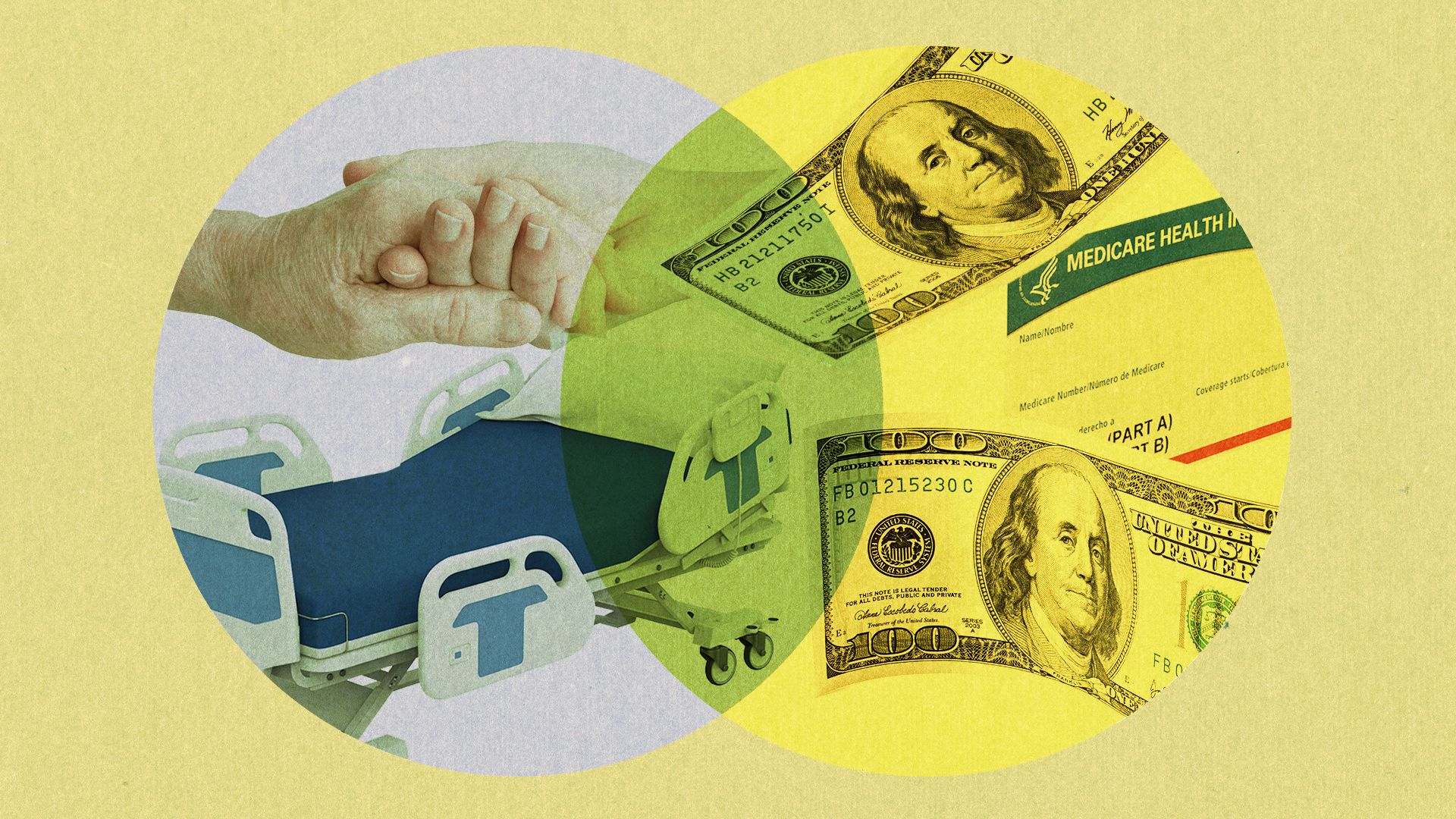
The collective "we" have been talking about insurance and bypassing certain other big topics for a very long time now. But the focus was justified this year.
- Trillion-dollar Medicaid legislation was passed and the Affordable Care Act is once again shaping up to be a huge topic in next year's midterm elections thanks to the expiring enhanced subsidies.
The big picture: If current law continues as-is — meaning Congress doesn't act to stop various forms of voter pain — several million Americans could lose their health insurance, some insurers will get dinged financially, and hospitals that serve vulnerable patients may be at risk of further financial turmoil.
- But at the same time, the Trump administration didn't enact the crackdown on Medicare Advantage or prior authorizations that some predicted. That was particularly notable when you consider that the year began just weeks after the killing of UnitedHealth CEO Brian Thompson.
- So in these ways at least, health insurance was "the dog that didn't bark," as the Brunswick Group's Lanhee Chen told me.
- And big insurers are still just as big as ever — no trustbusting there.
Catch up quick: Republicans passed just shy of a trillion dollars in Medicaid cuts as part of their tax bill, which is expected to translate into coverage losses.
- That will have an impact on insurers dependent on Medicaid for a big portion of their business.
- But it's also a big deal for hospitals who serve Medicaid-heavy populations. A recent analysis led by Harvard researchers found that urban hospitals may actually be most at risk of shutting down services or closing entirely, the NYT reported.
- In other words, this deepens a trend we've written about before: The gap between rich and poor hospitals is getting wider.
A similar dynamic could play out with ACA plans; ACA-heavy insurers will take a beating if the enhanced subsidies aren't extended.
- But while coverage losses could be large here too, it's harder to game out the impact until we know exactly who will drop their coverage and how much care they were using.
- Regardless, for enrollees who stick with their plans, premiums are going up — and they're going up a lot more if the enhanced subsidies expire.
One other insurance thing that's caught my eye: the bypassing of insurance altogether.
- We've seen it with the rise of drug companies — including the manufacturers of anti-obesity drugs — selling their products directly to consumers, an approach that became a core component of the White House's deals with drugmakers.
- But there's also the rise in direct primary care and subscription-based care models.
- And there's also other forms of direct contracting. Just this week, Northwell Health signed a deal with a large New York labor union health fund that bypasses traditional insurance and is expected to reduce the union's costs by 20%.
The bottom line: It's been a big, busy year. Hopefully you're about to get some time off and can think about something other than health care for a while.
Thanks to Adriel Bettelheim and David Nather for editing and Matt Piper for copy editing.
Sign up for Axios Future of Health Care