Axios Future of Health Care

September 30, 2026


Hello, Wednesday! Here's how the latest Trump drug tariffs that took effect this week could be bad news for small biotechs.
Today's newsletter is 1,021 words, a 4-minute read.
1 big thing: Tariffs cast cloud over smaller biotechs
A wave of new Trump administration tariffs on brand-name drugs took effect this week, and some in the biopharma world are worried.
Why it matters: The steep tariffs that took effect yesterday pose a threat to small and midsize biotech firms that outsource their manufacturing.
- They're intended to pressure the firms to enter into more "most favored nation" drug pricing deals, but could just as easily convince some companies to sell out to Big Pharma companies or scale back operations, according to industry watchers.
- Some manufacturers could also pass through the added cost in the form of higher list prices or lower rebates to purchasers.
Driving the news: 100% tariffs on certain patented drugs and ingredients took effect yesterday, in the latest action stemming from President Trump's April order on adjusting pharmaceutical imports to the U.S.
- The duties hit at a time when more than half of branded drug products have at least one manufacturer outside of the U.S. The Department of Commerce says that poses a national security threat and justifies the kind of sectoral tariffs that it's levied on autos, steel and aluminum.
- The first phase of the tariffs took effect at the end of July on large drug manufacturers. This stage takes aim at smaller companies with limited resources that are more at risk, because of their heavy reliance on overseas manufacturing.
The administration is offering three-year exemptions from tariffs to companies that enter into voluntary MFN agreements and commit to onshoring production.
- Those that just agree to onshore manufacturing would face a 20% tariff until 2030.
- Last week, the Commerce Department clarified that nine categories of specialty drugs from jurisdictions that have trade agreements with the U.S. — including the European Union, the U.K., Switzerland, Japan and South Korea — would also be exempt.
- Other products could win carve-outs, if manufacturers demonstrate that they meet an urgent public health need.
- Generic drugs are for the most part exempt.
That still leaves more than 100 firms that have products that are subject to the duties and may not have the resources to shift production to the U.S., according to Marta Wosińska, a senior fellow in economic studies at the Brookings Institution.
- Some of the firms may not have any production facilities and simply contract with manufacturers in pharma hubs like India or Singapore.
- "The question is how easy is it for these companies," she said. "If it isn't possible, the easier thing might be to merge [with a big drugmaker] or sell the product."
Drug and biotech manufacturers say new duties will siphon money away from R&D and erode companies' competitiveness.
- "With these tariffs, the United States has reversed decades of sound trade policy, creating new uncertainty for biotech innovators, and increasing the burden on the small- and mid-sized companies responsible for many of tomorrow's breakthrough medicines," a spokesperson for the Biotechnology Innovation Organization said.
- The trade group's CEO, John Crowley, this month urged the administration to withdraw the tariffs or create broad exemptions, citing the risk of "inconsistent and unpredictable decision-making" that could compromise patient access.
What we're watching: It's not clear how quickly the Commerce Department will make exemption decisions, how it will define an urgent public health need, or whether manufacturers that win a carve-out will get the tariffs they paid during the review process refunded.
- Some industry observers say there could be legal challenges to the tariffs and the national security rationale for levying them.
- Those smaller firms that do opt to onshore production to avoid tariffs could strike deals with domestic contract manufacturers, since investing in new facilities and hiring workforces could be prohibitively expensive.
2. PhRMA selects next CEO
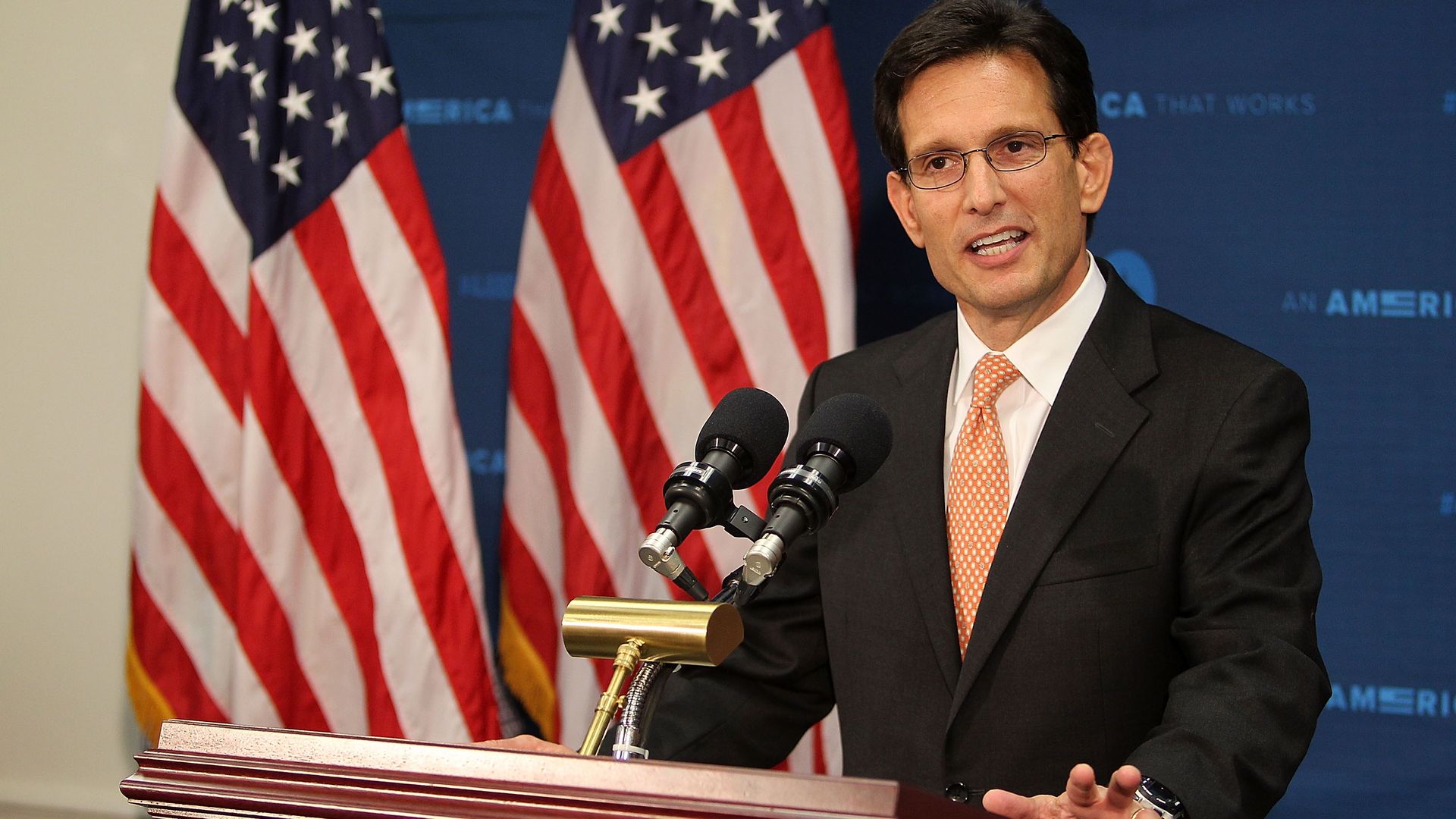
PhRMA yesterday announced that former House majority leader Eric Cantor will be its next president and CEO, becoming the pharmaceutical industry's top lobbyist at a critical moment.
Why it matters: Though widely respected in many corners of Washington, Cantor is a Republican who was ousted from the House amid a Tea Party wave, raising questions about his credibility with the current lineup in Congress.
The big picture: One of Cantor's primary tasks will be repairing Washington's deeply fractured relationship with the drug industry.
- Democrats achieved their decades-long goal of allowing Medicare to negotiate some drug prices last time they were in power, and many want to expand that effort should they gain power once again.
- And Republicans, under the leadership of President Trump and Health Secretary Robert F. Kennedy Jr., have become far more critical of the pharmaceutical industry than they were a decade ago, including its practice of charging higher prices in the U.S. than in other countries.
- Though the GOP seems satisfied with the Trump administration's voluntary drug pricing deals with individual pharmaceutical companies, Cantor will need to convince both parties that cracking down on drug prices amid a health care affordability crisis is a bad idea.
At the same time, America's status as the world leader in biomedical innovation is threatened by China's rapid rise, a dynamic the industry is being forced to navigate.
- Though large Western pharma companies have done billions of dollars' worth of licensing deals with Chinese biotechs this year alone, experts warn it's only a matter of time before large Chinese drug companies become major global competitors.
Cantor will succeed Steve Ubl, who announced in April that he planned to step down after 11 years at the helm of PhRMA, effective Nov. 9.
- PhRMA said in its announcement that Cantor brings "decades of experience at the intersection of business and public policy to lead the organization at a pivotal moment for America's biopharmaceutical industry."
- Merck CEO Rob Davis, chair of PhRMA's board, said: "Eric is well respected among policy leaders in Washington and around the world, with a long track record of working effectively across the political spectrum to achieve important outcomes that have a lasting impact."
Thanks for reading Axios Future of Health Care, and to editor Kate Marino and copy editor Matt Piper. Please ask your friends and colleagues to sign up.
Sign up for Axios Future of Health Care