Pharma's game of "five-dimensional chess"

Add Axios as your preferred source to
see more of our stories on Google.
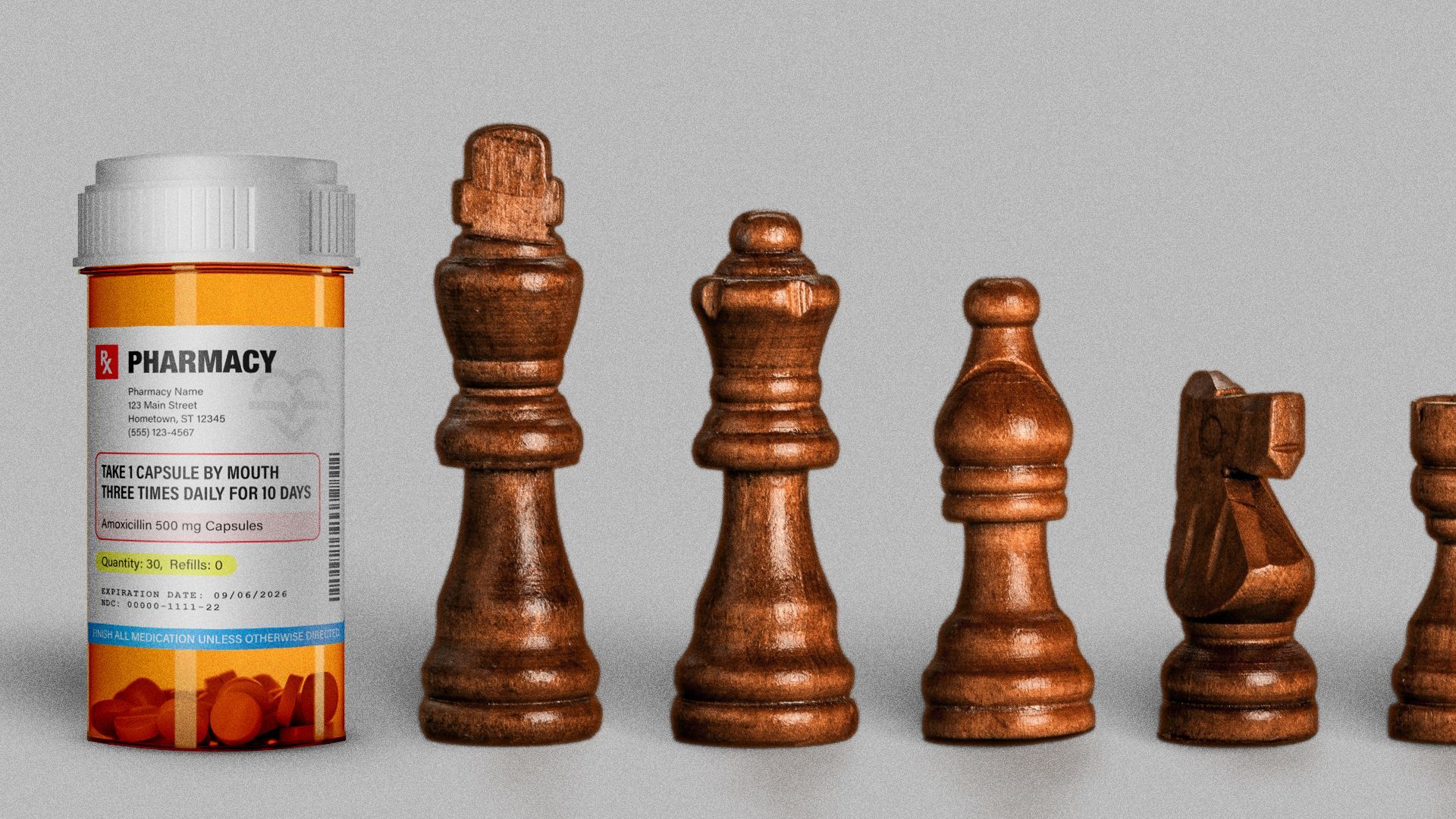
Illustration: Maura Kearns/Axios
While the Trump administration says it has more drug pricing deals lined up with pharmaceutical manufacturers, the emerging template is still a tough sell for many companies.
Why it matters: Pfizer was the first to commit to the Trump administration's plans for reshaping how medicines are sold, but other companies don't necessarily have the same incentives to opt in.
State of play: The administration sent letters over the summer to 17 drug companies outlining what it wanted them to do, starting with pegging U.S. prices to the lowest amount paid in other developed nations.
- The letters "explained his initiative to lower drug prices — either with the pharmaceutical industry's voluntary cooperation or without it," White House spokesperson Kush Desai said.
- Beyond the three announced agreements with Pfizer, AstraZeneca and EMD Serono, the administration has "secured multiple yet-to-be unveiled deals, with even more being actively negotiated," Desai told Axios.
- "Some of the companies who had been most resistant at the start are at the table now," said a source in conversation with multiple drug companies, who spoke on the condition of anonymity because of the sensitivity of the talks. "Whether they get to yes is a different issue."
The big picture: All three drug companies that have announced pricing deals from the Oval Office have made the same basic commitments, which align closely with the demands the administration made over the summer.
They agreed to:
- offer "most-favored nation" pricing to state Medicaid programs.
- add U.S. manufacturing and research.
- not launch new drugs at higher prices in the U.S. than in other countries.
- participate in the administration's "TrumpRx" platform for selling drugs directly to patients.
What they're saying: "I can't talk specifics, but I would say that we are in active dialogue with the administration and I would say that we share a point of view, which is ... we want our medicines to be accessible. We want them to be available and [we're] having conversations around making them available in ways like direct-to-consumer." Novo Nordisk president Dave Moore told Axios this week at the HLTH conference in Las Vegas.
- Analysts have generally responded positively to the agreements, saying they're preferable to tariffs on the industry that Trump has threatened or regulatory action applying most-favored-nation pricing in Medicare.
Yes, but: Those threats aren't completely off the table yet, particularly Medicare regulation, and holdout companies may be waiting for more information before making their next moves.
- "There's a lot of four-, five-dimensional chess that's happening here," said Rob Smith, managing partner at Capital Alpha.
Between the lines: There's still a ton of uncertainty surrounding the details of the agreements struck so far and what the Trump administration plans to do next.
- Multiyear tariff exemptions have been given to the companies that signed on, but the administration has been quiet about another big concern for manufacturers: what Medicare is willing to pay for drugs.
- The administration will also soon reveal the prices it's willing to pay for the 15 medicines subject to the next round of Medicare drug price negotiations under the Inflation Reduction Act. That may offer clues to companies uncertain whether to cut a broader pricing deal with the White House.
Plus, there's a ton of variation between drug companies. Some that have a larger footprint in Medicaid may find the existing template harder to swallow than those whose revenue is less dependent on the entitlement program.
- And those with major new drug launches on the near-term horizon may have difficult decisions about the launch price criteria.
The other side: The White House may have less leverage than its language implies.
- Any regulatory attempt to force drug companies to sell their product to Medicare at most-favored-nation prices will certainly be challenged in court, and it's an open question as to how successful those lawsuits would be.
The bottom line: There are still a lot of unknowns surrounding what is already a very unconventional policymaking process.
- "I think as a whole it's a pretty good deal for manufacturers, but it's a question of how durable are those deals and is the White House committed to upholding them," Smith said.
