Axios Future of Health Care

September 18, 2026


We made it to Friday! Anyone expecting the nation's most powerful anti-vaxxer to continue toning down his rhetoric got a reality check yesterday.
💥 "The Axios Show": In our new episode, Hasan Piker sits down with Axios' Alex Thompson in what he called "his most contentious interview."
- Piker weighs in on Dems' must-win Senate race, Iran's nuclear ambitions, Israel, China — and the controversial rhetoric that has followed him for years. Watch on YouTube.
Today's newsletter is 1,205 words, a 4.5-minute read.
1 big thing: RFK Jr.'s vaccine agenda lives on
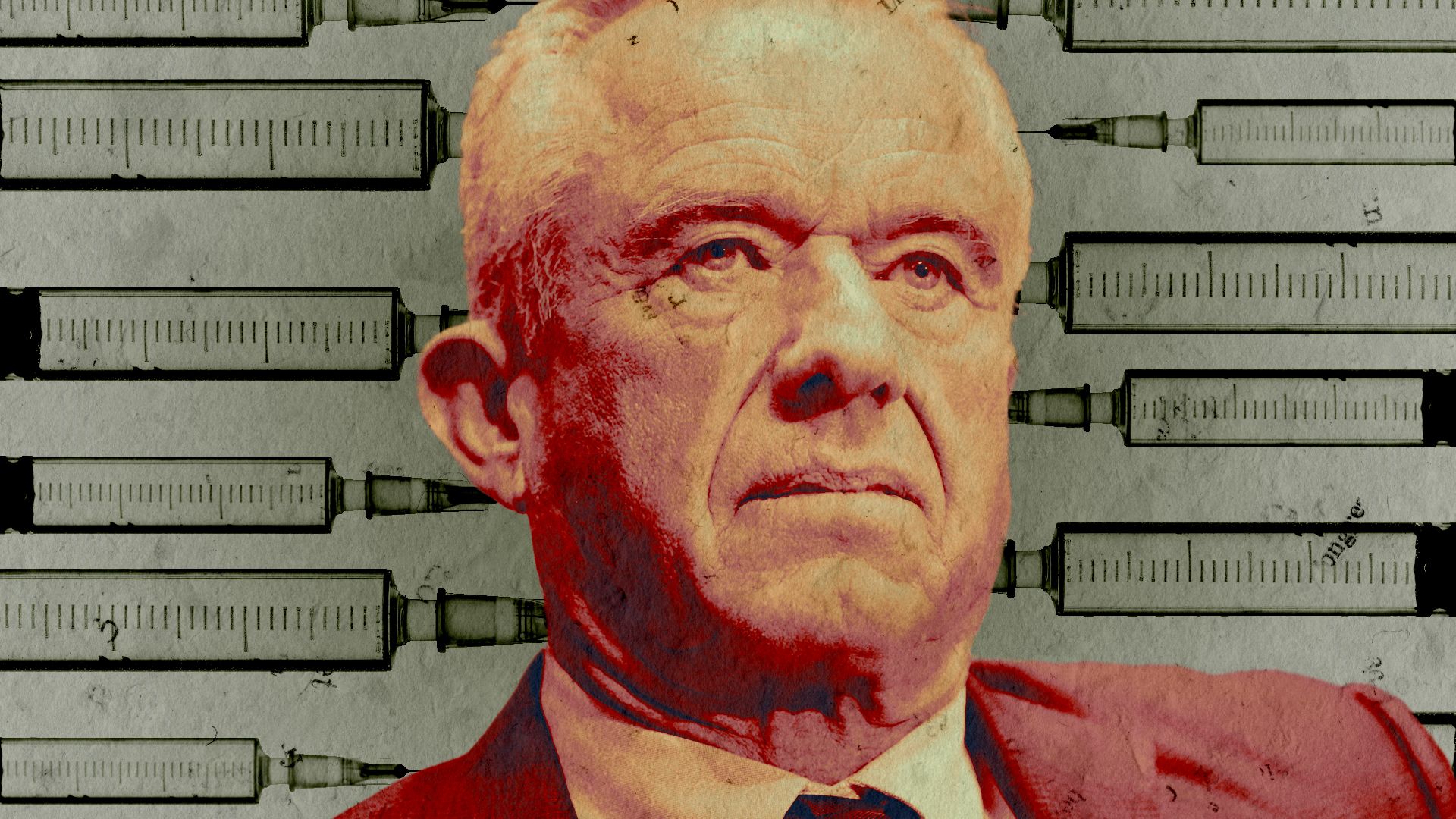
Health Secretary Robert F. Kennedy Jr. returned yesterday to the anti-vaccine group he founded, using a keynote address to signal the Trump administration isn't done questioning the safety of routine shots and expanding carveouts to federal mandates.
Why it matters: Though Kennedy avoided some of his most politically incendiary rhetoric, the speech made clear that HHS is working hard behind the scenes to continue reshaping federal vaccine policy.
- He again questioned the safety of routine childhood vaccines and asserted they play a role in the development of chronic illnesses — questions that ignore decades of science supporting the vaccines' safety.
Driving the news: Kennedy spoke for more than an hour at a Children's Health Defense meeting in Washington, D.C., highlighting the Trump administration's work on healthy food before turning to vaccines.
- He listed what the federal government is doing to reverse, in vaccine critics' eyes, decades of negligence on the issue.
- And Kennedy assured the audience that President Trump is fully committed to the cause.
- "He's directed us to pursue answers to strengthen vaccine safety, to expand options for families who want them and to preserve individual choice without federal mandates," Kennedy said. "Let me be clear: You have a strong and steadfast friend at the White House."
Between the lines: Kennedy addressed those frustrated with the administration's pace, in a nod to "Make America Healthy Again" movement members who feel he hasn't done enough to crack down on vaccines.
- "In government, a bunch of things have to happen before something else happens, or you get sued, and it's a very laborious system, and there's a lot of inertia built in," he said.
- "If we were able to overcome it, we would have changed things on day one, but those would have been short-lived, and I would have been out of a job."
He certainly didn't sound like someone who's ready to leave office after the midterm elections, as has been rumored.
- The backing he appears to have from Trump himself reinforces that.
- "I didn't come to Washington to protect institutions from uncomfortable questions," he said. "I came to make those institutions answer those questions, and I intend to stay in this fight as long as I am able."
Reality check: The vast majority of health experts and scientists say that the question of vaccine safety is settled, pointing to reams of evidence accumulated over many years.
- "It's a complete fabrication, because there's been so much data on vaccine safety," said Amesh Adalja, senior scholar at the Johns Hopkins Center for Health Security and spokesperson for the Infectious Diseases Society of America.
- "But the overarching point is no matter how much evidence there is or that accumulates, it will not change RFK Jr.'s mind related to vaccines."
The big picture: A pre-midterm pause on Kennedy's vaccine rhetoric ended weeks ago, when he stood with the president as Trump signed an executive order calling for fewer childhood vaccinations, splitting the childhood MMR vaccine into three shots and delivering vaccines at separate medical visits.
- Kennedy's speech mentioned numerous ongoing efforts within HHS to study vaccine safety, "including cumulative effects, longer-term health outcomes, uses of adjuvants, the safety of adjuvants, and many, many other issues."
- Researchers are also "examining questions involving adjuvants, timing, vaccination during pregnancy, maternal immunity, timing and a range of health outcomes, from allergies to autoimmune diseases to autism and other neurodevelopmental disorders," he added.
The bottom line: Expect, at a minimum, results of Kennedy-requested vaccine safety studies to come out of HHS in the second half of Trump's term.
- Experts aren't expecting those studies to meet high scientific standards.
- "Anything RFK Jr. touches, I'm not confident of its veracity," Adalja said. "I have zero confidence in anything that comes from his department."
2. Exclusive: HHS launches PPE demand forecast

HHS is releasing a department-wide forecast of its demand for personal protective equipment, giving American manufacturers predictability and strengthening supply chains, the department first told Axios.
Why it matters: The COVID pandemic exposed America's dependence on other countries for manufactured goods like PPE and prescription drugs, and there's sustained interest in changing that.
Details: The new policy requires each HHS division to maintain a forecast of its needs, and covers PPE purchases acquired through all methods.
- The forecasts will be updated quarterly. The policy carries out a pandemic-era law aimed at strengthening efforts to onshore PPE production.
What they're saying: "This forecast gives domestic PPE makers a clearer line of sight into future HHS demand so they can hire workers, invest in equipment, and keep production ready here at home," said Anthony Figliola, principal deputy assistant secretary and a member of the president's Made in America Council.
- "It is a practical step toward stronger supply chains, better emergency preparedness, and using federal purchasing power to support American manufacturers and American workers."
The big picture: The U.S. was hit with mask and other medical supply shortages during the height of the pandemic. But efforts to make sure that doesn't happen in a future emergency have largely fallen flat.
- Part of the problem is that manufacturers don't produce more than what's demanded, and demand for items like masks in nonpandemic times is much lower.
- "As an industry, we shifted back from that 'just in case' scenario planning and supply planning to 'just in time,' where now you have to be cost-conscious," Kyle MacKinnon, senior director of operational excellence at Premier's supply chain strategic operations, told Healthcare Brew.
3. Kennedy fills insurance coverage task force

Kennedy moved yesterday to fill vacancies on the expert panel that recommends which health services insurers must cover at no cost to patients, appointing eight new members and a new chairman.
Why it matters: In May, Kennedy fired the heads of the U.S. Preventive Services Task Force, raising concerns about possible political influence in future decisions about cancer screenings, HIV PrEP and other services used by about 100 million privately insured people.
Driving the news: Kennedy named Cleveland Clinic hematologist-oncologist Seth Corey chair of the task force, citing his experience in generating, analyzing and assessing medical evidence.
- The other appointees included Venkatesh L. Murthy, a University of Michigan professor of preventive cardiology who in the past criticized COVID-vaccine policy for adolescents and young adults for underplaying the risks of heart inflammation.
- Another appointee, University of Minnesota finance professor Stephen Parente, is not a medical doctor but was picked for his expertise in evaluating the cost and value of health services and technologies.
The Supreme Court last year upheld the structure of the task force in a case surrounding coverage of HIV prevention drugs, ruling that its members are accountable to the HHS secretary, who can remove and replace members at will.
Thanks for reading Axios Future of Health Care, and to editor David Nather and copy editor Matt Piper. Please ask your friends and colleagues to sign up.
Sign up for Axios Future of Health Care